
An Overview of Digital Workflows and 3D Printing in the Orthotics and Prosthetics Industry
This white paper is an introduction to using 3D printing technology to create next-generation
orthotics and prosthetic devices. The report covers traditional workflows and how they differ
from additive manufacturing workflows, plus takes a look at the materials needed to 3D print
orthotics and prosthetics. You will also find information on 3D scanners along with three real-life
case studies.
An Overview of Digital Workflows and 3D Printing in the Orthotics and Prosthetics Industry
This white paper is an introduction to using 3D printing technology to create next-generation
orthotics and prosthetic devices. The report covers traditional workflows and how they differ
from additive manufacturing workflows, plus takes a look at the materials needed to 3D print
orthotics and prosthetics. You will also find information on 3D scanners along with three real-life
case studies.
Abstract
Orthotics and prosthetics is the specialty within the healthcare industry that focuses on the development, design, manufacturing, and application of artificial appliances that stabilize, support, or replace limbs or other parts of the body. Today, the industry’s market size is approximately $6.5 billion dollars, with an expected annual growth rate of 4.2 %. The growth is driven by the need to improve patient care through the provision of custom-fit solutions that ease the traditional challenges associated with their use. This is where 3D-printed orthoses and prostheses have crucial roles to play.
According to IGI-sponsored research, traditional challenges associated with the use of orthoses and prostheses include discomfort related to fitting problems and health-related issues caused by material compatibility between the skin and the O+P device. To ease these concerns, healthcare professionals have placed emphasis on the importance of customization to meet the specific goals of individual patients. However, customization brings a new set of challenges – added expense and a time-consuming production process.
Today, the healthcare industry continues to explore new design, testing, and manufacturing options to reduce customization costs and speed up production cycles. Known for its rapid production and relatively affordable processes, 3D printing provides stakeholders in the orthotics and prosthetics industry with a powerful customization solution. This overview will provide doctors, physical therapists, healthcare providers, and medical device manufacturers with an extensive guide on getting started with 3D printing orthosis and prostheses.
Challenges: Traditional Workflows and Their Limitations
Traditional workflows come with diverse challenges and potential for error that can compound at each stage of the workflow. Utilizing casts and other manual methods to develop a topographic map introduces tolerance errors that may affect the fit of the end-use part. The time taken to complete a single customization project is approximately three to six weeks depending on the dimensions, design complexity, and manufacturing process used.
Design errors, excess manual labor, extended production timelines, and associated costs make the customization of orthoses and prostheses using traditional workflows a lengthy process for manufacturers and healthcare service providers to navigate. These processes are often many decades old, and have fallen into the “if it’s not broken, don’t fix it” category of procedures. However, while current offerings have been servicing patients for many years, there exists significant room for improvement. These improvements can lead to lower lead times and better fitting devices.
Before we show how augmenting traditional workflows with rapid prototyping can result in improved efficiency and significantly reduced costs while providing a more satisfying experience for the patient, let’s take some time to quickly review the existing workflows that many medical professionals are familiar with.
Commonly Used Devices in the Orthotics and Prosthetics Industry
Orthotic devices are generally defined as external medical devices used for the support, immobilization, and treatment of muscular or skeletal injuries and deformities. Prosthetic devices refer to medical devices developed to replace missing body parts or to support specific body parts and their functions. According to the National Institute for Health, orthotic devices are always externally used and prosthetics may be used either externally or internally, depending on individual use cases. Most of the research presented within has been skewed toward orthotic applications, however we will also touch upon orthopedic prosthetics and limb replacements as opposed to prosthetic implants or surgical devices. Formlabs is committed to providing additional evaluations of 3D printing medical workflows; view our Medical website for the publication of future analysis.
Examples of common orthotic devices include:
- Knee Braces: to reduce the pressure and force on the knees during physical activities.
- Ankle Foot Orthosis: to stabilize the foot and improve gait.
- Wrist and Hand Orthosis: to support joints within these regions and the use of the limb.
Examples of common prosthetic devices include:
- Below-the-Knee Prosthetics: these devices aid mobility for someone who has functionality of their knee but not their ankle.
- Above-the-Knee Prosthetics: these devices aid mobility of someone who does not have functionality of their knee or ankle.
- Ankle-Foot Prosthetics: these devices are used to support the functions of the ankle or serve as replacement devices.
- Above-the-Elbow Prosthetics: these devices replace the function of the hand and wrist for patients who have functionality of their elbow.
It’s important to note that where direct printing of load bearing devices may be restricted by material strength properties and durability, manufacturing aids and molds have shown to be an effective solution over traditional techniques, with a much lower cost and barrier to entry.
Of course, this is not an exhaustive list of orthotic and prosthetic applications used across the healthcare industry. We have concentrated our discussion here on common uses where 3D printing has shown a demonstrable improvement in workflow, performance and/ or customer satisfaction.
Traditional Workflows for Manufacturing Orthoses and Prostheses
Conventional manufacturing processes associated with producing orthoses and prostheses vary according to the end-use part. In most cases, some or all of the following traditional manufacturing processes are utilized:
- Plaster Casting: Plaster casting uses mesh and plaster to create a cast for an arm or leg. The plaster mold casting process involves the use of plaster, gypsum, or calcium sulfate which is mixed with talc, sand, and other materials to form a slurry. The slurry is then applied onto a patterned surface to form the mold. Plaster is then poured into the mold to form the finished part.
- Impression Foam Casting: The foam boxing process involves the use of a foam box to capture the impression of a patient’s foot. This casting method relies on the weight of the patient to accurately capture impressions for the manufacturing process.
- Conventional Machining: The machining process involves a human operator manually directing the machining tools to cut through materials to form the finished part. Without modern automation, the operator is responsible for managing the location and intensity of the machining tool.
- Thermoforming: This involves the use of a thermoforming machine and a mold or pattern to transform a plastic sheet into a 3-dimensional part. Thermoforming is sometimes used alone or alongside other manufacturing processes to produce externally used medical devices.
- Wax Casting: This involves creating a mold from a pattern using wax as the mold-forming material. Here, the caster casts a model and polishes the casting to produce a “master” pattern. The master model is used to make a wax mold out of rubber, which is heated and “vulcanized” around the master casting to make a flexible wax mold. The molten material for the end-use part is poured into the mold to form the finished part.
Despite the differences in these traditional orthoses and prostheses manufacturing processes, a common production workflow outlines the steps for developing end-use items. This workflow includes the following steps:
- Developing a topographic map of the affected area: This involves the use of casts, technical drawings, and measurements to map out the area. The process can take 30-60 minutes to complete.
- Model Formation: Developing a model from the topography map takes approximately one to two hours to accomplish.
- Fitting and Sculpting: To ensure the mold fits the end-user, fitting and sculpting are required. The fitting process is iterative to ensure the needed adjustments and corrections are done. Thus, fitting usually involves multiple testing and validation appointments that occur within two to four weeks. The average appointment can take several hours depending on the complexity of the design.
- Post Processing and Finishing: This involves removing excess materials and prepping the orthotic or prosthetic device for use.
Solutions: 3D Printing and Material Options
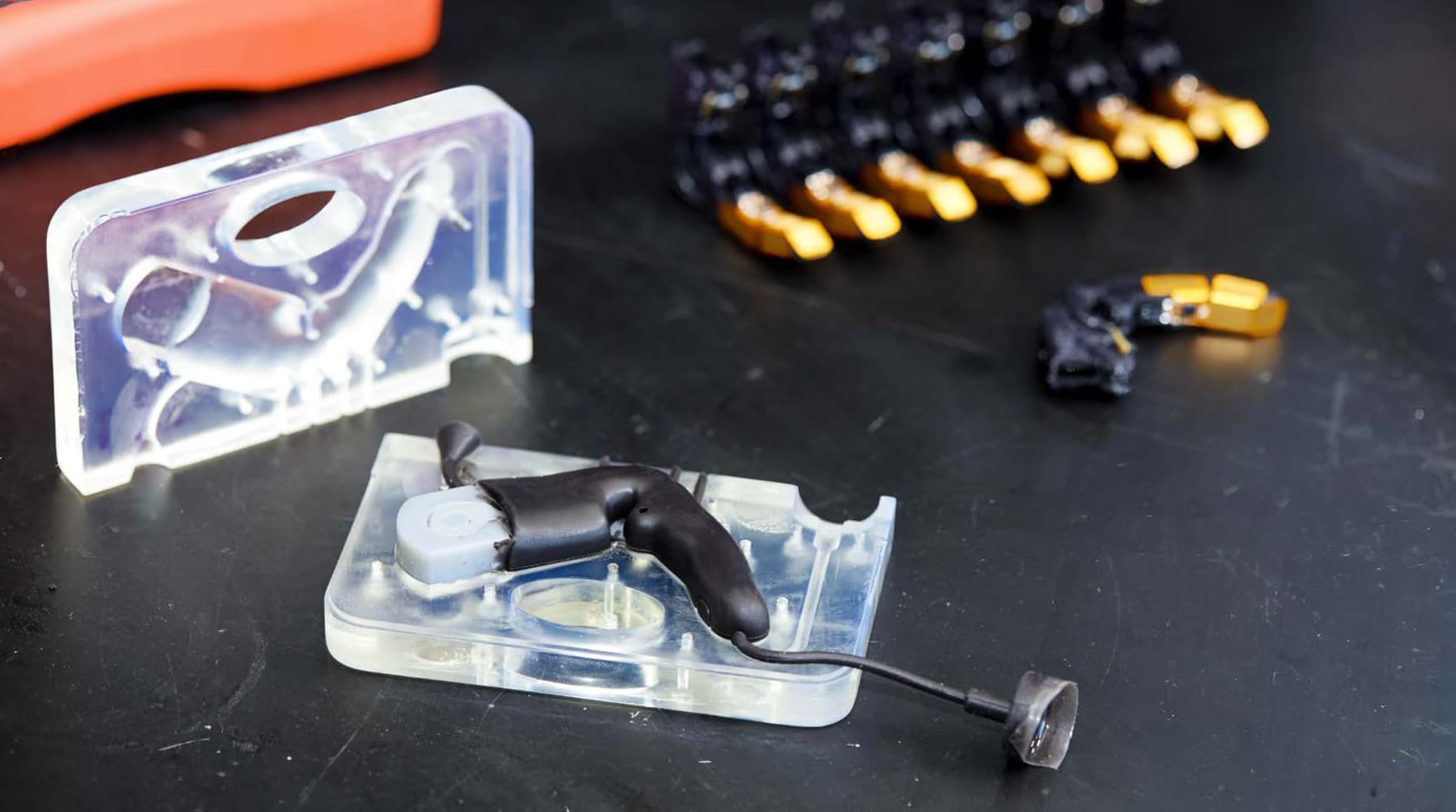
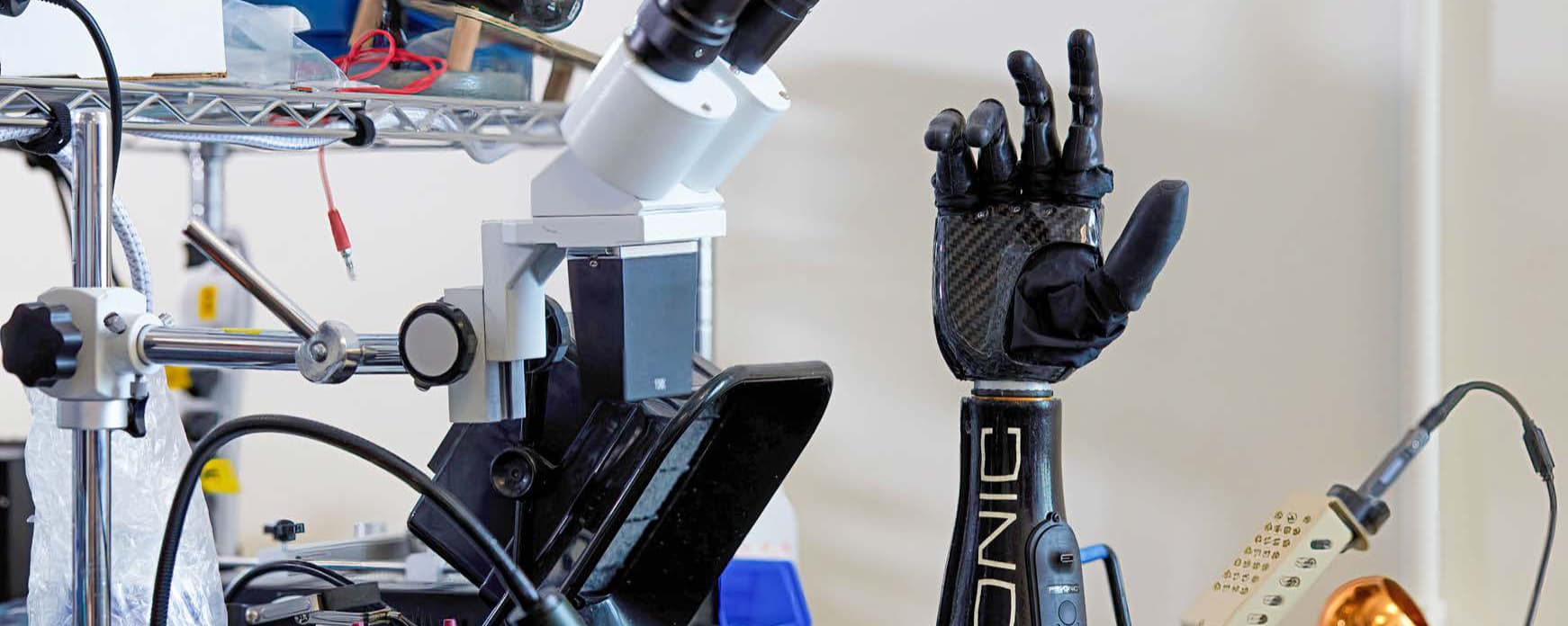
Part of the PSYONIC Ability Arm, a pioneering bionic prosthetic, is created using 3D printed molds.
Applications of 3D Printing in Orthotics and Prosthetics
Adoption of additive manufacturing is growing rapidly in the end-use medical device market for the proven economical benefits, reliability, and production efficiency. The 3D printing process empowers service providers with an affordable, rapid production technique for manufacturing 3D-printed orthoses and prostheses.
Research on the application of 3D printing highlights two important use cases:
1. Producing Ultra-affordable Orthoses and Prostheses: 3D printing’s prototyping and production speed make it ideal for producing ultra-affordable items at varying volumes for commercial or personal use. The healthcare industry takes advantage of this speed to produce easily affordable orthoses and prostheses such as:
- POHLIG GmbH Orthosis Ring: The orthosis ring is used to reposition the talus or provide support for patients with an equinus foot. Here, selective laser sintering (SLS) 3D printers are used to rapidly produce 3D-printed orthoses rings at very affordable prices.
- Wrist Orthosis: The wrist orthosis is used to support the wrist or hold it in positions that reduce the possibility of further injuries to sprained wrists. 3D printed orthoses demonstrate a comparable reduction in pain when compared to conventional options, while improving overall patient satisfaction.
- Orthopedic Insoles: 3D printed insoles are ultra-affordable solutions that provide patients with a customizable orthosis for foot correction and support. The printing process enables orthopedic service providers to quickly produce affordable insoles for diverse patients.
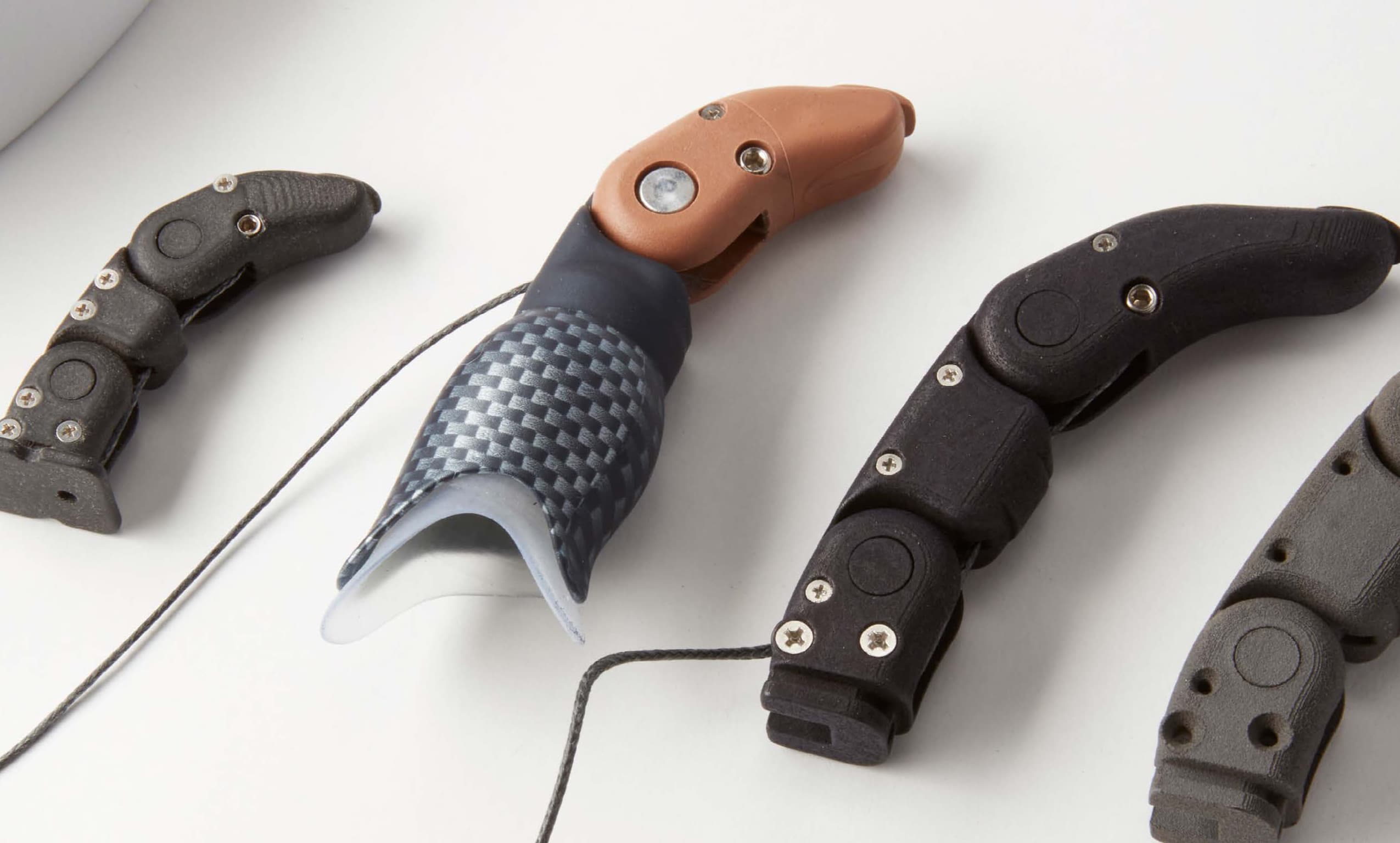
- Prosthetic Finger: 3D printed prosthetic fingers provide patients with a versatile replacement personalized to provide extensive comfort when used. The M-finger produced by Partial Hands Solutions, using the Fuse 1 SLS 3D printer from Formlabs and printed with nylon powder, is an excellent example of producing a custom prosthesis at a reduced cost.
- Enabling the Future: Enabling the Future is a non-profit community that designs and 3D prints task-specific, upper-limb assistive devices for children around the world. They provide these services at no cost to the recipients or their families. This group uses 3D printing to overcome the high cost associated with traditional manufacturing techniques and lessen the financial burden associated with kids rapidly outgrowing their devices. FormlabsHealthcare Applications Engineer Aisling McEleney, the former President of eNable Lowell, continues to advocate for low-cost assistive devices.
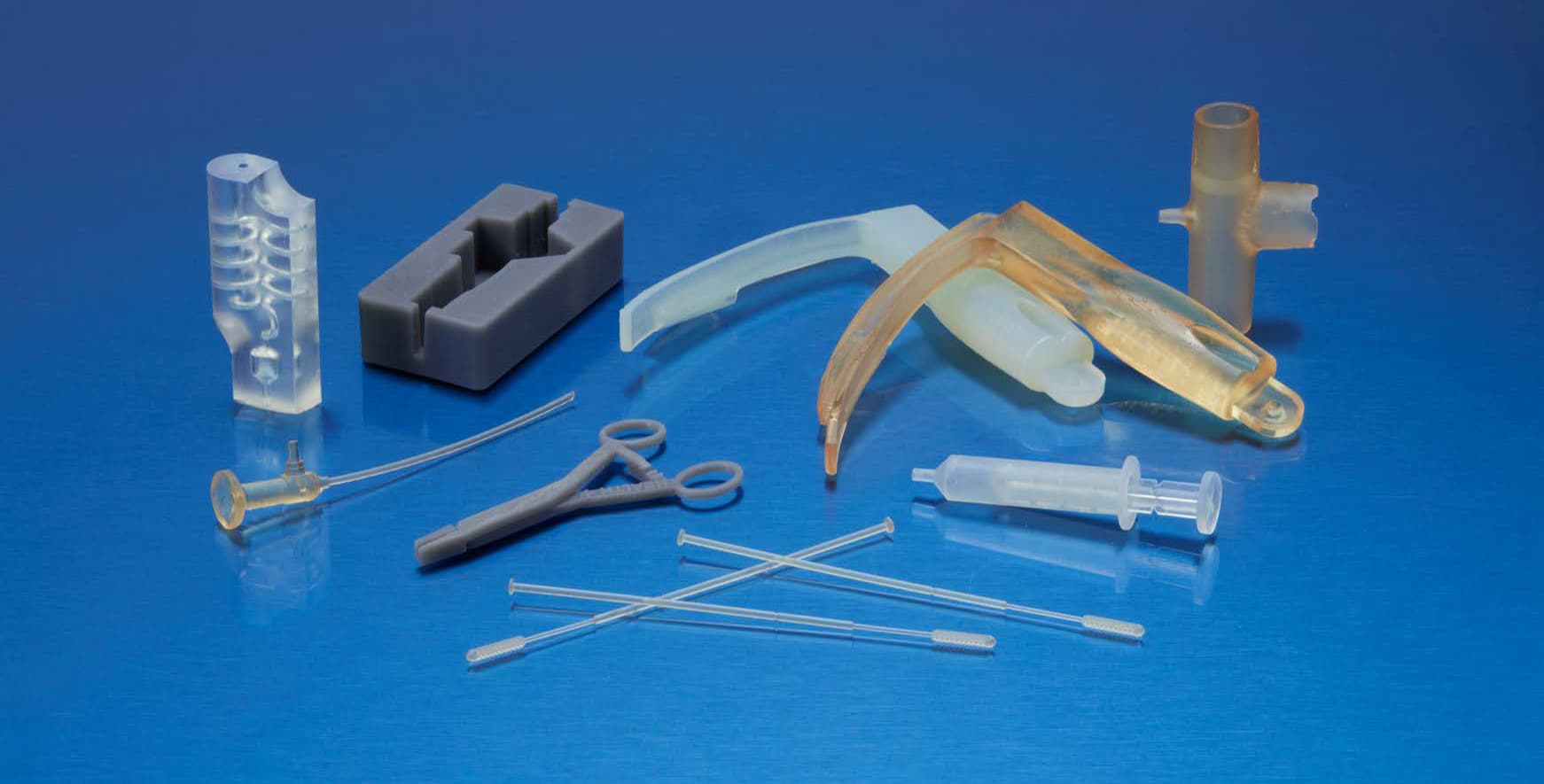
2. Professional Grade Orthoses and Prostheses – High-precision and accuracy levels are required to develop complex prostheses or orthoses, including articulation, motorization, and intricate components. In scenarios where precision accuracy is required, professional-grade 3D printers and high-performance materials are essential. The production process may seem more complex to new users due to the scanning process and designing the CAD models, however adoption of this technology has consistently shown to increase productivity while reducing production costs. Examples of professional-grade prostheses include:
- Prosthetic Hands and Fingers: Developing usable prosthetic hands involves recreating accurate joint movements, ensuring proper fitting, and promoting the comfort of the end-user. Hence, the 3D printing process involves implementing high-precision levels and tight tolerances to develop professional-grade 3D-printed prostheses.
- Orthoses for Traumatic Hand Conditions: Traumatic and chronic hand conditions limit a patient’s ability to use the limbs and may cause considerable pain. Professional-grade orthoses have been proven to reduce the effects of traumatic injuries, reduce the chronic pain that comes with them, and improve hand functionalities.
- Custom Orthosis for Locomotion: Pediatric and geriatric patients who struggle with diverse health risks associated with impaired movement sometimes require the use of supportive devices for locomotion. 3D-printed personalized orthoses can help patients improve their balance and movement over time. The example of a father who developed custom orthosis to aid his child’s movement provides more insight into the customization capabilities of 3D printing and its reduced production costs.
Customer Focus: 3D Printing in Action
Right now, medical device firms are bringing new and innovative orthotics and prosthetics to market by using in-house 3D printing. The following three examples all use either Formlabs SLS or SLA machines, using an array of materials to create affordable mobility devices.
How PSYONIC Developed a FDA-registered, Medicare-covered Bionic Hand Using Additive Manufacturing
One company trying to upend the market is PSYONIC, creator of the Ability Hand. Designed and manufactured in-house with hybrid manufacturing methods, including 3D printing, injection and silicone molding, and CNC machines, the Ability Hand is promising to restore people’s life, and mobility, back to what it was.
What was PSYONIC able to accomplish with Formlabs SLA 3D printers?
- Create an FDA-registered, Medicare-covered, industry-defining upper-limb prosthesis from scratch.
- Collect customer feedback and rapidly prototype in-house to improve the Ability Hand’s design and functionality.
- Deploy a true hybrid manufacturing production method to deliver the Ability Hand at an affordable price.
- Help patients return to their normal lives, including Sergeant Garrett Anderson.
- Increase affordability and access from 10% to 75% of patients.
- Utilize new durable and impact-resistant 3D printing materials to create longlasting end-use parts.
Learn more about Psyonic and the Ability Hand on the Formlabs Blog
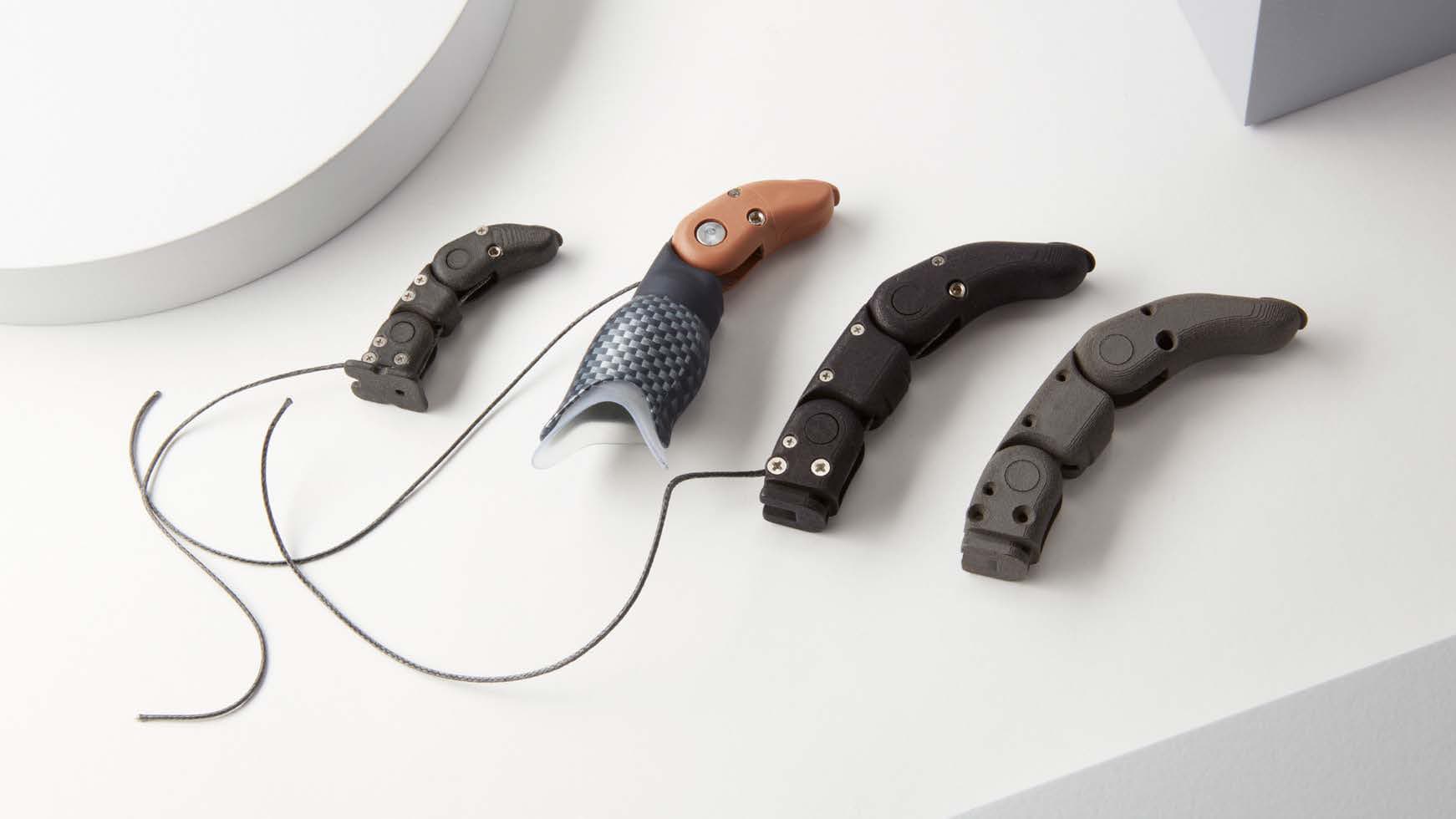
Partial Hand Solutions: Affordable SLS 3D Printing For Patient-Specific Prosthetics
Partial Hand Solutions is dedicated to advancing technology for amputees of all ages. Since the company's inception in 2007, they’ve provided functional solutions for many active soldiers and individuals with partial hand and finger amputations, along with children with more extensive prosthetic requirements.
Equipped with the Fuse 1 and the Fuse Sift, Matthew feels like he finally has the capability to produce high performance, patient-specific 3D printed prosthesis. For the first time, he’s printing lightweight, durable, long-lasting parts on a budget suitable for a small business.
What’s different about SLS 3D printing with the Fuse 1 compared to other SLS printers Matthew has used before? Matthew has identified two core benefits:
- The efficient workflow, which reduces costs and maximizes design time.
- The high-quality parts that enable his small business to produce exceptional, longlasting custom prosthesis.
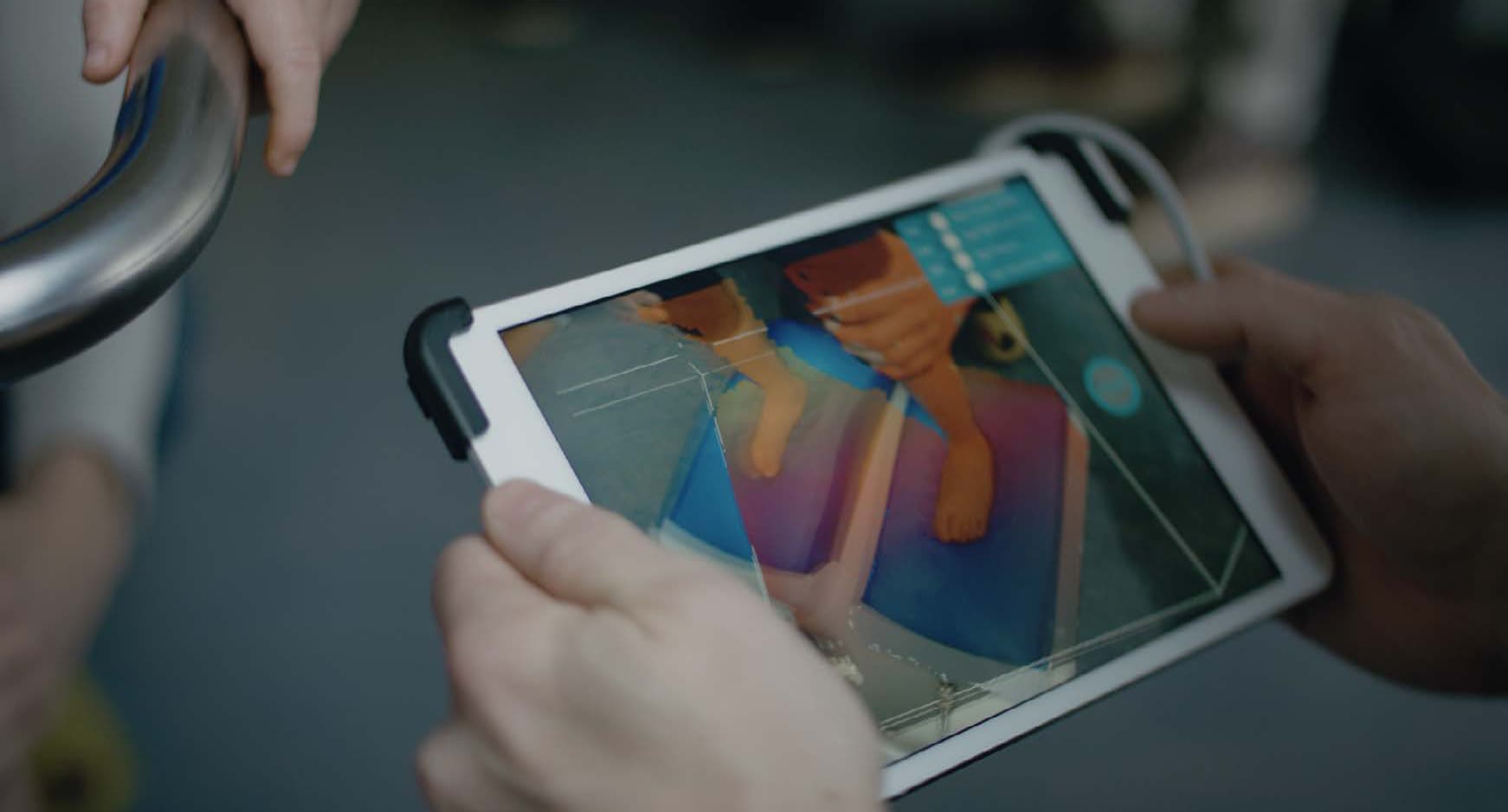
Father Helps Son With Cerebral Palsy Walk With Custom 3D Printed Orthosis
Mateja’s son Nik was born one month prematurely. Due to difficulties during childbirth, he suffered severe brain damage that led to cerebral palsy. Despite the grim initial outlook, Nik was tremendously motivated to be mobile, but the symptoms of his condition prevented him from standing or walking on his own.
Matej set out with a simple goal: to enable Nik to walk. Months of research and development followed, resulting in a custom-made, 3D printed orthosis that provides support and correction exactly where Nik needs them, which finally helped him take his first steps independently.
After six months of research and experimentation, Matej pieced together an innovative new workflow that is now patent pending:
- The patient’s feet are placed on a vacuum bag in the corrected, weight-bearing (i.e. standing) position.
- The feet are 3D scanned from the top, and the footprints are scanned from the vacuum bag using an affordable Structure Scanner that is mounted on an iPad.
- The scan data is merged and cleaned to produce an accurate representation of the patient’s foot.
- The custom-made orthosis is designed directly on the scanned foot in CAD software.
- The orthosis is 3D printed in high resolution using a Formlabs SLA printer and Durable Resin.
Common 3D Printing Materials
Application specific requirements generally determine the materials to be used when 3D printing custom or generic orthoses or prostheses. Material considerations may include the patient’s affected anatomy and the desired functionality; the material properties necessary, including durability and flexibility; and how long the end-use print is expected to last. Colored options may also be considered for a variety of reasons, including patient perception and improved patient compliance. An extensive variety of 3D printing materials are available for the production of orthoses or prostheses, and the most commonly used ones include:
- Nylon: Many types of nylon are utilized in the manufacture of 3D printed orthoses and 3D printed prostheses due to their physical properties. These properties include the durability, flexibility, and aesthetics of nylon. Nylon is also highly resistant to chemicals and abrasion. The commonly used nylon polymers are the PA11 and PA12 iterations, which may be modified for enhanced strength properties.
- Acrylic Resins: Multiple resin types are utilized in 3D printing performance-grade orthoses and prostheses by orthopedic service providers. The advantageous features of acrylic resins include durability, high tensile strength, aesthetic finish, and abrasion resistance.
- Thermoplastic Elastomers (TPE): TPE is used for its flexibility, strength, and durability. Orthopedic and healthcare service providers also point to its high resistance to chemicals, water, moisture, and abrasion as some of the major reasons why TPE is used in 3D printing orthoses and prostheses.
- Acrylonitrile Butadiene Styrene (ABS): ABS is a popular thermoplastic used across the 3D printing community due to its malleability and durability. ABS is used in 3D printing ultraaffordable prosthetic devices due to the affordability of the material.
- Polyethylene: The material provides features such as resistance to many solvents, resistance to abrasion and wear, resistance to chemicals, and approval by the FDA and USDA for the development of medical devices.
- Thermoplastic Polyurethane: The material provides features such as durability, high elasticity, high resistance to abrasion, and transparency which may be requirements for specific customization projects.
- Polypropylene: Customization projects that require the use of translucent and durable material with an excellent heat-resistance profile can choose propylene. The material is also resistant to chemicals and moisture.
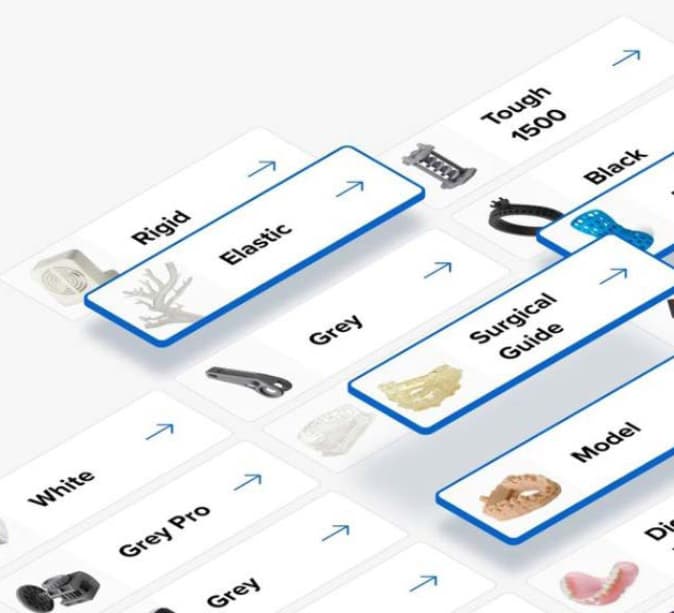
FIND THE RIGHT MATERIAL FOR YOUR APPLICATION
Selecting a 3D printing material isn't always easy or straightforward, it often requires balancing multiple attributes to achieve your intended outcome. This interactive material wizard helps you make the right material decisions based on your application and the properties you care the most about from our growing library of resins.
Overview of the Digital Process
The digital approach to 3D printing orthoses and prostheses for patients starts with scanning the affected body parts to determine the dimensions required for the end-use part. Digital scanners are used to accomplish this task. Below are the steps in the digital workflow:
1. Scan Acquisition
The wide acceptance of the application of 3D printing in healthcare has led to the development of powerful scanners. These scanners produce accurate CAD models of a patient’s anatomy without the need for complicated computer-aided design software. Table 1 shows an example of 3D scanners:
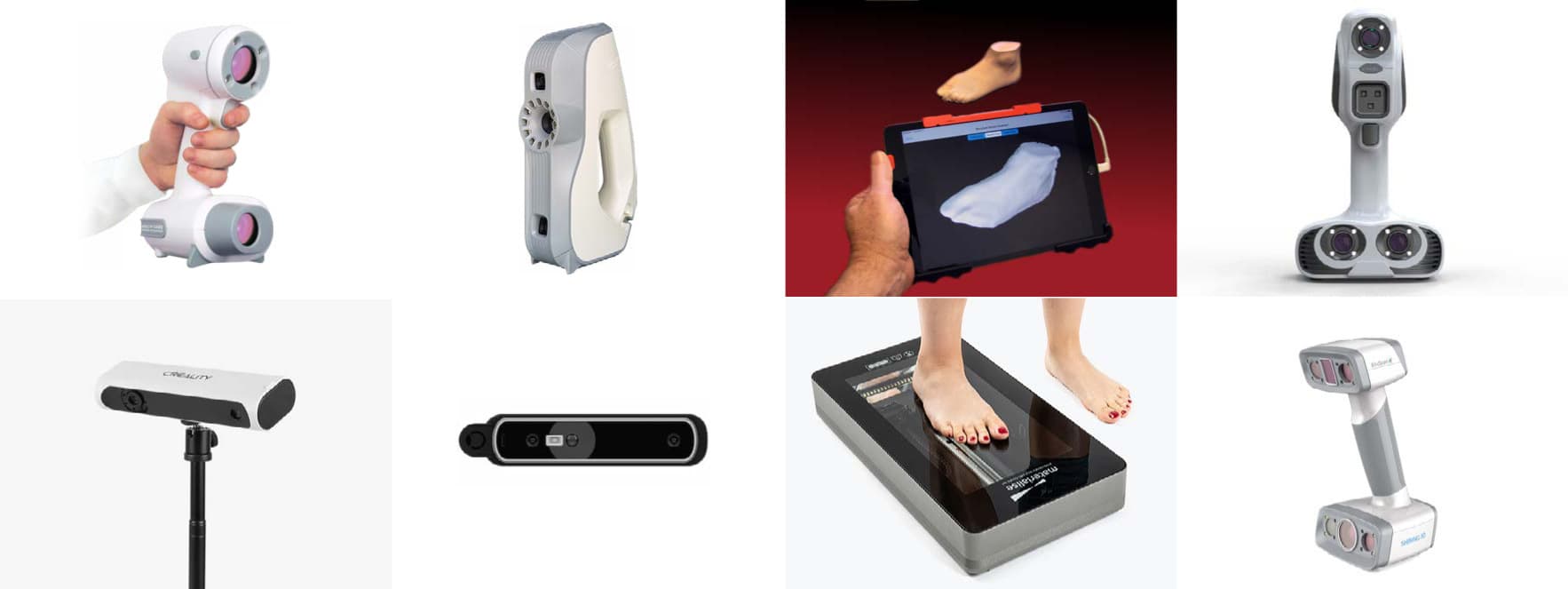
Table 1: Digital Scanner Options
Compared to traditional impression and model forming processes, 3D scanning provides highaccuracy, capturing speed, reduced manual labor, and flexibility when choosing capturing locations. The 3D models produced via scanning provide the information required to modify the existing 3D model or design patient-specific solutions before the 3D printing process.
With such a wide range of product options, from handheld 3D scanners to desktop 3D scanners, it can be difficult to choose the best 3D scanning system that’s right for your budget. Formlabs put together a free guide that gives an overview of the 3D scanning market, including comparing structured light scanners to laser triangulation technology, and the differences between handheld and desktop scanners.
| HIGH PRICE, HIGHEST ACCURACY ($15,000 AND MORE) | MORE AFFORDABLE, HIGH ACCURACY ($12,000 AND UNDER) | LOW PRICE, LOW ACCURACY |
|---|---|---|
| Zeiss T-Scan Hawk Scantech Simscan EviXscan Optima+ M Creaform HandyScan 307 Silver Series |
peel 3d peel 1, peel 2 & peel 2-S FARO Freestyle 2 Polyga Compact S1 |
iPhone Pro and iPad Pro Structure Sensor Matter and Form 3D Scanner V2 Revopoint POP |
2. Common Shape Modification and/or Design
Scan acquisition processes capture the required data for developing accurate models for the 3D printing process. In most cases, the acquired data must be modified through mesh repairs to develop 3D printable models for the next stage of the customization process.
The shape modification and design stage involve utilizing either CAD or CAM software to design a functional model around the digital scan of the anatomical part and prep the model for the printing process. Examples of shape modification and design service providers/tools include:
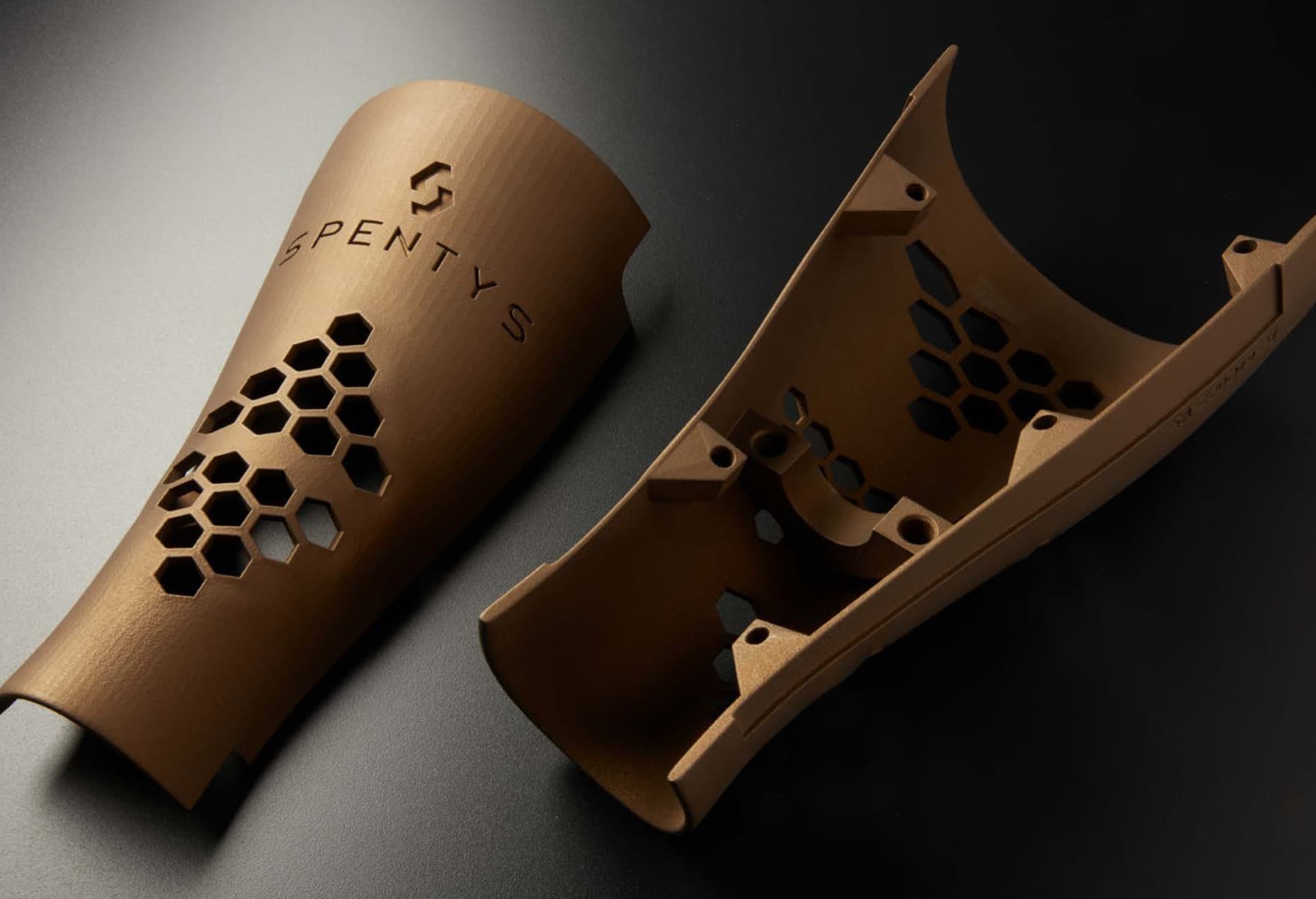
- Spentys: The Spentys platform is equipped with digital workshop tools to automate the modification and design tasks associated with prepping scanned models. These tools support the personalization of CAD models and the testing or validating of designs before 3D printing. Spentys also validates digital workflows from the scanning process to ensure the 3D-printed prostheses meet their intended goals.
- Mecuris: The Mecuris platform is a powerful digital workspace that provides both CAD/CAM and 3D printing support services to the orthopedic device development industry. The CAD and CAM tools within the virtual workspace support shape modifications and design repairs of scanned anatomical parts.
- nTopology: Offers a modern modeling engine that enables the intuitive modification of 3D models and designs from scanned objects. The intuitive nature of the platform empowers both professional designers and individuals with little design knowledge to modify 3D models.
3. 3D Printing Technologies
Orthopedic and healthcare service providers can take advantage of the diverse 3D printing technology to produce finished items. The application of the end-use part, its size, production volume, and design complexities are some of the important criteria to consider when choosing a printing technology.
The common technologies used in 3D printing orthoses and prostheses models include:
- Selective Laser Sintering: SLS is capable of producing high-quality 3D printed prostheses at low tolerances, making them optimal for developing professional-grade solutions for patients. SLS is used in producing precision parts that require enhanced durability and ductility.
- Multi Jet Fusion: In scenarios where premium-grade 3D printed orthoses and 3D printed prostheses are required, MJF can provide high-quality parts at a much higher cost per part than SLS.
- Stereolithography: SLA is commonly used to produce 3D-printed prostheses that meet the quality recommendations of individual applications. Orthopedic service providers may choose to leverage SLA to produce low-cost items such as insoles or high-quality items such as hand aids or ocular implants.
- Fused Deposition Modeling: This material extrusion technology is capable of producing low-cost solutions due to the negligible costs of its operational processes and materials. Healthcare service providers routinely utilize FDM to produce custom insoles, and hand, leg, and joint support solutions without stringent design requirements. FDM printers are capable of producing low-cost and larger prosthetic designs due to the thermoplastics the process relies on, and the availability of larger FDM desktop 3D printers.
Formlabs and Other 3D Printers
Choosing the right 3D printing engine and brand for your orthoses and prostheses production runs requires some in-depth cost analysis, features analysis, and knowledge about the support ecosystem of each vendor. Table 2 below provides a competitor analysis for the Formlabs Fuse 1+, HP Jet Fusion 3D Series, EOS, and 3DS SLS printers:
|
Printer |
Cost |
Materials |
Build Volume/Throughput |
Printing Technology |
|---|---|---|---|---|
| Starting at $27,999. Complete setup starting from $39,243 | Nylon 11, Nylon 12, Glass-Filled Nylon 12, Nylon 11 Carbon Fiber | 16.5 x 16.5 x 30 cm 6.5 x 6.5 x 11.8 in Capable of round-the-clock printing that minimizes downtime |
SLS | |
| $340,000+ | Nylon 12, Nylon 11, Glass-Filled Nylon 12, and TPU | 38 x 28.4 x 38 cm 15 x 11.2 x 15 in |
MJF | |
| $150,000+ | Nylon 11, Nylon 12, Glass-Filled Nylon 12, TPU | 200 x 250 x 330 mm 7.9 x 9.8 x 13 in |
SLS | |
|
3D Systems PROx 6100 |
$100,000 - $200,000 | Nylon, TPE, TPU | 15 x 13 x 18 in | SLS |
If you’re not sure how SLA, FDM, SLS, and MJF technologies work, we put together some useful guides for those looking to make investments in 3D printing. Our first post compares SLA, FDM, and SLS. Our second takes a deep dive into SLS and MJF.
4. Post-Processing Considerations
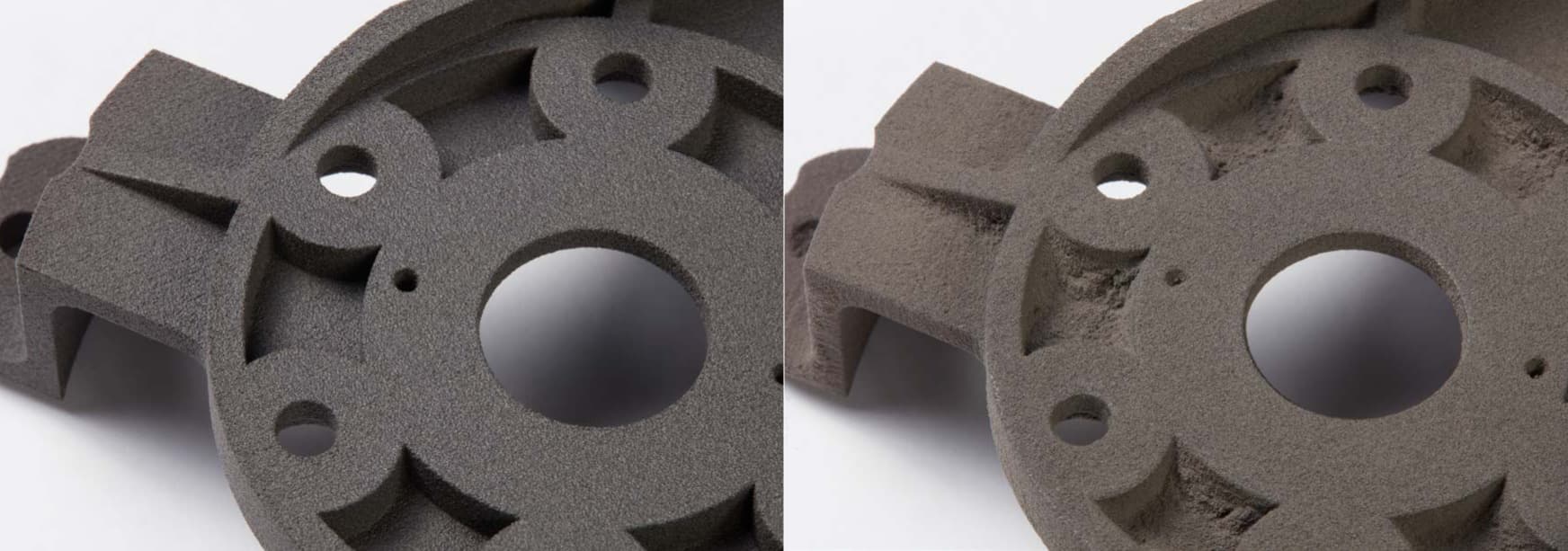
3D printed parts may require some forms of post-processing to meet the aesthetics requirements for the application or needs of the patient. Multiple post-processing techniques are applied individually or together to ensure the 3D-printed orthoses or prostheses ease a patient’s health challenges. These techniques involve:
- Sanding: The sanding process involves the use of sandpaper to smoothen 3D printed surfaces. Sanding is generally a consideration for FDM 3D printed surfaces due to obvious layering and surface roughness and is rarely required for SLS 3D printing.
- Media Blasting: Media is propelled through a high-pressure nozzle to rapidly strip away surface imperfections without removing material that would negatively impact the final part. View our guide to media blasting SLS parts.
- Coloring: There are a number of possibilities for coloring your printed part, including priming/ painting, dying, ceramic or powder coating, and more. This can help improve the aesthetic quality of the printed part and promote user acceptance. A number of these options are described in detail on the Formlabs blog.
- Vapor Smoothing: The vapor-smoothing process exposes the printed part to vaporized solvents, creating a smooth, uniform surface that has both aesthetic and mechanical advantages.
Vapor smoothing comes highly recommended because it refines surface smoothness and improves mechanical performance without affecting the printed details or dimensional integrity. The post-processing technique may be applied to a variety of 3D printing materials including nylon, TPU, TPE, ABS, and their polymers.
A vapor smoothing unit such as the AMT PostPro SF100 costs approximately $3,000 and the industrial-grade PostPro SF50 for $65,000. The Powerfuse S is another excellent option for industrial vapor smoothing. Healthcare providers can also choose to outsource the smoothing process to 3D printing service providers. This post-processing technique is executed within one to five days depending on the complexity of the printed part. The cost of vapor smoothing is approximately $2 to $7 per part for batches containing approximately a thousand 3D printed pieces or more.
Formlabs' Role in the Orthoses and Prostheses Manufacturing Community
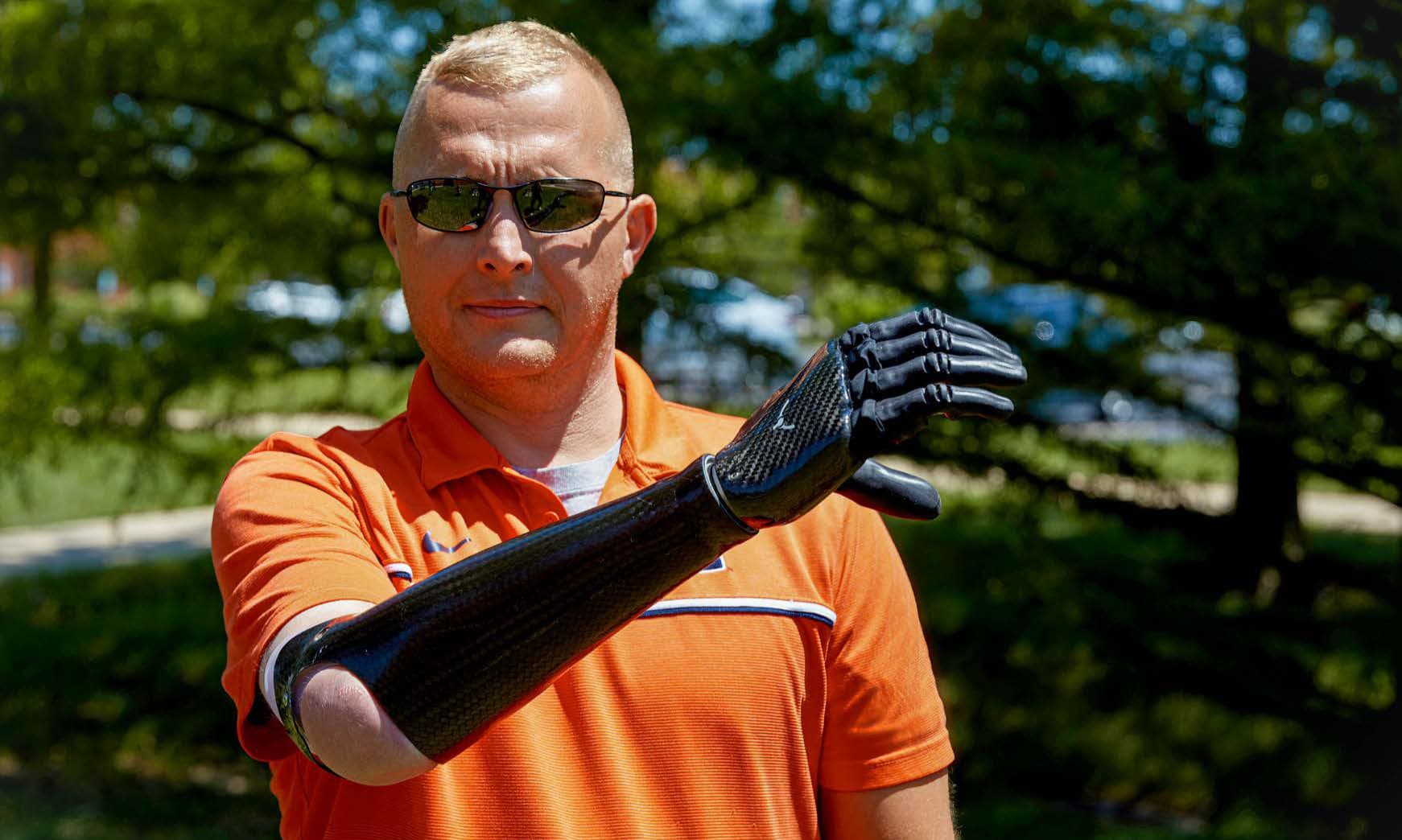
The PSYONIC Ability Hand, created with multiple 3D printing technologies, including Formlabs SLA.
The digital workflow associated with 3D printing highlights the importance of leveraging a production ecosystem that supports the entire process from scanning to post-processing 3D printed parts. To reduce cost, eliminate material waste, and speed up production timelines, it is crucial to implement a production ecosystem that ensures scanning, modification, printing, and post-processing occur symmetrically, without disruptions.
Formlabs provides orthoses and prostheses service providers with powerful tools and the technical experience required to build functional ecosystems. Service providers who intend to manufacture commercial anatomical support solutions must also consider the need for documentation to gain the product certifications required by many communities. To this end, Formlabs currently provides the orthoses and prostheses development community with:
- SLS Printing Engines: The Formlabs Fuse 1+ 3D printer is a next-generation SLS engine equipped with the features and capability to produce custom, premium-grade orthoses and prostheses for the healthcare industry. Service providers continue to leverage the Fuse 1+ and various nylon materials (Nylon 11 Powder, Nylon 12 Powder) to produce high-performing immobilization and support device for the industry.
- SLA Printing Engines: The Formlabs Form 4B and Form 4BL are built specifically for the healthcare industry. The Form 4BL, a large-format 3D printer, is designed specifically for the large-scale production of healthcare devices, including O+P applications, using a diverse array of materials. Form 4B is a compact, high production volume solution that supports the development of customized devices using biocompatible materials.
Formlabs also works in partnership with solutions providers that offer diverse services across the digital workflow. These collaborations are designed to provide a proven end-to-end workflow that includes everything from scan acquisition and shape modification, to delivering the finished 3D printed product. Partnerships across the digital process include:
- Scan Acquisition: Partnerships with Structure Sensor, Peel 3D, Amfit, and Materialise provide integrated support for scanning 3D printable anatomy models for Formlabs printing engines.
- Shape Modification/Design: Partnerships with Spentys, Mecuris, and nTopology platforms provide the healthcare industry with powerful CAD/CAM tools that complement the Formlabs PreForm 3D printing software to automate the design modification and printing process.
Formlabs-Specific Digital Process Guidance
Finding the right image acquisition for your application can be confusing. The following two charts are intended to provide some guidance for which image acquisition partners have been evaluated by Formlabs for select applications.
|
Amfit |
|||||
|---|---|---|---|---|---|
| Insoles | X | X | X | X | X |
| Toe correction | |||||
| Ankle/foot orthosis | X | X | X | X | X |
| Hip orthosis | X | X | X | X | X |
| Lower Leg, thigh & knee orthosis | X | X | X | X | X |
| Torso orthosis | X | X | X | X | X |
| Elbow, arm, wrist orthosis | X | X | X | X | X |
| Finger orthosis | X | X | X | X | X |
| Neck orthosis | X | X | X | X | X |
| Helmet / Head | X | X | X | X | X |
|
Creality |
||||
|---|---|---|---|---|
| Insoles | X | X | X | X |
| Toe correction | ||||
| Ankle/foot orthosis | X | X | X | |
| Hip orthosis | X | X | X | |
| Lower Leg, thigh & knee orthosis | X | X | X | |
| Torso orthosis | X | X | X | |
| Elbow, arm, wrist orthosis | X | X | X | |
| Finger orthosis | X | X | X | |
| Neck orthosis | X | X | X | |
| Helmet / Head | X | X | X |
Choosing the Right 3D Printer by Scale
The following chart provides guidance for application suitability with regard to print size, however, some applications may vary by age, body size, material properties, or part design. As appropriateness will include considerations for both scale and mechanical properties, care should be taken to ensure material properties are adequate for the intended use.
| Example Applications Adult Sized |
Form 3B+ |
Form 3BL |
Fuse 1+ 30W |
|---|---|---|---|
| Finger Orthosis | X | X | X |
| Hand & Wrist Orthosis | X | X | X |
| Ankle & Foot Orthosis | X | X | |
| Hip Orthosis | X | X | |
| Insoles | X | ||
| Corrective Bracing | X | X | X |
| Cranial Orthosis / Protective Helmets | X | X | |
| Prosthetic Liner | X | ||
| Definitive Sockets | X | X | |
| Manufacturing Molds | X | X | X |
| Medical Casts | X | X | |
| Fairings | X | X | |
| Prosthetic Attachments | X | X | X |
| Robotic / Bionic Prostheses | X | X | X |
| Exoskeleton Components | X | X | X |
Choosing the Right Material
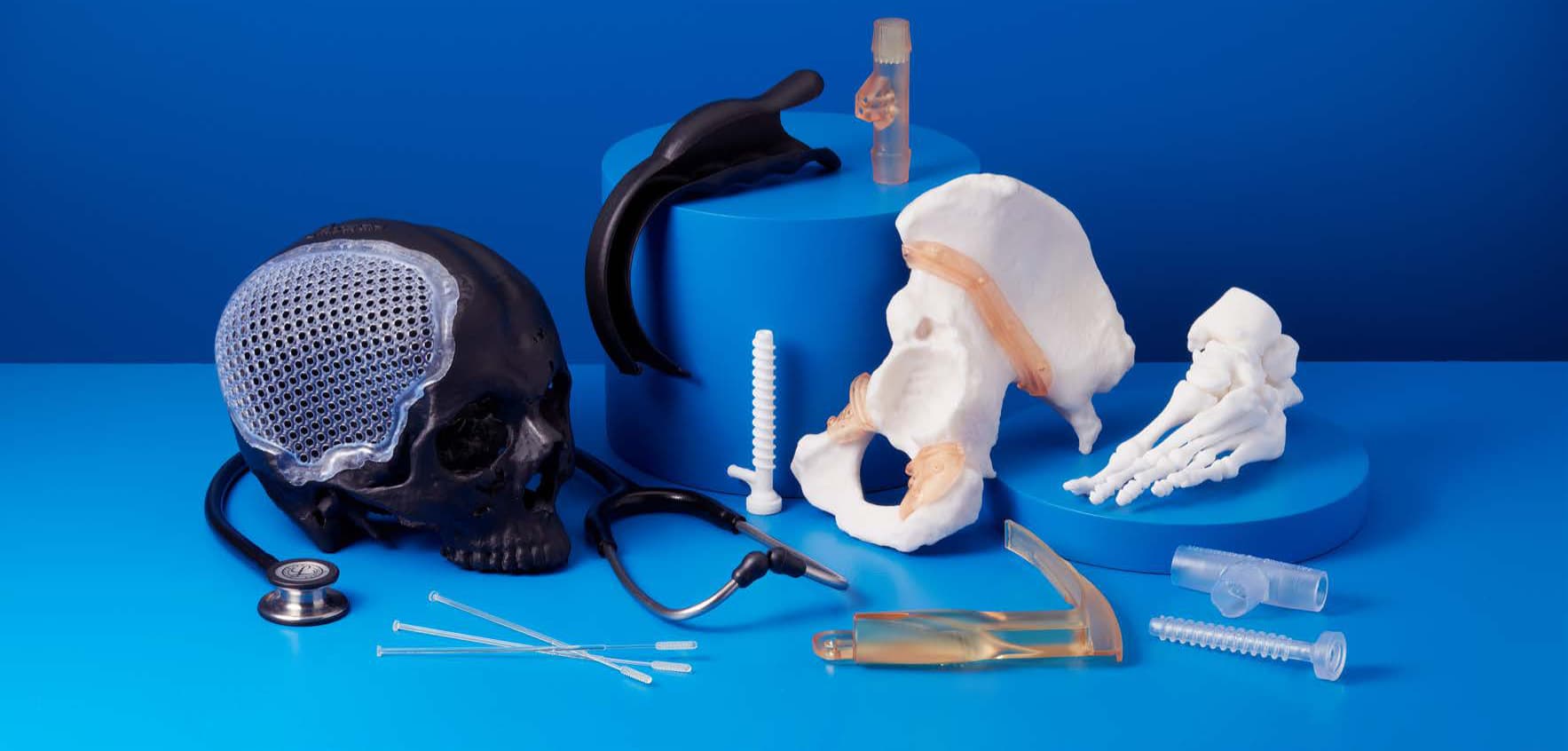
3D printers such as the Form 3B+ offer a wide range of medical materials.
Formlabs material library includes over 30 materials, including biocompatible and engineering options. The following chart is a curated list of materials commonly used in healthcare applications. We’ve provided key material properties sorted by ductility for comparison. A more inclusive list of Formlabs Materials can be found on our website.
| Material | IZOD Notched J/m |
Tensile Strength MPa |
Tensile Modulus GPa |
Elongation % |
Flexural Modulus MPa |
Heat Deflection °C @ 0 .45 MPa |
|---|---|---|---|---|---|---|
| LFS Technology (Form 3B+ and Form 3BL 3D Printers) | ||||||
| Rigid 10K | 16 | 65 | 10 | 1 | 9000 | 163 |
| Grey | 16 | 65 | 2.8 | 6.2 | 2200 | 73 |
| Grey Pro | 19 | 35 | 1.4 | 33 | 2200 | 78 |
| Tough 2000 | 40 | 46 | 2.2 | 48 | 1900 | 63 |
| Tough 1500 | 67 | 33 | 1.5 | 51 | 1400 | 52 |
| PU 1000* | 170 | 35 | 0.92 | 80 | 750 | 64 |
| Durable | 114 | 28 | 1 | 55 | 660 | 41 |
| PU 650* | 375 | 34 | 0.67 | 170 | 570 | 59 |
| SLS Technology (Fuse 1 and Fuse 1+ 30W 3D Printers) Sorted by Least Ductile to Most Ductile |
||||||
| Nylon 11 CF | 74 | 52 | 2.8 | 15 | 4200 | 188 |
| Nylon 12 GF | 36 | 38 | 2.8 | 3 | 2400 | 170 |
| Nylon 12 | 32 | 50 | 1.85 | 11 | 1600 | 171 |
| Nylon 11 | 71 | 49 | 1.6 | 40 | 1400 | 182 |
* Ross Flexural Cycles (ASTM D 1052 @ 23 °C): >50,000 cycles.
* PU 650 and PU 1000 require strict humidity controls for successful printability.

Extending Orthoses and Prostheses Manufacturing With 3D Printing
Advancements in 3D printing technology currently coincide with current progress across the healthcare sector. Next-generation 3D printers provide orthoses and prostheses service providers with powerful manufacturing tools to bring complex and innovative solutions to life. Commercial medical-device manufacturers looking to take advantage of the projected growth within the industry can also take advantage of digital manufacturing processes powered by 3D printing. Learn more about improving the orthoses and prostheses R&D and manufacturing processes with 3D printing by speaking with a Formlabs medical experts.