
Nylon 12. Versatile go-to powder with the superior dimensional accuracy and detail
A SIDE-BY-SIDE COMPARISON Contact Sales
Formlabs Fuse X1 vs. EOS P3 Next
Looking for a large-format industrial 3D printer for producing strong, long-lasting parts? See why Formlabs Fuse X1 is the leading industrial SLS 3D printing platform.
Compare the Formlabs Fuse X1 vs. EOS P3 Next
Formlabs Fuse X1
Costs
Formlabs Fuse X1
Starting at $84,999
The Fuse X1 starts at $84,999 for the printer, while the full ecosystem is available for less than a third of the price of an HP Jet Fusion 5600 ecosystem.
Buy directly from Formlabs via sales or locally from a worldwide partner network.
MATERIAL COSTS
$45–65/kg
The most common general-purpose Nylon 12 Powder costs $99/kg, while other high-performance or more niche materials are offered at only a slight premium.
Significant discounts are available for high-volume orders, starting at 20% for customers purchasing 50 kg of powder in bulk, and prices can reach as low as $45 per kilogram.
ANNUAL OPERATING COSTS
$20,000
Service plan for Fuse X1 costs $12,300 / year with the 5-year service plan pricing (two years free), software is free, and labor costs are estimated to be $7,500.
Print Technology
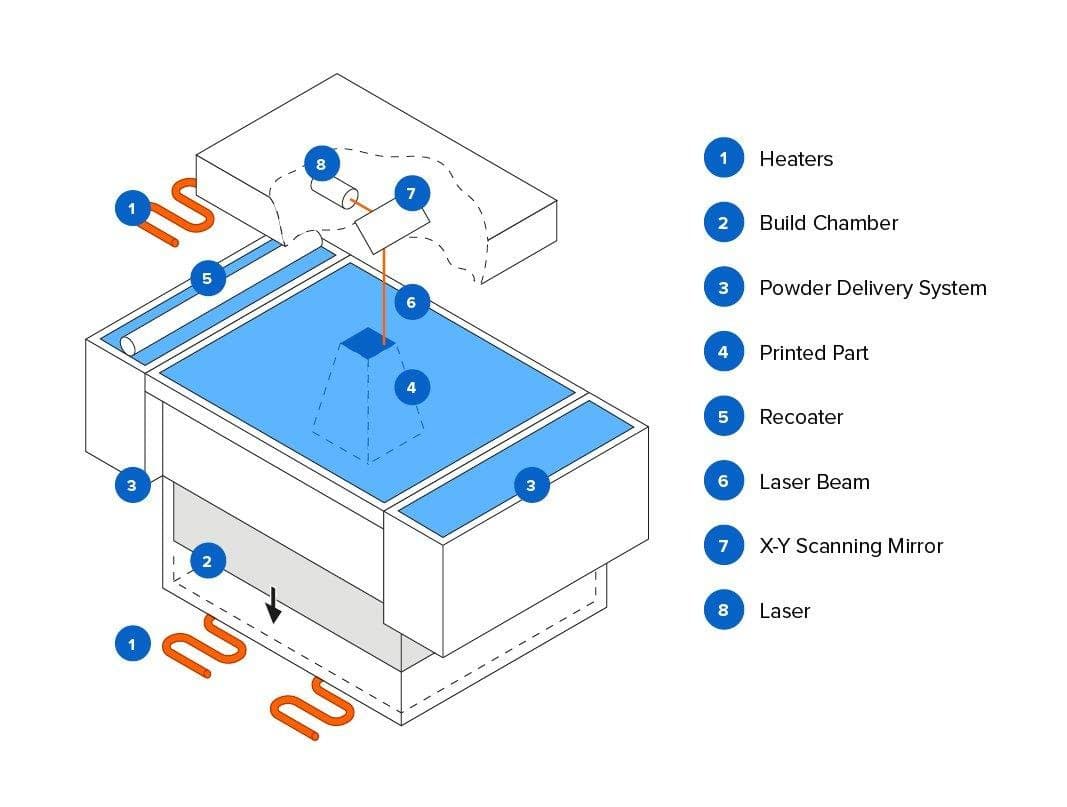
Selective Laser Sintering (SLS)
The Fuse X1 is the first benchtop industrial SLS 3D printer that offers high quality, compact footprint, and a complete, simplified workflow at a fraction of the cost of traditional industrial SLS systems.
Build Volume
61.5L
330 × 330 × 565 mm
13.0 x 13.0 x 22.2 in
Packing density
30%+ vol / 48%+ mass
Packing density directly determines cost per part, material waste, and throughput. Fuse X1's 30%+ volume / 48%+ mass packing density is the highest among powder bed fusion 3D printers and the single biggest operational differentiator.
Throughput
0.33 kg/hr
Efficiency
Minimal waste
Parts in the Fuse X1’s build chamber can be packed tightly together to maximize density. Thanks to the 30% powder refresh rate for Nylon 12 Powder, you can print with up to 70% recycled powder for unlimited cycles. This means that you can print with minimal waste for tightly packed production builds.
Materials
Formlabs Fuse X1
Four validated materials, more in development
Fuse X1 supports four materials, including nylon 12 (standard, glass-filled**) nylon 11*, and TPU**.
*Available by the end of 2026.
**Available by June 2027.
More materials are in development.
Open Ecosystem
Print with any 1064 nm powder with Open Material Mode.
MATERIAL CHANGEOVER
Multi-material capable
Switching materials is possible within a few hours. Due to the lower hardware costs, it's also substantially cheaper to build out a multi-material fleet.
Post-processing
Formlabs Fuse X1
35-40 min from print to finished part
Go from printed to finished parts in as little as 35 minutes with the streamlined Fuse Series post-processing workflow. Fuse Sift X1 provides semi-automated depowdering in about 15-20 minutes, while Fuse Blast automatically cleans and media blasts parts in just 20 minutes, delivering a uniform dark gray finish that is ready for end use. Dyeing is optional, and vapor smoothing is not required for most applications. Total active labor from print to finished part is approximately 20-25 minutes.
Workflow
SETUP
Small floorspace, 1-hour install, zero facility retrofit
Fuse X1 is compact enough that it fits through a standard door and requires only 1-hour to install. Thanks to its small footprint, you can fit many into a facility, and it runs on standard power, so generally doesn’t require any facility retrofit.
Footprint: 12.5 sq ft
Power requirements: 1-phase 200–240V / 30A
EASE OF USE
Anyone can use
From print setup to powder recovery, our easy-to-use hardware and software are designed to maximize your efficiency at every step of the process. Easy workflow empowers anyone at your company to use the system independently after a quick 1-hour training.
MAINTENANCE
Simple, 5 minutes print-to-print
The Fuse X1 is designed for minimal upkeep. The system offers proactive maintenance alerts and a full-color touchscreen interface guides you through every step of printing and maintenance. The hopper-based powder delivery system enables completely contained powder loading. The self-regulating dosing system paired with adaptive dosing algorithms minimizes wasted powder in the print process.
Software
Formlabs Fuse X1
Powerful, easy to use, free, and updated regularly
Formlabs' free print preparation software, PreForm®, makes it easy to set up a print in minutes and offers the industry-leading packing algorithm to maximize efficiency. PreForm is available for both Windows and Mac. You can also use the online Dashboard to manage a fleet of printers, monitor prints, track materials and consumables, and work with your team. PreForm is updated regularly with new features.
Service
Formlabs Fuse X1Explore the Fuse Complete Service Plan
Premium service worldwide without premium price
Formlabs offers up to five years of premier support service for Fuse X1 customers with direct phone and email support, customized remote training, on-site visits and repairs from local certified SLS experts, annual preventative checkups, and worry-free warranty — worldwide.
The service plan costs $20,500 / year for a single year of service. To save the cost of 2 years up front, choose the 5-year service plan for $12,300 per year.
EOS P3 Next
Cost
EOS P3 Next
Starting at $300,000
EOS P3 Next printers start around $300,000, while the whole ecosystem with all post-processing equipment requires a more than $400,000 initial investment.
MATERIAL COSTS
$70-80/kg
Material pricing for EOS powder is opaque, there's no publicly available information.
ANNUAL OPERATING COSTS
$70,000
Service plan for EOS P3 Nextprinters costs $35,000 per year, software $20,000 per year, while labor costs are estimated to be $15,000. Higher labor cost driven by more labor-intensive workflow and more complex maintenance.
Print Technology
Selective Laser Sintering (SLS)
EOS's legacy large-format industrial SLS 3D printers offer high quality, but come with a much larger footprint, complex workflow and facility requirements, and substantially higher costs.
Build Volume
69L
340 x 340 x 600 mm
13.3 x 13.3 x 23.6 in
Packing density
20% vol / ~35% mass
Due to the less sophisticated temperature control and different architecture, the maximum packing density on EOS P3 Next printers is substantially lower than on Fuse X1.
Throughput
~0.11 kg/hr
Efficiency
Wasteful
While some materials support refresh rates as low as 30%, EOS's flagship material, PA2200, has a refresh rate of 50%. Combined with its lower maximum packing density, this makes it more difficult to optimize builds for minimal waste. As a result, most customers are forced to discard a significant amount of powder.
Build Volume
EOS P3 Next
Eight materials
EOS offers eight materials for the P3 Next, including nylon 12 (white, grey, glass-filled, carbon-reduced), nylon 11, and aluminide.
Open Ecosystem
MATERIAL CHANGEOVER
Single-material operation
Switching materials is extremely complex, time-consuming, and is generally not advised.
Materials
EOS P3 Next
Less user-friendly, labor-intensive
The post-processing workflow for EOS SLS printers is similar to the Fuse X1, but it is less operator-friendly and requires significantly more active labor, with several manual steps that can take hours. The standard breakout station is undersized for handling large volumes of powder and can be messy. In single-printer setups, powder is typically transferred by hand using buckets, mixed in cement mixers, and manually loaded back into the printer.
Software
SETUP
Large floorspace, multi-day installation, facility upgrades required
EOS P3 Next printers have a large footprint and require multi-day, on-site installation, making them difficult to deploy in many facilities. They also require industrial power, often necessitating costly facility upgrades.
Footprint: 27.8 sq ft (2.2× Fuse X1)
Power requirements: 3-phase, 32A
EASE OF USE
Requires a skilled AM technician
EOS SLS 3D printers have a much more complex workflow. Technicians need to go through a 3-day operator course; as a result, most companies limit access to a few skilled technicians.
MAINTENANCE
Complex, 30-60 minutes print-to-print
EOS SLS 3D printers require technicians to complete a long list of manual maintenance tasks in between each print, which can take 30 to 60 minutes. This results in higher labor needs and lower productivity.
Workflow
EOS P3 Next
Expensive and complex
EOS SLS printers require a paid subscription to EOSPRINT software, and customers are advised to use third-party software like Materialise Magics for packing builds, for an additional $20,000 per year.
Workflow
EOS P3 Next
Premium service worldwide at an excessive price
EOS P3 Next printers come with a compulsory service plan that costs $35,000 / year and offers a similar list of benefits.
Do you have more questions about the differences between these solutions?
Request a Free Sample 3D Print
See and feel Formlabs quality firsthand. We’ll ship a free sample part to your office.
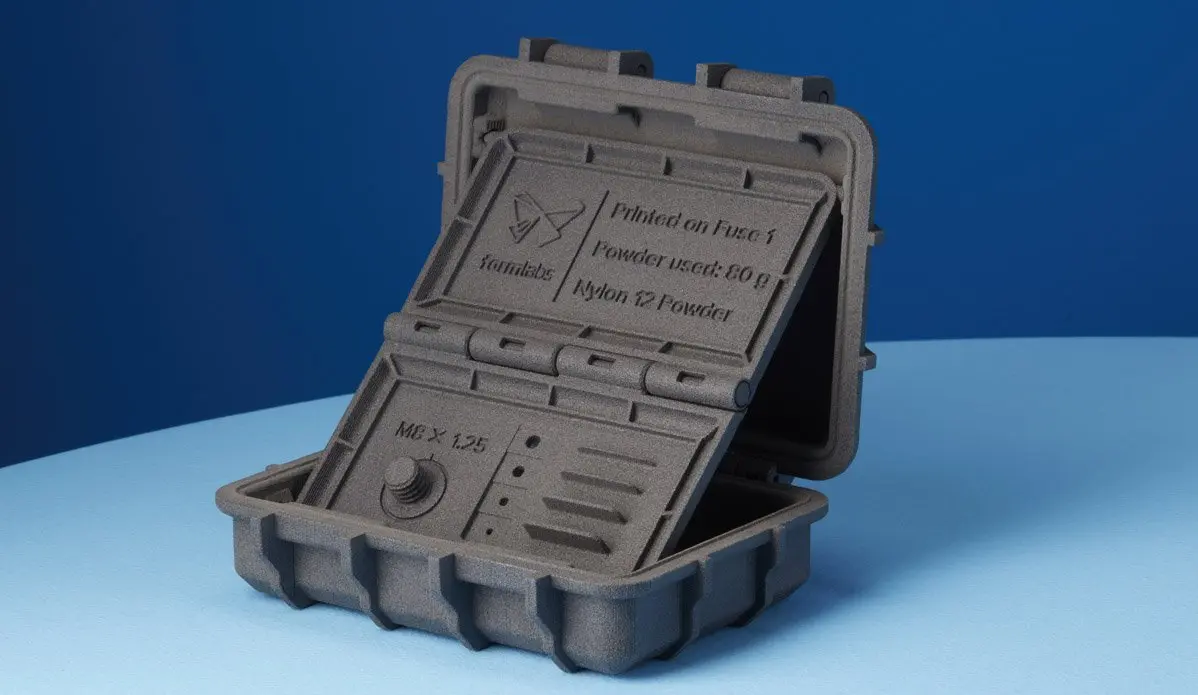
Deliver full-size parts overnight, or production runs of your latest design.
Build Volume
7.5x
Larger than Fuse 1+ 30W
Fuse X1
330 x 330 x 565 mm
13 x 13 x 22.25 in
Fuse 1+ 30W
165 x 165 x 300 mm
6.5 x 6.5 x 11.8 in
Production Batches
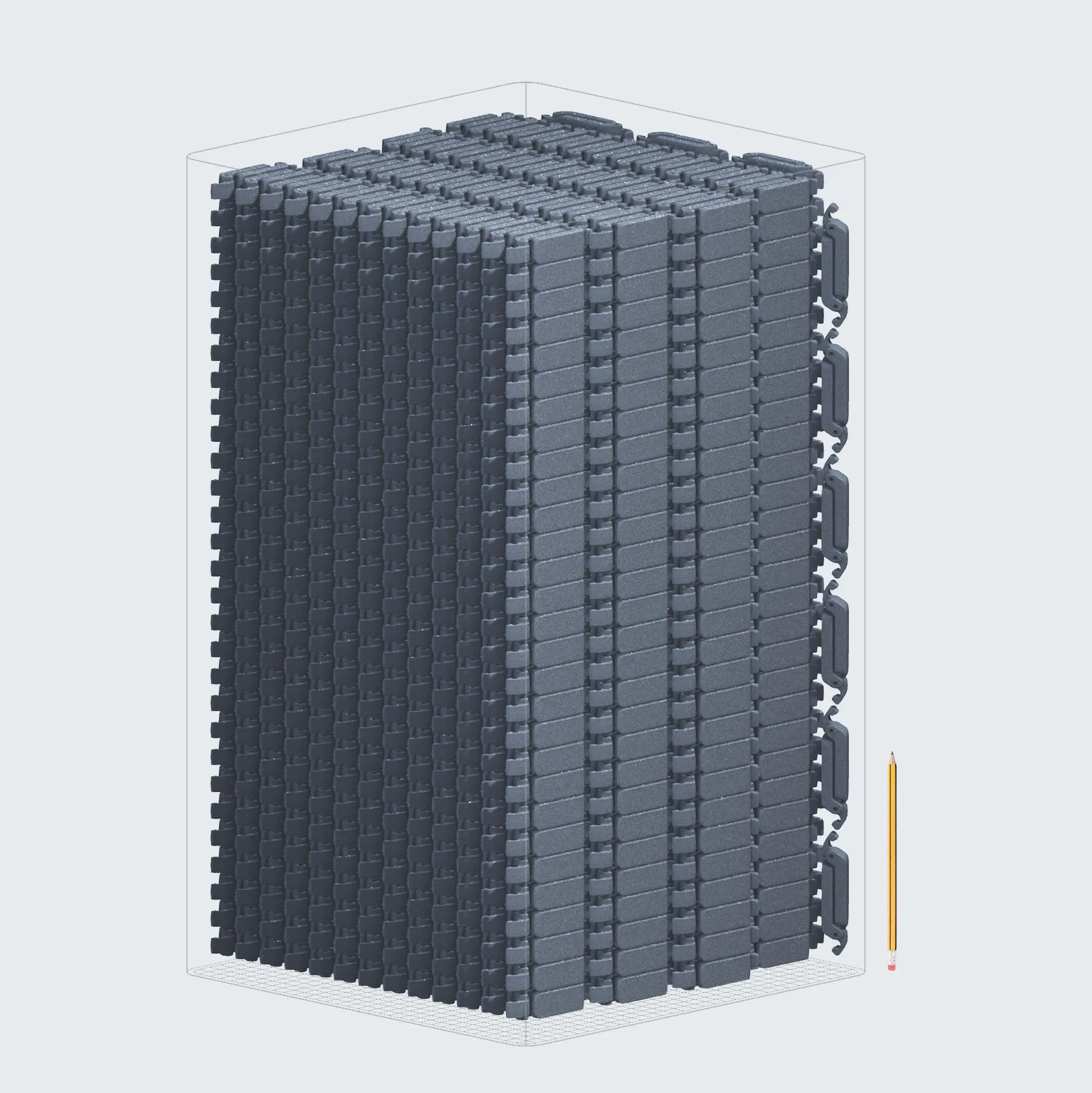
3280 Parts
41.5 hours
41% mass pack density
High Mix Builds
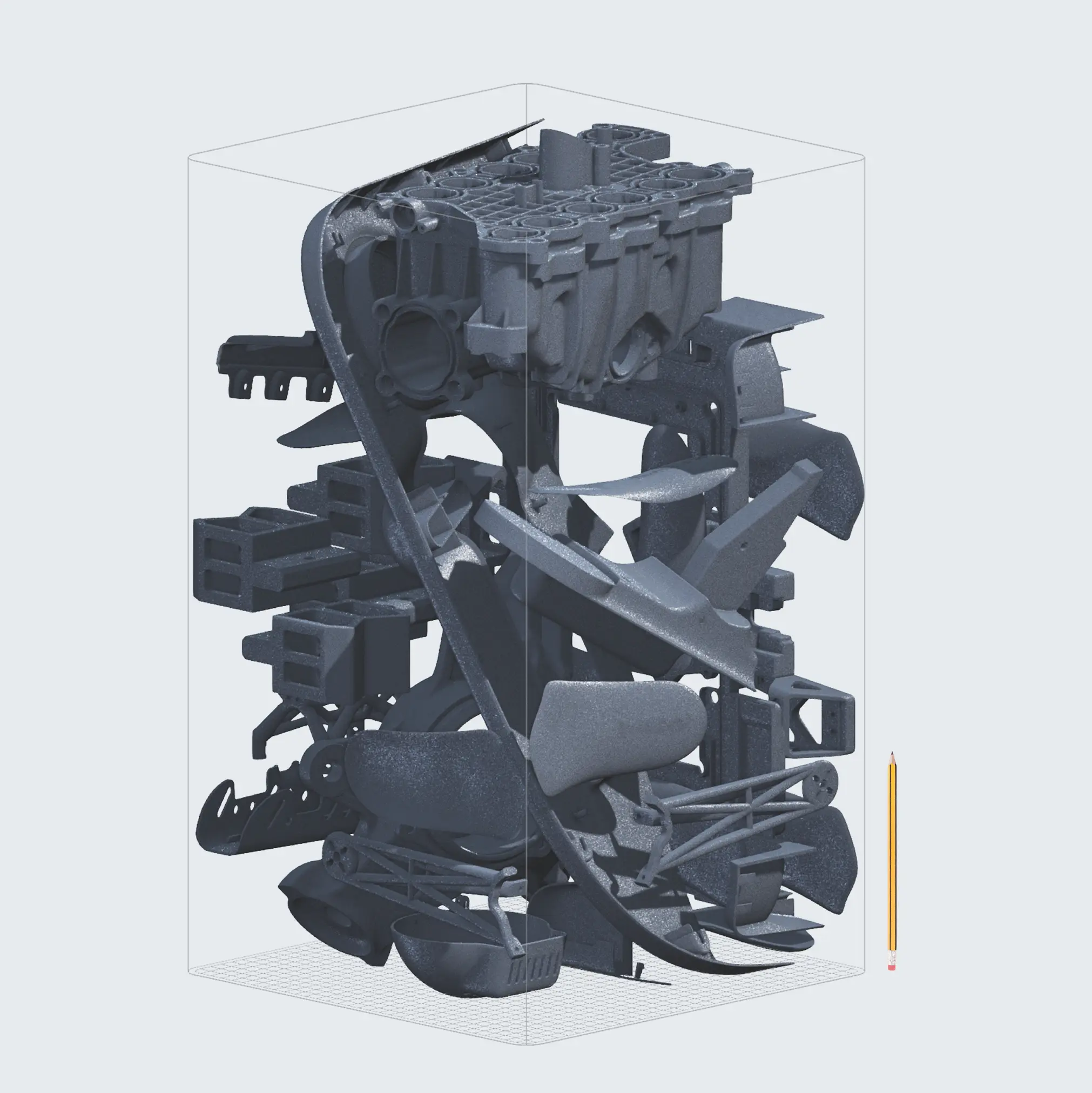
29 Parts
22.5 hours
10% mass pack density
Full Scale Prototypes
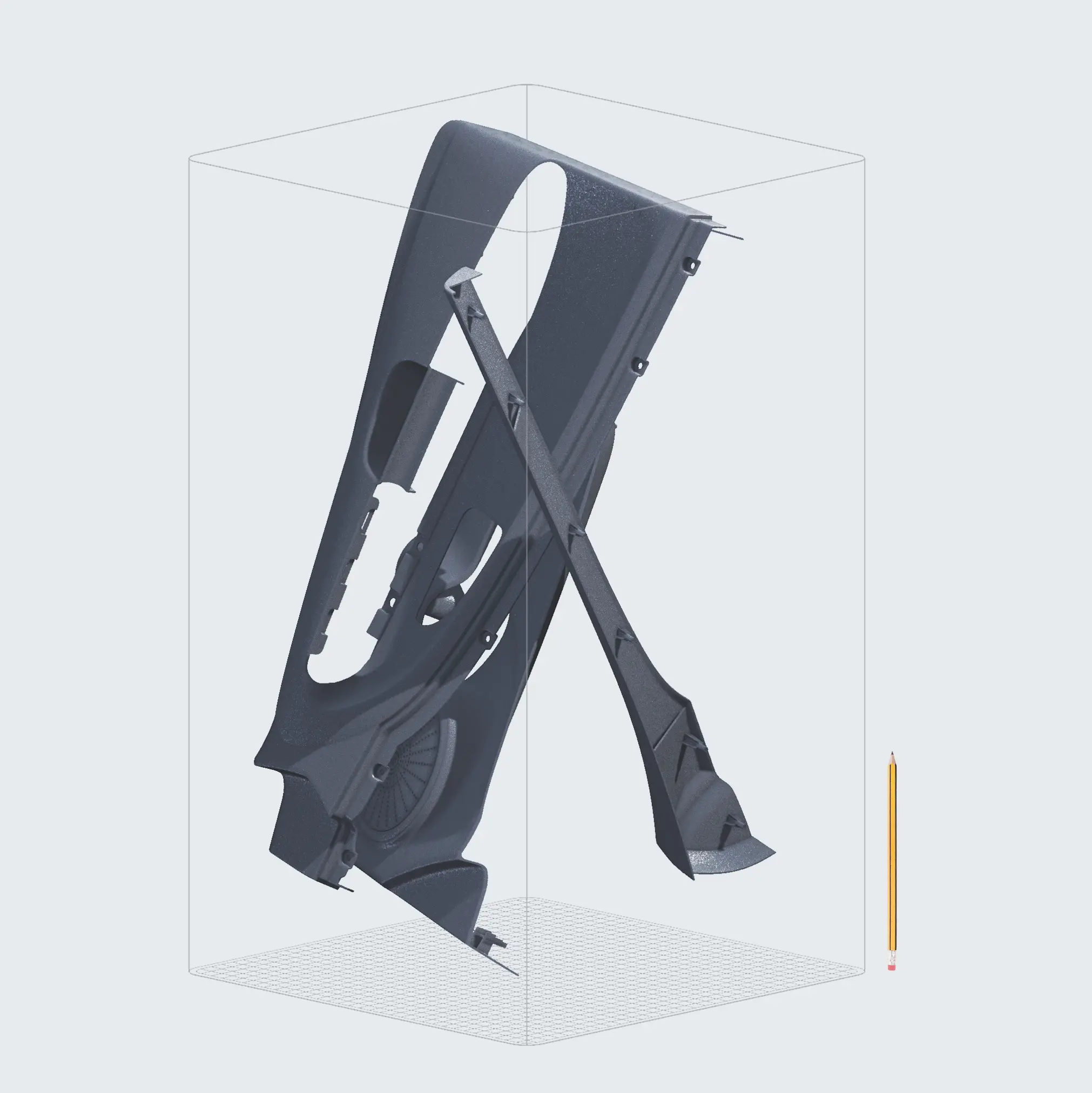
3 Parts
21 hours
2% mass pack density
Case Study: Radio Flyer
How Fuse X1 Helps Radio Flyer Shorten Prototyping Timelines by 90% With 9x Less Labor
“With Fuse X1, we can now print an entire Flyer Loop cargo ebike overnight and be gluing it together the next day. So we went from two months to two weeks to a couple of days.”
Agostino LoBello, Product Development Engineer, Radio Flyer
Scale production, not overhead with 50% lower cost per part.
- $59Fuse X1per frameLead time: 2 days
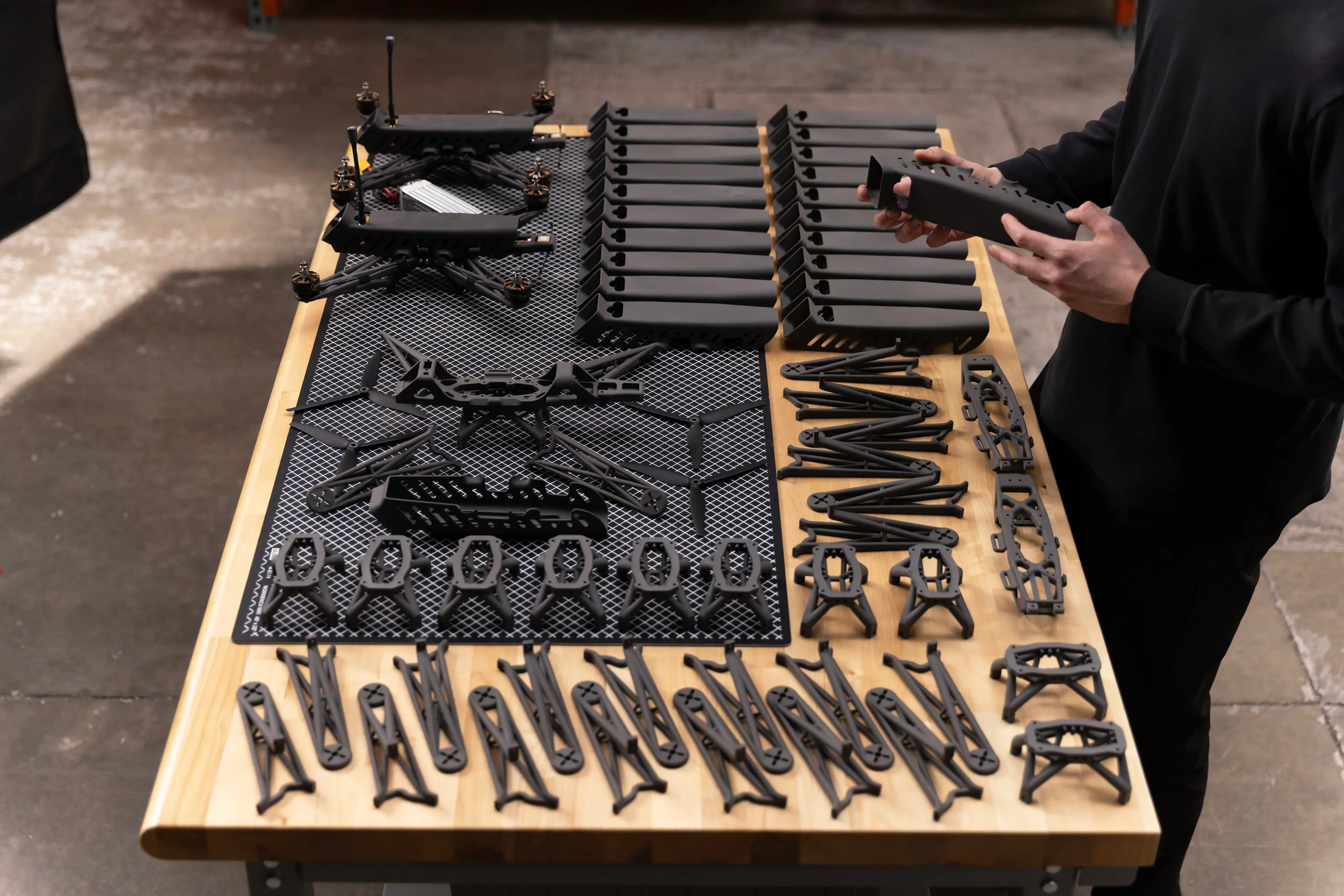 $239OutsourcedLead time: 14 days$115Legacy SLSLead time: 5 days
 - $792Fuse X1per doorLead time: 3 days
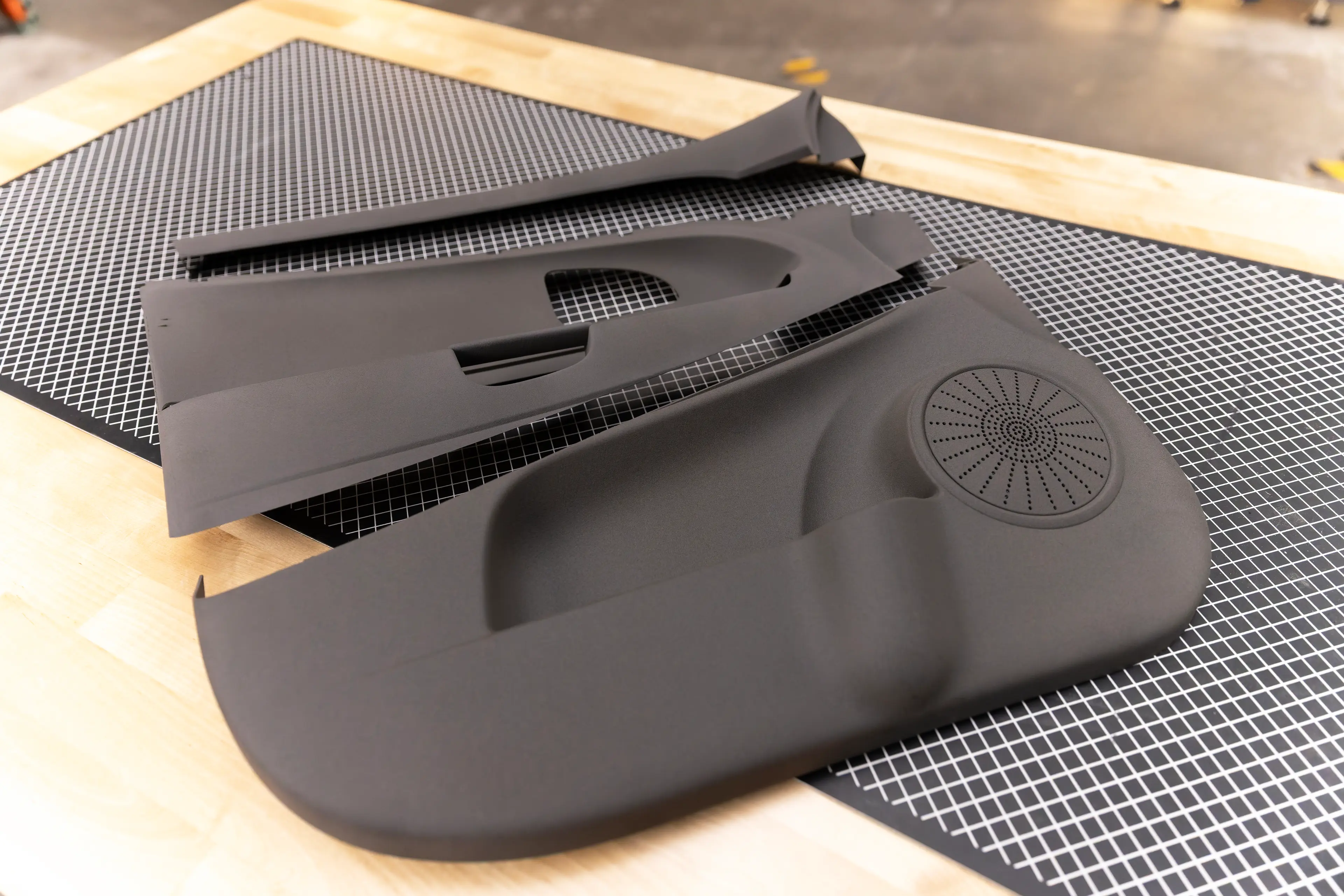 $1853OutsourcedLead time: 14 days$1307Legacy SLSLead time: 5 days
 - $0.5Fuse X1per latchLead time: 5 days
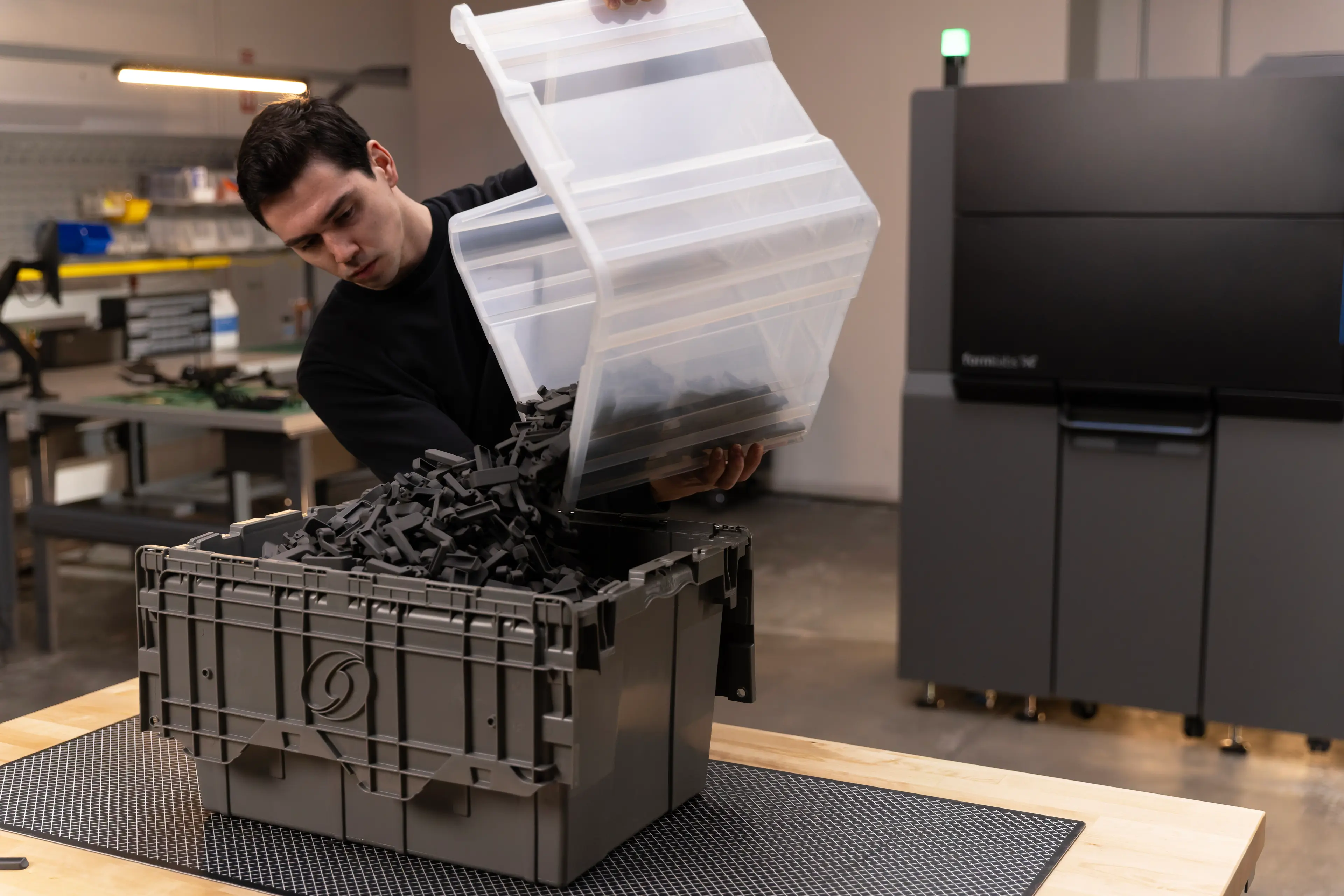 $22OutsourcedLead time: 14 days$1.56Legacy SLSLead time: 7 days
 - $990Fuse X1per frameLead time: 3 days
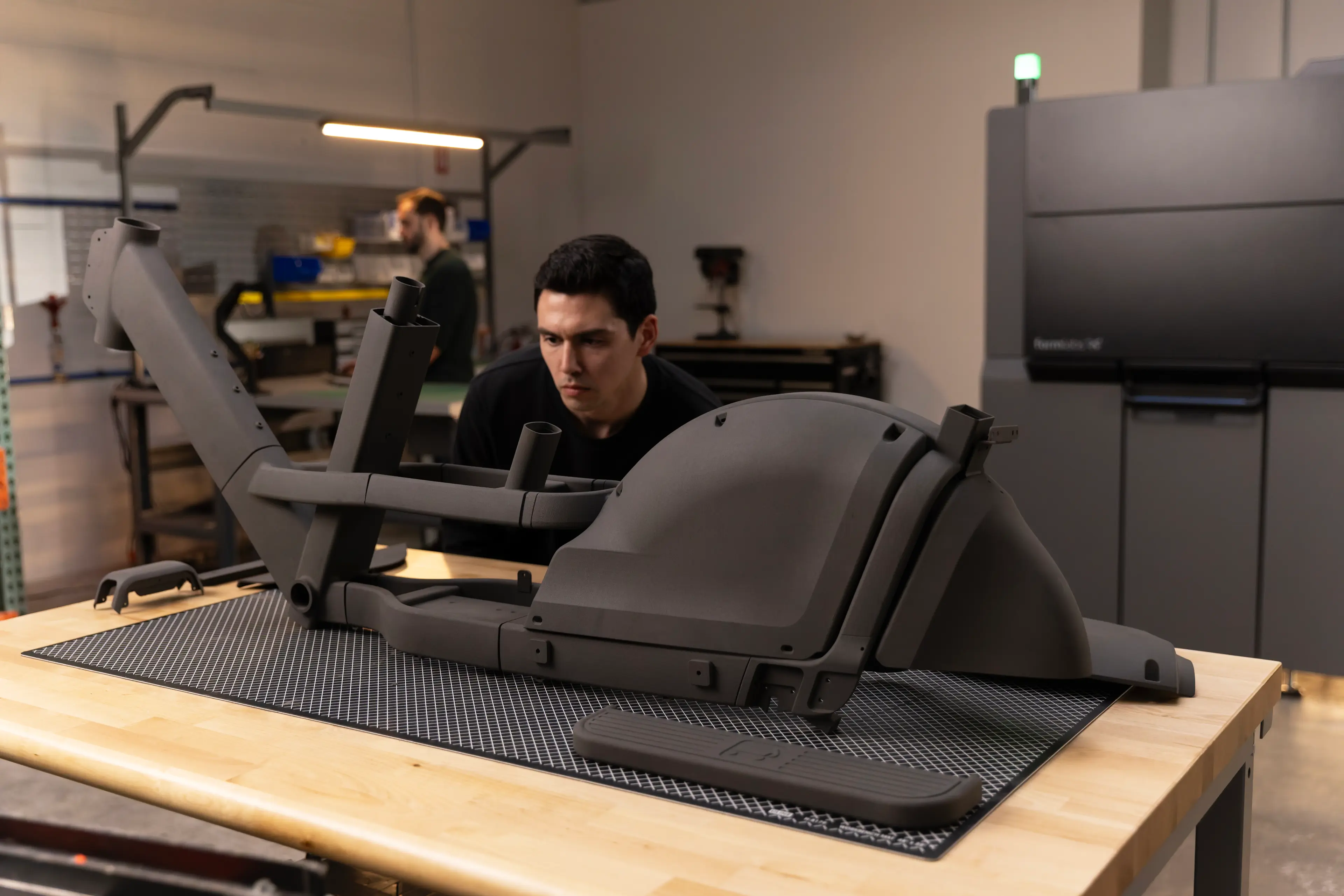 $3623OutsourcedLead time: 14 days$3010Legacy SLSLead time: 5 days
Case Study: Autotiv Manufacturing
3x the Throughput, Half the Size: How Fuse X1 Enabled a Service Bureau to Scale SLS
“The Fuse X1 has returned on investment about five times faster than comparable SLS systems that we already own and are evaluating, thanks to about half the upfront cost and about double the throughput. You can get a return on investment extremely quickly.”
Evan LaBelle, CEO, Autotiv Manufacturing
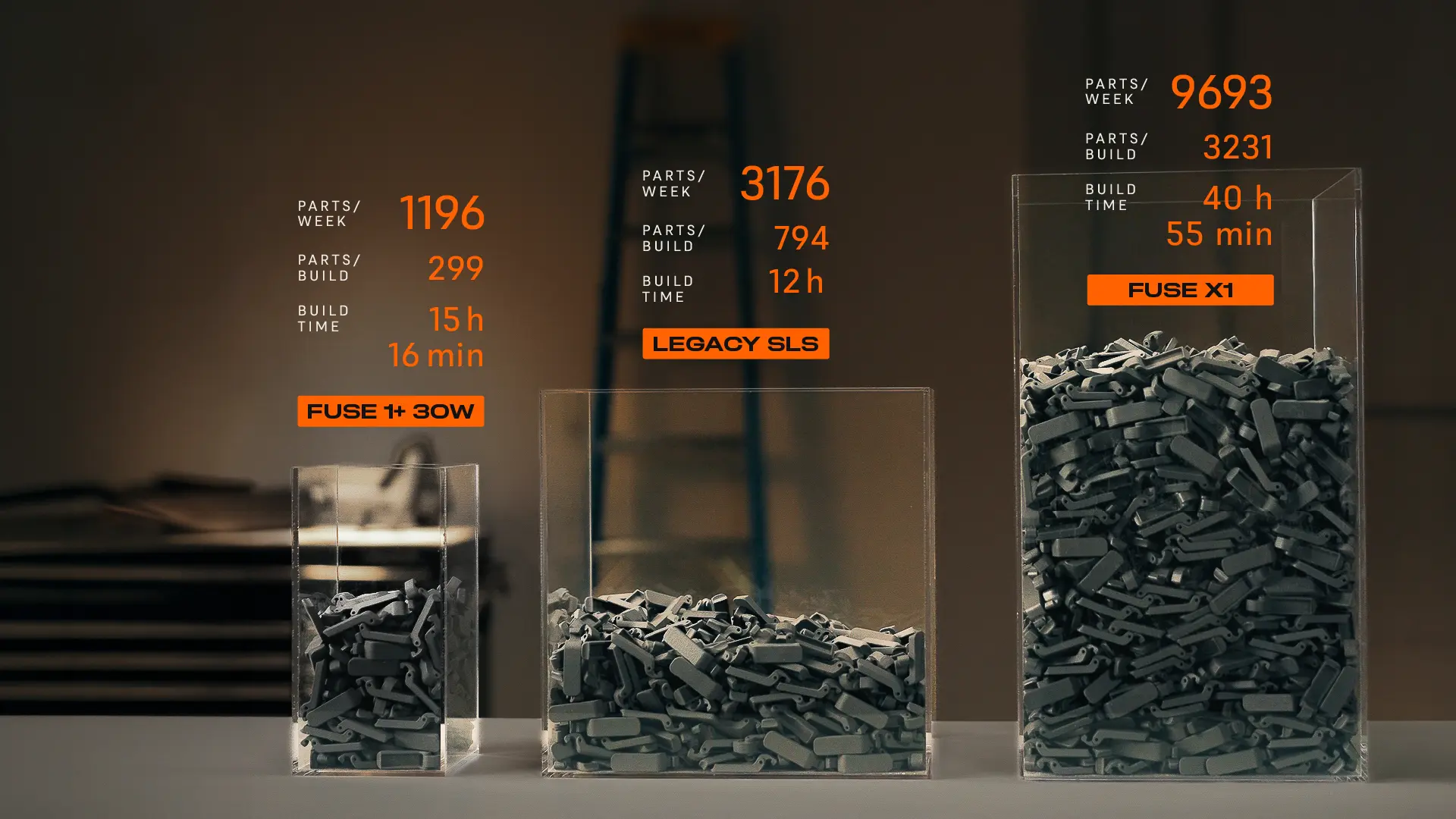
Productive no matter how you measure it. Fuse X1 delivers 3x higher throughput in less than half the floor space.
More Parts Per Build
With 30%+ packing density and a 61.5L build volume, the Fuse X1 fits more parts in a single build than competing industrial SLS and MJF systems, adding up to thousands more parts per week.
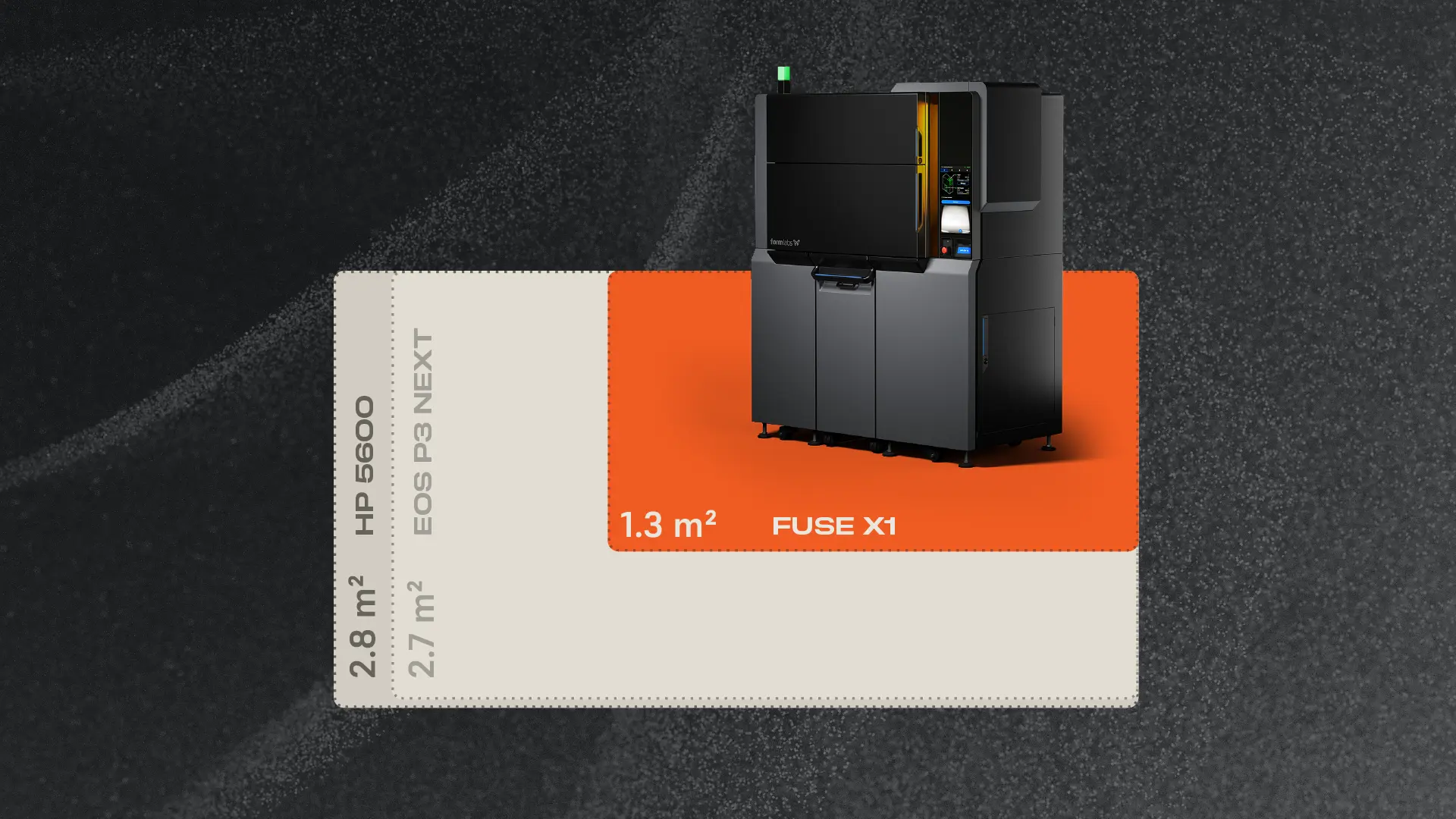
Fits Where Others Can't
At just 1.3 m², the Fuse X1 takes up less than half the floor space of an HP 5600 (2.80 m²) or EOS P3 Next (2.70 m²). It rolls through a standard doorway, so you can install production-scale SLS without rebuilding your floor plan.
Case Study: Tesla
How Tesla Giga Nevada Prints 20,000 Parts a Month Instead of Injection Molding With Fuse X1
“With the increased throughput and decreased costs, Fuse X1 has completely changed our perspective on what kinds of projects our lab can support versus what we would have traditionally moved to an injection mold.”
Cody Jepson, Engineering Technician, Additive Manufacturing at Tesla Giga NV
Print Intelligence, an industry-first, AI-powered print failure prevention system.
How It Works
The Fuse X1 is the most reliable SLS printer ever developed. By combining computer vision with Adaptive Temperature Control, Print Intelligence detects anomalies in real time and automatically masks the affected area, preventing print failures and maximizing part yield without sacrificing the rest of the build.
The Power Behind the Fuse X1
Using thermal imaging, Adaptive Temperature Control collects and processes 700 times more data per second than the Fuse 1+ 30W. That data drives 13 independent thermal zones that deliver, maintain, and sinter powder at an incredibly precise and stable temperature from the first layer to the last, giving you unlimited packing freedom and exceptional part quality.