
Mechanical Performance of Alumina 4N Resin at Extreme Temperatures
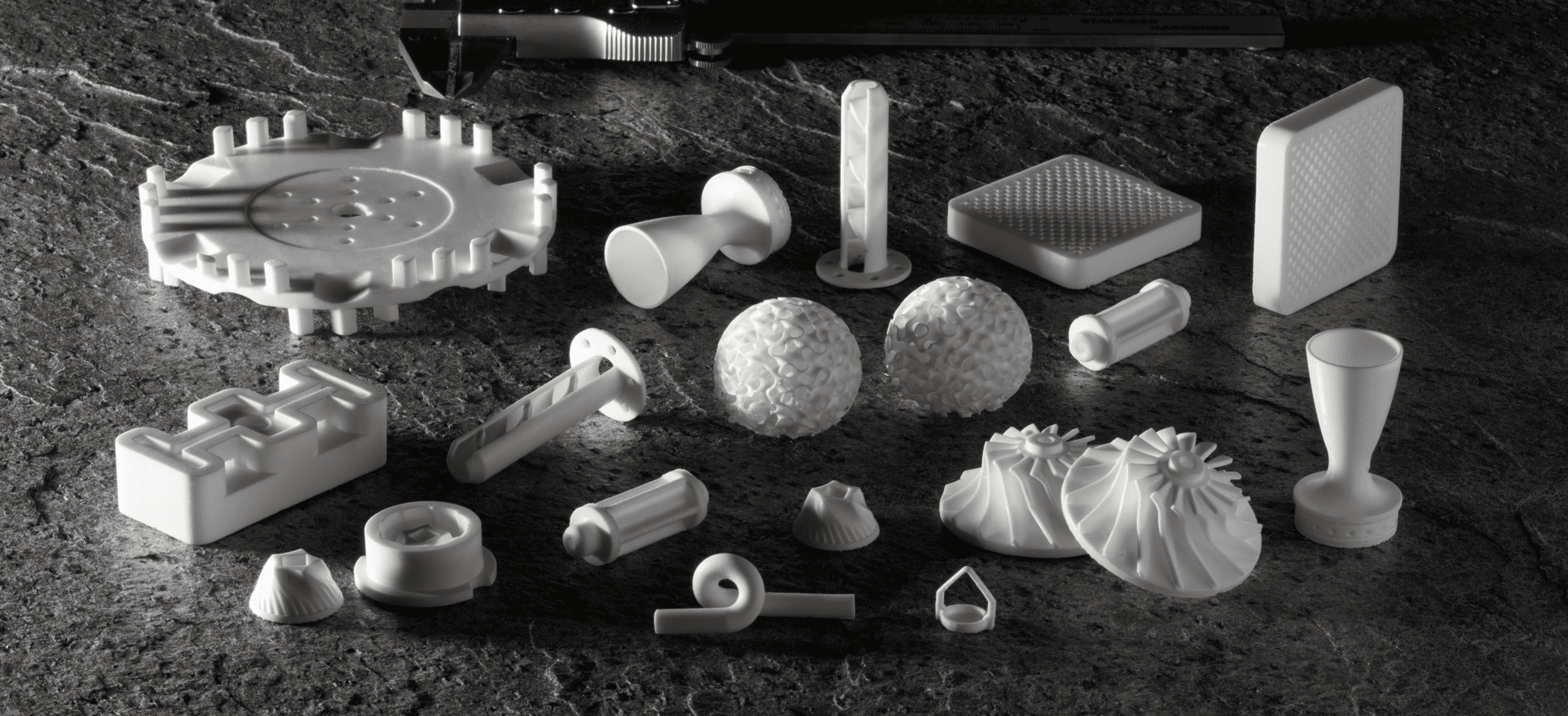
Formlabs introduced the first accessible, affordable, high-performance technical ceramic 3D printing material for stereolithography (SLA) 3D printers. Alumina 4N Resin is a 99.99% purity alumina material that combines the workflow flexibility and design freedom of 3D printing with the industrial and high-performance possibilities of technical ceramics. Alumina 4N Resin is ideal for use in high temperatures (beyond 1500 °C), insulative, or abrasionresistant applications — such as electrical testing, engineering research, or traditional foundry and casting processes. When customized or low-volume parts are necessary in these situations, 3D printing with Alumina 4N Resin is a cost-effective, highly accurate, and rapid solution, but does not sacrifice any mechanical properties that technical ceramic users are looking for. To provide more information regarding how those mechanical properties change in response to extreme temperatures, Formlabs has conducted testing, and this white paper will share those results.
Mechanical Performance of Alumina 4N Resin at Extreme Temperatures
Formlabs introduced the first accessible, affordable, high-performance technical ceramic 3D printing material for stereolithography (SLA) 3D printers. Alumina 4N Resin is a 99.99% purity alumina material that combines the workflow flexibility and design freedom of 3D printing with the industrial and high-performance possibilities of technical ceramics. Alumina 4N Resin is ideal for use in high temperatures (beyond 1500 °C), insulative, or abrasionresistant applications — such as electrical testing, engineering research, or traditional foundry and casting processes. When customized or low-volume parts are necessary in these situations, 3D printing with Alumina 4N Resin is a cost-effective, highly accurate, and rapid solution, but does not sacrifice any mechanical properties that technical ceramic users are looking for. To provide more information regarding how those mechanical properties change in response to extreme temperatures, Formlabs has conducted testing, and this white paper will share those results.
What is Alumina 4N Resin?
Formlabs developed Alumina 4N Resin to address the need for a technical ceramic workflow that wasn’t prohibitively expensive and complicated. Previously, ceramics made for 3D printing were often only available for systems that cost upwards of $250,000, and came with complex workflows that limited users’ ability to reliably, consistently, and affordably produce 3D printed ceramic parts.
Alumina 4N Resin answers these challenges by combining the materials science and engineering behind technical ceramic materials with the ease of use, consistency, and affordability of Formlabs 3D printers.
Applications of Alumina 4N Resin
Alumina 4N Resin, like any technical ceramic, can be used in applications that require extreme heat, chemical, or electrical resistance. Ceramics have almost always been used in these applications, but 3D printed ceramics have typically not been able to match the mechanical properties of traditionally fabricated ceramic parts. Alumina 4N Resin, with a 99.99% purity, can achieve the heat and chemical resistance required for highly complex applications.
Though there are still many applications where traditional ceramic parts are cost-effective, 3D printable ceramics like Alumina 4N Resin have the advantage where the situation calls for complex geometry, iterative changes, or customization.
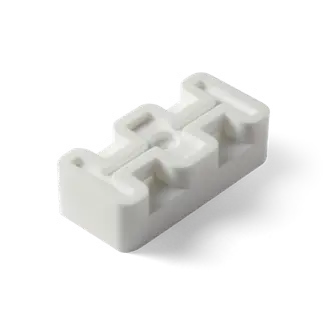
High-Voltage Applications
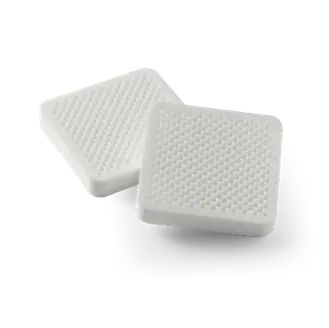
Thermal Protective Parts
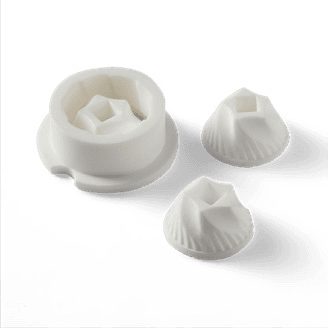
Foundry Tools for Metal Casting
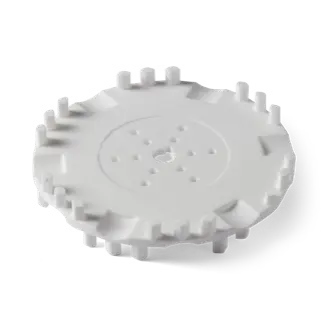
Customized Manufacturing Tools

Functional Engineering Prototypes
Alumina 4N Resin Workflow
The intuitive workflow of the Formlabs SLA printers combined with Alumina 4N Resin creates an entirely new means for producing high-performance ceramic parts, previously only possible through expensive contractors or 100x more expensive (dedicated) ceramic 3D printers with complex workflows.
- 3D Print: Alumina 4N Resin prints on Form 4 and Form 3/+ printers in 50 microns layers. Due to the high green strength, parts require a thin part removal tool, such as a razor blade, to remove them from the Stainless Steel Build Platform.
- Wash: After the parts are removed from the platform, use the required Ceramic Wash Solution to clean the parts and remove (wet sand) supports. The solvent can be used in the Finish Kit buckets or Form Wash. To wet sand a part:
- Use 80 grit sandpaper for aggressive sanding
- Use 320 grit sandpaper for general sanding
- Use 1000 grit sandpaper for delicate sanding
- Dry: Remove excess solvent with compressed air before drying the parts completely overnight or, if under time constraints, in an oven. Full washing and drying instructions can be found on Formlabs Quick Start Guide to Alumina 4N Resin.
- Debind and Sinter: Move the parts to the debinding oven and sinter them in the oven for the final step in the process. In order to achieve optimal material properties, follow the firing schedule instructions exactly, found here.
Mechanical Properties of Alumina 4N Resin at Different Temperatures
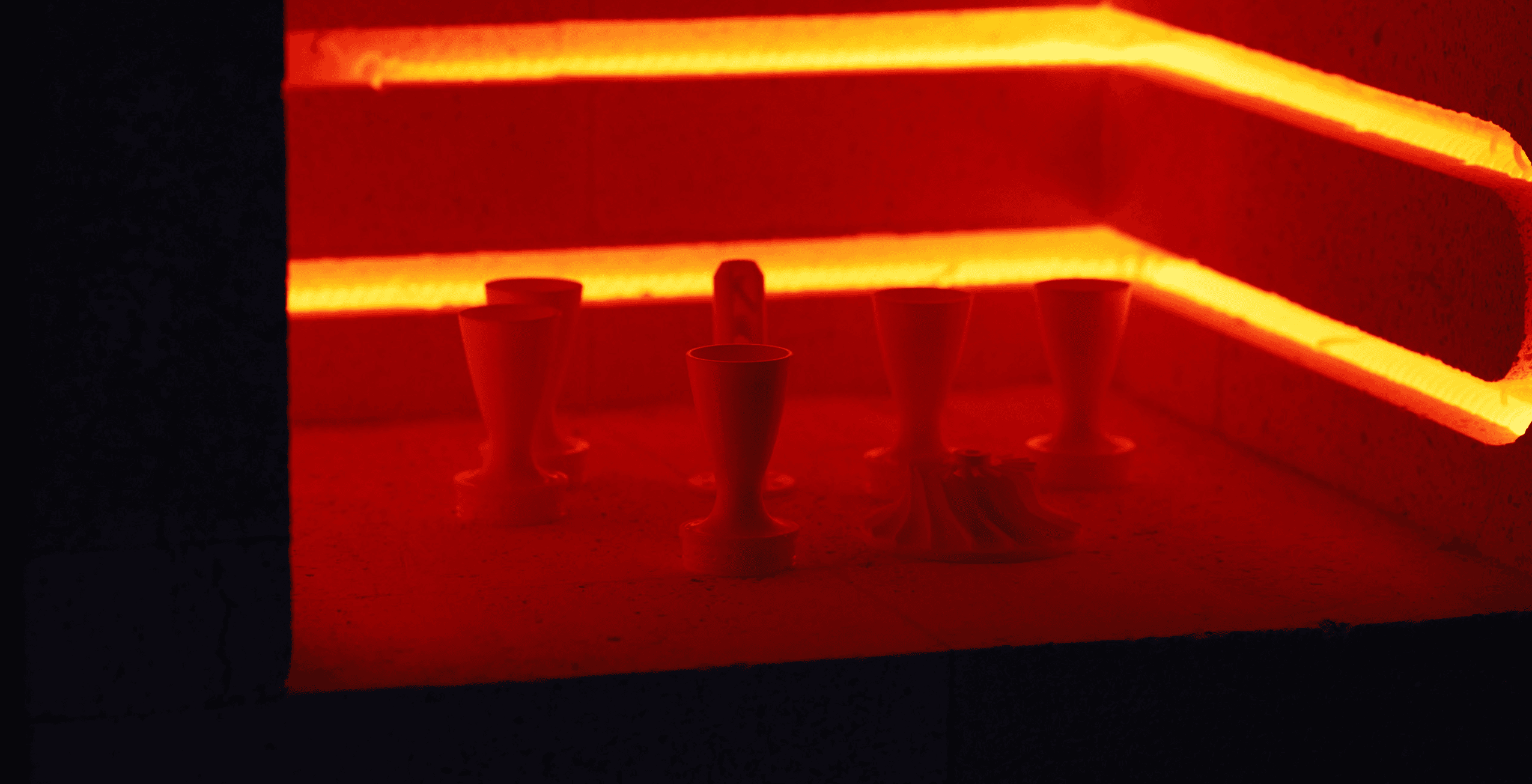
Alumina, like many ceramics, is used at extremely high temperatures, often exceeding the melting point of most metals, including all steels and even nickel superalloys. Understanding how it behaves at these temperatures is critical, and marks the difference between whether a part will succeed or fail.
The melting point of alumina is over 2000 °C, but the material begins to sag and lose its strength before reaching that point. Formlabs’ TDS recommends a maximum operating temperature of 1500 °C, but this experiment aims to show that, depending on the application, it may be successful at far higher temperatures.
Testing Procedure
Testing at high temperatures is notoriously difficult, often requiring expensive equipment to produce usable results. Sag tests, however, are fairly straightforward and can be used to get some basic understanding of how the material may perform at high temperatures.
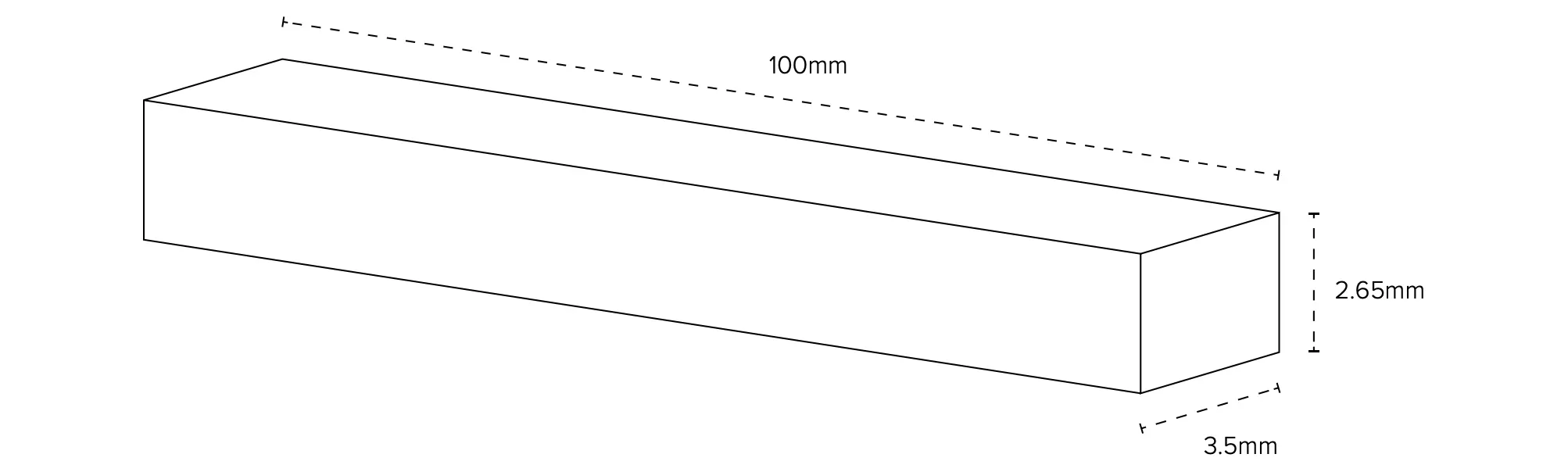
The bars used in this test were printed in the size shown in the image above, intentionally made extremely thin so that they would show the largest deflection, where a thicker bar would likely show nearly none. The test is illustrated below, consisting of a thin bar laid across a 90 mm span with two triangular supports on each side, and some overlap to ensure the part didn’t sag off of the supports at high temperature.
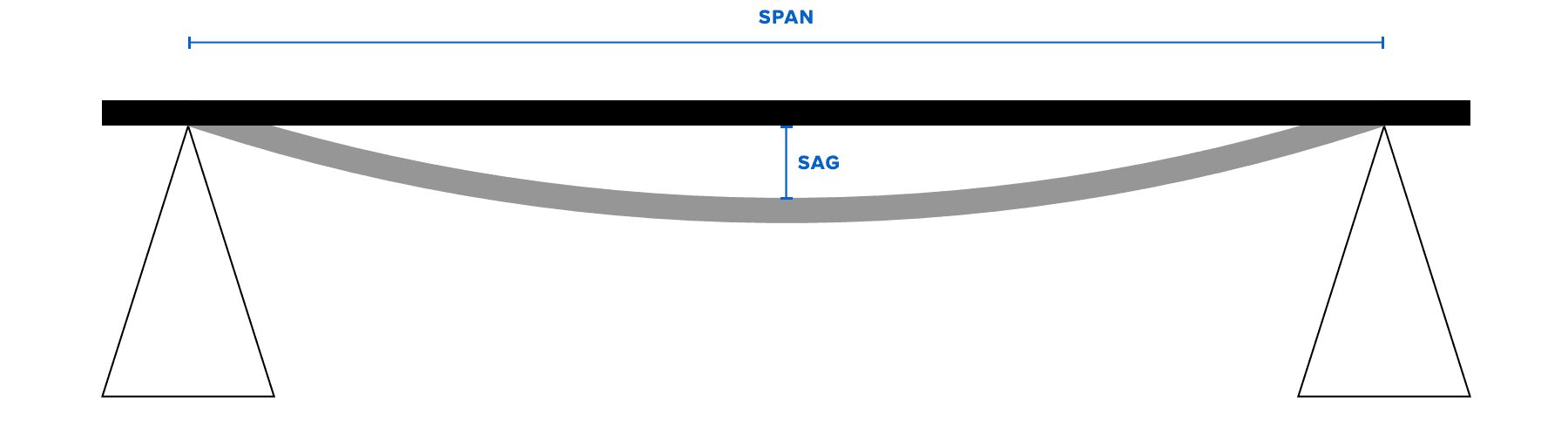
The bar was measured before and after firing, with the bar placed so that any warpage before the test was set downward, to ensure that only gravity affected sag. All of this was measured by the use of a granite table and a height gauge, determining the height of the bar at the two ends and the maximum sag height by finding the height that just barely passed under the height gauge.
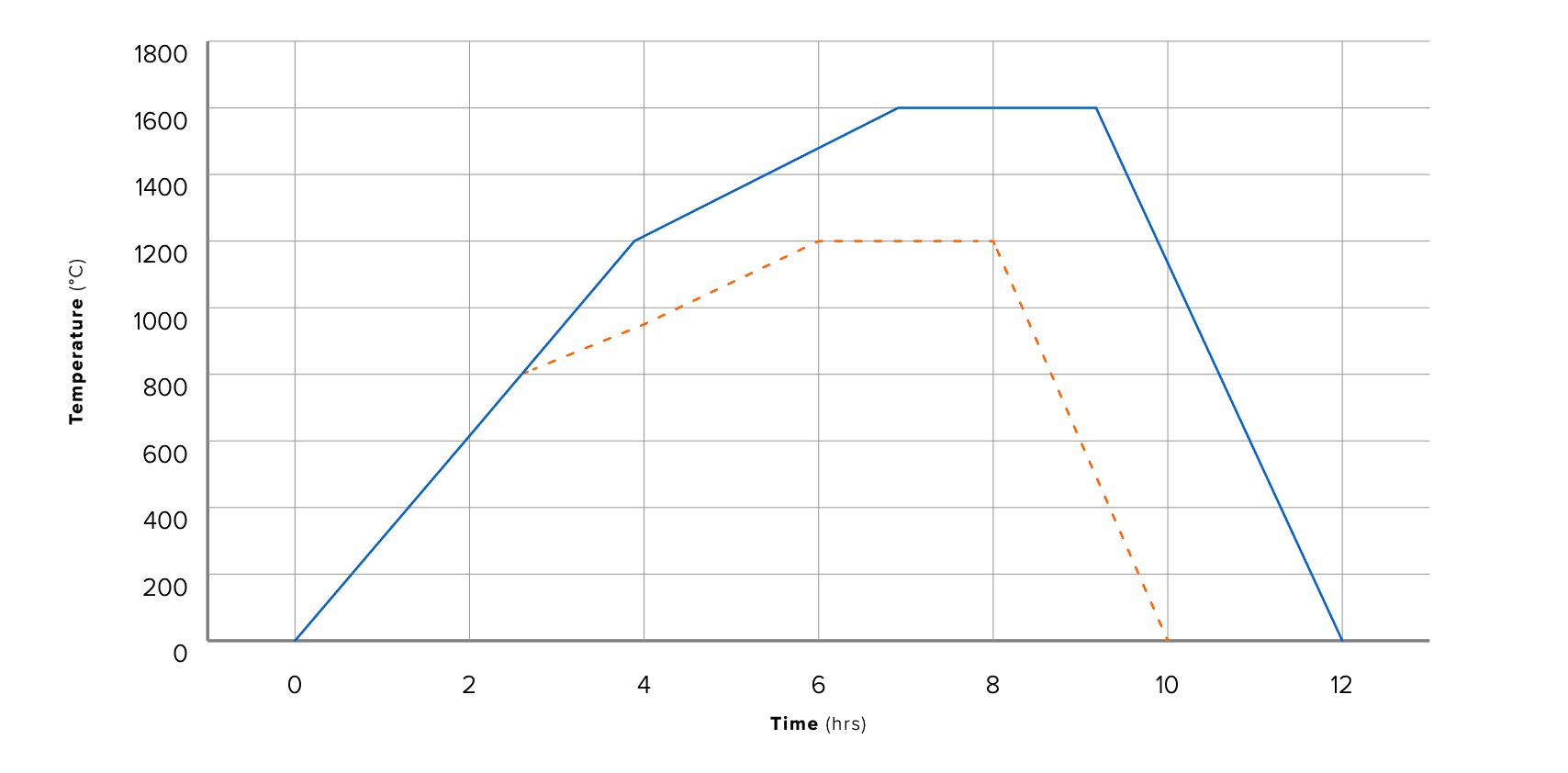
All of the bars were initially fired as normal through the two-furnace recommended firing cycle. Then the sag test followed a consistent process, heating at 5 °C/min to 400 °C under the target temperature, and then 2 °C/min to the target temperature, holding for 2 hours. The versions of this firing for 1600 °C and 1200 °C are shown in the graph below.
Sag Testing Thermal Cycle
Testing Results
The test was run all the way through to 1700 °C, with the results on the following graph. Repeating the test at specific temperatures resulted in very similar results with almost no statistically significant variance.
Sag Distance vs. Temperature
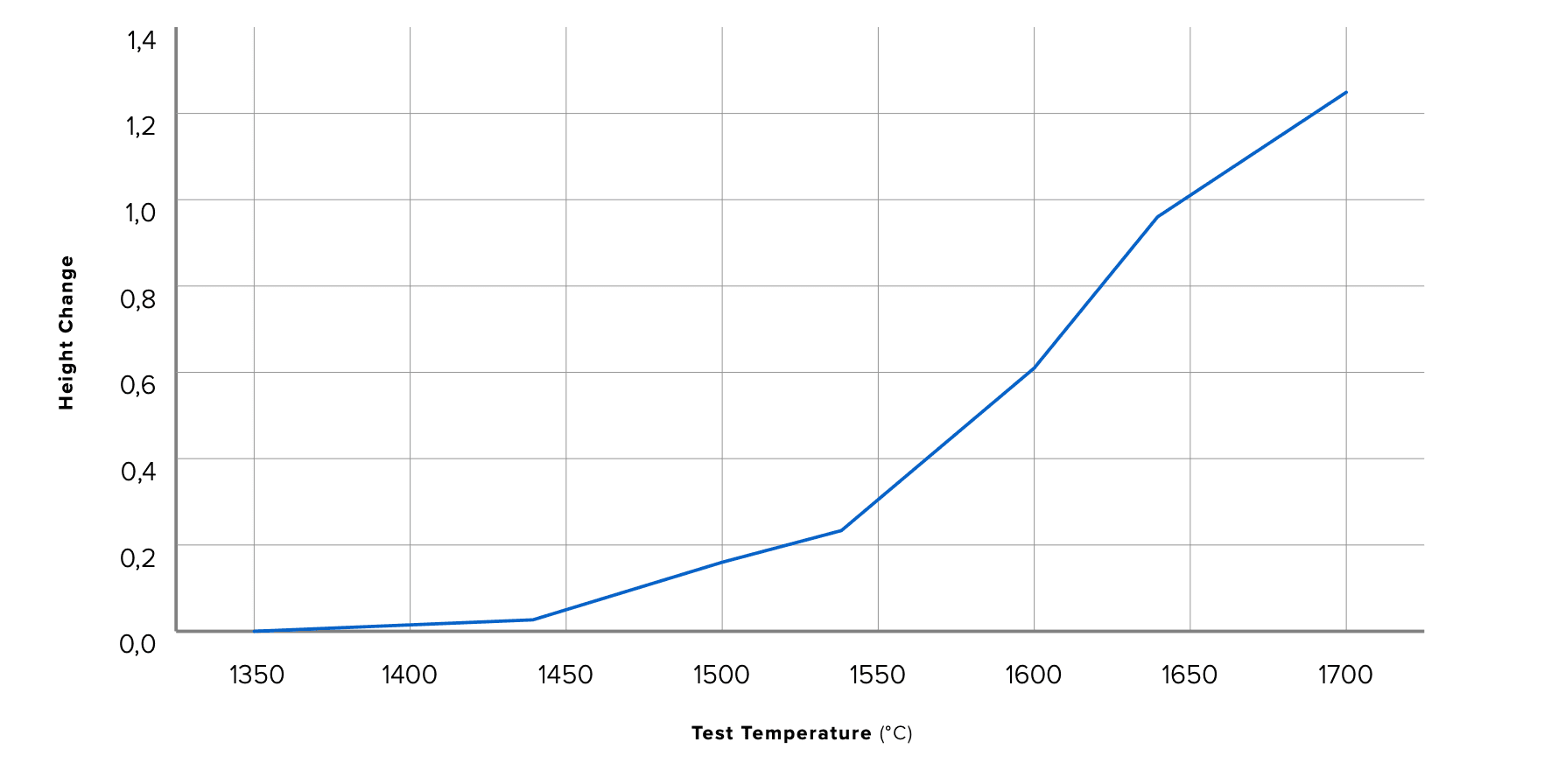
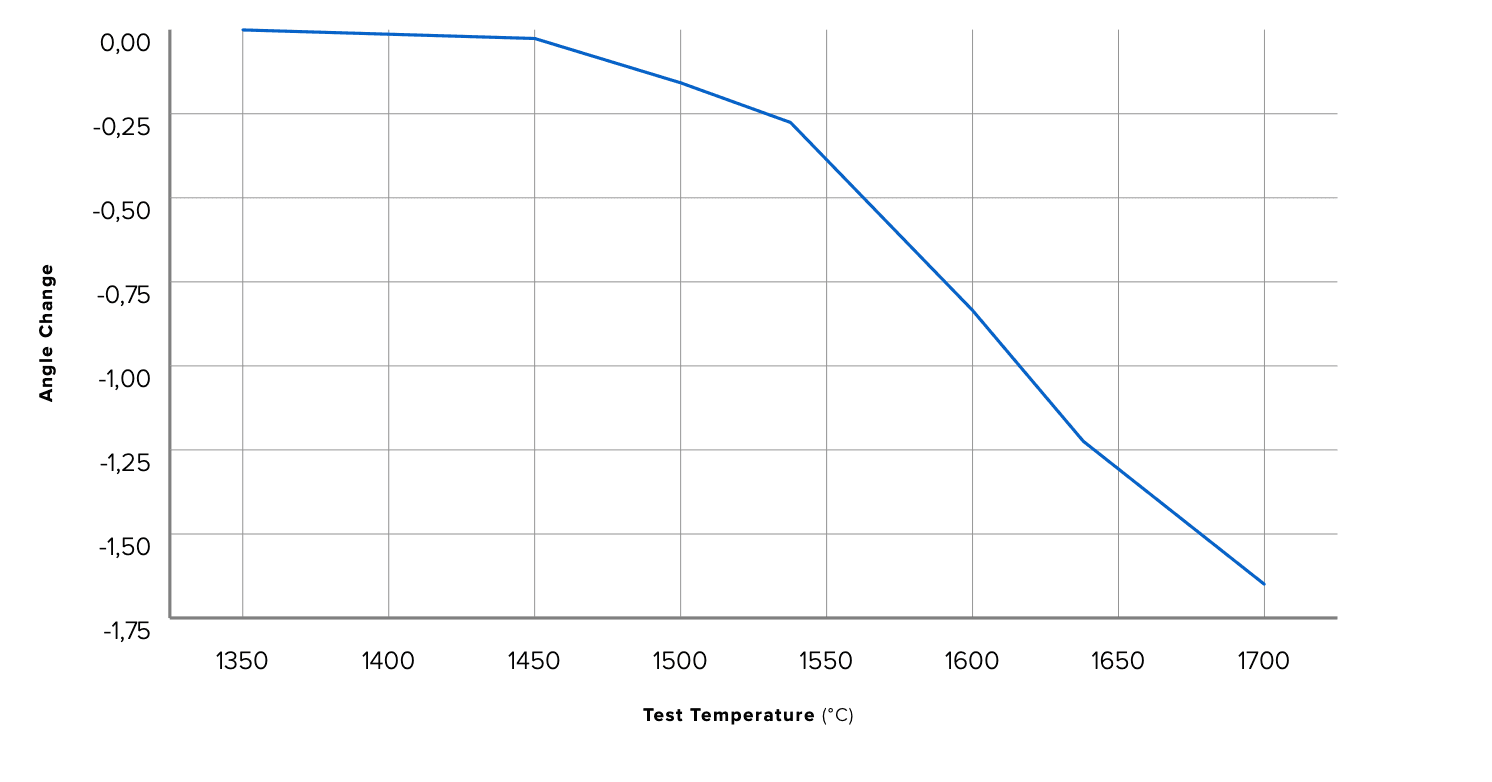
Absolute distance changes aren’t necessarily the most representative data points, however. A more representative measurement can be made by constructing an angle between the support points and the sagged area. This also has the benefit of being slightly more applicable to more situations. The angle is shown below, as well as the actual results.
Angle vs. Temperature
Conclusions and Implications
The high temperature testing of Alumina 4N Resin shows it to be extremely resistant to sagging. The 2.6 mm part sagged less than 1° at 1600 °C, even on an unsupported span over 30 times as long as the height of the part.
For parts operating at extreme temperatures, Alumina 4N Resin is the perfect choice, and at ‘low’ temperatures below 1400 °C, will not sag or deform at all. This, in addition to the other properties of Alumina 4N Resin such as extreme electrical resistance, chemical resistance, and low permeability, make it ideally suited for many engineering applications that previously have been unobtainable for 3D printed parts.
To discuss Alumina 4N Resin for your own application, contact our team of specialists.