Note:
As of June 9, 2026, Elastic 50A Resin V2 has been renamed to Flexible 50A Resin. This better describes its performance relative to other flexible Formlabs resins.

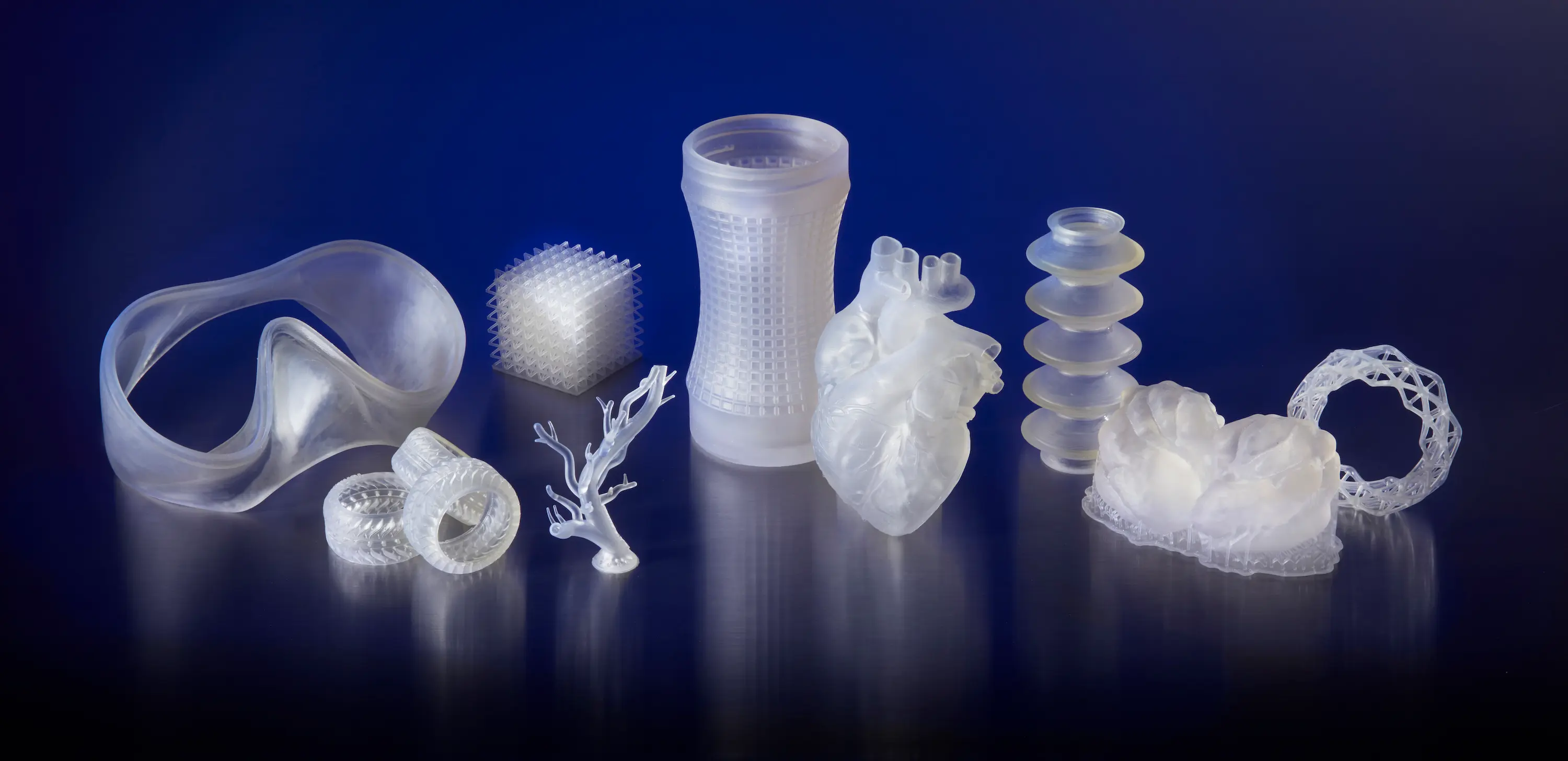
Flexible 50A Resin is an elastomeric material designed for applications requiring high elongation and high energy return. Use Flexible 50A Resin for parts that will bend, stretch, compress, and hold up to repeated cycles without tearing. Elastic is transparent, which makes it well suited for medical models for simulation or education. To learn more about potential applications for this material, read the blog post Introducing Elastic Resin: A Soft, Resilient 3D Printing Material (English only).
Note:
As of June 9, 2026, Elastic 50A Resin V2 has been renamed to Flexible 50A Resin. This better describes its performance relative to other flexible Formlabs resins.
Note:
To learn more about the performance or specific material properties of Flexible 50A Resin, please refer to the Safety Data Sheet (SDS) and Technical Data Sheet (TDS). Always consult the SDS as the primary source of information to understand safety and handling of Formlabs materials.
Comparación con otros materiales
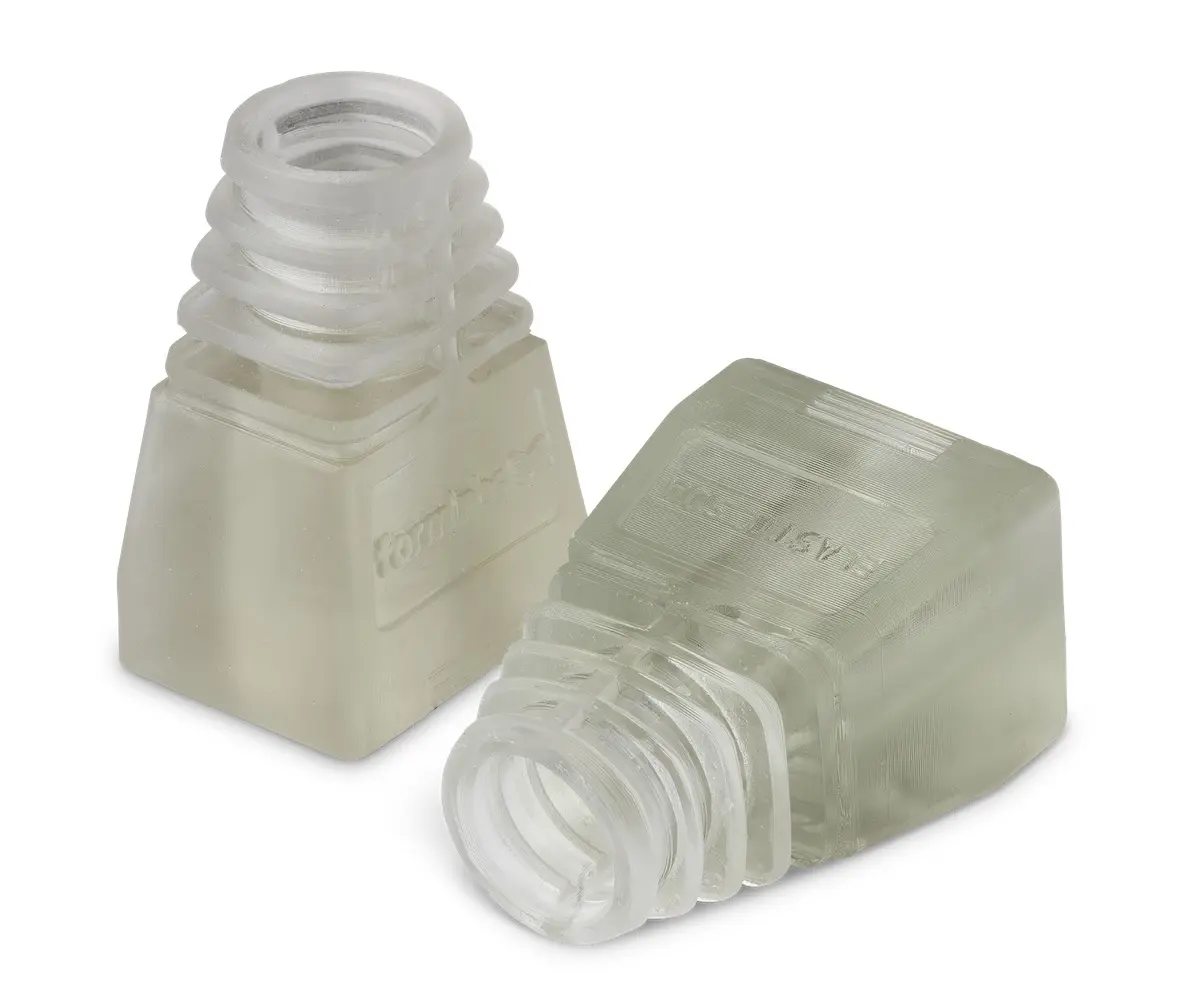
Elasticity is the ability of an object or material to resume its normal shape after being stretched or compressed. Flexible 50A Resin is designed to “bounce back” and return to its original shape quickly.
Durometer is the hardness of a material. Flexible 50A Resin has a lower durometer than other Formlabs resins, making it suitable for prototyping parts normally produced with silicone. Flexible 50A Resin also has a higher tear strength than comparable materials, making it capable of repeated cycles of use.
See the table below for a comparison of relevant material properties with other engineering resins and with other products:
| Formlabs Flexible 50A Resin, post-cured | Formlabs Flexible 80A Resin | |
|---|---|---|
| Durometer/shore hardness | 50A | 80A |
| Elongation at break (%) | 160 | 120 |
| Tensile strength (MPa) | 3.4 | 8.9 |
| Tear strength (kN/m) | 12.3 | 24.0 |
| Color | Clear | Clear |
To learn more about the performance properties of each Formlabs resin, refer to the library of material properties datasheets.
Printing with Flexible 50A Resin
Notice:
Flexible 50A Resin is a unique material that requires more support than some other Formlabs resins. Increase support density for parts with large cross sections, and keep large cross sections closer to the build platform. Avoid orienting parts with merging features-- areas that begin printing separately and then merge together later in the printing process.
Install or update PreForm, then set up the next print job.
To prepare a model for printing in PreForm:
Avoid long unconnected supports when printing with Flexible 50A Resin. Generating isolated supports more than 20 mm long may lead to print failures. Increase support density or add additional supports manually to the model to increase trussing between supports. Supports printed with Flexible 50A Resin normally distort slightly from the force of the peel cycle.
Print feature recommendations
Improve print success with Flexible 50A Resin by designing features according to Formlabs recommendations.
Supported wall thickness
Minimum: 400 microns
Recommended: 600 microns
Unsupported wall thickness
Minimum: 600 microns
Recommended: 800 microns
Shallow angles
Minimum: 19 degrees
Recommended: 45 degrees
Horizontal span/bridge
Maximum: 600 microns
Vertical wire diameter
Minimum: 300 microns
Maximum: 1500 microns
Clearance between adjacent parts
Minimum: 1000 microns
Hole diameter
Minimum: 800 microns
Acabado
The Form Wash agitates the solvent bath and removes parts from the bath after a set time. Wash parts according to the support article Form Wash time settings. Pay particular attention to information that affects mechanical properties or biocompatibility requirements.
The surface of parts printed with Flexible 50A Resin may feel slightly sticky after washing.
If the model is hollow or has internal channels, ensure liquid resin is flushed out thoroughly from these features. Allow parts to fully dry before post-curing.
Requisitos de poscurado
Flexible 50A Resin requires post-curing to reach its optimal mechanical properties.
Nota:
Para poscurar esta resina, sumerge las impresiones en un recipiente de vidrio lleno de agua, con un tamaño mínimo de 500 ml. Las piezas deben estar completamente sumergidas y sin burbujas de aire sobre sus superficies.
Always allow parts to dry thoroughly before post-curing. Refer to the support article Form Cure time and temperature settings for post-curing recommendations.