
Jigs, fixtures, and manufacturing aids
Jigs, fixtures, and manufacturing aids
A jig, fixture, or manufacturing aid is any tool or device that supports and facilitates manufacturing operations. Manufacturing aids simplify the manufacturing and assembly processes, reducing cycle times, improving worker safety, and lowering production costs.
Typically, manufacturers source their manufacturing aids through machine tooling in metal in-house or through outsourced vendors. Most tools are made of multiple-part assemblies. Outsourcing comes with weeks of lead time and high costs. As a result, producing custom tools just-in-time can be challenging.
Depending on the forces experienced by the part, it is not always necessary to produce these tools in metal. 3D printed manufacturing aids allow manufacturers to fabricate tools rapidly and at a low cost in-house with complete design freedom, material choice, and flexibility.
Formlabs recommended materials
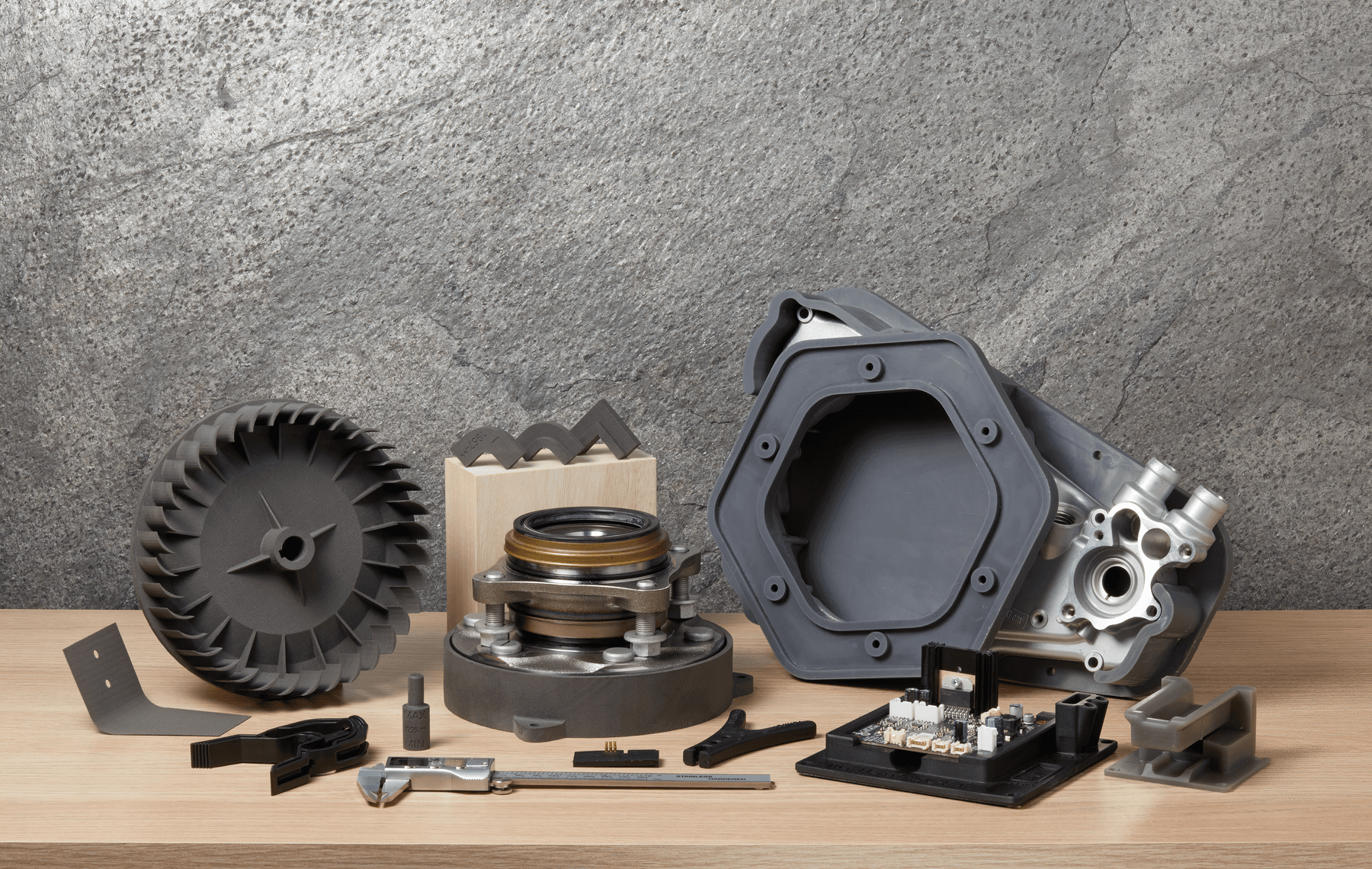
Formlabs offers a portfolio of engineering materials with advanced properties that enable applications in demanding environments. Tough 2000 Resin and Durable Resin are popular choices for SLA printed jigs, fixtures, and other aids. For printing long-lasting tools, Formlabs recommends using Nylon 12 Powder with SLS printing.
All materials have been tested for repeatability, mechanical strength, and environmental durability in factory use cases. Refer to the individual material articles for specific material properties.
| Material | Best For | Key Benefits |
|---|---|---|
| Tough 2000 Resin | Robust fixtures, alignment tools | Developed to withstand high stress and strain, similar to acrylonitrile butadiene styrene (ABS) |
| Durable Resin | Compliant jigs or snap-fit tools | Impact resistance, some flexibility, looks and feels like polypropylene |
| Rigid 10K Resin | High-precision, load-bearing tools | High stiffness, strength, and resistance to heat and chemicals |
| High Temp Resin | Heat-exposed applications | HDT of 238 °C @ 0.45 MPa |
| ESD Resin | Sensitive electronics | Safely dissipates static buildup that can damage sensitive electronics |
| Elastic 50A Resin / Flexible 80A Resin | Soft jaws, compliant interfaces | Bends, stretches, compresses, and holds up to repeated cycles without tearing |
| Nylon 12 Powder (SLS) | Impact-resistant jigs without supports | High stiffness and durability |
Design considerations
When designing a printed part for use as a jig, fixture, or manufacturing aid, follow Formlabs’ best practices for designing successful models.
General guidelines:
- Combine jig components to reduce the number of parts
- Include flat faces or right-angle geometries within the fixture to aid inspection and determine overall accuracy
- Increase rigidity with reinforcing ribs and fillets
- Design for user experience with custom grips, visual alignment features, and ergonomics
Printing considerations
Follow Formlabs best practices for model orientation.
When printing on an SLA printer, orient parts to minimize supports on functional surfaces and reinforce walls as necessary.
Post-processing considerations
Follow Formlabs best practices for washing and post-curing prints. Refer to the individual material articles for specific wash and cure instructions. Consider further post-processing for added strength, durability, and user experience, such as electroplating or coating for SLA printed parts or media blasting for SLS printed parts.
- Inspect the printed part against the original CAD model. Use a caliper, micrometer, or other metrology equipment to validate.
- Test the functional performance of the fixture. When the part is loaded onto the fixture, pay close attention to how well it is seated against locating surfaces and supports. A properly designed and built fixture will support the part, eliminating any movement once clamping force is applied.
- For processes with higher operating forces, like milling or drilling, calculate clamping requirements based on feeds and speeds, the power of the machine, and the selected material, as well as safety.
To extend the life of the 3D printed part, Formlabs recommends:
- Loosen any bolts and relieve clamping forces after completing secondary operations to prevent continuous load.
- Augment 3D printed parts with common stock parts for increased functionality.
- Use springs, ramped slides, or levers to raise the part up from the fixture surface.
End-use recommendations and limitations
3D printing is a powerful solution to fabricate tools rapidly and at a low cost in-house. Key benefits include speed, reductions in costs, design freedom, material choice, and flexibility. It is particularly recommended for:
- Assembly fixtures that improve alignment, reduce errors, or assist manual processes.
- Inspection jigs for go/no-go testing, measuring, or tolerancing.
- Custom ergonomic tools that reduce strain or enhance consistency.
- Low-volume, high-mix tooling for short production runs or prototyping phases.
Some limitations include:
- SLA printed parts may experience creep (permanent elastic deformation) if continually loaded.
- For very high wear areas, consider metal or hybrid solutions (e.g., steel plates on printed frames).
- Avoid overly thin features or unsupported arms unless validated through testing.
Additional resources