Note:
It is not necessary to wear protective gloves when handling powder at room temperature.

SLS powder is a combustible material that requires the proper storage and handling precautions to use safely. Always dispose of sintered and unsintered powder in accordance with your local government regulations.
Use appropriate personal protective equipment when handling loose or unsintered powder. Refer to the support article Safety with Fuse 1 generation printers for additional information.
Always consult the safety data sheet (SDS) as the primary source of information to understand safety and handling of Formlabs powders.
Safety and handling
Pulverized plastic powder (e.g., nylon PA12) poses a combustion risk if not properly handled. Only use a compliant vacuum that is grounded and bonded, such as a Class II, Division 2 vacuum, when cleaning excess powder. Do not handle powder near an ignition source. Transport powder with care to avoid allowing plumes to form, especially in enclosed spaces.
Always wear the proper personal protective equipment (PPE) when handling powder with the Fuse 1 or Fuse Sift.
Long-sleeved shirts and long pants when handling the product are recommended. Routinely wash work clothing and protective equipment to remove contaminants.
Gloves
Plastic powder may draw moisture and oils out of bare skin. Wear non-reactive nitrile gloves when handling loose or unsintered powder to avoid contaminating the powder.
In the case of prolonged or frequently repeated skin contact, wear impermeable gloves. Before using, check glove leak tightness/impermeability. In the case of wanting to reuse the gloves, clean the gloves before taking off and air them well.
Note:
It is not necessary to wear protective gloves when handling powder at room temperature.
Breathing protection
The primary concern with respiratory protection is to avoid irritation, similar to other dusty environments. None is required with correct and proper use and under normal processing conditions. Avoid breathing dust. Avoid breathing processing fumes or vapors. Wear a properly fitted respirator approved by NIOSH if local exhaust does not keep the particulate concentration below ACGIH Threshold Limit Value or irritation occurs.
Safety glasses
Safety glasses or dust protection goggles are recommended to prevent particulate matter from entering eyes when handling product.
First aid
Powdered plastic, like any other fine powder, can easily become airborne and come into contact with your face. In case of powder inhalation, swallowing, or contact with eyes, follow these instructions:
Storage
When stored as directed, Formlabs SLS powders do not have a defined shelf life or expiration date:
Lot number
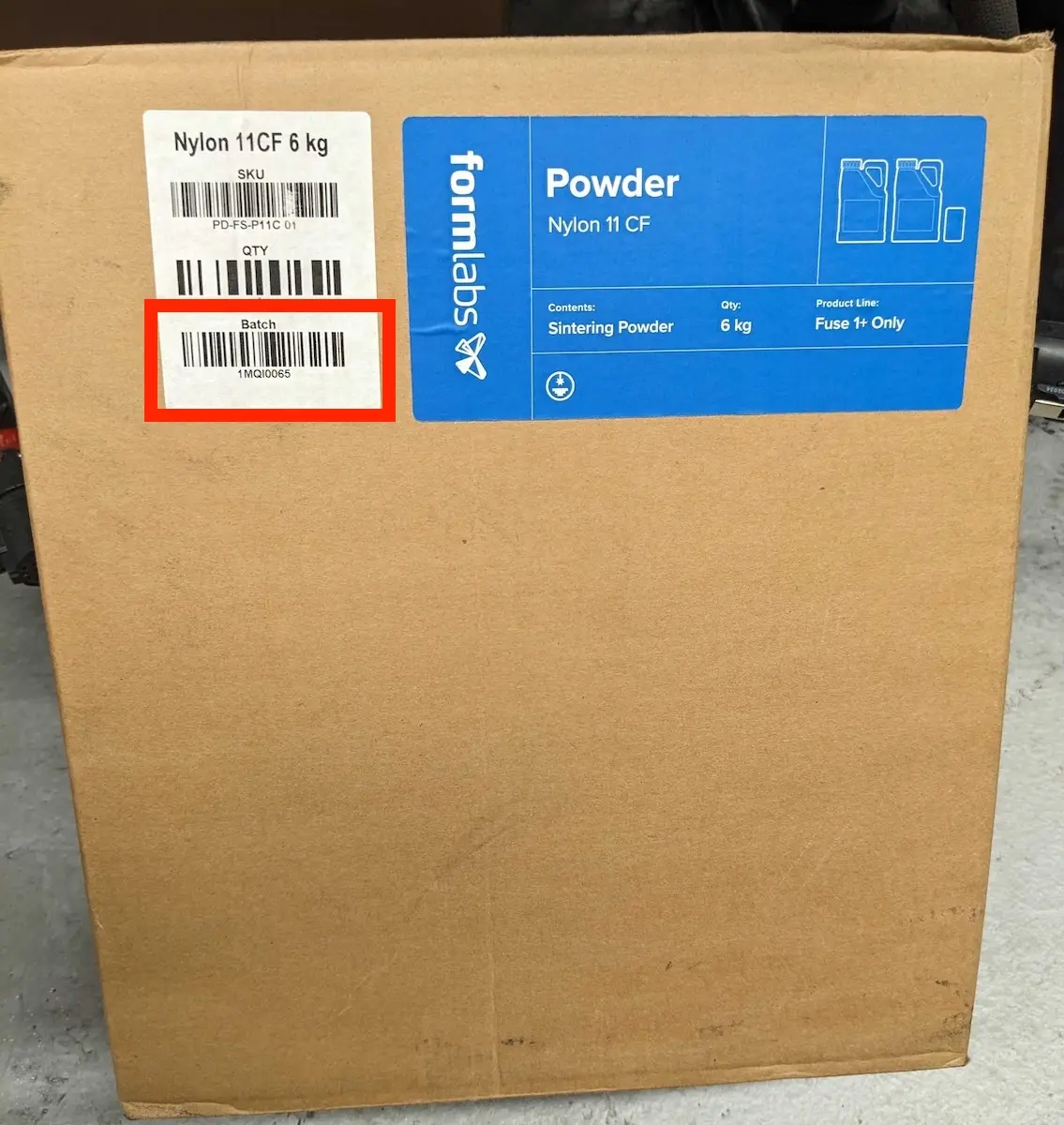
Powder production batches can be identified by their lot number. Formlabs may ask you for the lot number when helping you troubleshoot an issue. The lot number can be found on the outer box or the powder jug (for materials packaged in jugs). The lot number format depends on the material; some examples are given below:
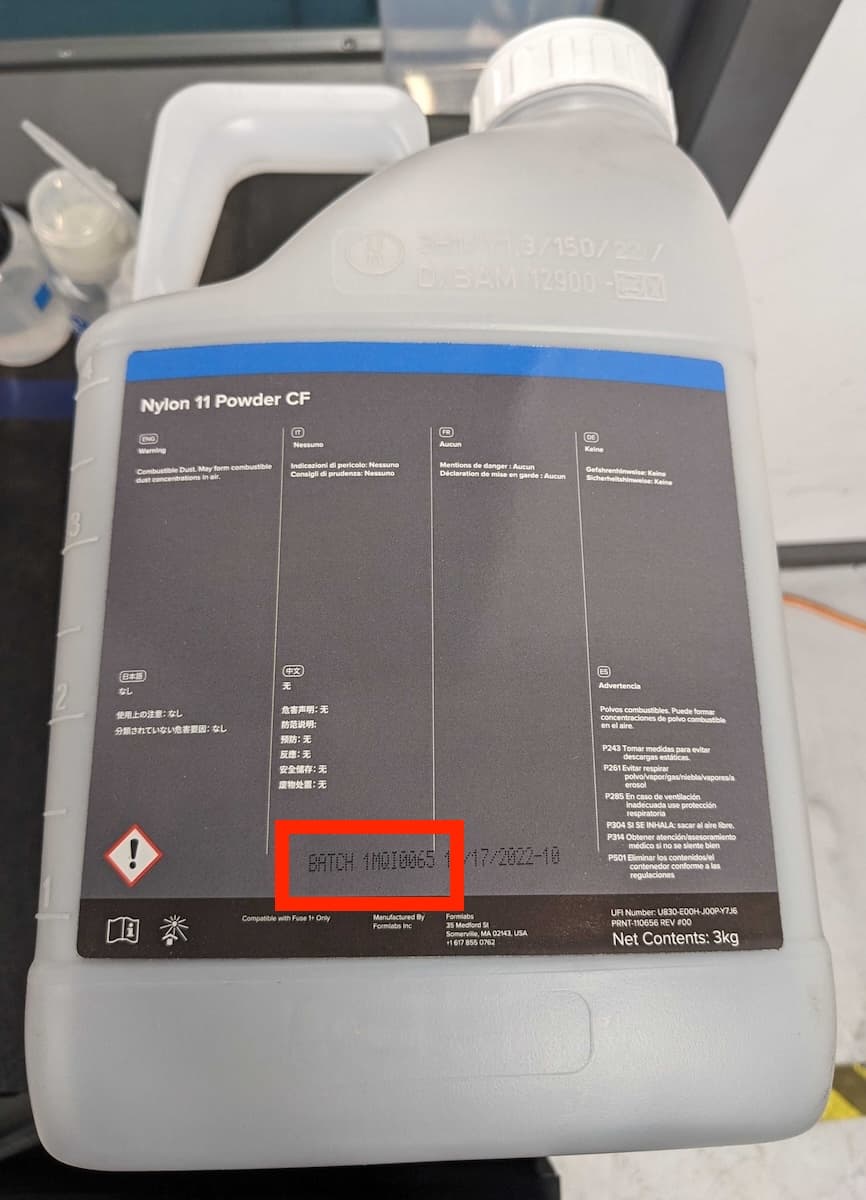
Example of a powder lot number on a powder jug
Example of a powder lot number on a powder box
Powder disposal
Dispose of powder (whether fresh or used) and anything containing or coated in powder according to environmental regulations, using powdertight containers.
Unsintered powder
Unsintered used powder must be disposed of in accordance with your local ordinances and environmental regulations for plastic waste.
Notice:
For disposal purposes, vacuum bags and filters used to clean unsintered powder should be considered unsintered powder waste.
Sintered powder
Discard cleaned parts and sintered powder with household waste. Cleaned parts and sintered powder cannot be recycled.
Powder cartridges
If a powder cartridge is broken or otherwise unusable, empty it of any remaining powder before disposal. Dispose of the empty powder cartridge in accordance with local regulations. Empty powder cartridges cannot be recycled.
Build chambers
If a build chamber is broken or otherwise unusable, empty it of any remaining powder before disposal. Dispose of the empty build chamber in accordance with local regulations. Empty build chambers cannot be recycled.
Disposal of electronic components
The symbol on the product, the accessories, or packaging indicates that this device shall not be treated as nor disposed of with household waste. When you decide to dispose of this product, do so in accordance with local environmental laws and guidelines. Dispose of the device via a collection point for the recycling of waste electrical and electronic equipment. By disposing of the device in the proper manner, you help avoid possible hazards for the environment and public health that could otherwise be caused by improper treatment of waste equipment. The recycling of materials contributes to the conservation of natural resources. Therefore do not dispose of your old electrical and electronic equipment with the unsorted municipal waste.