-
50% contained ACMO.
-
50% of the resins containing ACMO either did not have an SDS easily available online or did not properly communicate its hazards.

The High Cost of Low-Cost SLA Resins: A Monomer Analysis and Hazard Report
A safety data sheet (SDS) or material safety data sheet (MSDS) is produced by a material manufacturer and lists information pertaining to the potential hazards of a material. However, comparing the monomer components of several low-cost resins with their SDSs found discrepancies, meaning potential hazards were excluded or obfuscated.
Formlabs performed comprehensive monomer analysis on dozens of stereolithography (SLA) resins. The primary objective was to verify the monomer components against their respective SDSs using gas chromatography-mass spectrometry (GCMS). In this testing the resin is separated into its pure constituent components and analyzed with a mass spectrometer. The mass spectrometer ionizes molecules and measures the abundance of fragments at different mass-to-charge ratios (m/z). This produces a chemical fingerprint (trace) in the form of a mass spectrum for each ingredient in the mixture, which can be compared to known references for identification. In all the resins tested in which ACMO was identified, the relevant mass spectrum was more than 95% similar to the reference spectrum (see below)
The High Cost of Low-Cost SLA Resins: A Monomer Analysis and Hazard Report
A safety data sheet (SDS) or material safety data sheet (MSDS) is produced by a material manufacturer and lists information pertaining to the potential hazards of a material. However, comparing the monomer components of several low-cost resins with their SDSs found discrepancies, meaning potential hazards were excluded or obfuscated.
Formlabs performed comprehensive monomer analysis on dozens of stereolithography (SLA) resins. The primary objective was to verify the monomer components against their respective SDSs using gas chromatography-mass spectrometry (GCMS). In this testing the resin is separated into its pure constituent components and analyzed with a mass spectrometer. The mass spectrometer ionizes molecules and measures the abundance of fragments at different mass-to-charge ratios (m/z). This produces a chemical fingerprint (trace) in the form of a mass spectrum for each ingredient in the mixture, which can be compared to known references for identification. In all the resins tested in which ACMO was identified, the relevant mass spectrum was more than 95% similar to the reference spectrum (see below)
ACMO: A Monomer to Know

ACMO (N-Acryloylmorpholine) is a low viscosity monomer which produces strong and tough materials, which is why it is found in some 3D printing resins. ACMO presents significant health risks, including Category 2 organ toxicity (respiratory tract). The full GHS Hazard Statements and Precautionary Codes for ACMO can be viewed here.
The Environmental Protection Agency (EPA) has SNUR (Significant New Use Rule) for ACMO. The following labels and protocols are mandated for compliant handling:
-
Mandatory Warning: Products containing ACMO must include the warnings to the effect of: "DANGER. May cause damage to organs through prolonged or repeated exposure. Causes serious eye damage.”
-
Engineering & PPE (Personal Protective Equipment): The SNUR requires the use of specialized nitrile gloves, dedicated ventilation systems, and respirators to prevent inhalation of ACMO vapors.
Several tested resins did not disclose mandated warnings associated with ACMO.
Resin Analysis Findings
Summary of Findings
|
Manufacturer |
Resin |
SDS available online? |
ACMO-free? |
ACMO included on SDS? |
ACMO warnings correctly listed on SDS? |
|
|
3D Systems |
Figure 4 Rigid Grey |
Y |
N |
Y |
Y |
|
|
Anycubic |
Grey |
Y |
N |
N |
N |
|
|
Anycubic |
High-Speed |
Y |
N |
N |
N |
|
|
Anycubic |
ABS-Like |
Y |
N |
N |
N |
|
|
Anycubic |
High Clear |
Y |
Y |
- |
- |
|
|
Asiga |
FusionGRAY |
Y |
Y |
- |
- |
|
|
Asiga |
PlasticClear |
Y |
Y |
- |
- |
|
|
BASF |
ST45M |
Y |
N |
Y |
Y |
|
|
BASF |
ST7500SG |
Y |
N |
Y |
Y |
|
|
BASF |
ST1400 |
N |
Y |
- |
- |
|
|
Creality |
Grey |
N |
N |
- |
- |
|
|
Creality |
Transparent |
N |
N |
- |
- |
|
|
Creality |
Fast |
N |
N |
- |
- |
|
|
ELEGOO |
Standard V2 |
Y |
N |
N |
N |
|
|
ELEGOO |
8K Space Grey |
N |
N |
- |
- |
|
|
ELEGOO |
Rapid Standard |
N |
N |
- |
- |
|
|
ELEGOO |
ABS-Like |
Y |
N |
N |
N |
|
|
ELEGOO |
Translucent |
N |
N |
- |
- |
|
|
eSUN |
Water Washable |
Y |
N |
N |
N |
|
|
Evonik |
ST 6100 L |
Y |
Y |
- |
- |
|
|
HeyGears |
PAU20 |
Y |
N |
Y |
N* |
|
|
HeyGears |
PAP10 |
Y |
N |
Y |
N* |
|
|
HeyGears |
PAS10 |
Y |
N |
Y |
N* |
|
|
HeyGears |
PAU10 |
N |
- |
- |
- |
|
|
HeyGears |
PAT10 |
Y |
N |
N |
N* |
|
|
Liqcreate |
Strong-X |
Y |
Y |
- |
- |
|
|
Liqcreate |
Tough-X |
Y |
Y |
- |
- |
|
|
Loctite |
IND403 |
Y |
Y |
- |
- |
|
|
Loctite |
IND3843 |
Y |
Y |
- |
- |
|
|
Loctite |
IND405 |
Y |
Y |
- |
- |
|
|
Loctite |
IND147 |
Y |
Y |
- |
- |
|
|
Loctite |
IND402 |
Y |
N |
Y |
N |
|
|
Loctite |
IND406 |
Y |
Y |
- |
- |
|
|
Loctite |
Onyx Impact Plus |
Y |
Y |
- |
- |
|
|
Loctite |
IND475 |
Y |
Y |
- |
- |
|
|
Loctite |
3D 3172 |
Y |
Y |
- |
- |
|
|
Loctite |
IND249 |
Y |
Y |
- |
N* |
|
|
Nova3D |
Clear |
N |
Y |
- |
- |
|
|
Phrozen |
Speed |
Y |
N |
Y |
Y |
|
|
Phrozen |
Aqua-Gray |
Y |
N |
Y |
Y |
|
|
Phrozen |
Protowhite |
Y |
N |
Y |
Y |
|
|
Phrozen |
Water-Washable |
Y |
N |
Y |
Y |
|
|
Phrozen |
RPG Grey |
Y |
N |
Y |
Y |
|
|
Siraya Tech |
Blu Tough |
Y |
N |
Y |
N |
|
|
Siraya Tech |
Fast ABS-Like |
Y |
N |
Y |
N |
|
|
Siraya Tech |
Tenacious Grey |
Y |
N |
Y |
Y |
|
|
Siraya Tech |
Tenacious Clear |
Y |
N |
Y |
Y |
|
|
Siraya Tech |
Tenacious Flex Black |
Y |
N |
Y |
Y |
|
|
SUNLU |
ABS-Like |
Y |
N |
N |
Y |
|
|
SUNLU |
Water Washable |
N |
N |
- |
Y |
*Heygears uses the language and hazard code “Warning: causes serious eye irritation” but should list “Danger: causes serious eye damage.”
** Siraya Tech uses the signal word ‘warning’ but should have ‘danger’ on the US and EU SDS. Otherwise, US SDS are largely correct, but EU SDS does not properly list hazard codes H318 serious eye damage and H373 organ damage in sections 2.1 and 2.2.
*** Some resins properly list the hazards for ACMO but fall short in other warnings such as reproductive toxicity, aquatic toxicity, and carcinogenicity.
-
17% of the resins tested did not have an SDS easily available online.
-
63% contained ACMO.
-
28% contained ACMO and did not list the monomer on their SDS.
-
52% of the resins containing ACMO did not have the proper hazard labelling associated with the chemical. This means the hazards of using the material are not being communicated to the user.
Failure to provide mandated warnings is a significant safety oversight, as ACMO exposure can lead to irreversible respiratory tract damage and long-term reproductive toxicity.
Users of these resins should research the specific hazards of ACMO to implement best practices and minimize exposure to harmful effects. For further research, you can access helpful resources at the ECHA monomers database and PubChem.
Formlabs’ Approach to Resin Safety
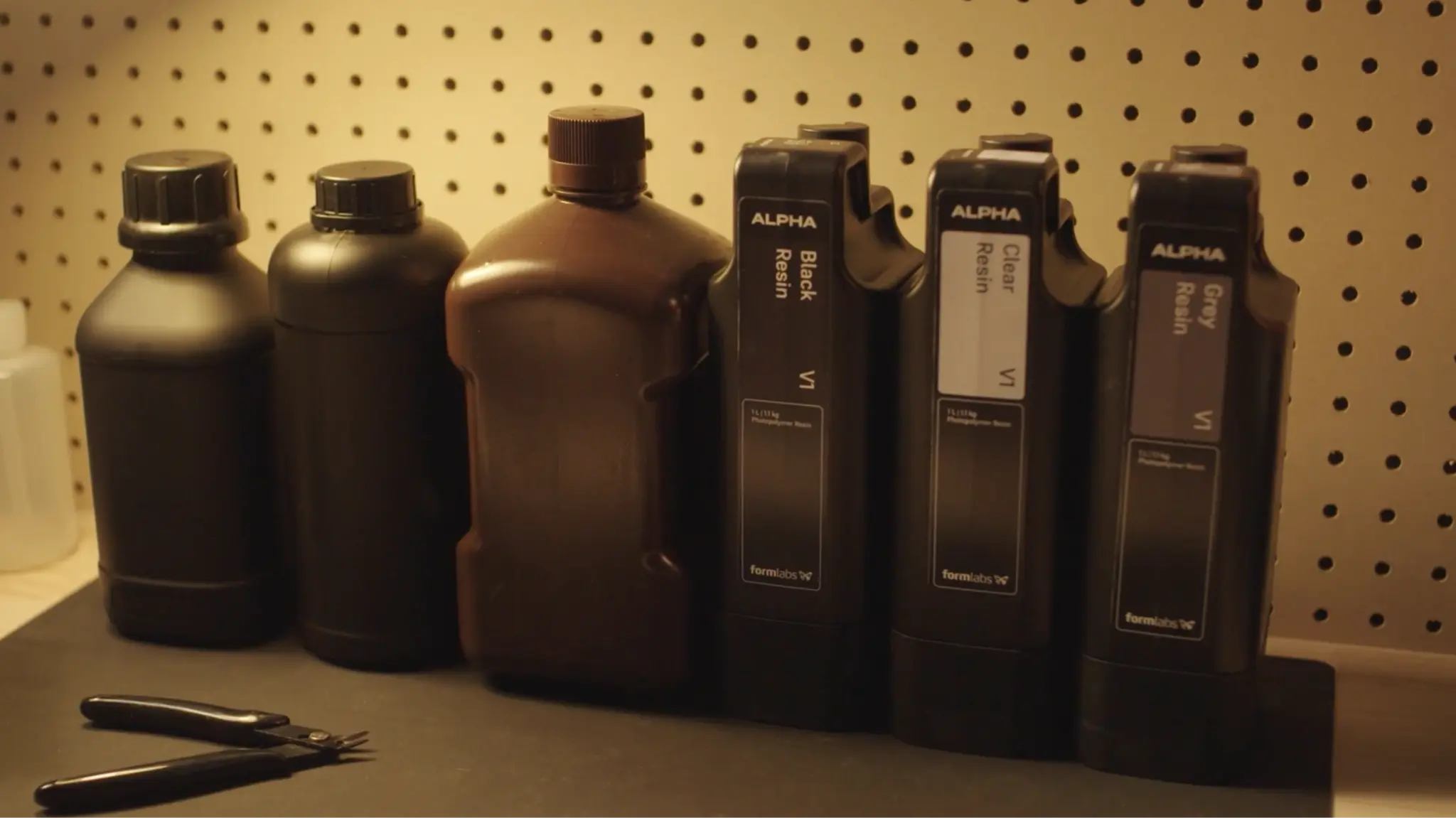
Formlabs resins are formulated for high performance while minimizing hazardous ingredients; Formlabs resins do not contain ACMO. In addition, we provide thorough SDSs for our materials so that users can approach printing with comprehensive information about hazards and the precautions to take when printing.
Formlabs employs more than 40 materials scientists and engineers who research, develop, and test the materials that make our desktop and benchtop printers engines of innovation. Alongside the chemical engineers formulating new resins, a team of 20 settings optimization specialists makes sure printers and materials work together seamlessly.
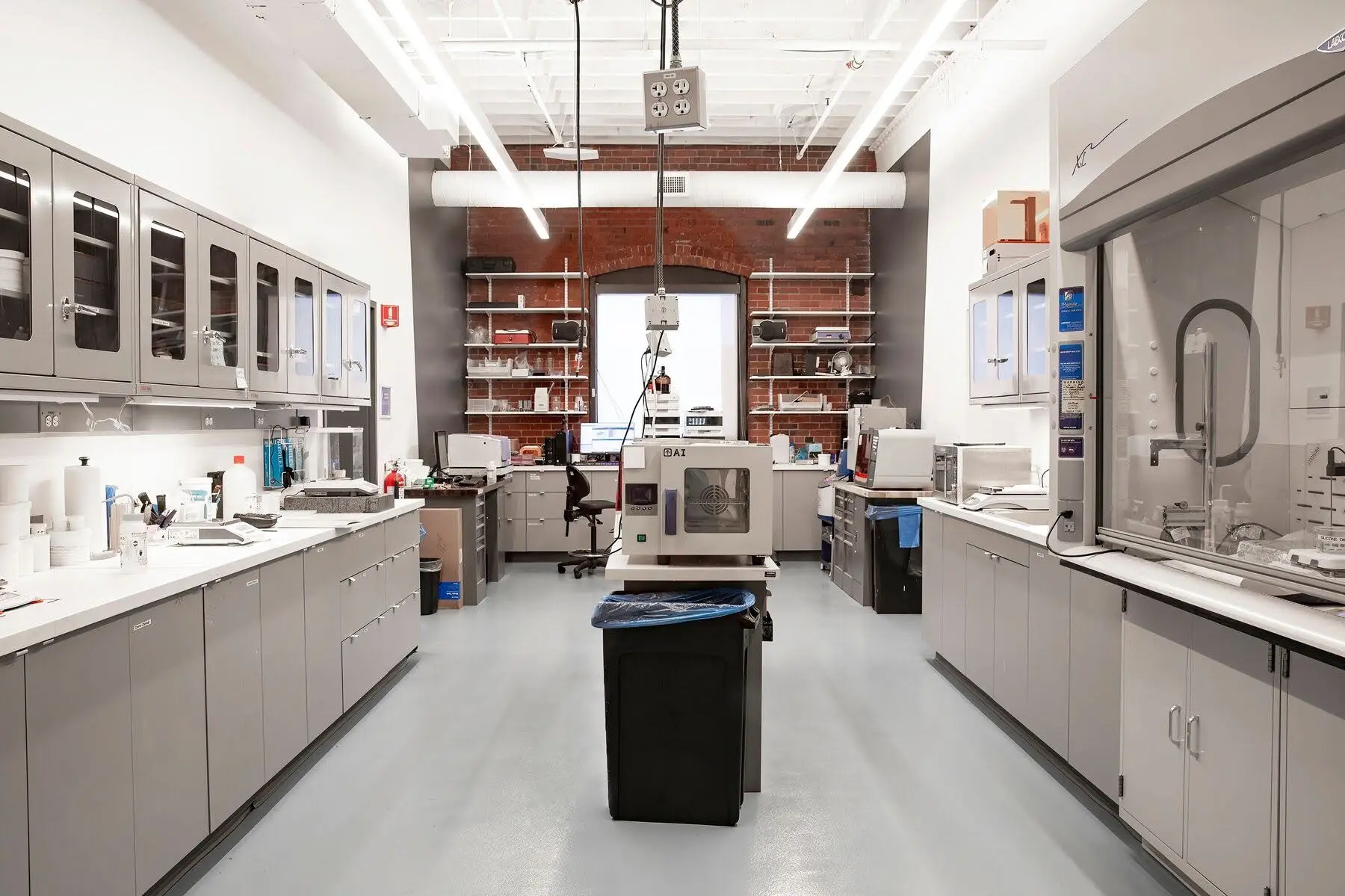
Formlabs Materials Lab in Somerville, USA
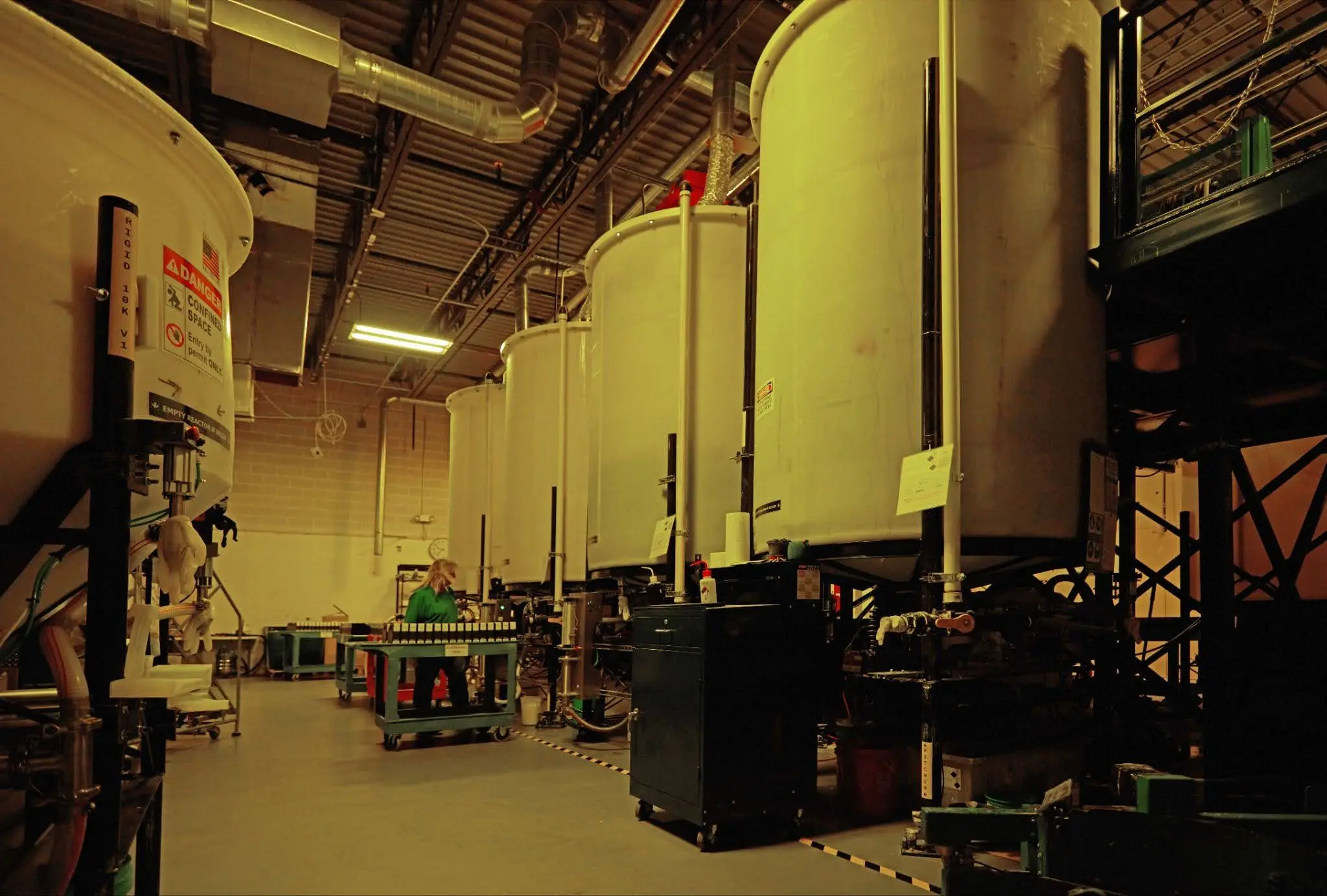
Formlabs resin manufacturing facility in Ohio, USA
Il nostro impegno per la qualità e l'affidabilità non si ferma alla stampante. Questo significa mantenere gli stessi standard anche nella produzione dei materiali, motivo per cui produciamo tutte le nostre resine nel nostro stabilimento in Ohio. I nostri materiali biocompatibili sono prodotti in un ambiente completamente regolamentato dall'inizio alla fine. Questi materiali sono progettati e prodotti nell'ambito del nostro affidabile sistema di gestione della qualità conforme alla norma ISO 13485 e al regolamento UE sui dispositivi medici (MDR). Un team dedicato di operatori e specialisti del controllo qualità produce le resine all'interno di una camera bianca certificata ISO classe 8.
Per ulteriori informazioni sulla sicurezza, visita il nostro centro sicurezza o scarica le SDS dei materiali Formlabs.
Metodo
To identify ACMO in 3D printing resins we use Gas-Chromatography Mass-Spectrometry (GCMS). In this process resin is separated into its pure constituent components and analyzed with a mass spectrometer. The mass spectrometer ionizes molecules and measures the abundance of fragments at different mass-to-charge ratios (m/z). This produces a chemical fingerprint (trace) in the form of a mass spectrum for each ingredient in the mixture, which can be compared to known references for identification. In all the resins tested in which ACMO was identified, the relevant mass spectrum was more than 95% similar to the reference spectrum (see below)
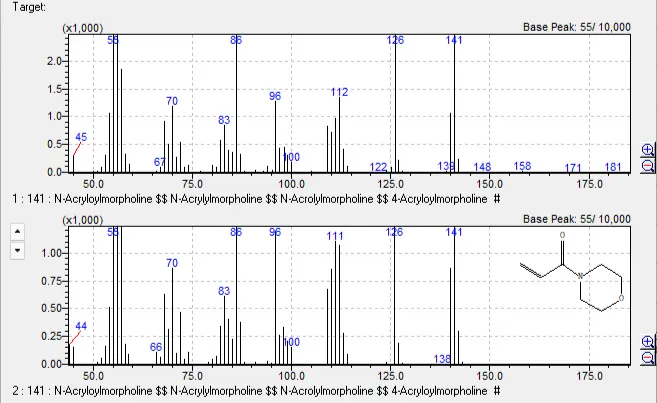
Traccia di spettrometria di massa (abbondanza rispetto a m/z) di un monomero target (in alto) rispetto al riferimento ACMO noto (in basso).