3D Printing Solutions for Drone Manufacturing
“Formlabs Fuse printers in Ukraine account for ~10% of our global powder usage—proving how low-cost, disruptive 3D printing is dominating in fast-changing environments.”
Maxim Lobovsky
Co-Founder and CEO, Formlabs
3D Printing Versus Traditional UAV Manufacturing
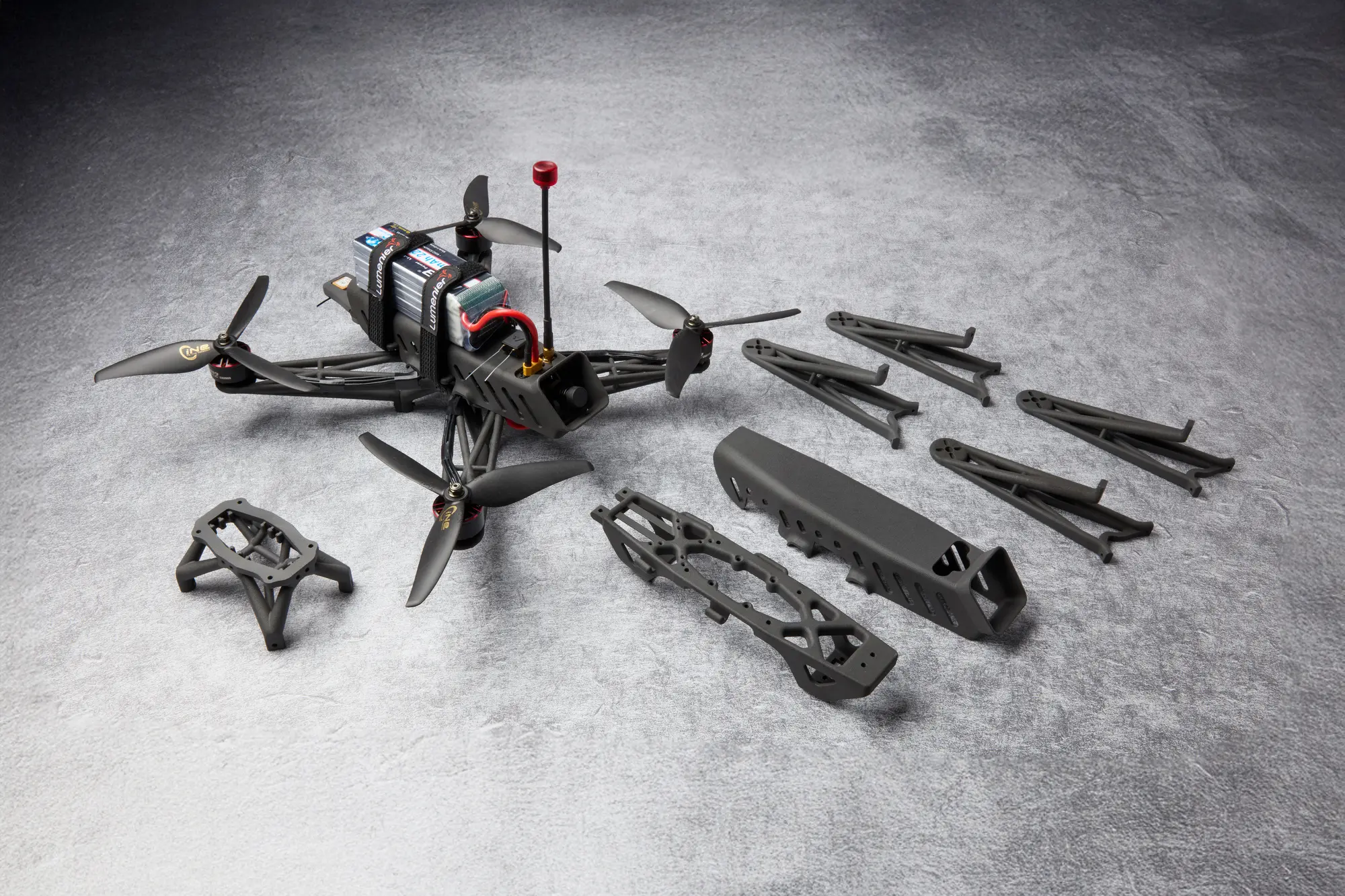
Traditional drone manufacturing is constrained by expensive tooling, labor-intensive composite layups, and the geometric limits of CNC machining. 3D printing removes those barriers and enables:
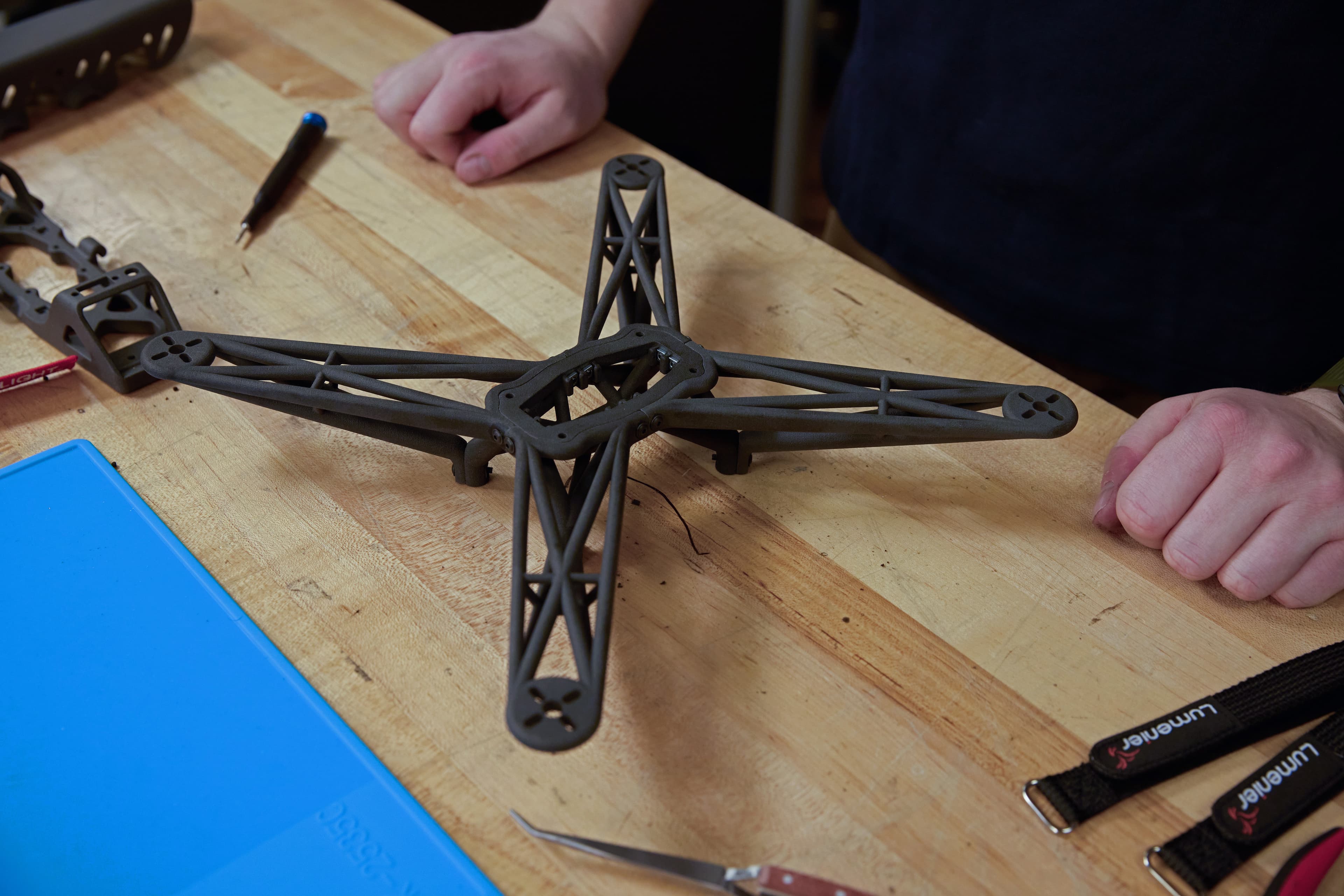
Unlimited Design Freedom
Strong, lightweight frames and geometries difficult to tool or machine
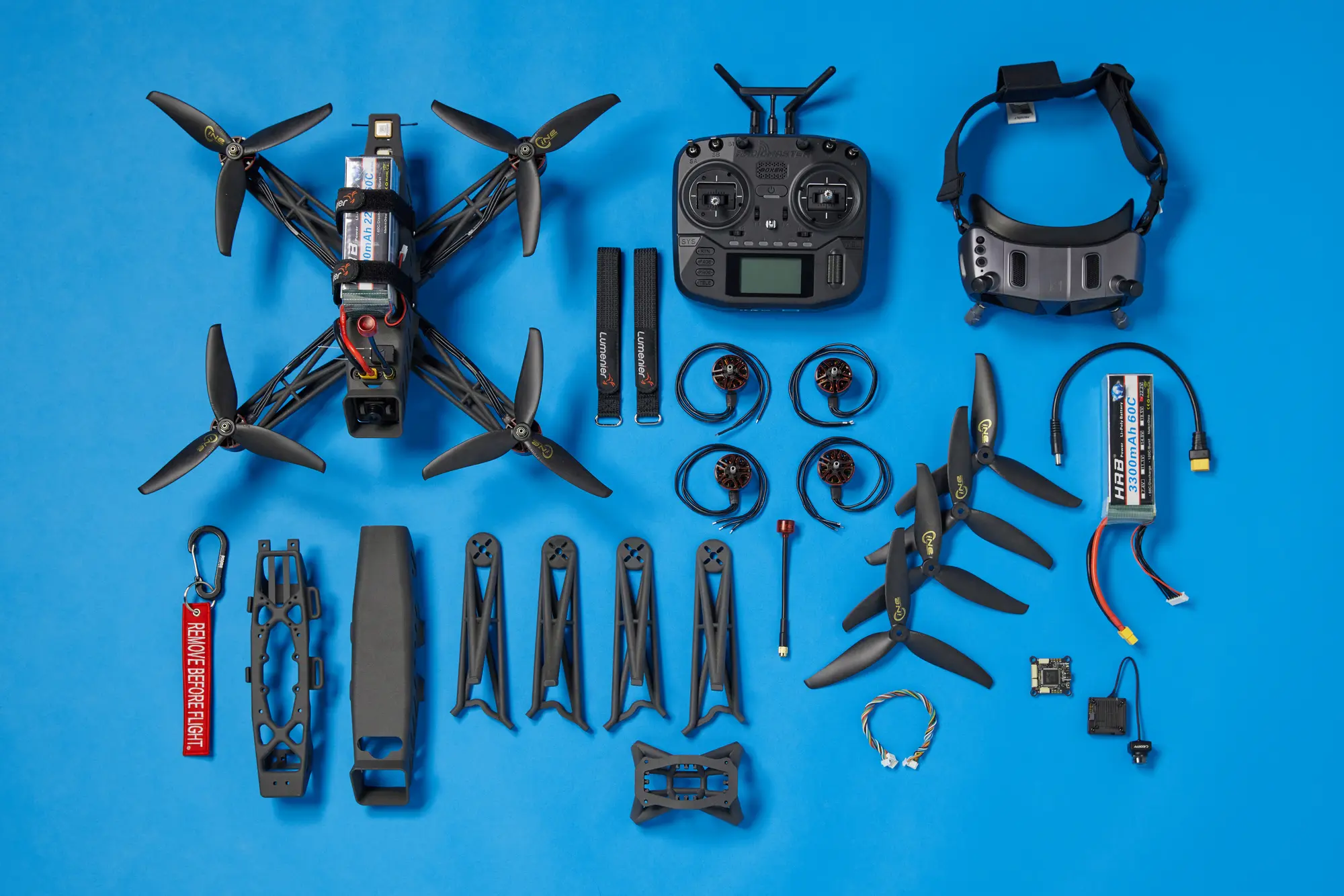
Faster Time to Market
Low-volume production without tooling lead times or minimum orders
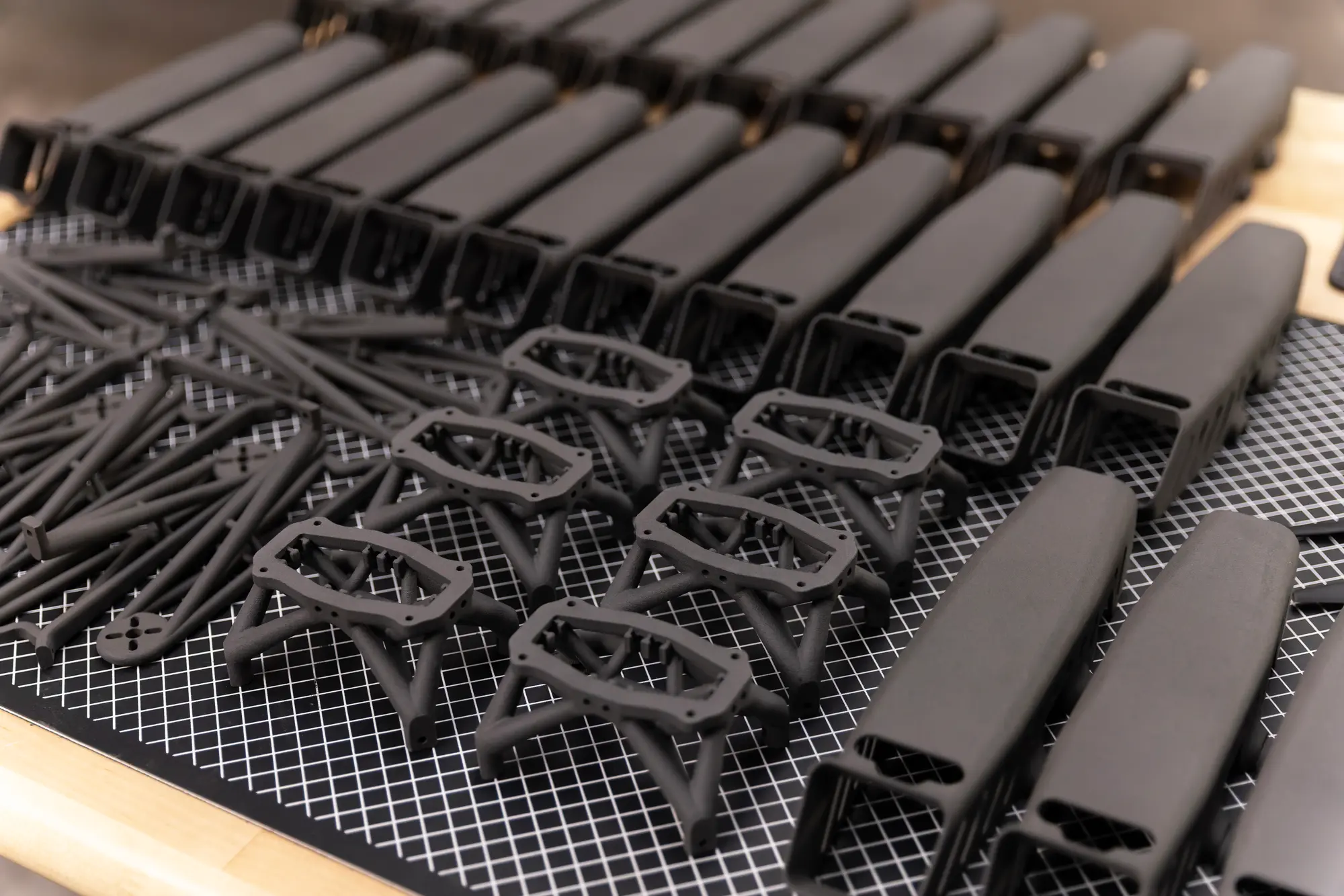
In-Field Repairability
Affordable, accessible printers that keep drones flying anywhere
Why 3D Print Drones with Formlabs
Faster iteration, lower cost, and full control — with production-grade materials on accessible, ITAR-ready printers
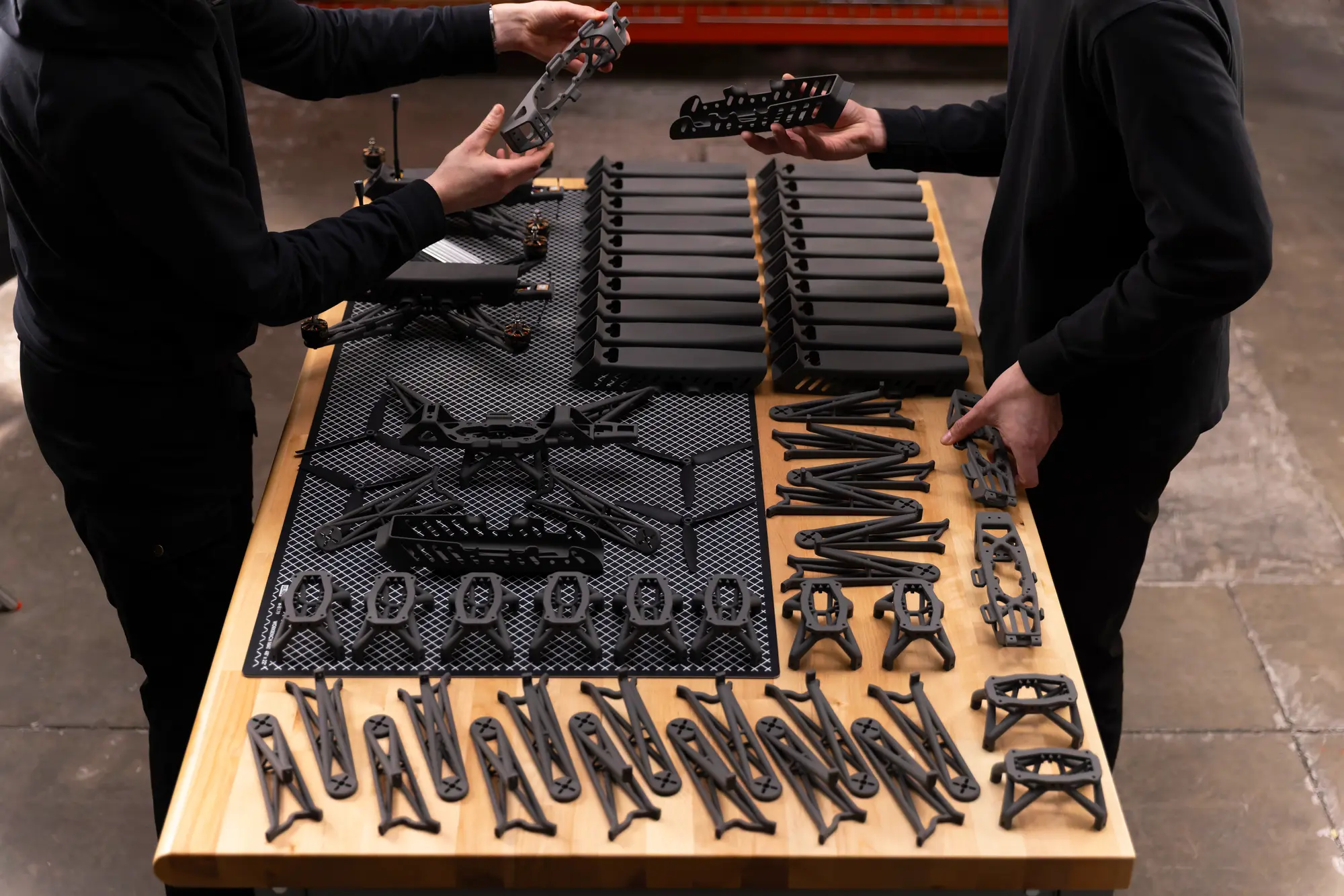
Scale production, not overhead, with 50% lower cost per part.
High Throughput, Low Cost
Print 20 drone frames per Fuse X1 build at $59 per frame vs $239 per frame via outsourcing vs $115 per frame via Legacy SLS.
Explore Drone Production in Practice
From first prototype to full production, our customers trust Formlabs to bring flight-ready parts from design to deployment — in-house, on their own timeline.
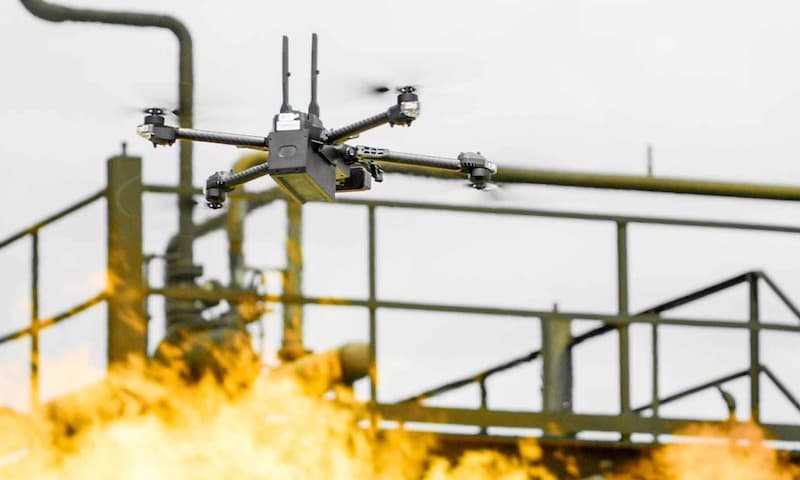
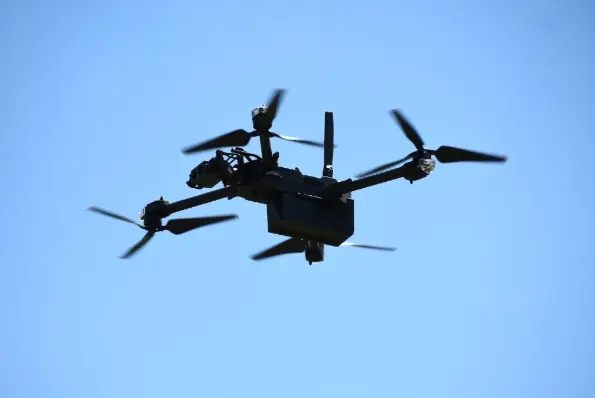
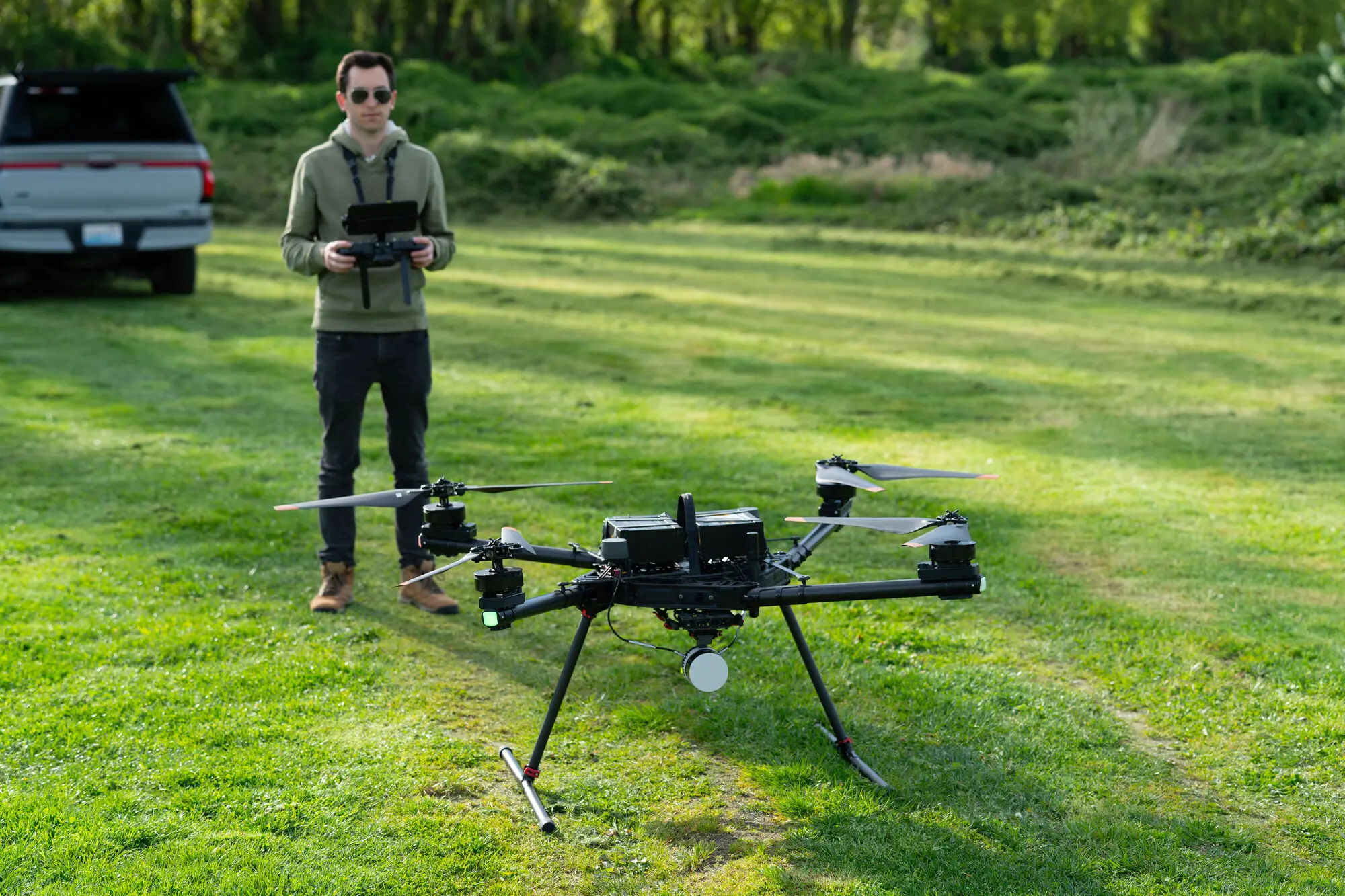
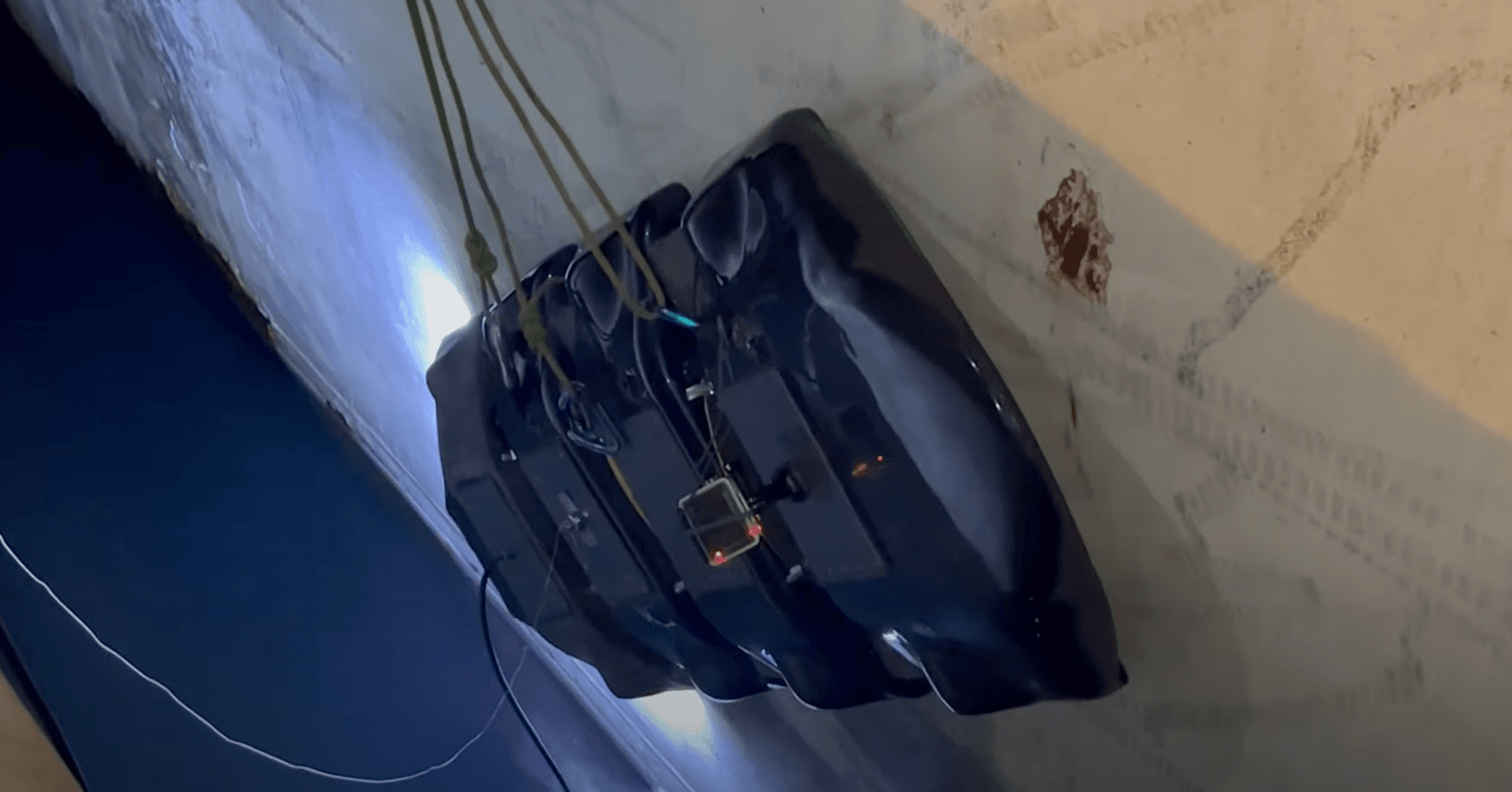
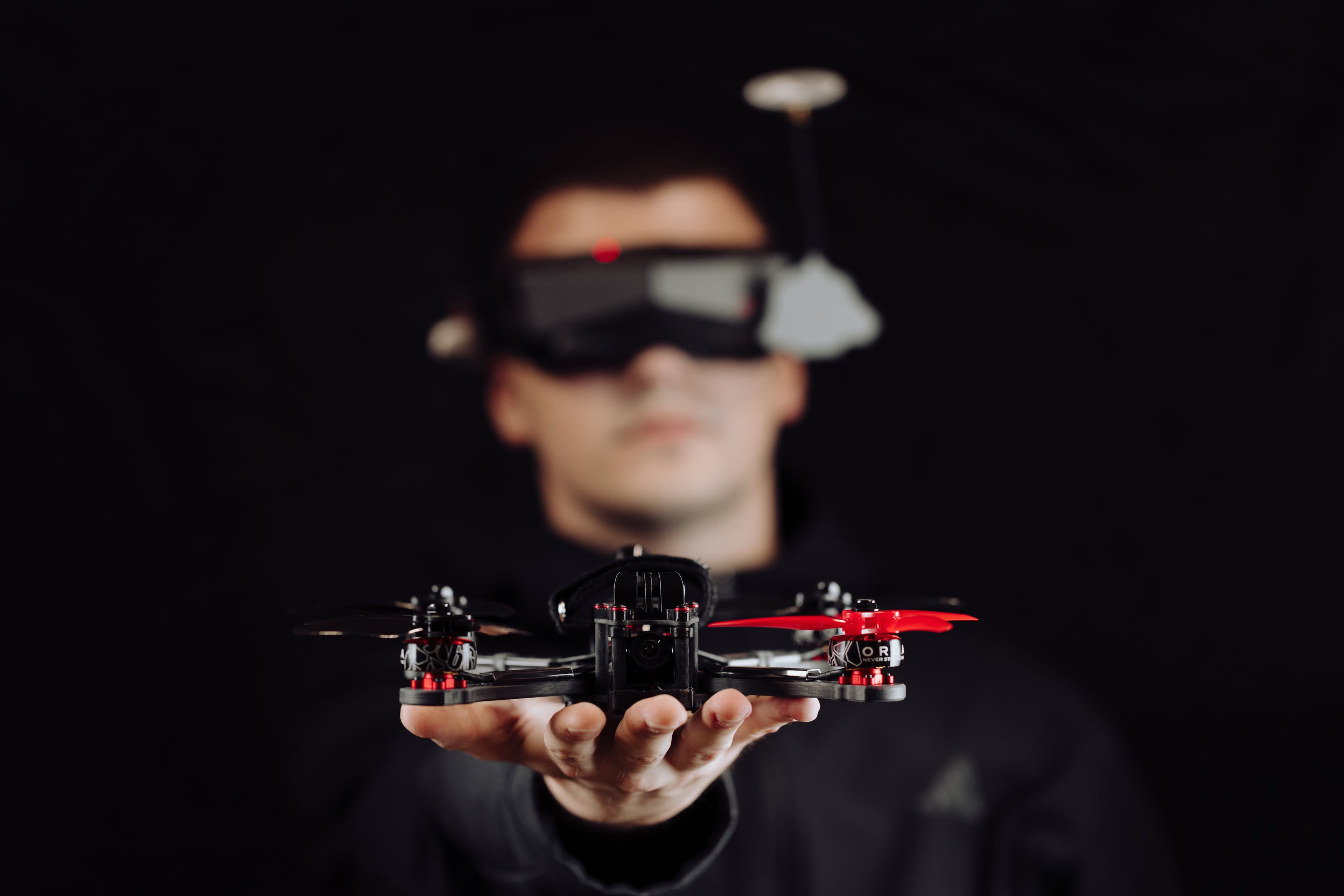
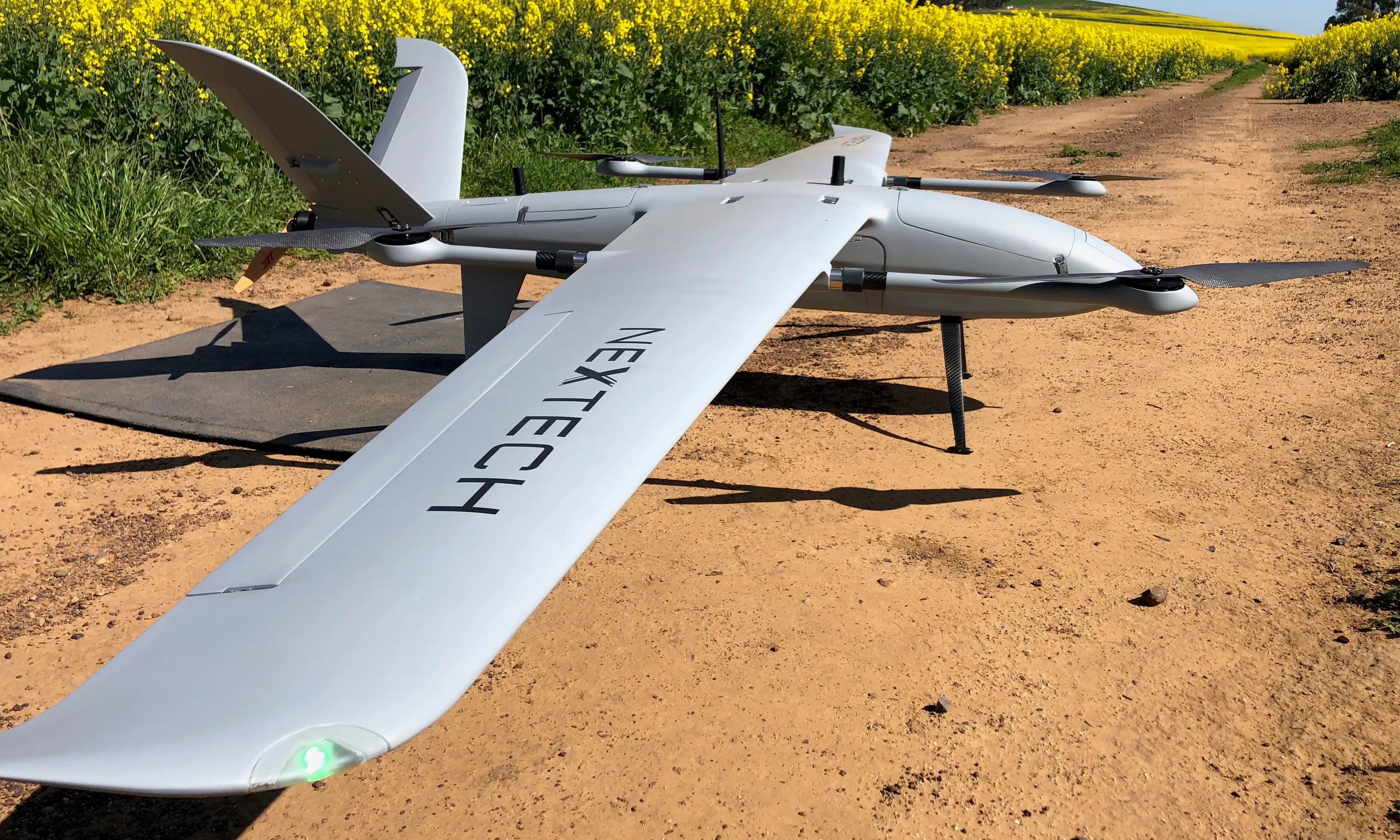
Trusted by Drone Innovators Worldwide



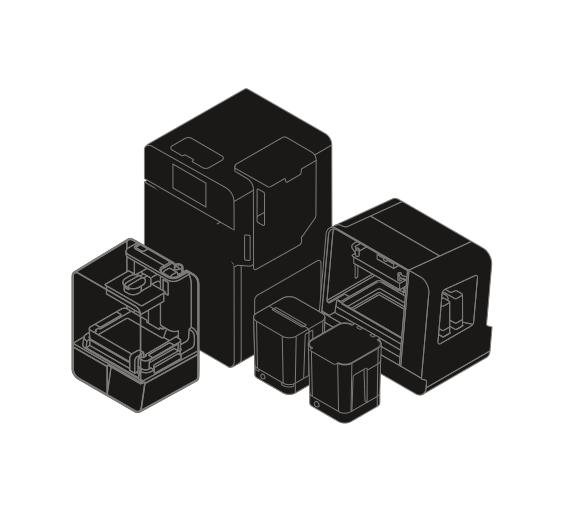
A Full Suite of 3D Printing Solutions for Drones
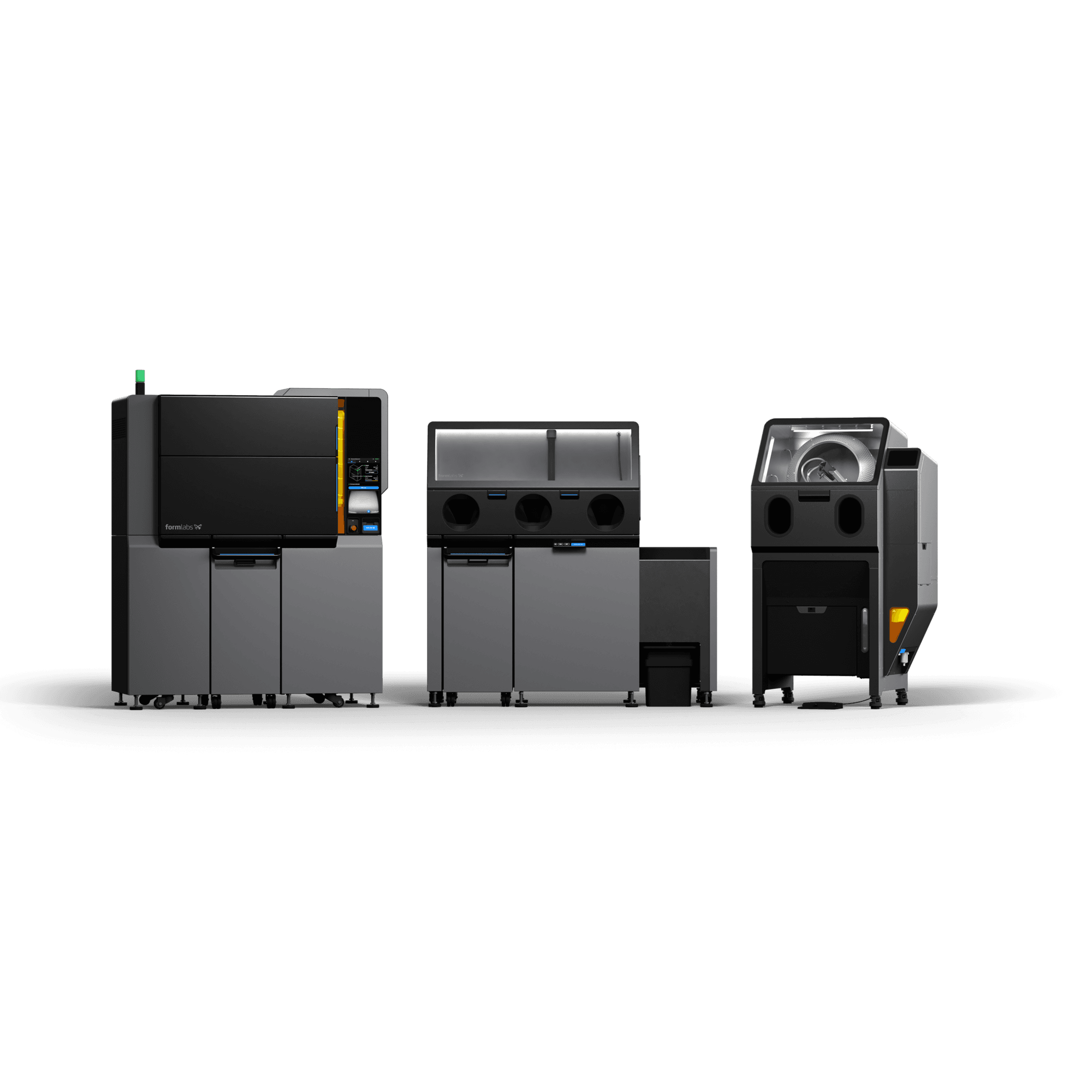
Fuse X1
Scale answer for production volume (4K+ drone bodies / year)
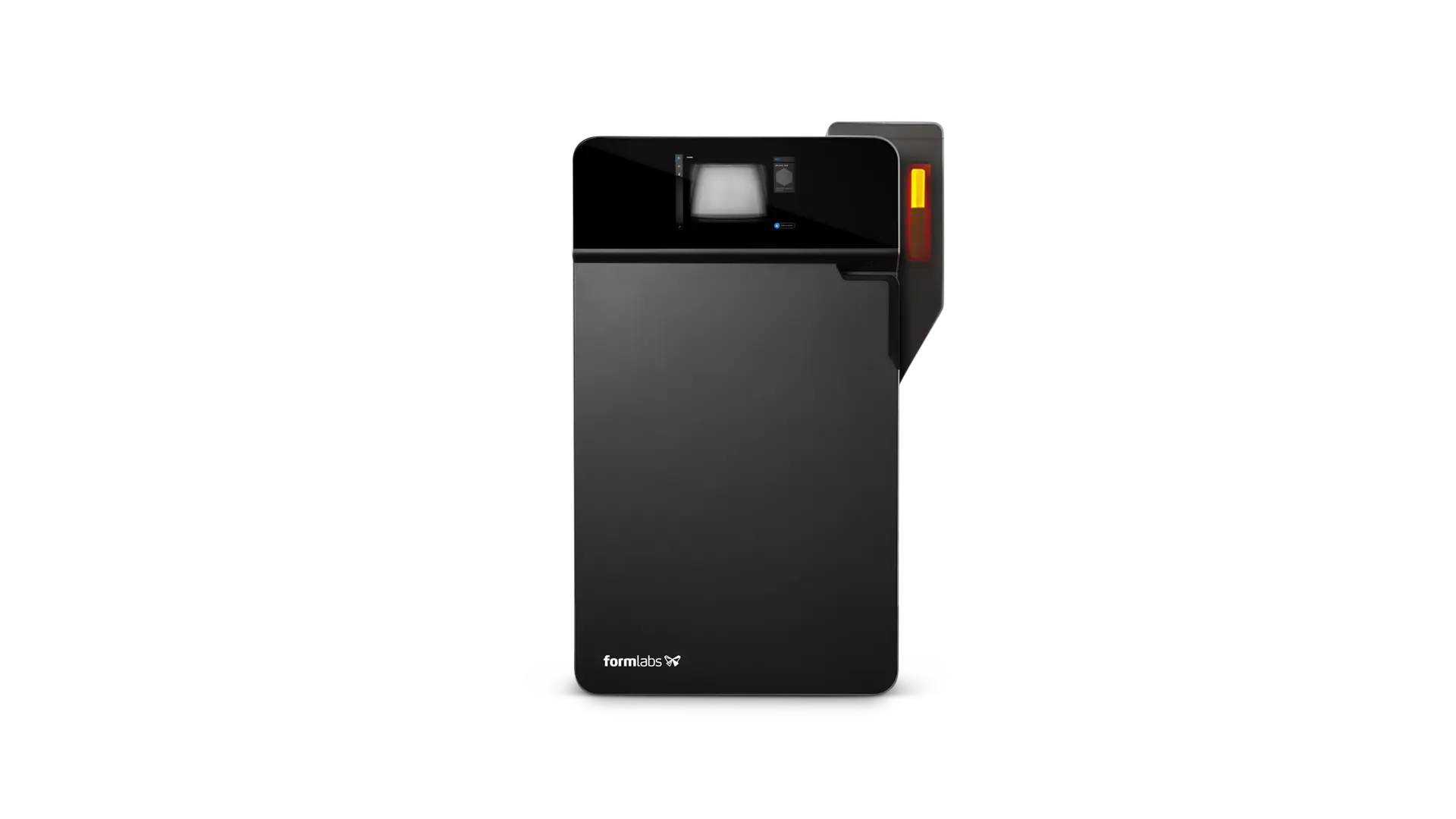
Fuse 1+ 30W
Production-ready nylon 3D printing for your benchtop
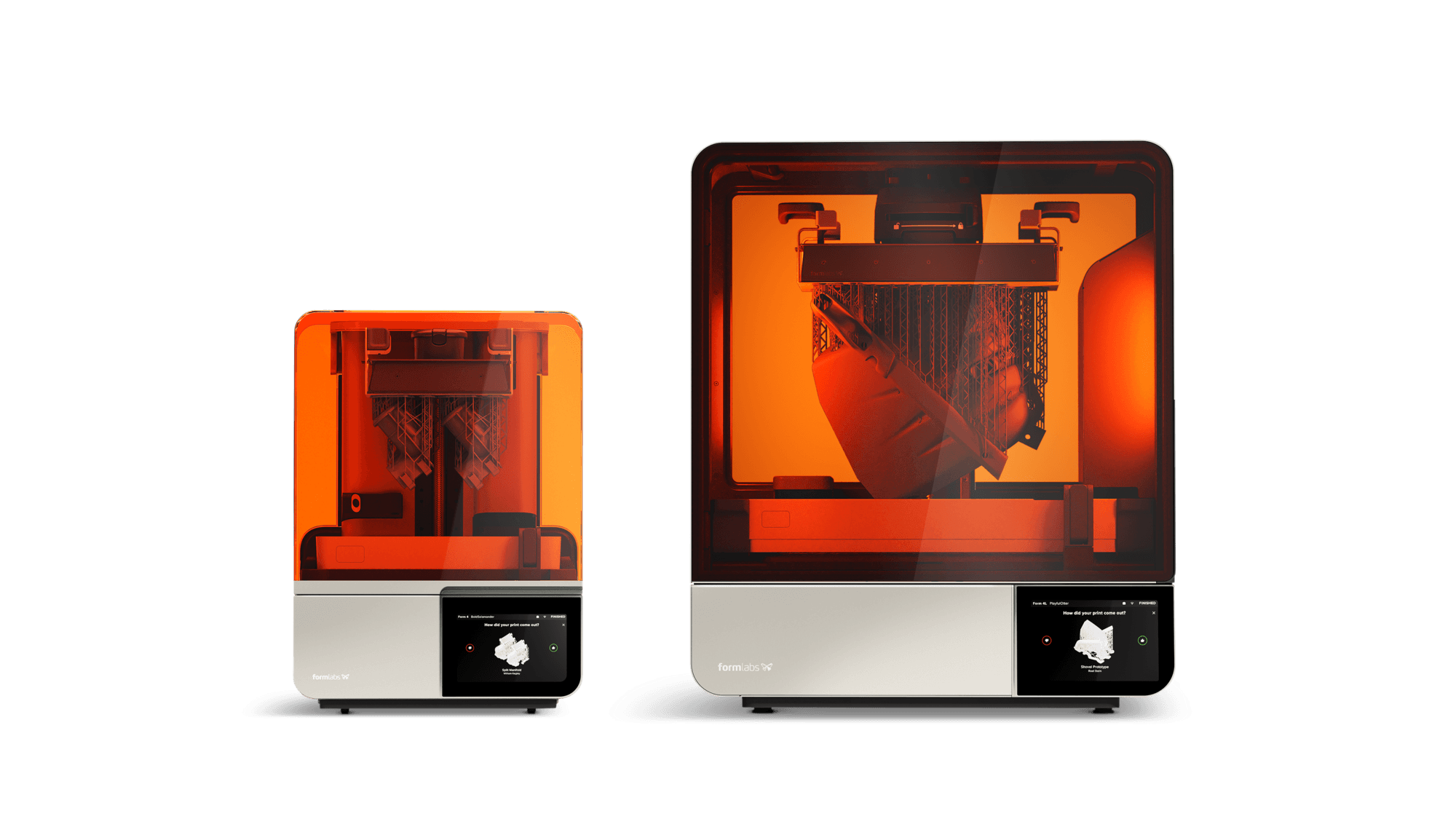
Form 4 Series
SLA for watertight enclosures and sealed housings
A Versatile Range of 3D Printing Materials for Drones
Formlabs SLS powders and SLA resins are lightweight yet durable and environmentally resistant for drone applications.
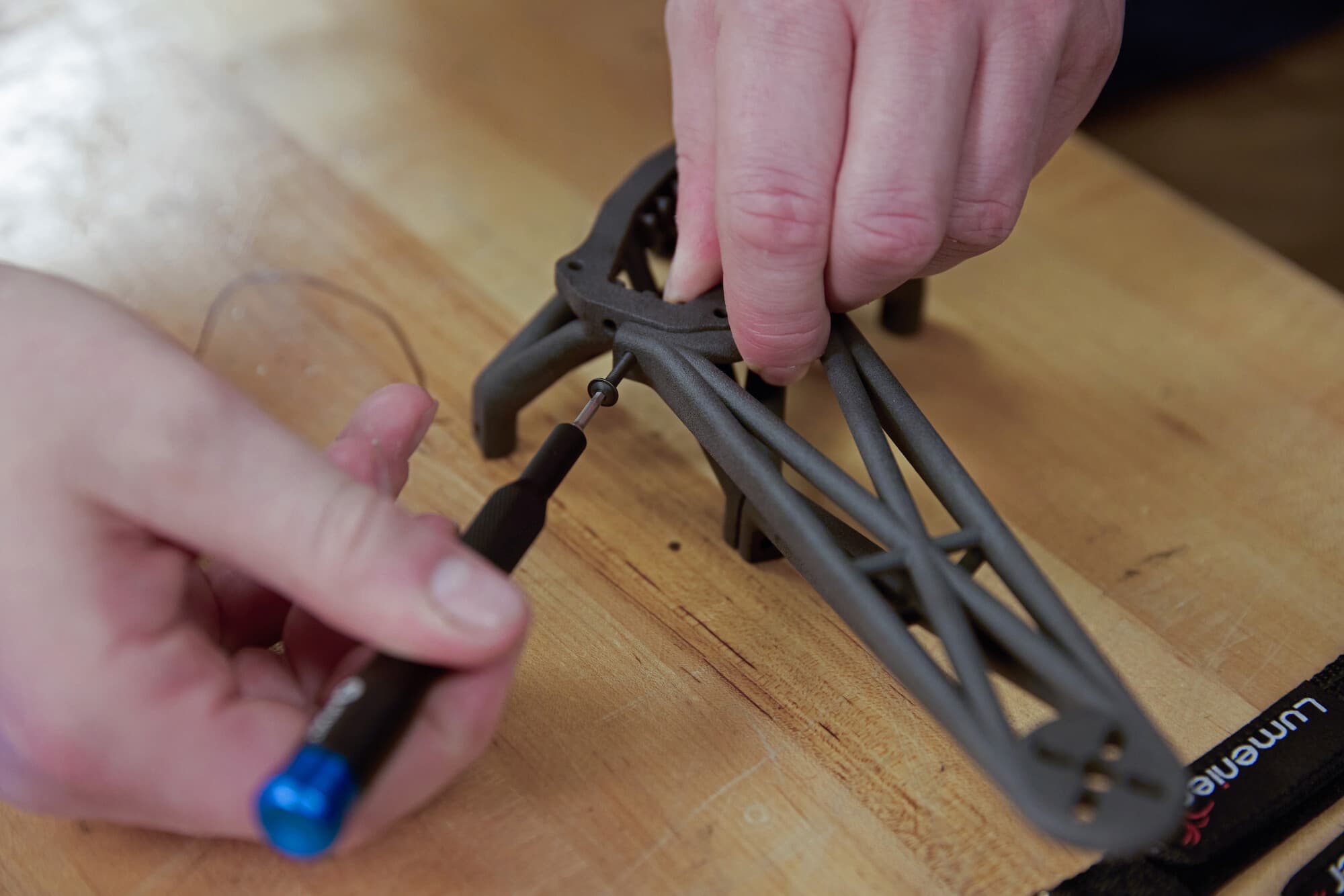
The All-Rounder
Nylon 12
Recommended drone applications:
Frame / chassis
Arm tubes
Mounting brackets
Key features
High dimensional accuracy
Durable, lightweight
Environmental stability
High ductility
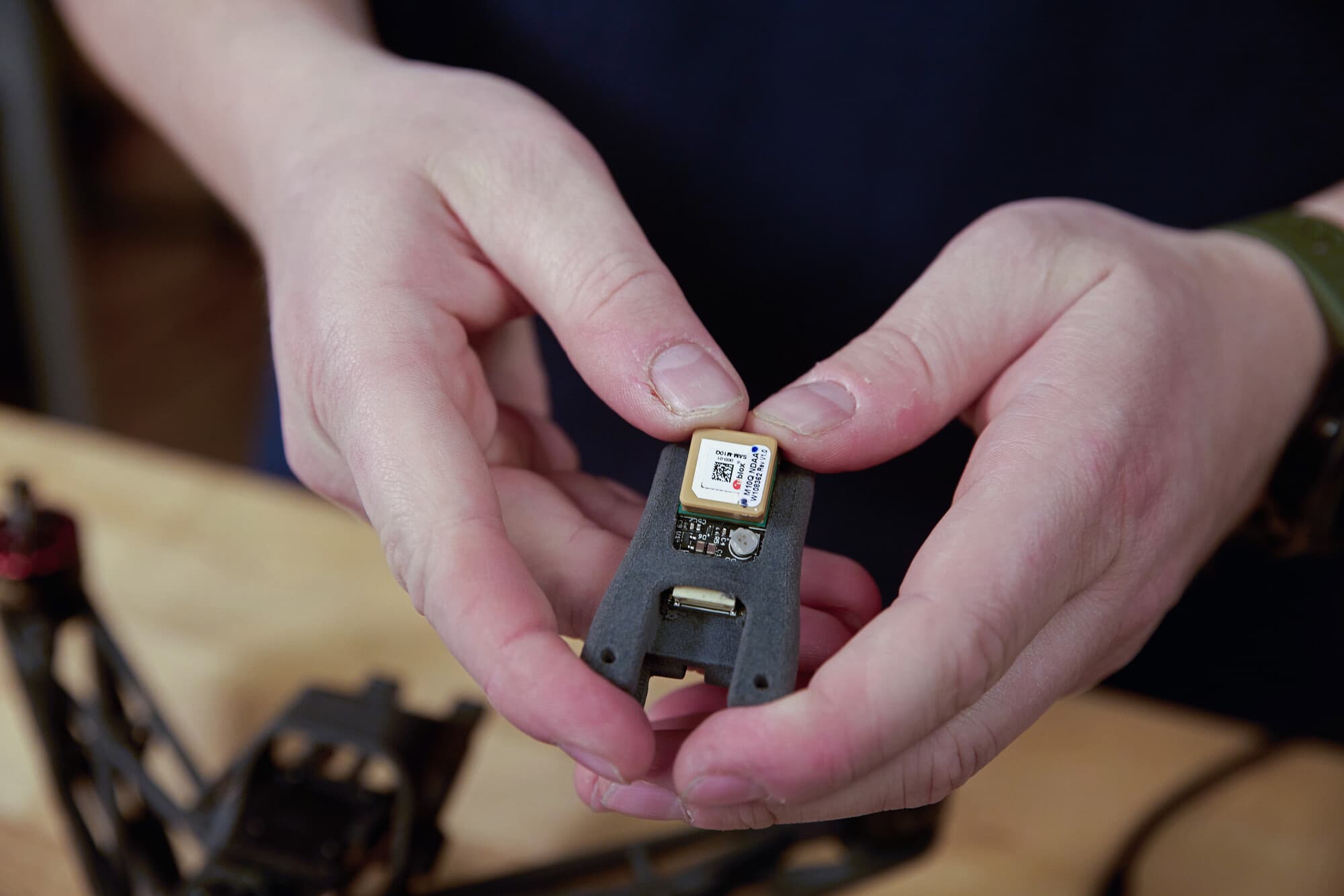
Flexible & damping
TPU 90A
Recommended drone applications:
Camera gimbal mounts
Motor dampeners
Landing pads
Key features
Superior tear strength
High elongation at break
Variable softness
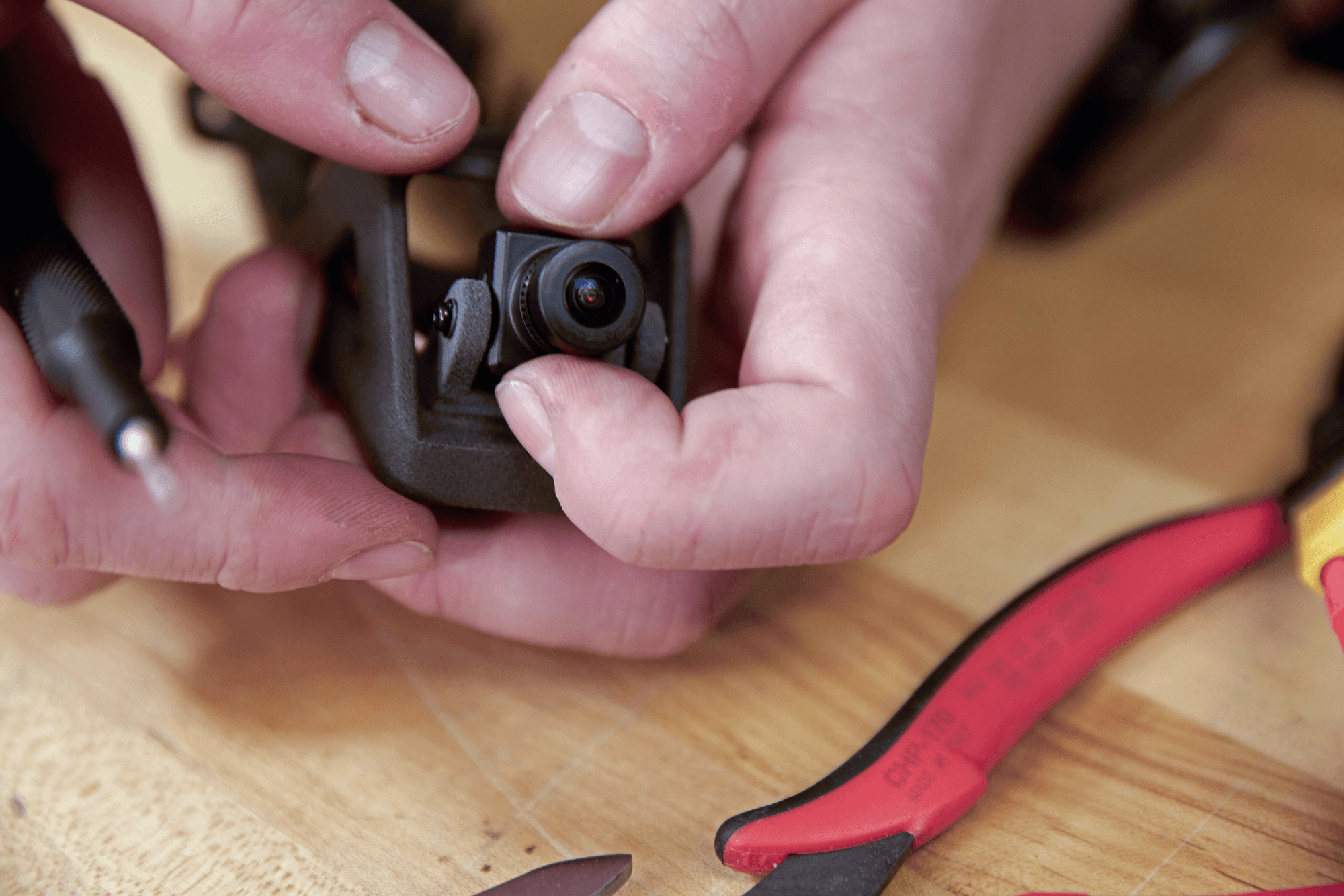
Comparable to ABS
Tough 2000
Recommended drone applications:
Camera mount
Payload housing
Key features
Strength & stiffness like ABS
Energy absorption
High temp resistant
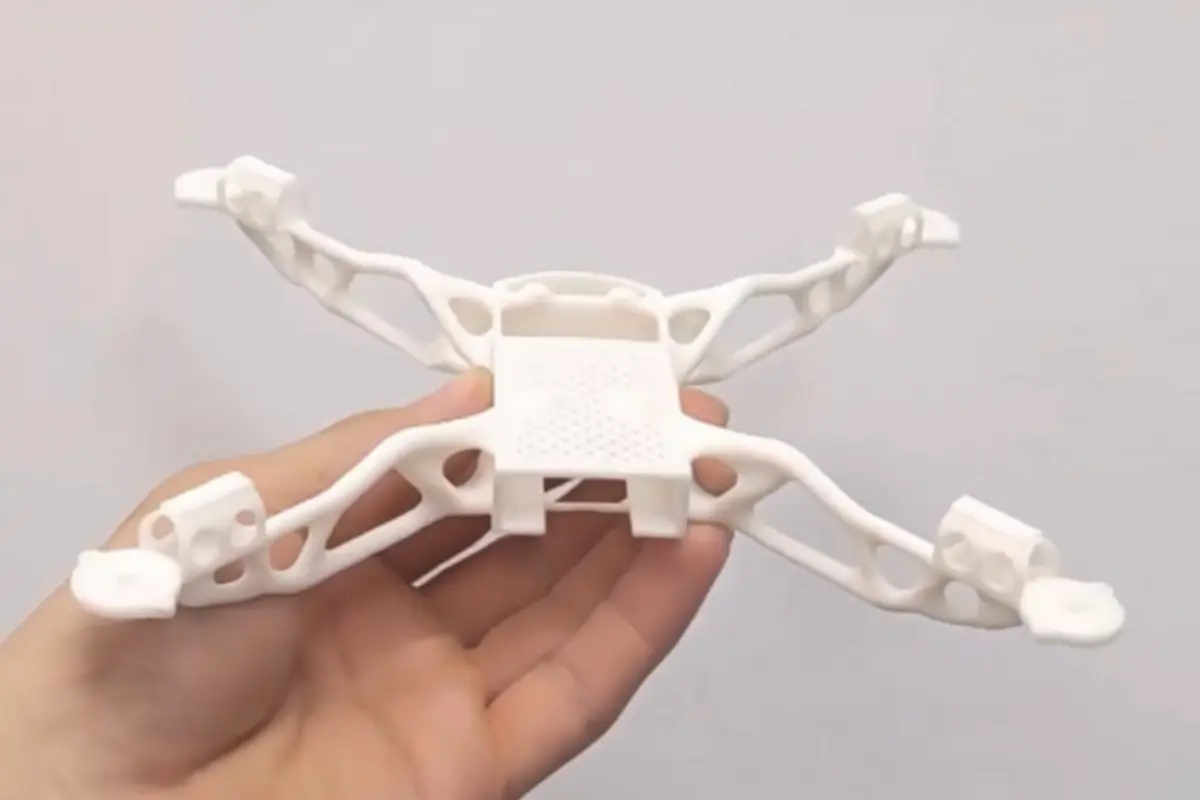
Glass-infused anchor
Rigid 10K
Recommended drone applications:
Fixed-wing fuselages
Aerodynamic fairings
Key features
Extreme stiffness
Aerodynamic finish
Heat / chemical resistant
Compare the Paths to 3D Printed UAV Production
The Fuse series prints lightweight, durable end-use UAV parts with no support structures while the Form series prints isotropic, watertight, high-detail parts ideal for sealed electronics housings and payload enclosures.
Starting with desktop FDM
Affordable for quick mockups, but risky for flight. Heat-fused layers create a weak vertical axis prone to delamination under flight vibration, and complex designs require tedious support removal.
With in-house Formlabs
The Fuse series prints lightweight, durable end-use UAV parts with no support structures while the Form series prints isotropic, watertight, high-detail parts ideal for sealed electronics housings and payload enclosures.
FAQs
Formlabs SLS powders and SLA resins are engineered to withstand the impact, vibration, water, chemicals, and UV exposure drones face outdoors, making them suitable for end-use parts rather than prototypes alone.
Both. A single Fuse X1 build can handle a 5-ft-wingspan fixed-wing, 20 ~1-ft quads, or 100+ nano UAVs. Formlabs drone customers like ORQA are already producing thousands of end-use parts a year on their Fuse Series printers.
Yes. Formlabs printers do not require a cloud connection and can operate fully offline, so print data and part files never leave your facility.
Yes. With entry price points under 4K and SLA printers that can travel in a Pelican case, you can produce industrial quality parts on the ground, the minute they're needed.
Yes. SLS (selective laser sintering) powders and SLA engineering resins are routinely used for end-use drone enclosures, brackets, and structural components. FDM parts are typically limited to prototyping and non-load-bearing applications.
FDM is used for prototyping and low-stress parts. SLA and MSLA are used for complex, high-detail components, watertight enclosures for UUVs, and rigid, aerodynamic fuselages. SLS is the primary choice for end-use structural parts due to high impact resistance, tensile strength and design freedom.
AM enables on-demand spare part production, eliminating minimum order quantities and long lead times from traditional manufacturing. Operators can store digital files rather than physical inventory and print parts as needed.
The biggest saving is tooling: additive parts need no molds or fixtures, so you skip the six-figure upfront investments that injection molding and CNC setups require (e.g., one Formlabs customer avoided a €100,000 tooling bill).
For frames and structural parts, SLS powders are the standard: Nylon 12 Powder for general frames and brackets, Nylon 12 Tough Powder for impact-prone crash frames and motor mounts, and carbon-fiber-filled Nylon 11 CF Powder for maximum stiffness at minimum weight. For enclosures and housings, large-format SLA resins are the better fit — they produce watertight, high-detail parts, which is why teams use the Form 4L for sealed electronics housings and payload enclosures. The right choice ultimately depends on the load and environment each part faces.