
Installation et utilisation du Finish Kit (génération Form 4)
Installation et utilisation du Finish Kit (génération Form 4)
Après l’impression, utilisez les outils inclus dans le Finish Kit pour retirer la pièce imprimée de la plateforme de fabrication, la rincer et retirer les supports.
Composants du Finish Kit
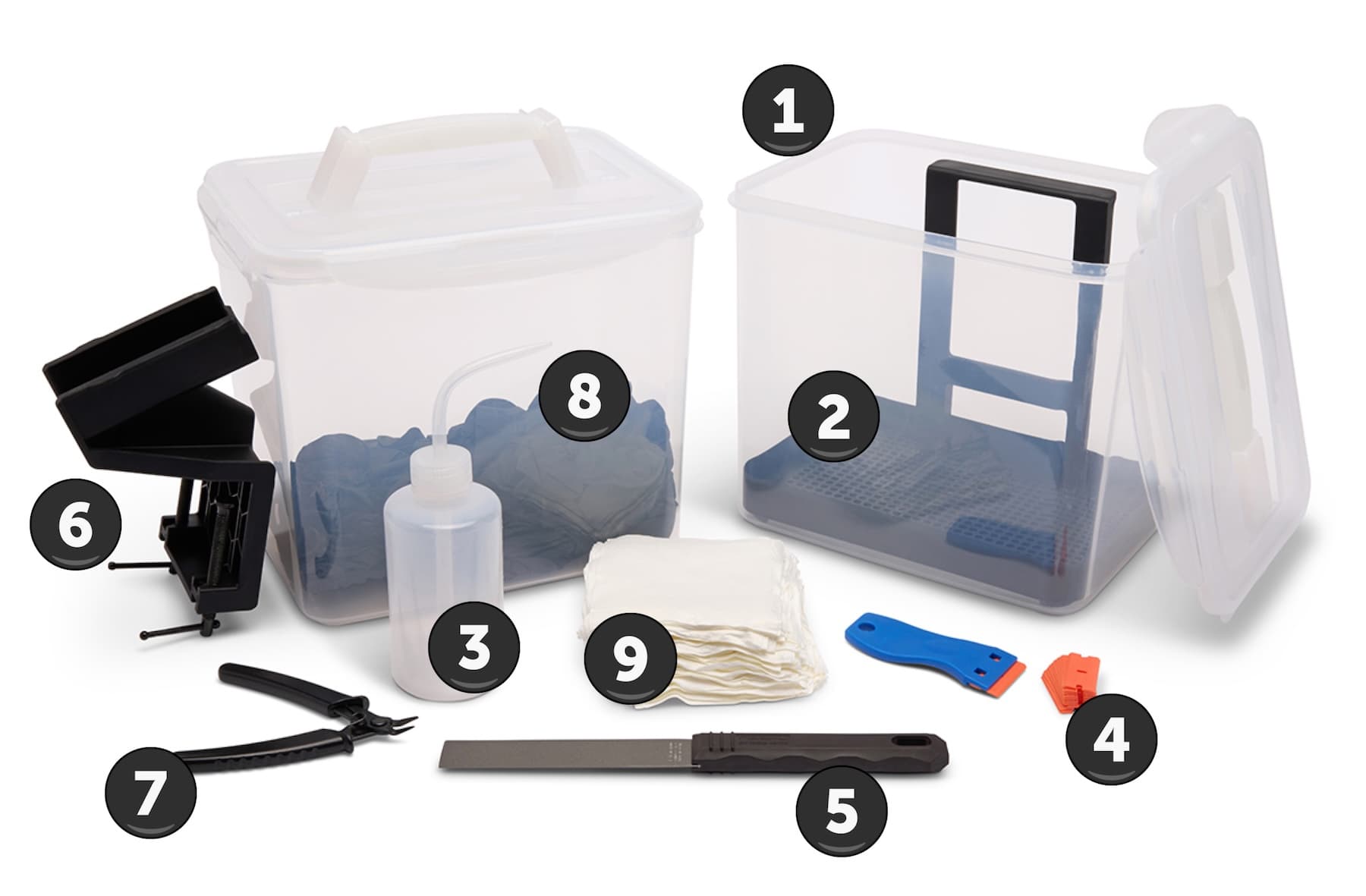
- Bacs de rinçage : deux seaux en plastique pour le solvant. Les couvercles se referment pour réduire l’évaporation du solvant.
- Panier de rinçage : utilisé pour transférer les pièces d’un bac à l’autre. Le panier peut être posé sur le bord du bac de rinçage pour égoutter les pièces.
- Bouteille de rinçage : gardez-la remplie de solvant propre pour rincer les impressions et nettoyer les canaux internes.
- Raclette en plastique pour bac : à utiliser pour inspecter et nettoyer le bac à résine de la Form 4.
- Spatule métallique : permet de retirer les pièces de la plateforme de fabrication. N’utilisez pas cet outil pour inspecter le bac à résine de la Form 4.
- Gabarit : permet de fixer la plateforme de fabrication pendant que vous retirez votre pièce imprimée.
- Pinces coupantes : Utilisez-les pour retirer soigneusement les supports de vos impressions.
- Gants jetables en nitrile : portez des gants lorsque vous retirez et finissez vos impressions.
- Chiffons de nettoyage : chiffons en microfibre non tissés jetables et non pelucheux pour le nettoyage des composants optiques de l’imprimante.
Utilisation du socle
Installation du gabarit de la plateforme de fabricationFixez le gabarit de la plateforme de fabrication au bord de votre surface de travail en serrant les pinces à vis sous la surface de travail. Veillez à ce qu’il y ait suffisamment d’espace autour du socle pour que vous puissiez travailler. | 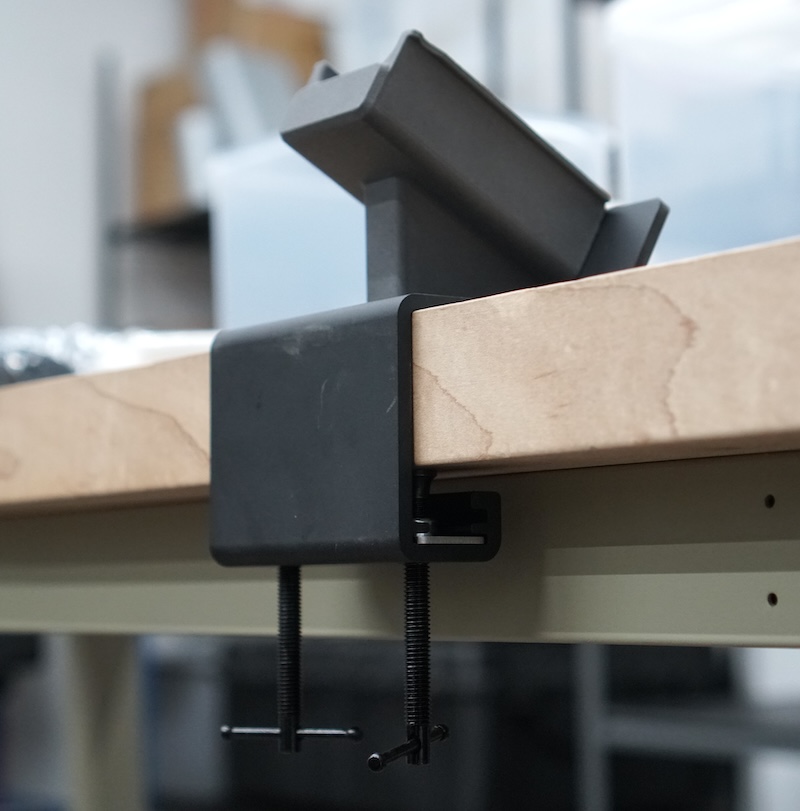 |
Fixation de la plateforme de fabrication sur le gabaritAvec votre impression orientée vers le haut, faites glisser la poignée de la plateforme de fabrication sur le support correspondant du gabarit. | 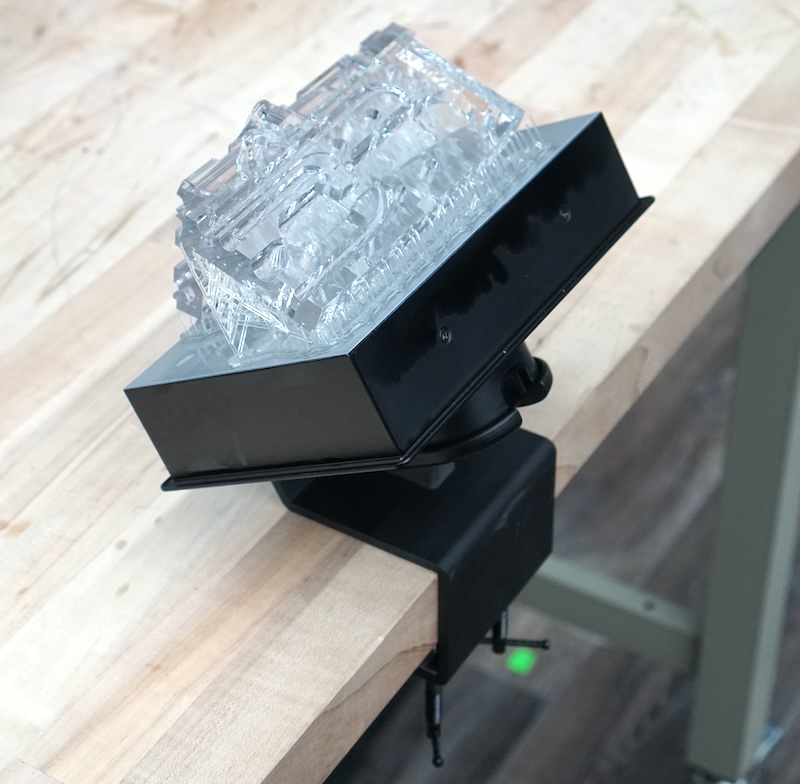 |
Retrait des pièces imprimées de la plateforme de fabricationUtilisez l’outil de retrait ou la spatule métallique pour retirer vos pièces imprimées de la plateforme de fabrication. Attention :N’utilisez pas d’outils tranchants sur des surfaces lisses, comme la plateforme de fabrication recouverte d’un film de résine, pour éviter tout glissement imprévu. Ne pas orienter les outils tranchants vers soi, surtout lors d’une découpe ou d’un raclage. |  |
Étapes suivantes
Si ce n’est pas déjà fait, remplissez partiellement les bacs de rinçage avec du solvant. Si vous lavez vos impressions avec de l’éther monométhylique de tripropylène glycol (TPM), remplissez un bac de rinçage avec du TPM et l’autre avec de l’eau. Lavez vos pièces imprimées pour éliminer tout solvant liquide restant.
Une fois que vos pièces imprimées sont complètement sèches, vous pouvez les post-polymériser. Certaines résines Formlabs nécessitent une post-polymérisation pour atteindre leurs propriétés mécaniques optimales ou dans le cadre d’un processus de travail d’une pièce biocompatible.
Après la post-polymérisation, continuez à post-traiter vos pièces. Supprimez les marques de support, polissez vos pièces ou peignez-les en fonction de leur utilisation finale.