Post-Processing





Form Studio Wash+Cure
New
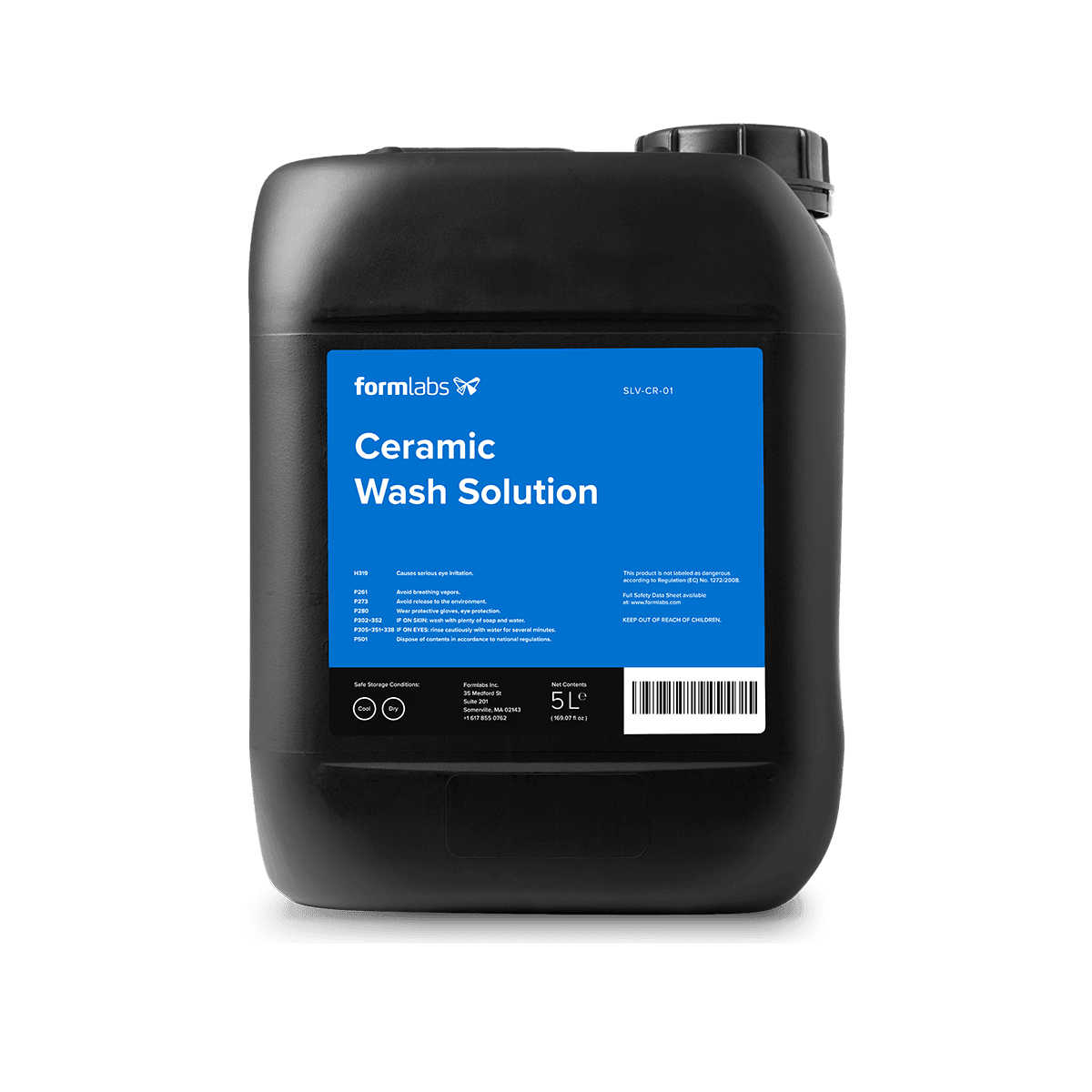
Ceramic Wash Solution (5 L)
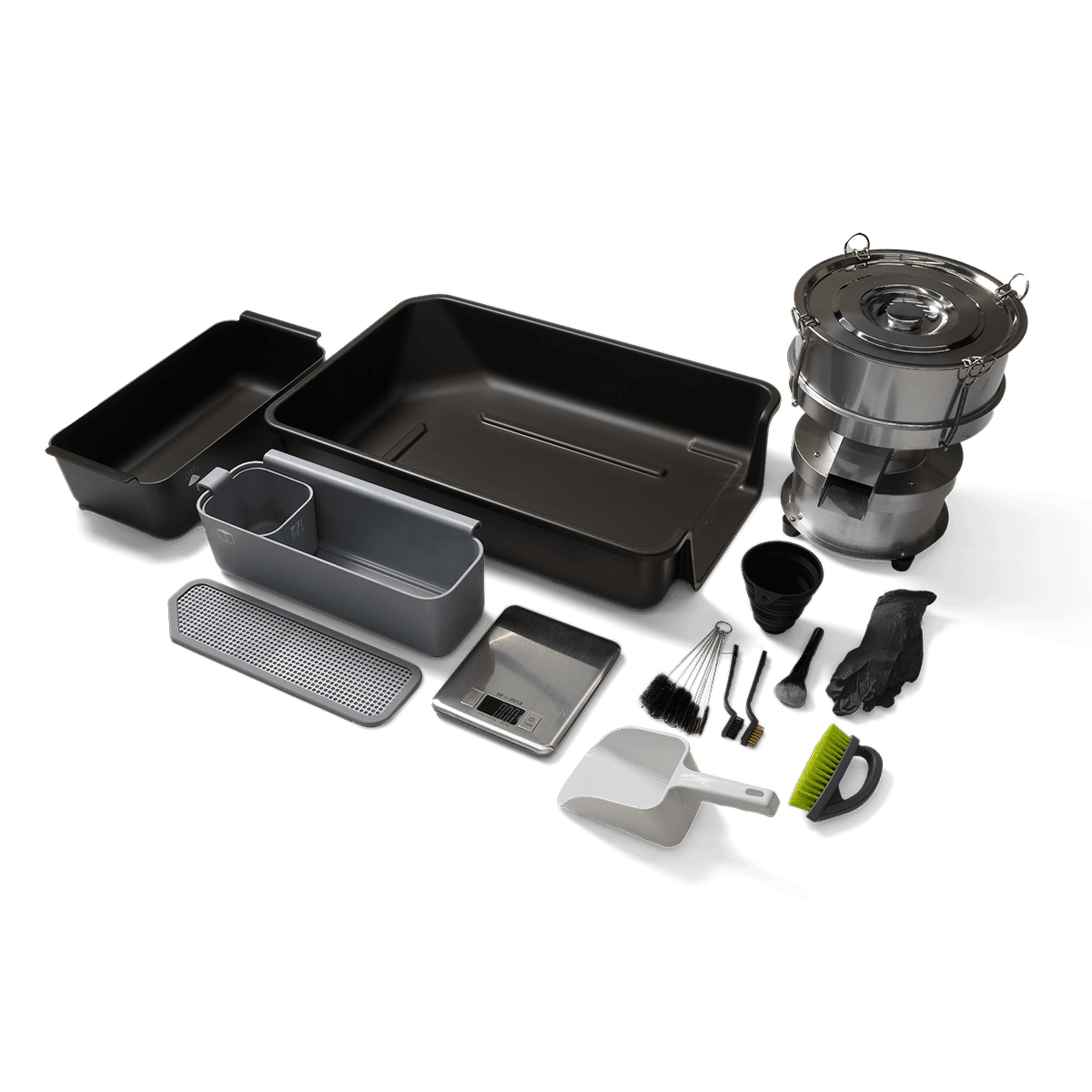
Finishing Tools
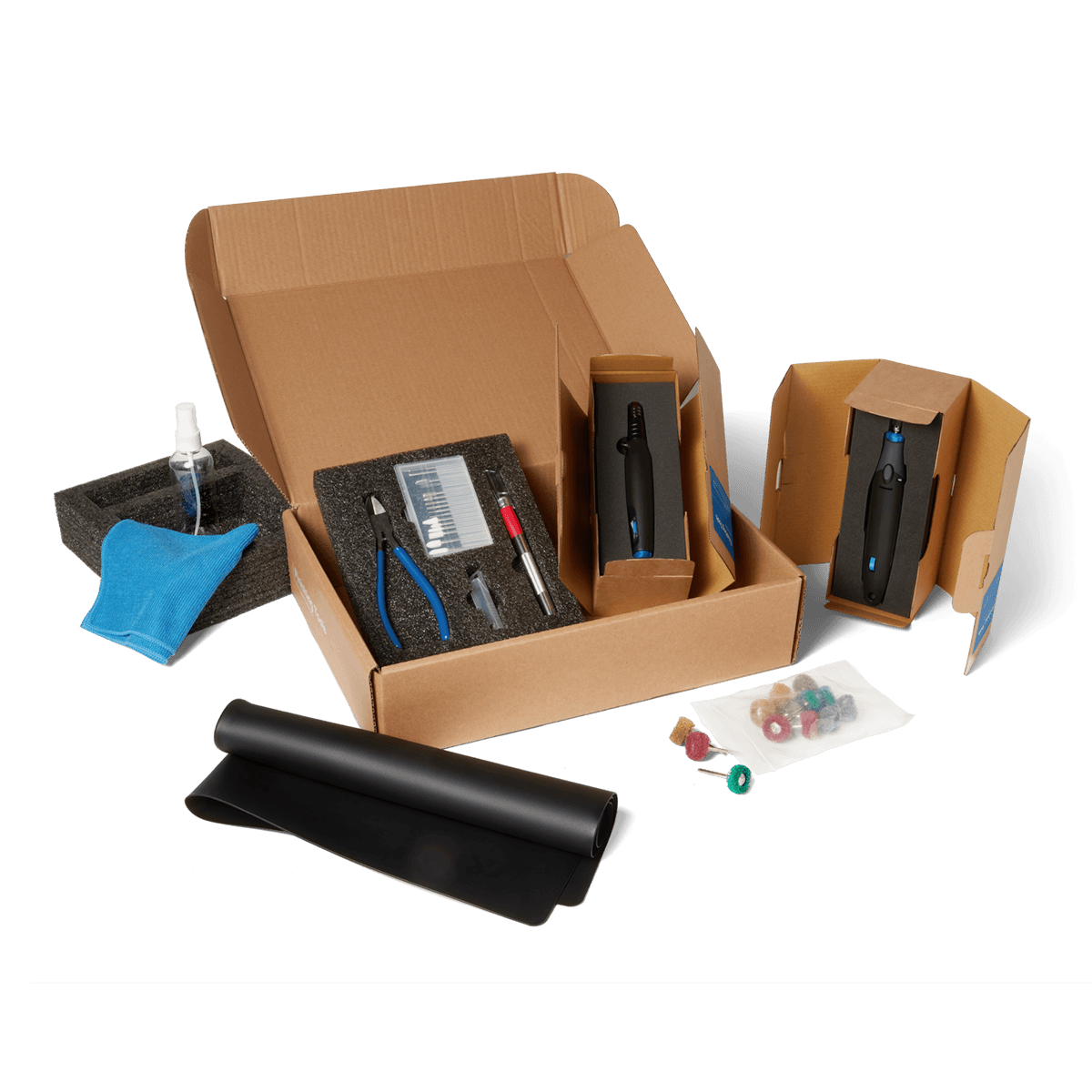

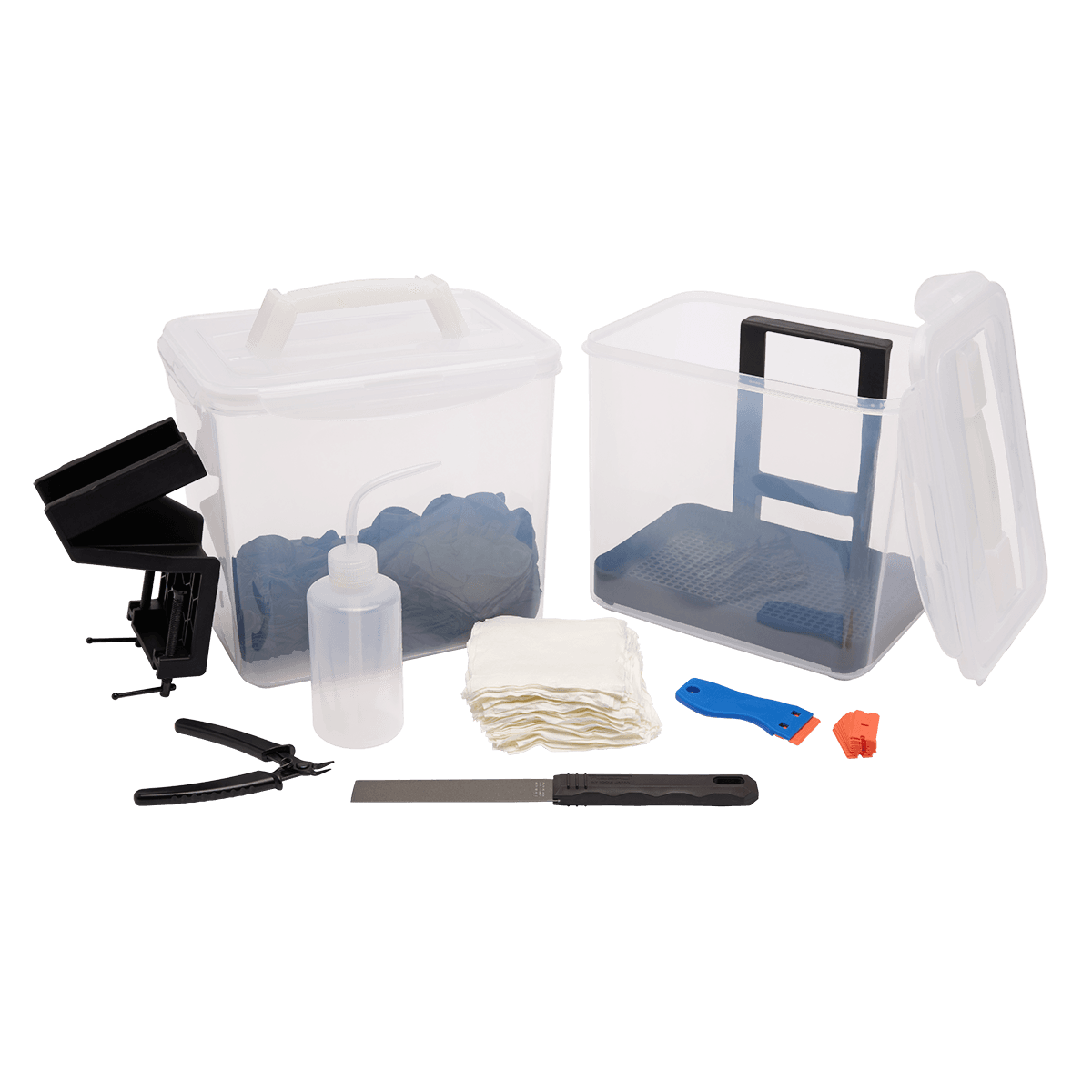
Form 4 Finish Kit

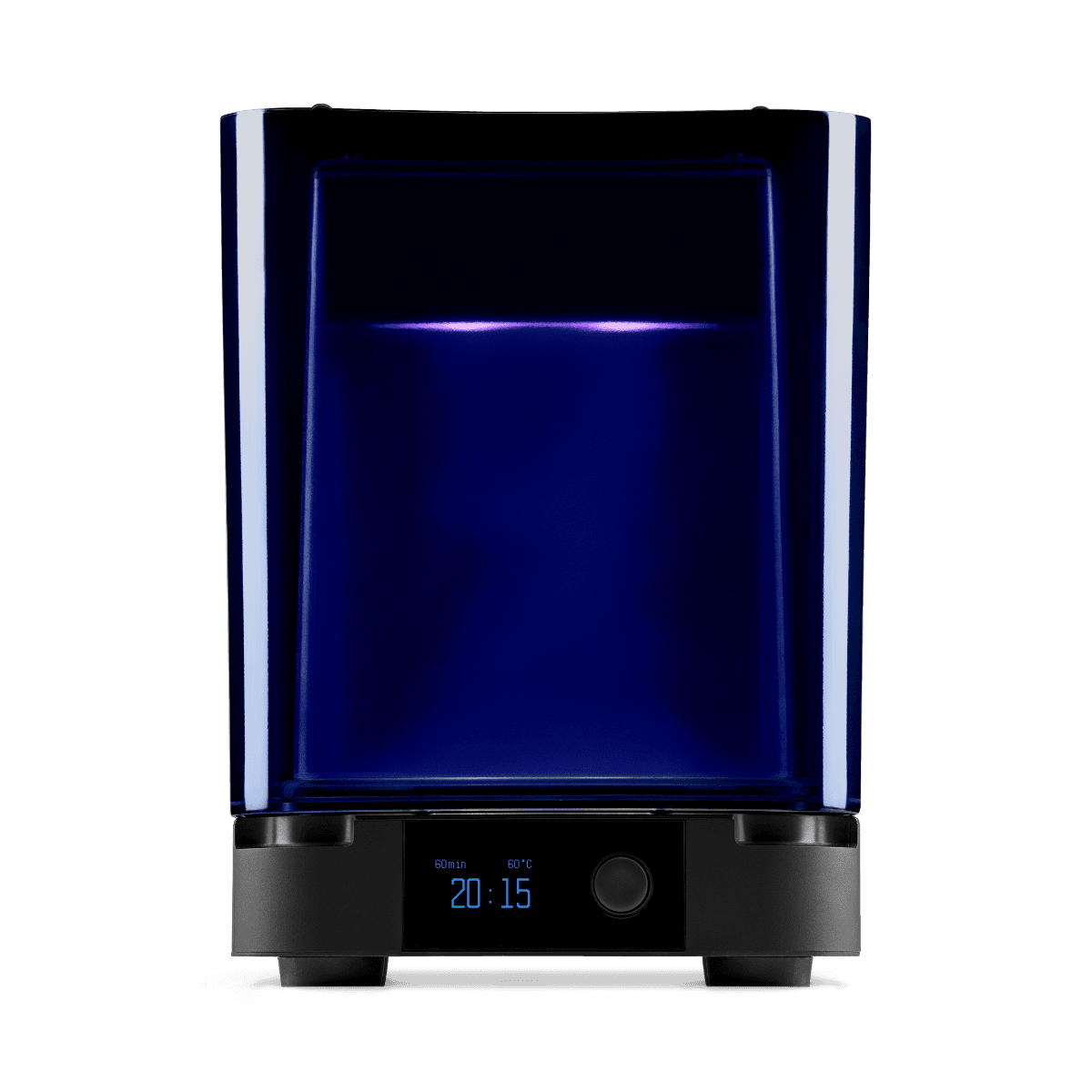
Form Cure V1
Form Cure V2 120V
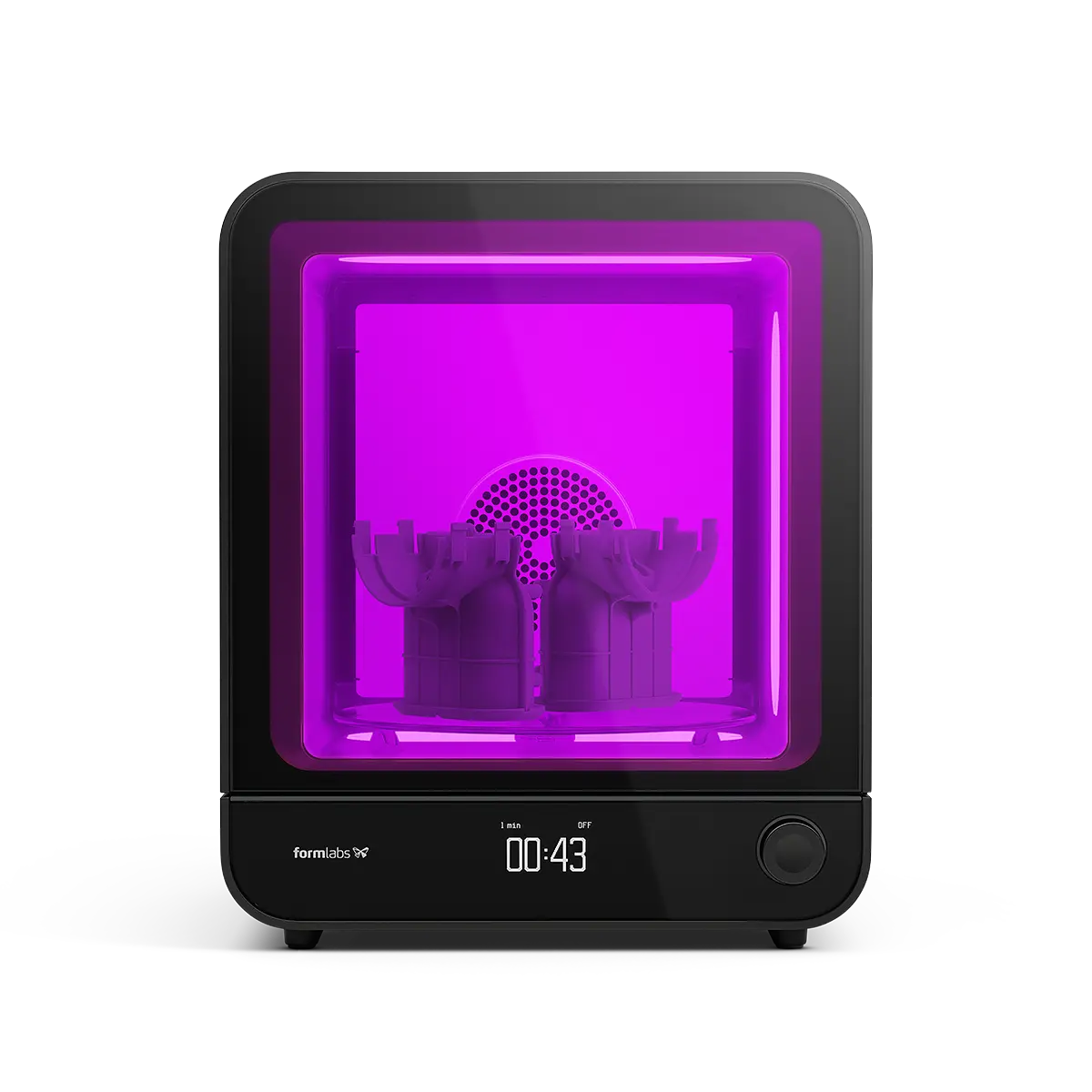
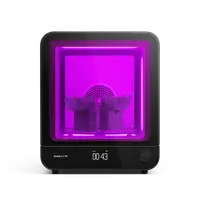
Form Cure V2 230V
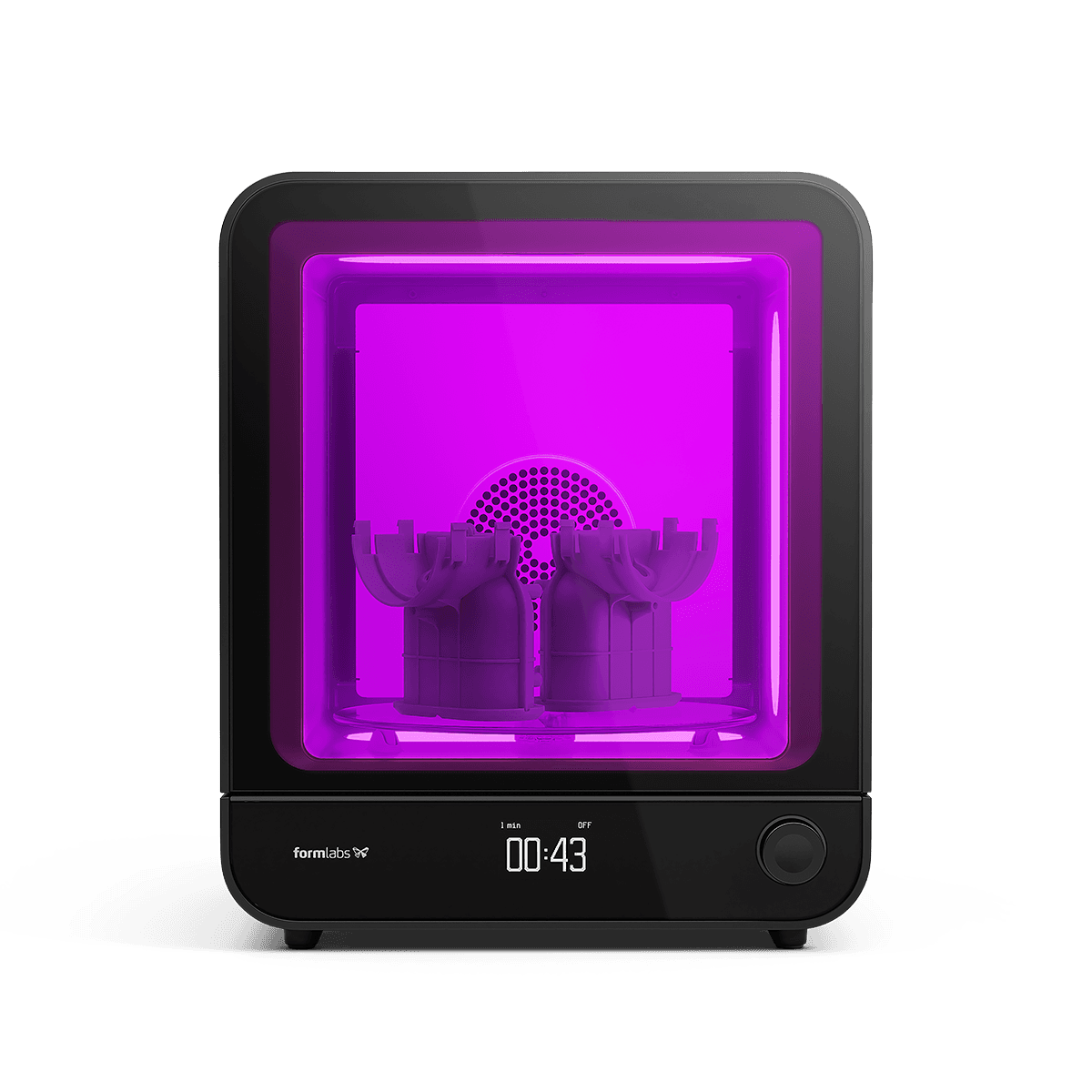

Form Cure L V2 120V
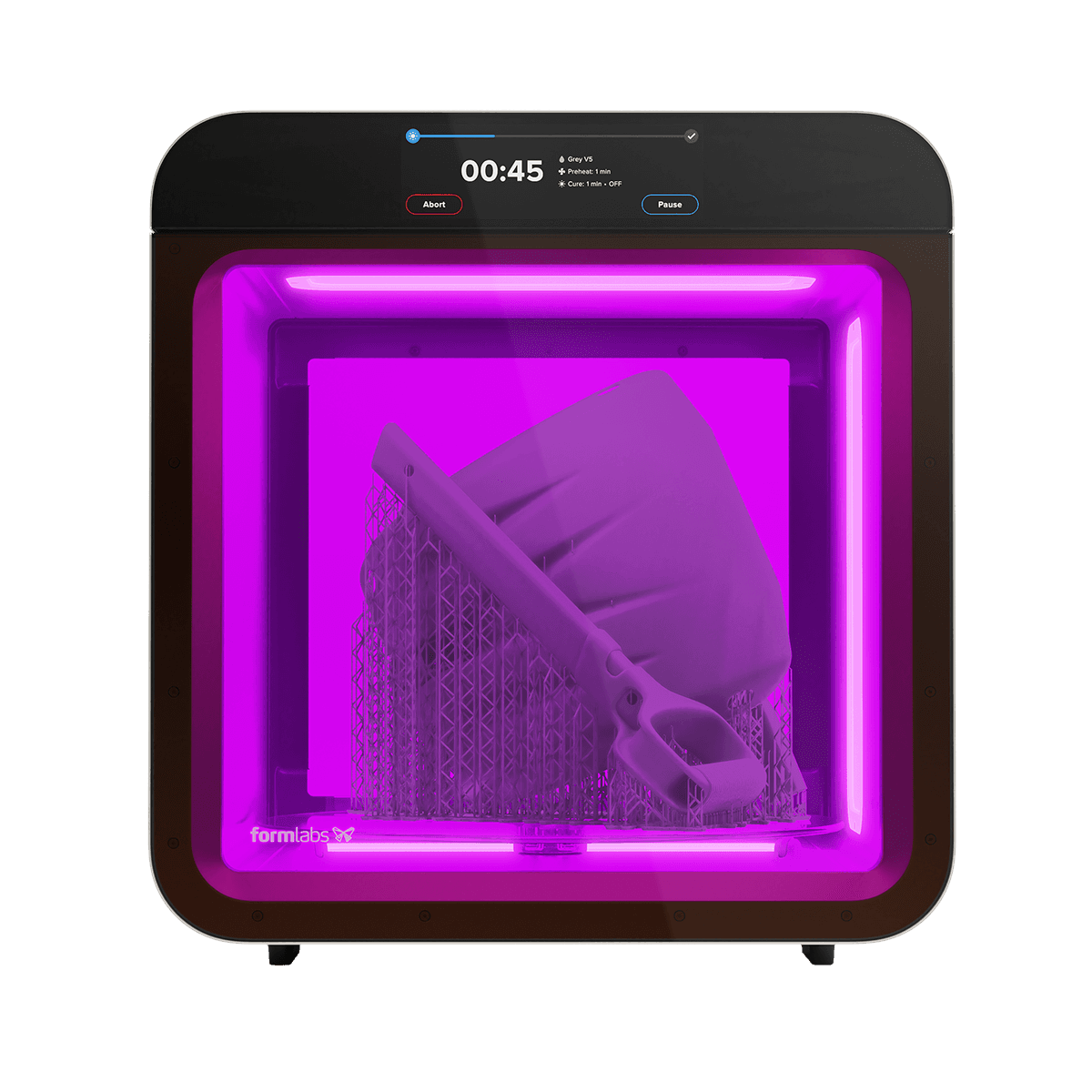
Form Cure L V1 120V
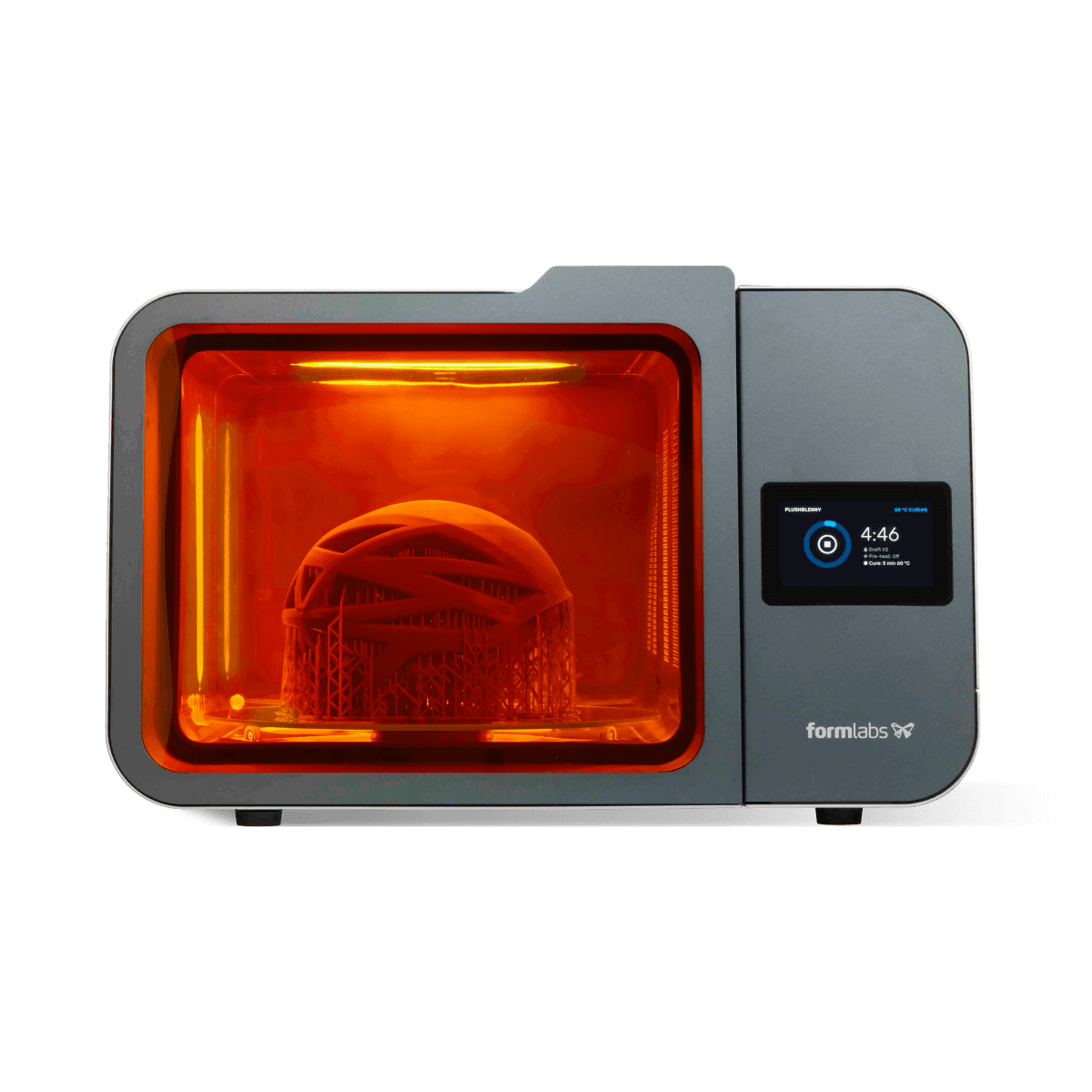
Form Cure L V2 230V
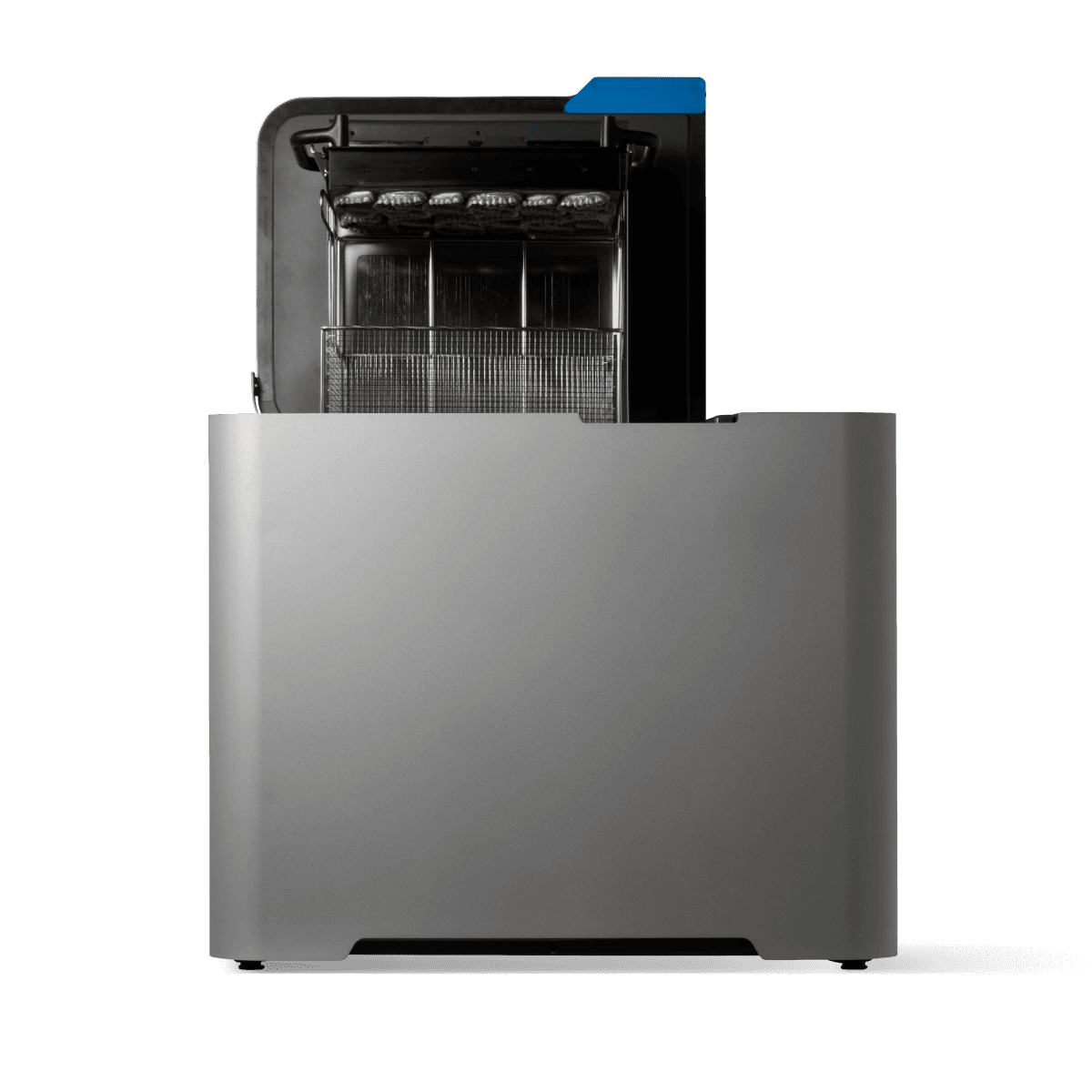
Form Wash L V2
Form Wash V2
Fuse Blast
Fuse Sift 230V
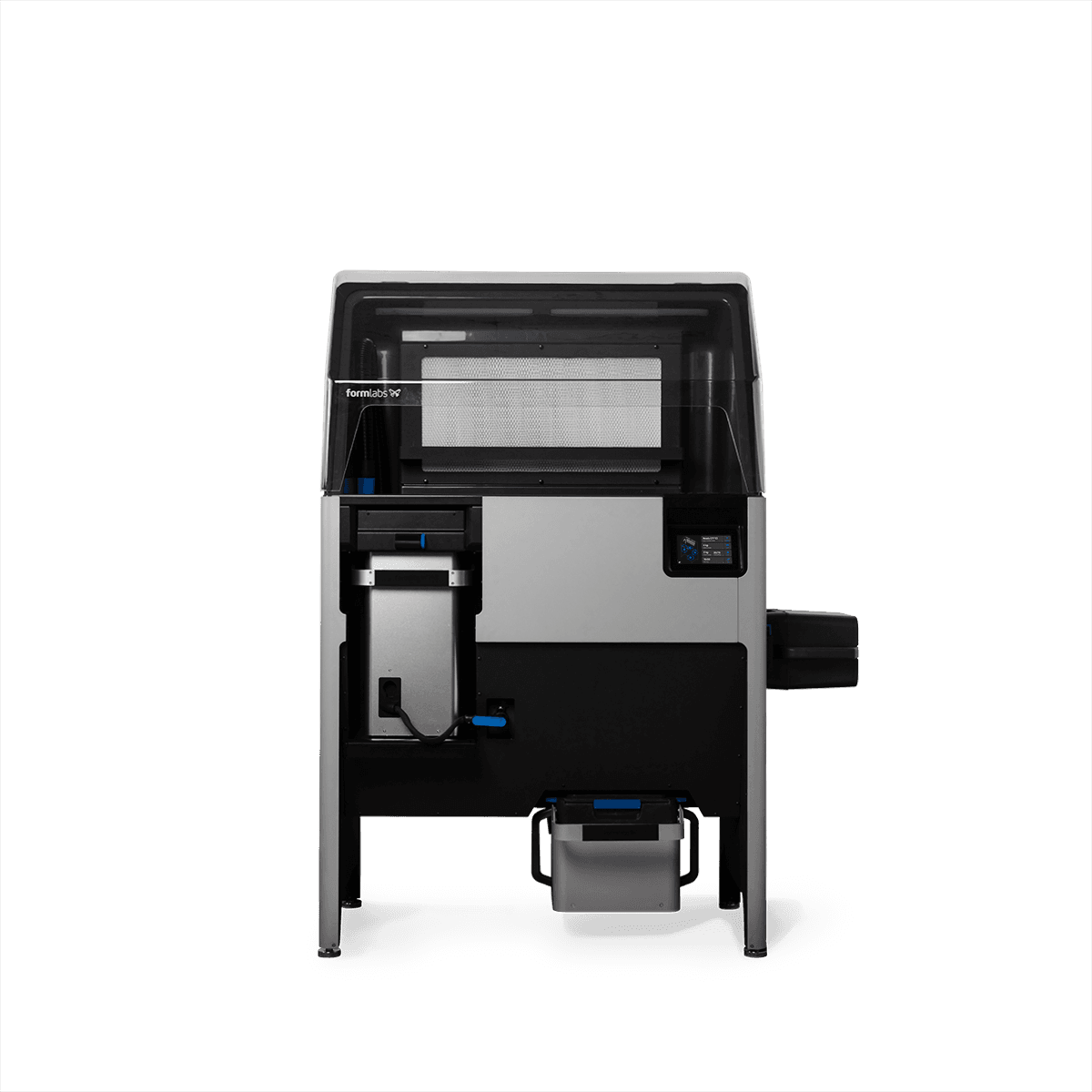
Fuse Sift 120V
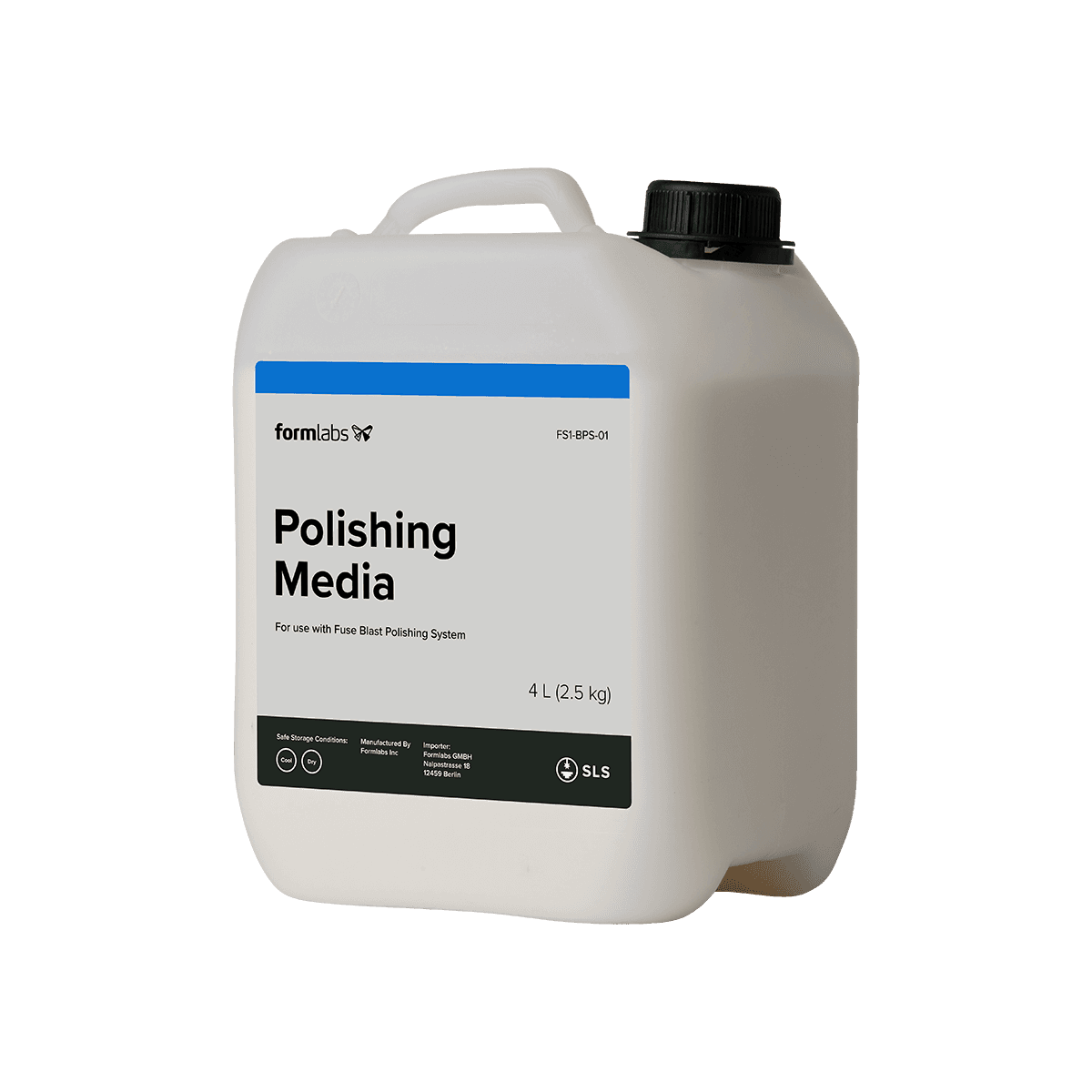
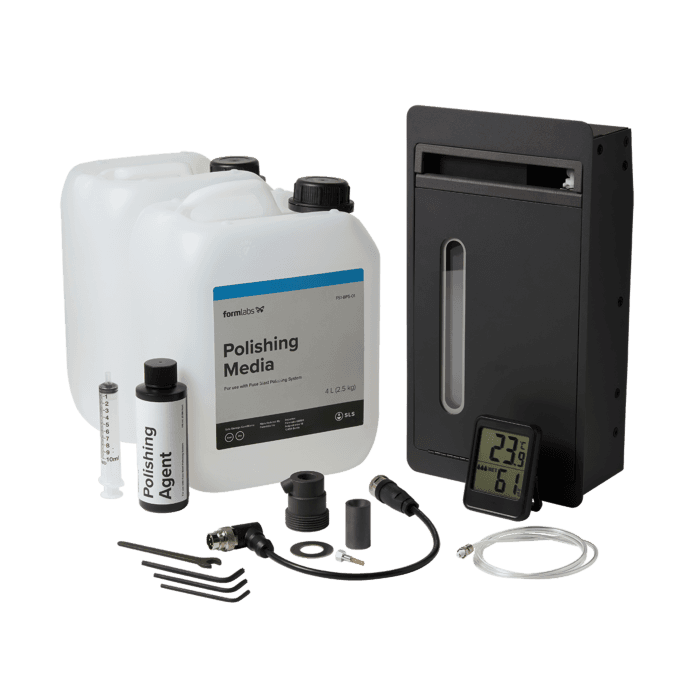
Fuse Blast Polishing Media 4 L (2.5 kg)
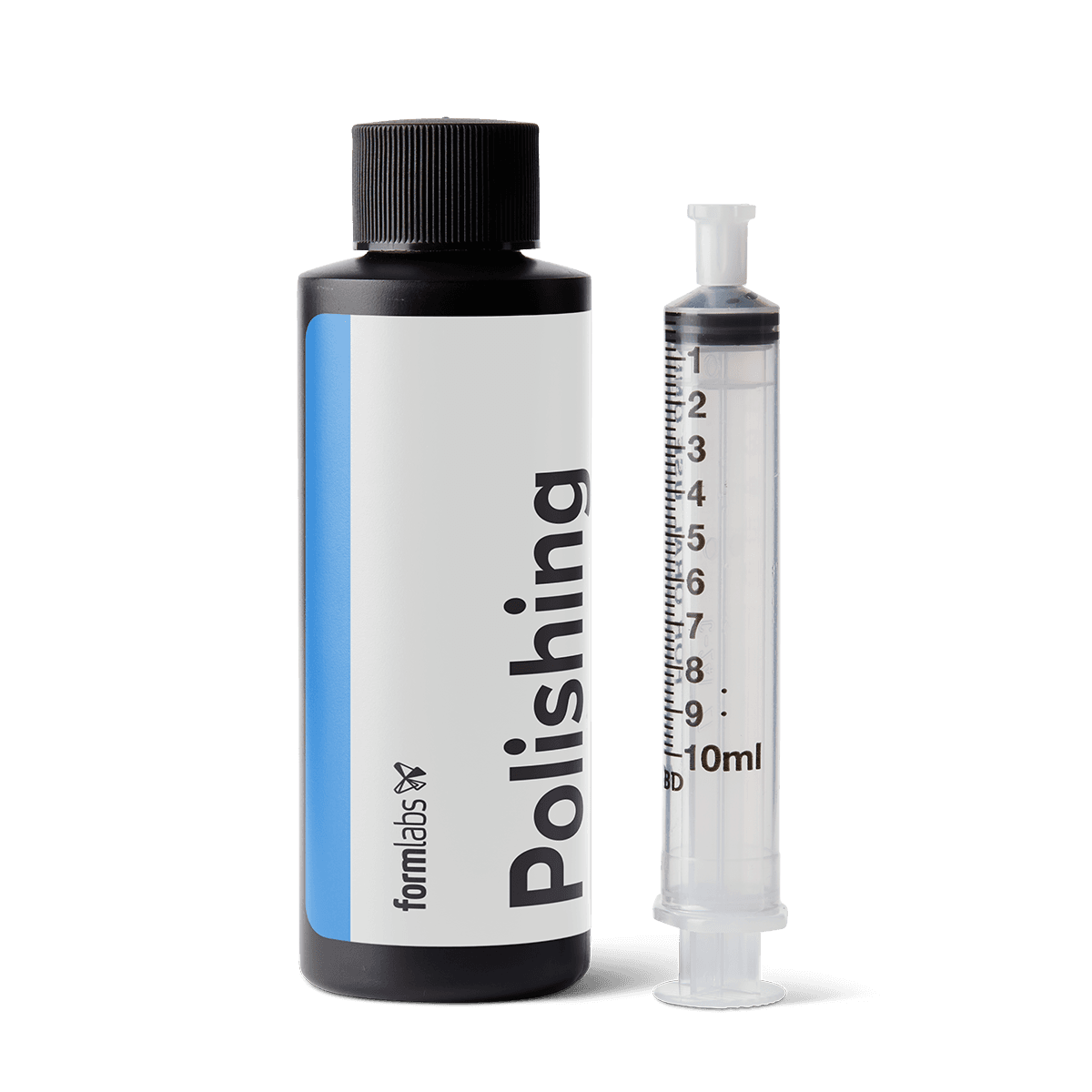
Fuse Blast Polishing Agent 115 mL
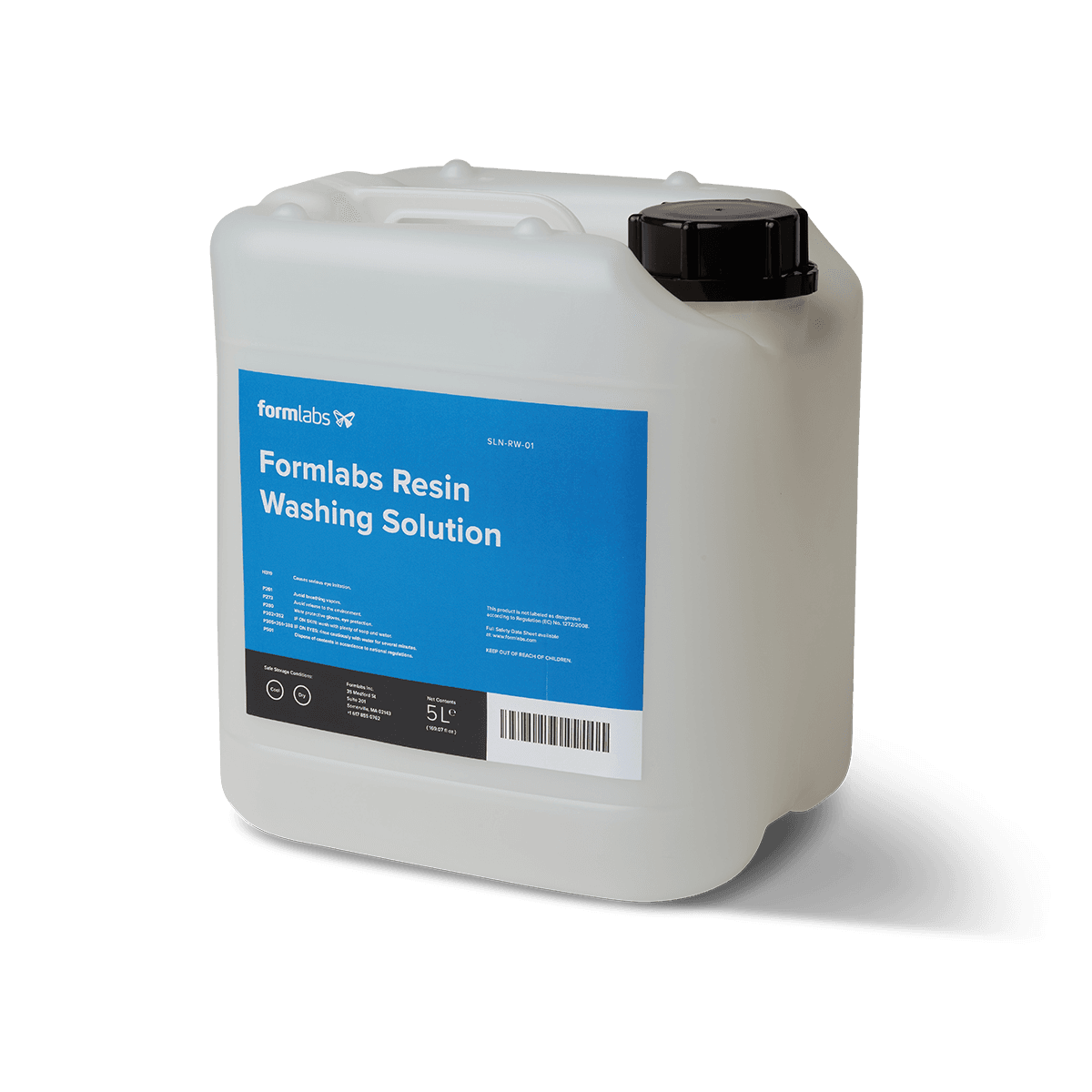
Formlabs Resin Washing Solution (5 L)
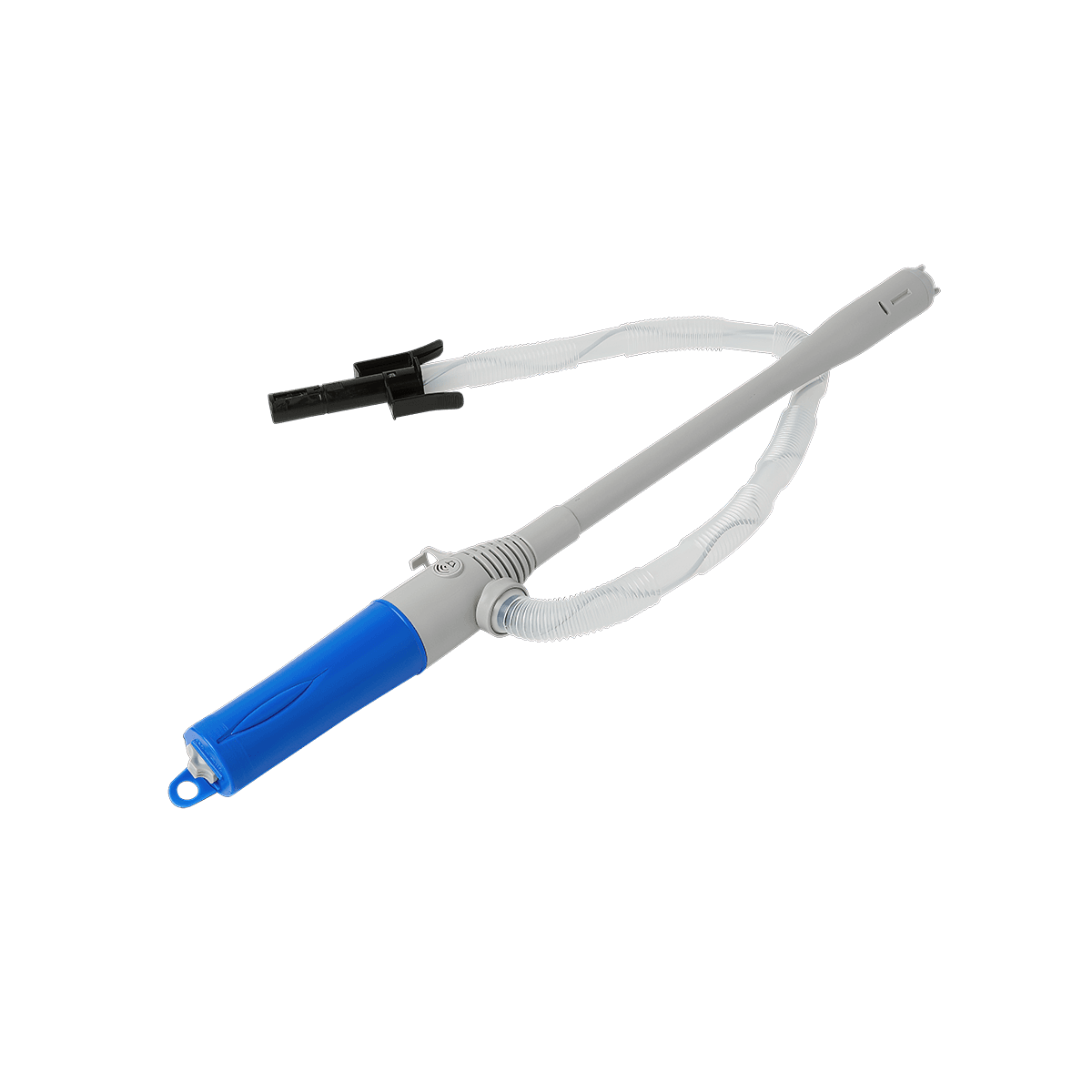
Solvent Pump
Fuse Depowdering Kit 230V
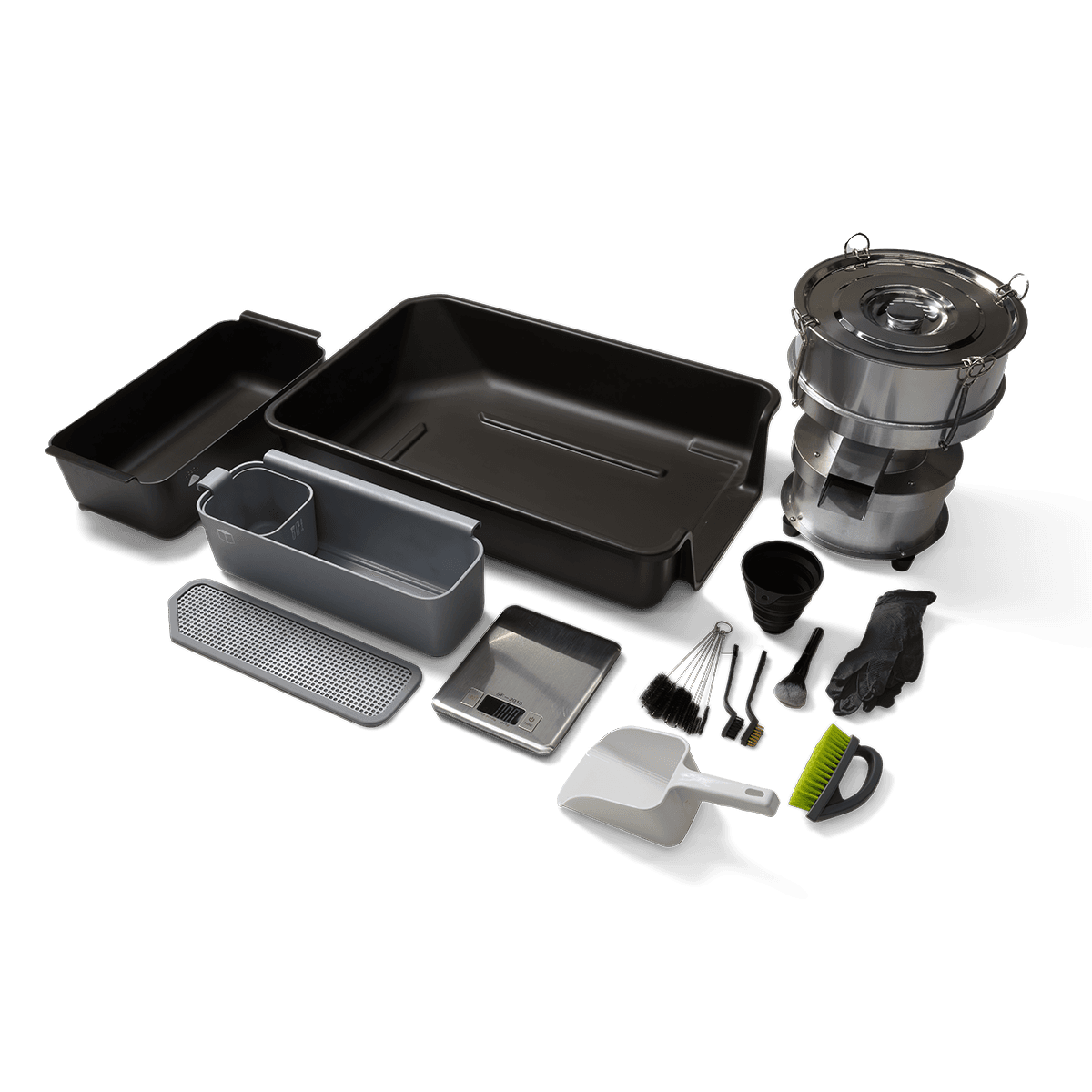
Fuse Depowdering Kit 120V
Fuse Blast Polishing System

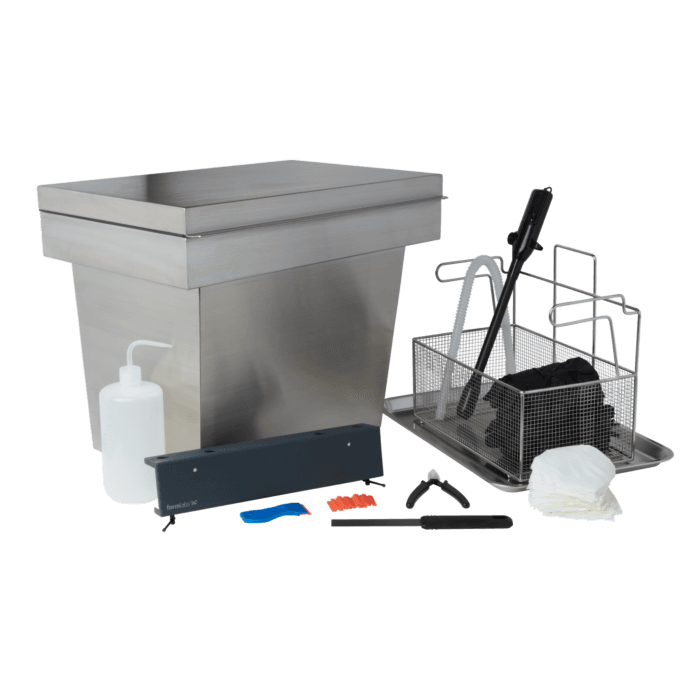
Form 4L Finish Kit Package
FAQ
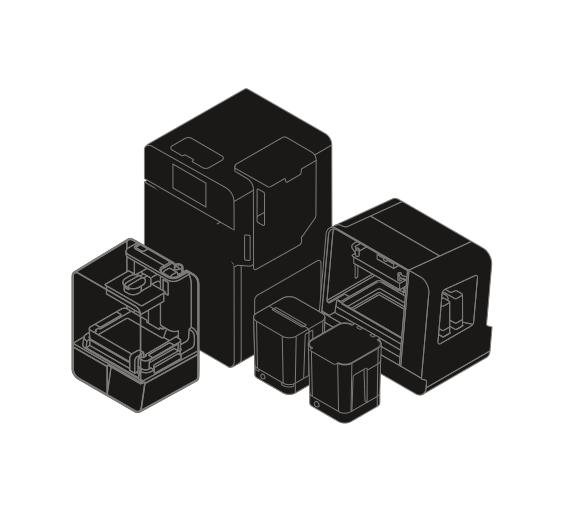
Post-processing is the final stage in the 3D printing workflow, encompassing steps that improve a part's aesthetics, mechanical properties, and overall performance to make it suitable for a wide range of applications.
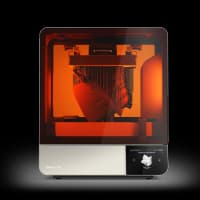
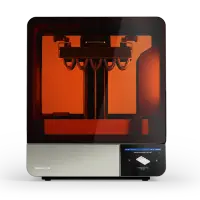
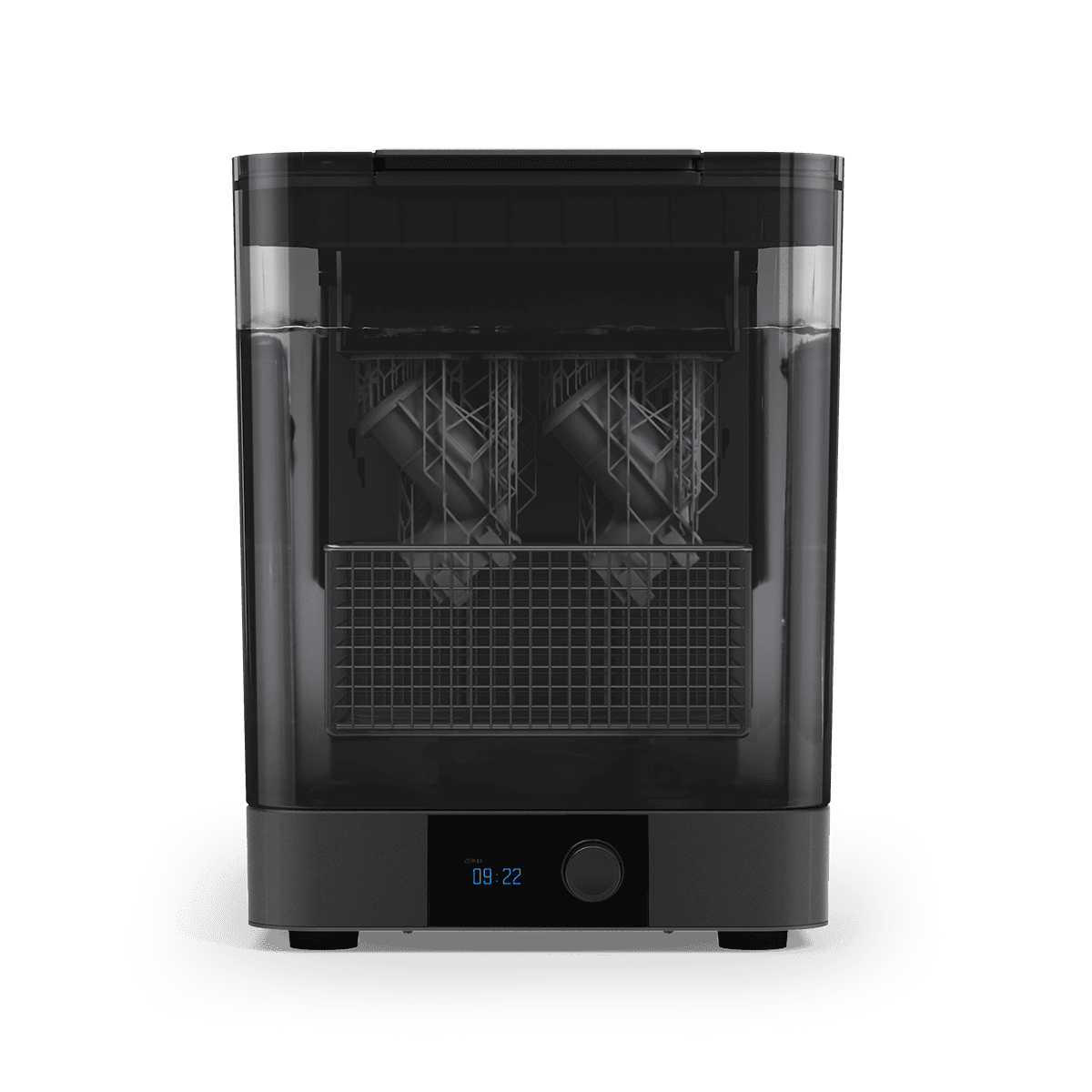
Formlabs offers Form Wash and Form Cure for desktop resin printers, as well as Form Wash L and Form Cure L for large-format and high-volume production, all designed to streamline rinsing and post-curing.
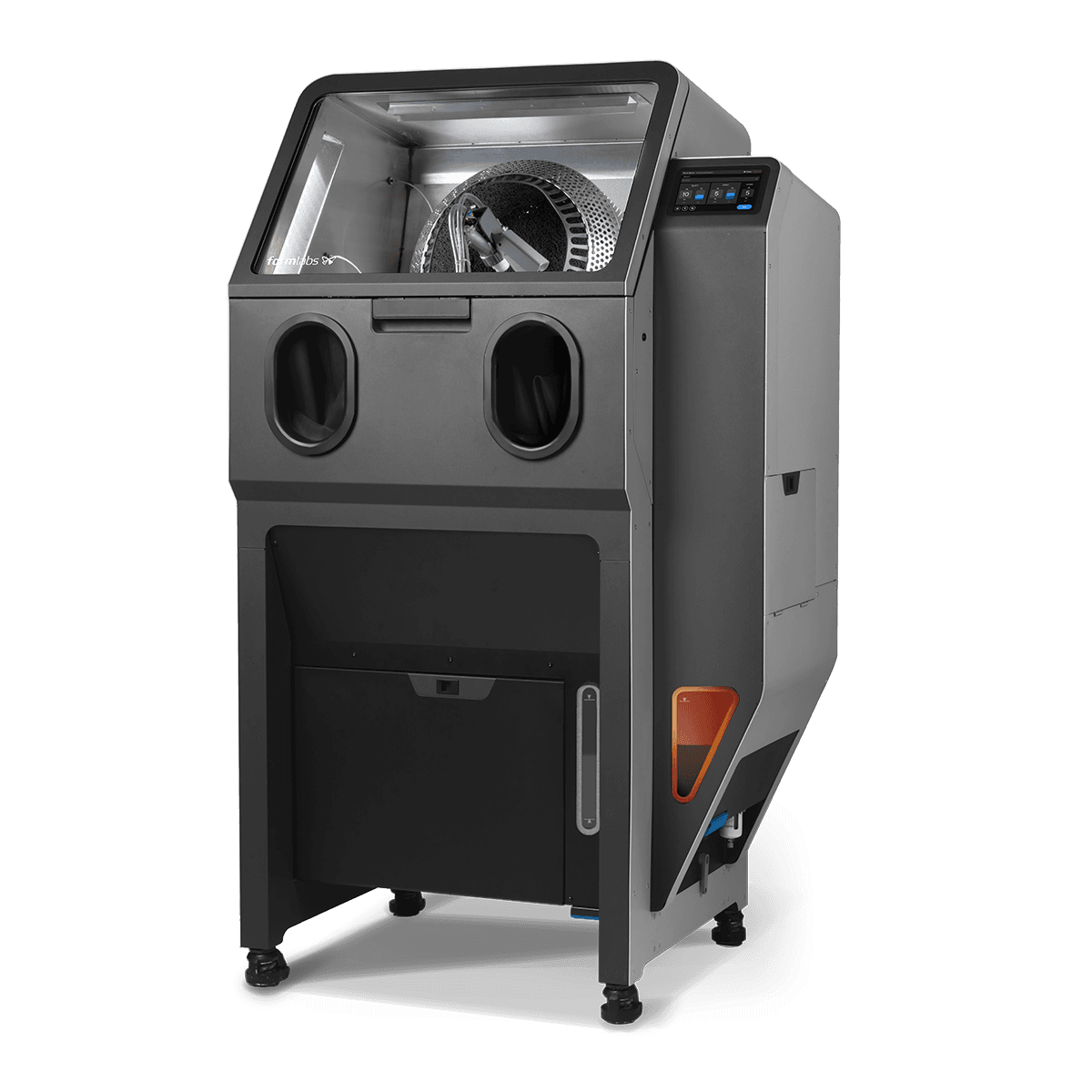
SLS parts can be depowdered using the Fuse Sift, the automated Fuse Blast, or the manual Fuse Depowdering Kit, depending on your production volume and budget.
Options include media blasting with the Fuse Blast, vibratory tumbling for a matte to semi-gloss finish, or vapor smoothing for a glossy shell that also reaches internal channels and complex geometries.
Yes, both resin and SLS parts can be dyed with consumer-grade dyes, and painting is recommended when bright colors or precise color-matching are needed, with spray painting offering the most even coverage.
Coating processes such as electroplating, ceramic coating, powder coating, and polymer coating can significantly enhance strength, durability, UV resistance, and chemical resistance, sometimes matching or surpassing injection molded plastics or metals.
Ceramic coatings, such as those made by Cerakote, are applied as a thin polymer film with ceramic additives and are among the highest-performance finishing options, ideal for end-use parts requiring color matching, improved mechanical properties, and resistance to UV, corrosion, and chemicals.
Sanding, buffing, and polishing are recommended first steps that smooth edges, remove blemishes, and eliminate support marks, creating an ideal surface for painting, coating, or other secondary processes.