Notice:
Ensure ESD Resin parts are properly grounded to prevent damage to components they may come into contact with. Use materials like ESD mats or grounding cables to allow static charges to safely dissipate.

Static electricity is a challenge for the manufacturing industry. Materials that build up static electricity can discharge when close to conductive materials, damaging electronics and other sensitive components.
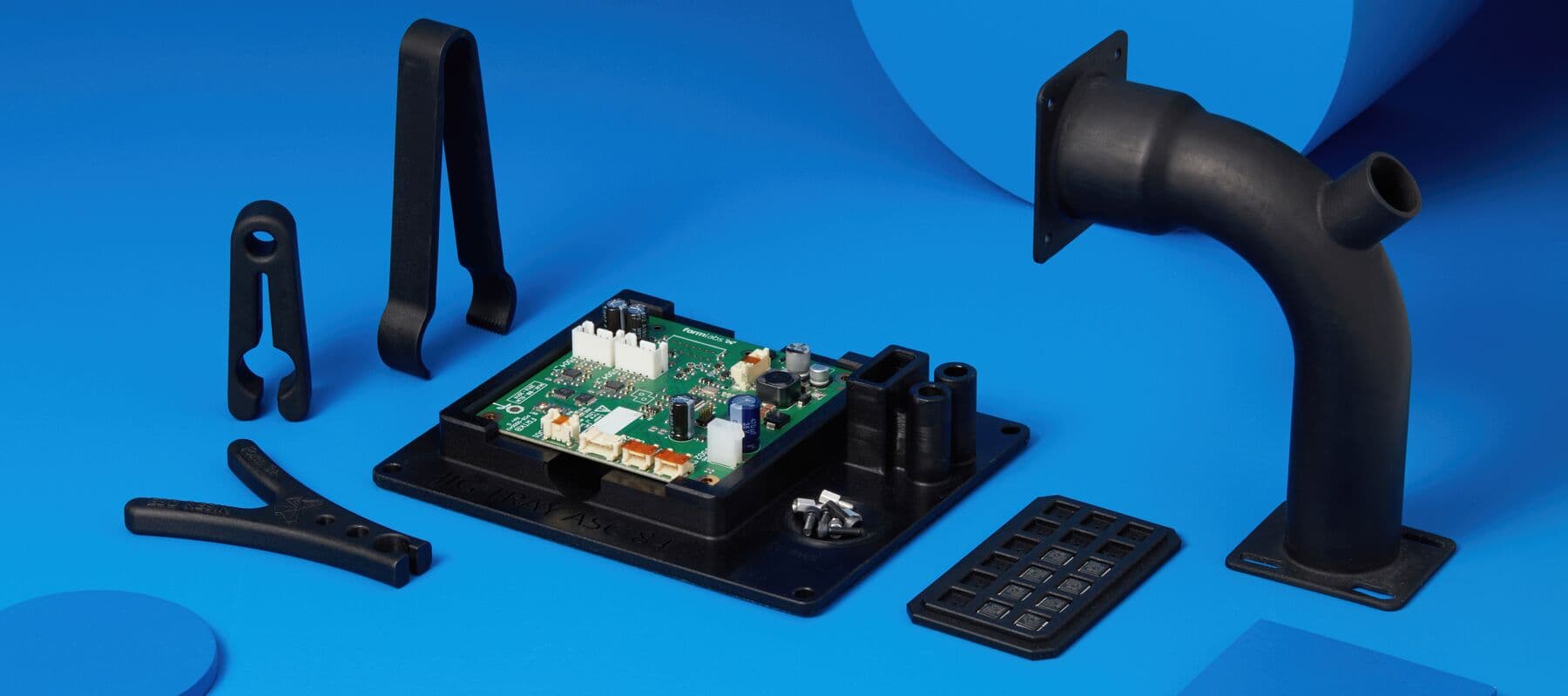
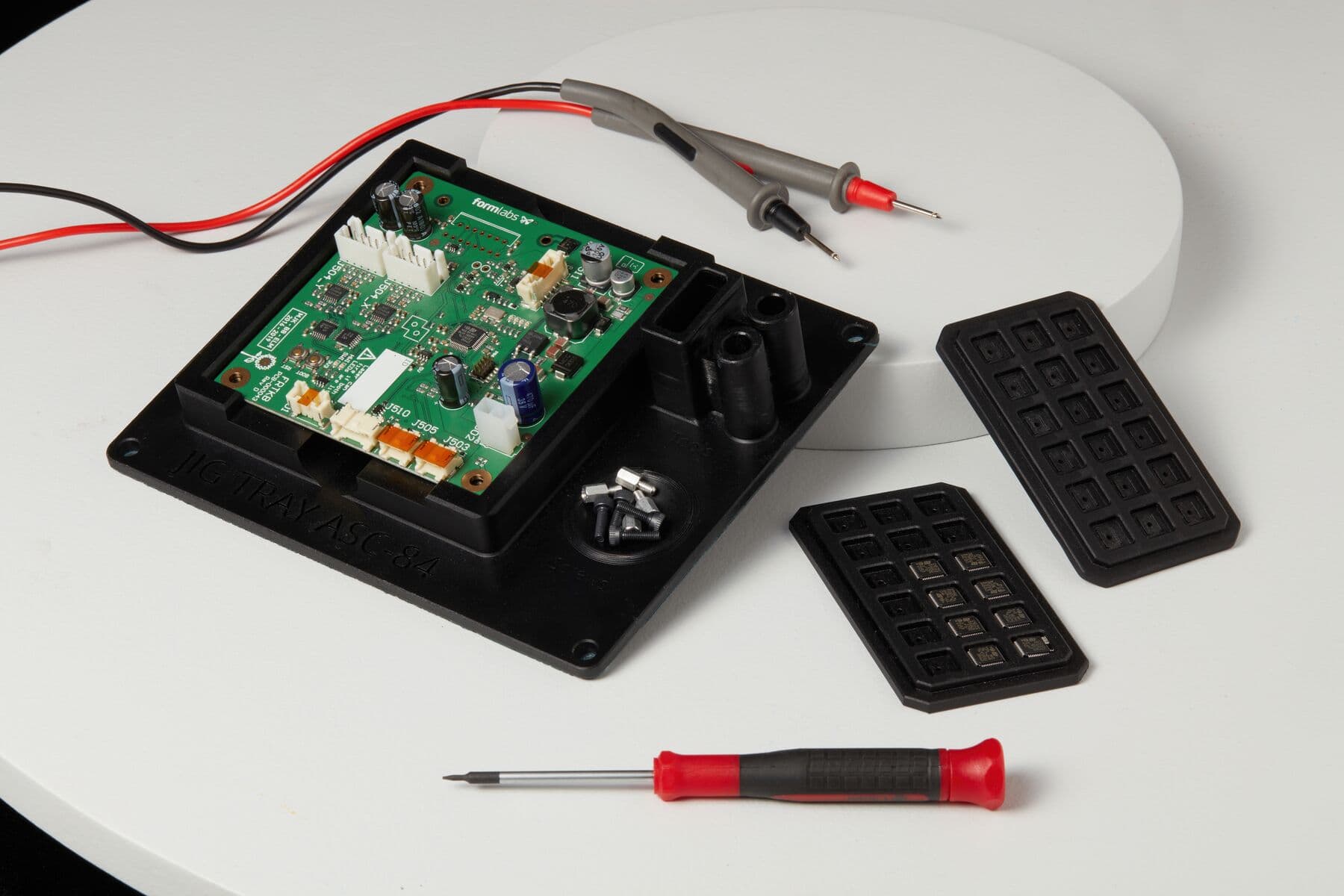
Most plastics, including Formlabs resins, are insulators that may build up static electricity and discharge it when they come into contact with conductive materials. Formlabs ESD Resin safely dissipates static buildup that can damage sensitive electronics, making it ideal for producing robust custom parts that comply with ESD safety standards.
Notice:
Ensure ESD Resin parts are properly grounded to prevent damage to components they may come into contact with. Use materials like ESD mats or grounding cables to allow static charges to safely dissipate.
ESD Resin prints at 50 microns and 100 microns.
Note:
To learn more about the performance or specific material properties of ESD Resin, please refer to the Safety Data Sheet (SDS) and Technical Data Sheet (TDS). Always consult the SDS as the primary source of information to understand safety and handling of Formlabs materials.
Comparison with other materials
Surface resistivity measures the resistance to current running along the surface of a material. The higher the resistivity, the less conductive the material. ESD Resin is more conductive than other Formlabs resins, allowing electric charges to flow in a controlled manner.
See the table below for a comparison of relevant material properties:
| ESD Resin | Tough 2000 Resin | |
|---|---|---|
| Surface resistivity (ohm/cm2) | 105 - 108 | > 1012 |
| Ultimate tensile strength (MPa) | 44 | 46 |
| Tensile modulus (GPa) | 1937 | 2140 |
| Elongation at break (%) | 12 | 45 |
| Izod Impact strength (J/m) | 26 | 40 |
| Heat deflection temperature (HDT) @ 1.8 MPa | 54.2 | 62.0 |
| Heat deflection temperature (HDT) HDT @ 0.45 MPa (°C) | 62.2 | 53 |
To learn more about the performance properties of Formlabs resins, refer to the library of material properties data sheets.
Printing with ESD Resin
Notice:
Install or update PreForm, then set up the next print job.
To prepare a model for printing in PreForm:
Before printing, ensure ESD Resin is mixed thoroughly for best results. Shake the resin cartridge and stir the resin in the tank with the wiper or a spatula with rounded corners. Mix new resin cartridges and any ESD Resin stored in the cartridge or tank after several weeks.
Finishing
The Form Wash agitates the solvent bath and removes parts from the bath after a set time. Wash parts according to the support article Form Wash time settings.
Notice:
Use a separate wash bucket to prevent ESD Resin from transferring to other parts.
If the model is hollow or has internal channels, ensure liquid resin is flushed out thoroughly from these features. Allow parts to fully dry before post-curing.
Post-curing requirements
ESD Resin requires post-curing to reach its optimal mechanical properties.
Refer to the support article Form Cure time and temperature settings for post-curing recommendations.