Notice:
To avoid damage to equipment, check the resin tank compatibility table in Choosing the right material to confirm you are using a resin tank that is compatible with this material.

Notice:
To avoid damage to equipment, check the resin tank compatibility table in Choosing the right material to confirm you are using a resin tank that is compatible with this material.
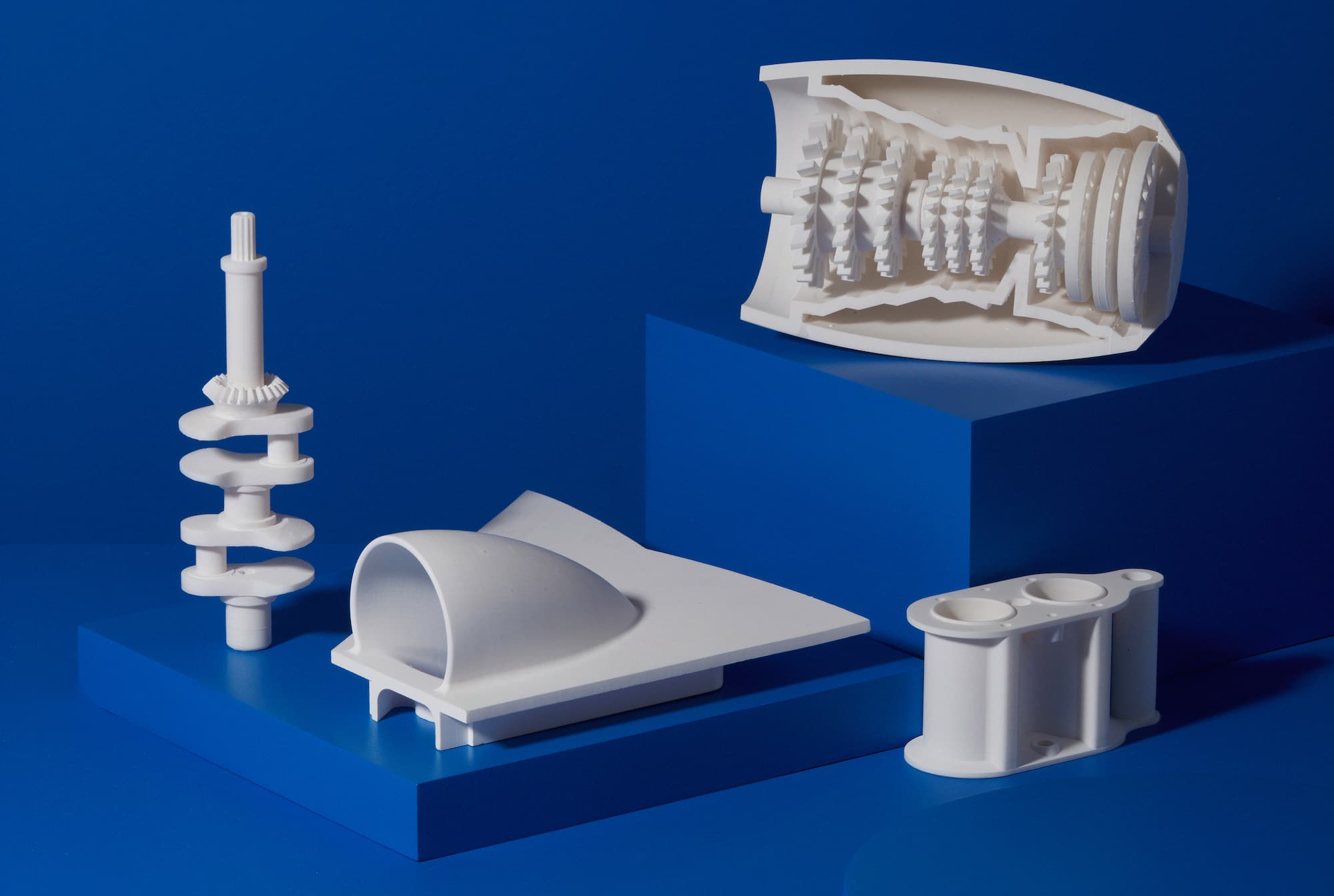
Rigid 10K Resin offers high stiffness, strength, and resistance to heat and chemicals, making it a game-changing industrial material for the most demanding jobs. With a stiffness simulating that of glass and fiber-filled thermoplastics, Rigid 10K Resin is designed to maintain structural integrity under any condition.
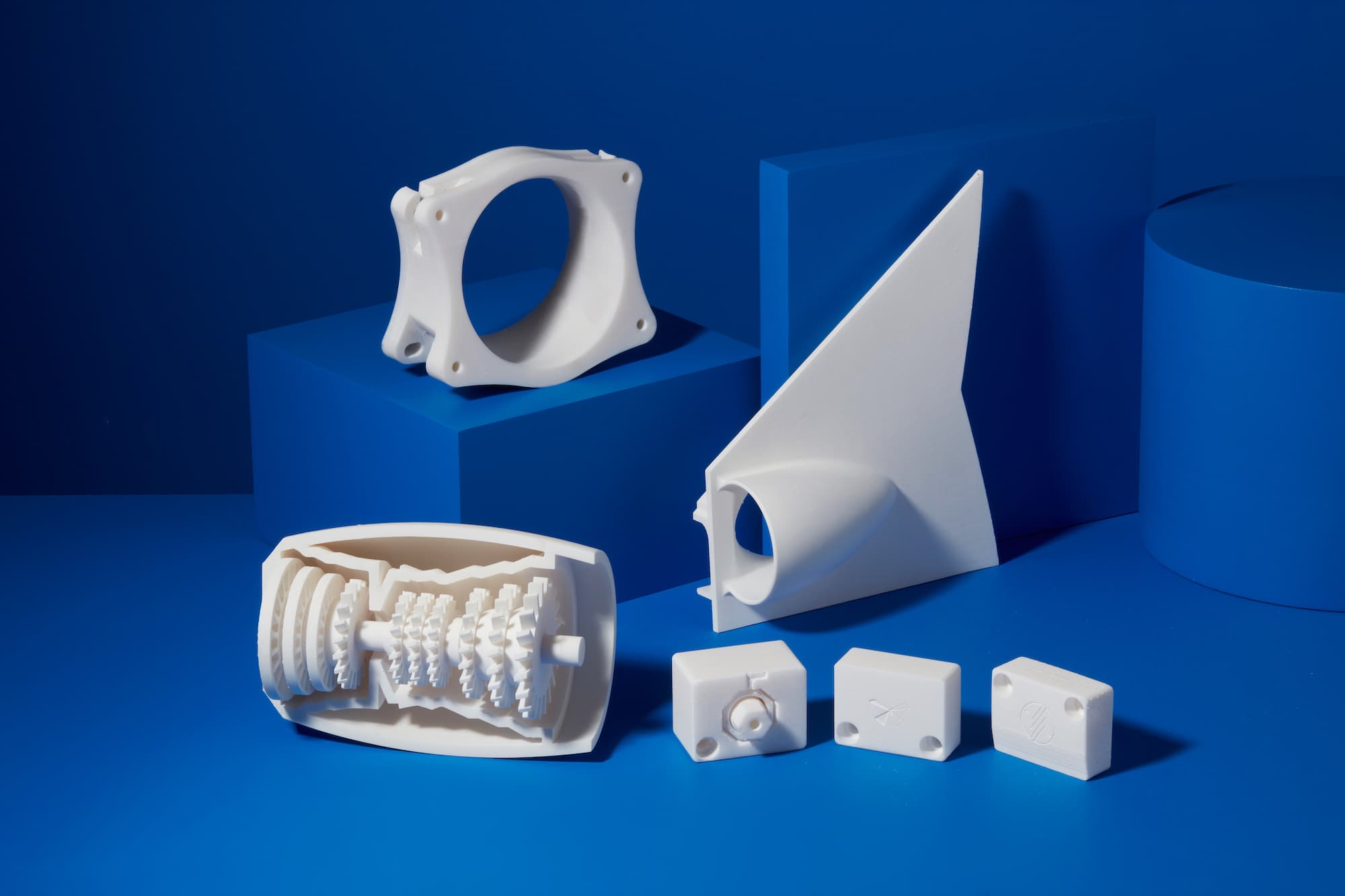
Rigid 10K Resin was developed to have high stiffness, high strength, and high temperature resistance for use in engineering, aerospace, and manufacturing applications.
Recommended for:
Not recommended for:
Note:
To learn more about the performance or specific material properties of Rigid 10K Resin, please refer to the Safety Data Sheet (SDS) and Technical Data Sheet (TDS). Always consult the SDS as the primary source of information to understand safety and handling of Formlabs materials.
Comparison with other materials
| Rigid 4000 Resin, post-cured (80 °C) | Rigid 10K Resin, post-cured (70 °C) | Rigid 10K Resin, optional thermal post-cure (90 °C) | |
|---|---|---|---|
| Ultimate tensile strength (MPa) | 75 | 65 | 58 |
| Tensile modulus (GPa) | 4 | 10 | 10 |
| Elongation at break (%) | 6 | 1 | 1 |
| Flexural modulus (GPa) | 3.7 | 9.0 | 10.0 |
| Izod Impact strength (J/m) | 19 | 16 | 18 |
| Heat deflection temperature (HDT) @ 1.8 MPa (°C) | 74 | 82 | 110 |
| Heat deflection temperature (HDT) @ 0.45 MPa (°C) | 88 | 163 | 218 |
To learn more about the performance properties of Formlabs resins, refer to the library of material properties data sheets.
Printing with Rigid 10K Resin
Install or update PreForm, then set up the next print job.
To prepare a model for printing in PreForm:
Refer to the support article Starting a print to open the model in PreForm, orient it, generate supports, and select print settings.
Finishing
The Form Wash agitates the solvent bath and removes parts from the bath after a set time. Wash parts according to the support article Form Wash time settings. Pay particular attention to information that affects mechanical properties or biocompatibility requirements.
If the model is hollow or has internal channels, ensure liquid resin is flushed out thoroughly from these features. Allow parts to fully dry before post-curing.
After post-curing, the surface of a part printed in Rigid 10K Resin may feel powdery. Rubbing mineral oil or water into the part surface and wiping away any excess will lead to a smoother, less powdery finish.
Post-curing requirements
Rigid 10K Resin requires post-curing to reach its optimal mechanical properties and high heat deflection temperature (HDT).
Notice:
There are two post-curing options for Rigid 10K Resin. Refer to the technical data sheet to understand how different options affect mechanical properties, and choose the post-cure option that is best suited to the intended application.
Refer to the Form Cure time and temperature settings for post-curing requirements.
Media blasting
Formlabs recommends media blasting Rigid 10K Resin printed parts for improved mechanical properties, including tensile, flexural, and impact strength. Media blasting parts reduces surface defects that may cause part failures.
The process of media blasting changes the surface color of Rigid 10K Resin parts from white to cream but does not significantly affect part dimensions.
Comparison with untreated Rigid 10K Resin parts
Rigid 10K Resin parts with and without media blasting were sent for APM testing to compare mechanical and material properties. All parts were media blasted with 70-140 mesh glass beads on all surfaces. See the table below:
| Rigid 10K Resin + UV cure | Rigid 10K Resin + UV cure + thermal cure | Rigid 10K Resin + UV cure + media blasting | % change from media blasting | |
|---|---|---|---|---|
| Tensile Modulus (GPa) | 10 | 10 | 11 | + 10% |
| Ultimate Tensile Strength (MPa) | 65 | 53 | 88 | + 35% |
| Elongation at Break (%) | 1 | 1 | 1.7 | + 70% |
| Flexural Modulus (GPa) | 9 | 10 | 9.93 | + 10% |
| Flexural Strength (MPa) | 126 | 103 | 158 | + 25% |
| Notched Impact Strength (J/m) | 16 | 18 | 20 | + 25% |
| Unnotched Impact Strength (J/m) | 47 | 41 | 130 | + 190% |