Formlabs Logo

Using Nylon 11 Pro Powder

Using Nylon 11 Pro Powder

Notice:

To avoid damage to equipment, check the compatibility table in Choosing the right powder to confirm you are using a printer that is compatible with this material.

Nylon 11 Pro Powder requires installing the Fuse 1 Generation Recoater Roller V2 on Fuse 1+ 30W printers, running the Combined Calibration Tool, and completing powder aging before first use. Read the section Preparing to print with Nylon 11 Pro Powder for more information.

Nylon 11 Pro powder is suitable for applications that require high impact resistance and flexibility. Formlabs recommends a 30% refresh rate for Nylon 11 Pro Powder, allowing for maximum reuse of materials and optimal print success. Formlabs recommends printing in an inert atmosphere on Fuse 1+ 30W, which improves part performance and print reliability.

Recommended for:

  • Impact-resistant prototypes and end-use parts

  • Snaps, clips, and living hinges

  • Thin-walled ducts and enclosures

  • Durable jigs, fixtures, and tooling

  • Orthotics and prosthetics

  • Wearable devices

Note:

To learn more about the performance or specific material properties of Nylon 11 Pro, please refer to the Safety Data Sheet (SDS) and Technical Data Sheet (TDS). Always consult the SDS as the primary source of information to understand safety and handling of Formlabs materials.

Comparison with other materials

For a comparison to other SLS materials, see the Nylon 11 Pro Powder product page.

To learn more about the properties of Formlabs materials, refer to the library of material properties data sheets.

Preparing to print with Nylon 11 Pro Powder

On Fuse 1+ 30W printers, Nylon 11 Pro Powder requires the Fuse 1 Generation Recoater Roller V2 for successful printing. Follow our guide for instructions on removing the existing roller and installing Fuse 1 Generation Recoater Roller V2.

Nylon 11 Pro Powder requires the running the Combined Calibration Tool before first use. The Combined Calibration Tool also ages a batch of powder, so you can start printing your models after running the tool.

Note:

The Combined Calibration Tool routine should be completed on each printer that will use Nylon 11 Pro Powder. Different printers of the same model and in the same room may require different calibrations.

Printing with Nylon 11 Pro Powder

For the best results, follow Formlabs design specifications for SLS printing. Refer to the support article Starting a print (SLS) to open the model in PreForm, orient it, and send it to the printer.

Printing with Nylon 11 Pro Powder on the Fuse 1+ 30W with inert atmosphere

Nylon 11 Pro Powder printing requires an inert atmosphere on Fuse 1+ 30W. Printing in an inert, low-oxygen atmosphere reduces powder degradation, enabling lower refresh rates and improving part quality. See the support article Using inert atmospheric control for more information.

When printing with Nylon 11 Pro Powder, use a refresh rate of 30% to maximize efficiency and printing reliability. Optimal refresh rate depends upon printed geometry. See our article on selecting the correct powder and refresh rate for more information.

Between prints

Accumulated powder and condensed airborne particulates can cause print failures in future print jobs if not properly cleaned out after each print. Clean the following areas between prints:

Cleaning the top of the print enclosure

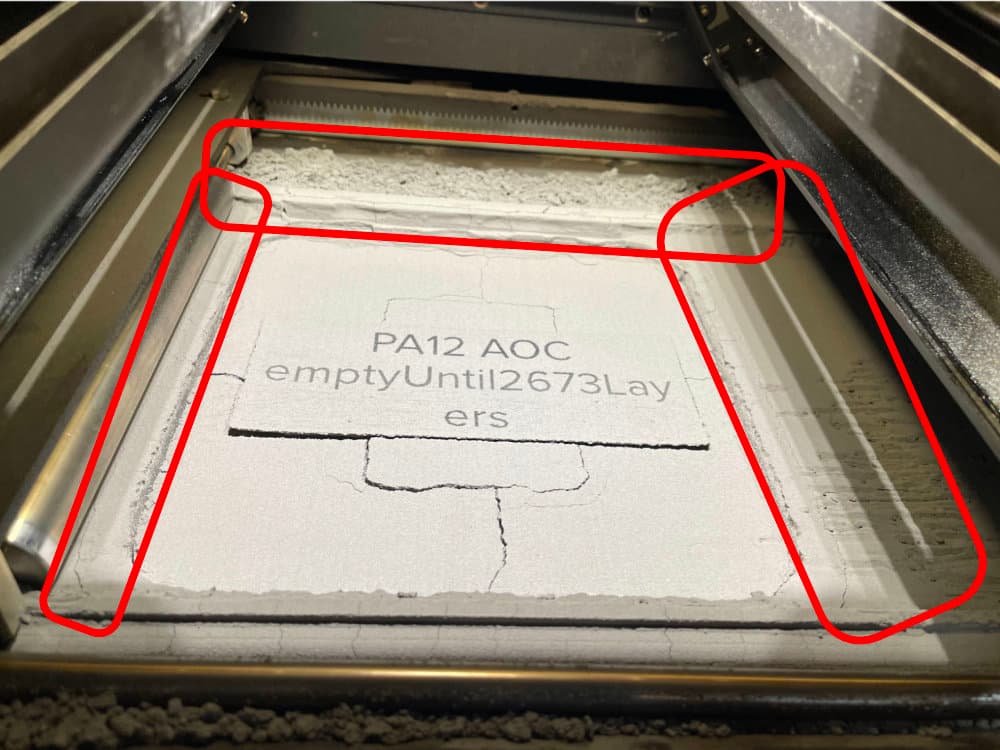
Powder can accumulate at the top of the print enclosure, particularly on the runways, the areas between the powder troughs and the top of the build chamber. This excess powder may fuse and be dragged into the build chamber during subsequent prints. Vacuum this area thoroughly to help prevent print failures.

The area around the top of the build chamber

Vacuuming the troughs

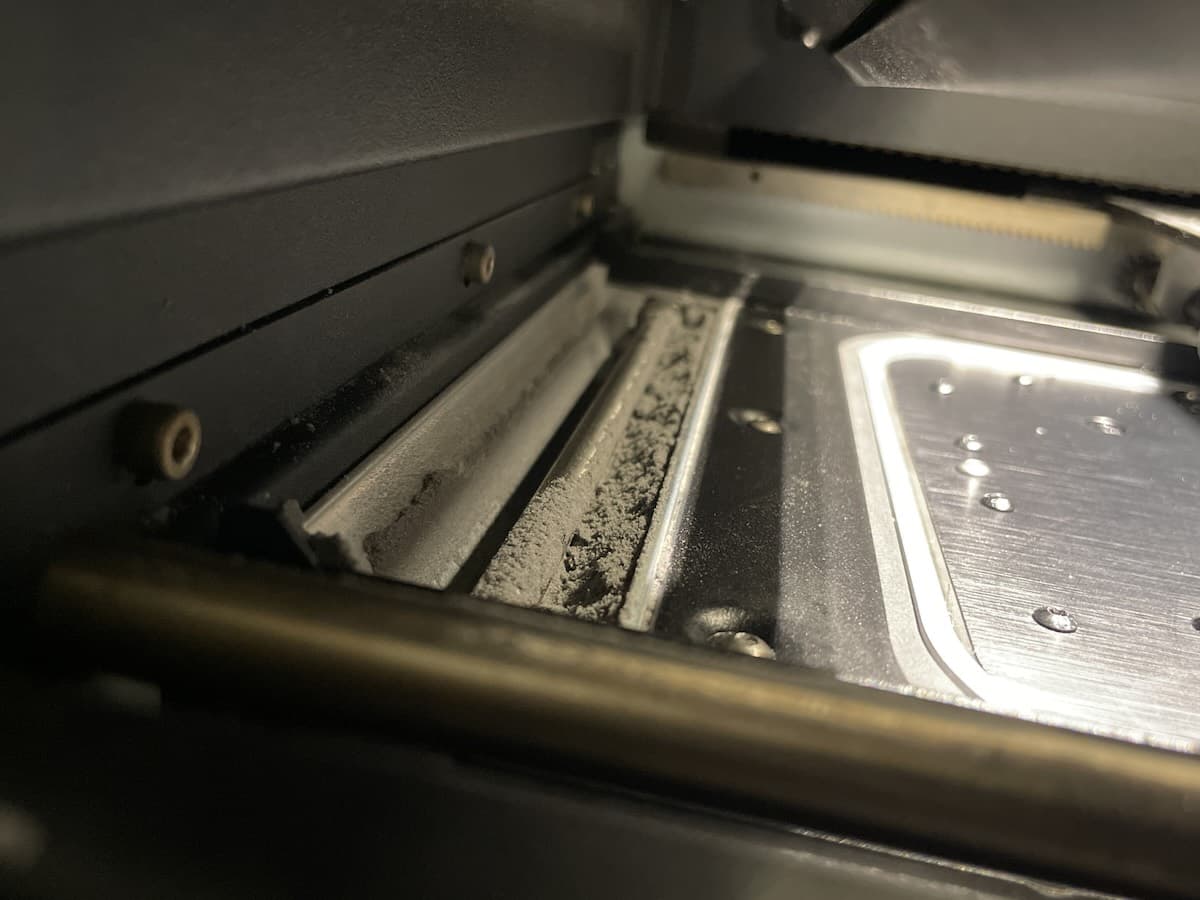
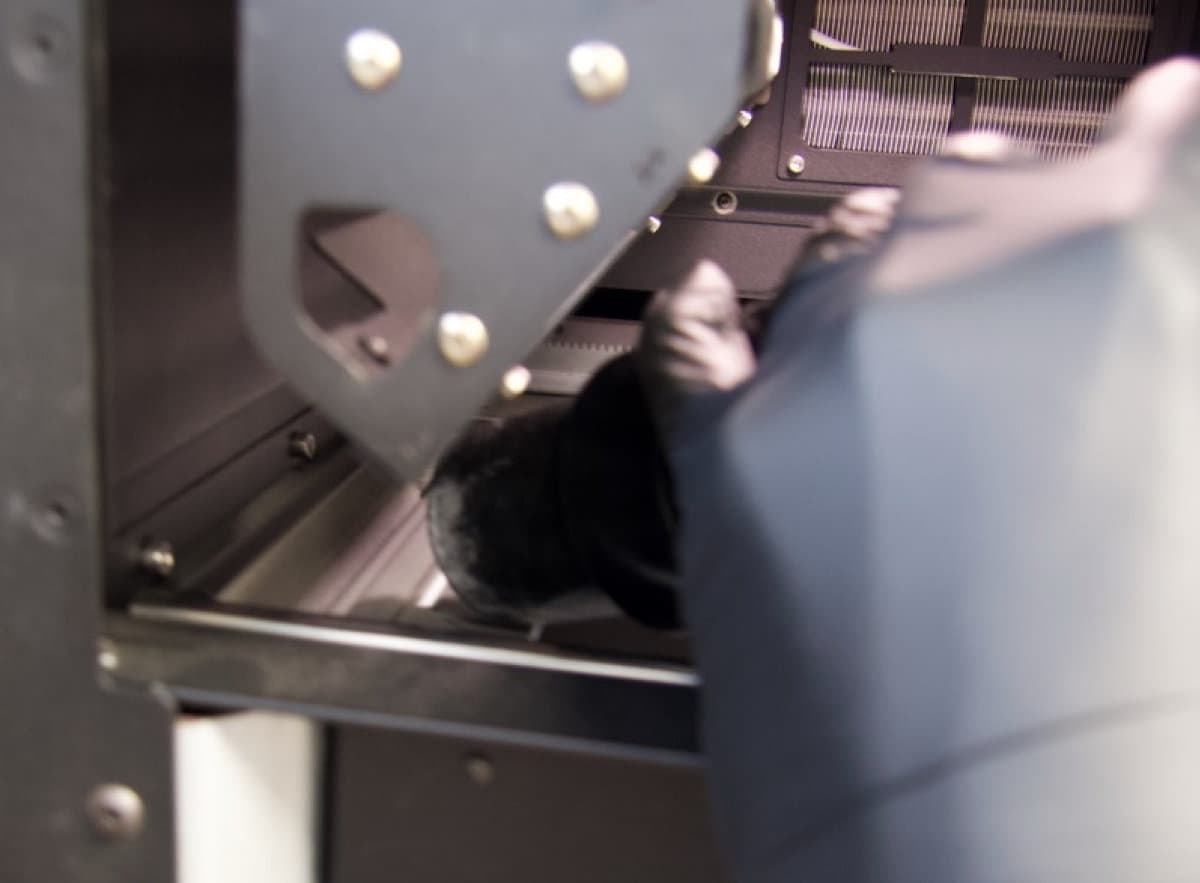
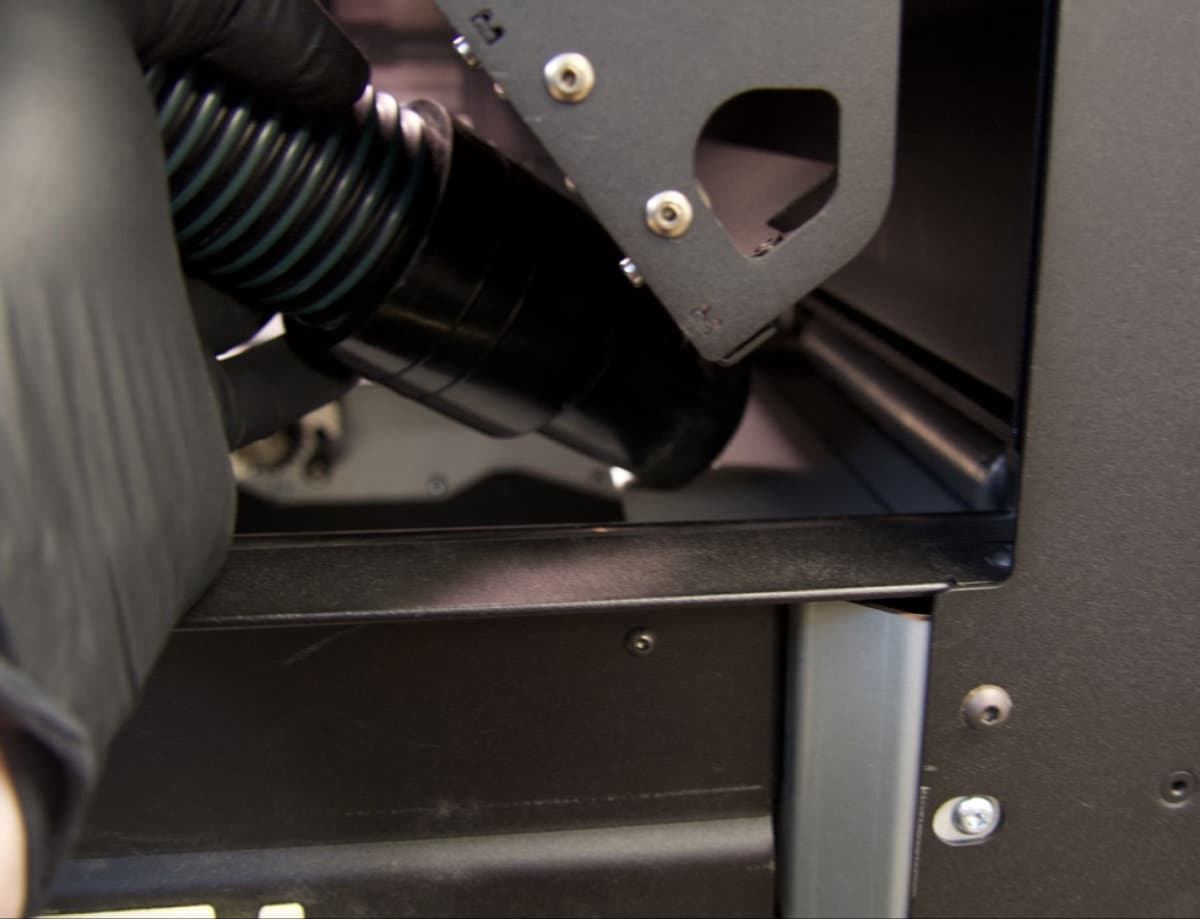
Between prints, clean both troughs and the area around the recoater’s path using a compliant vacuum with static dissipative components. Use the vacuum, fitted with a small brush attachment or the flexible hose attachment, to clean all powder out of the troughs. If needed, use compressed air or a gas duster to remove powder from hard-to-reach areas. Check in particular for powder buildup along the inner walls and corners of the troughs.

TPU 90A Powder buildup in a Fuse 1+ 30W printer trough
Vacuuming the left powder trough
Vacuuming the right powder trough

Close the print enclosure door and move the flipper motors to dislodge powder for cleaning.

To move the flipper motors:

  1. Close the print enclosure door.
  2. On the touchscreen, tap the wrench icon. The Maintenance menu appears.
  3. Tap Motor Moves. The Motor Moves screen appears, which allows you to manually activate various motors in the print enclosure.

Caution:

Unless specifically advised, do not select any of the options in the Motor Moves menu while the print enclosure door is open or any objects are in the path of the powder handling mechanisms at the top of the print enclosure. Moving parts present a crushing or tangling hazard. If necessary, tap the Stop button on the touchscreen to stop a motor movement.

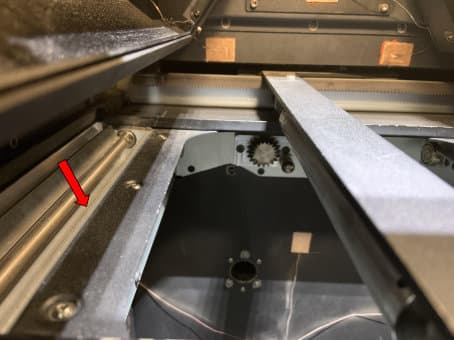
  1. Tap the CW, CCW, and Home arrows under the Flipper (Left) and Flipper (Right) headers to rotate the left and right flippers clockwise, counterclockwise, or back to their home positions. Repeatedly move the flippers and vacuum the powder troughs until they are clean. In particular, ensure that the inner edge of both powder troughs as well as any adjacent components are free of powder.
Left powder trough with an arrow pointing at the inner edge of the trough

Cleaning the recoater

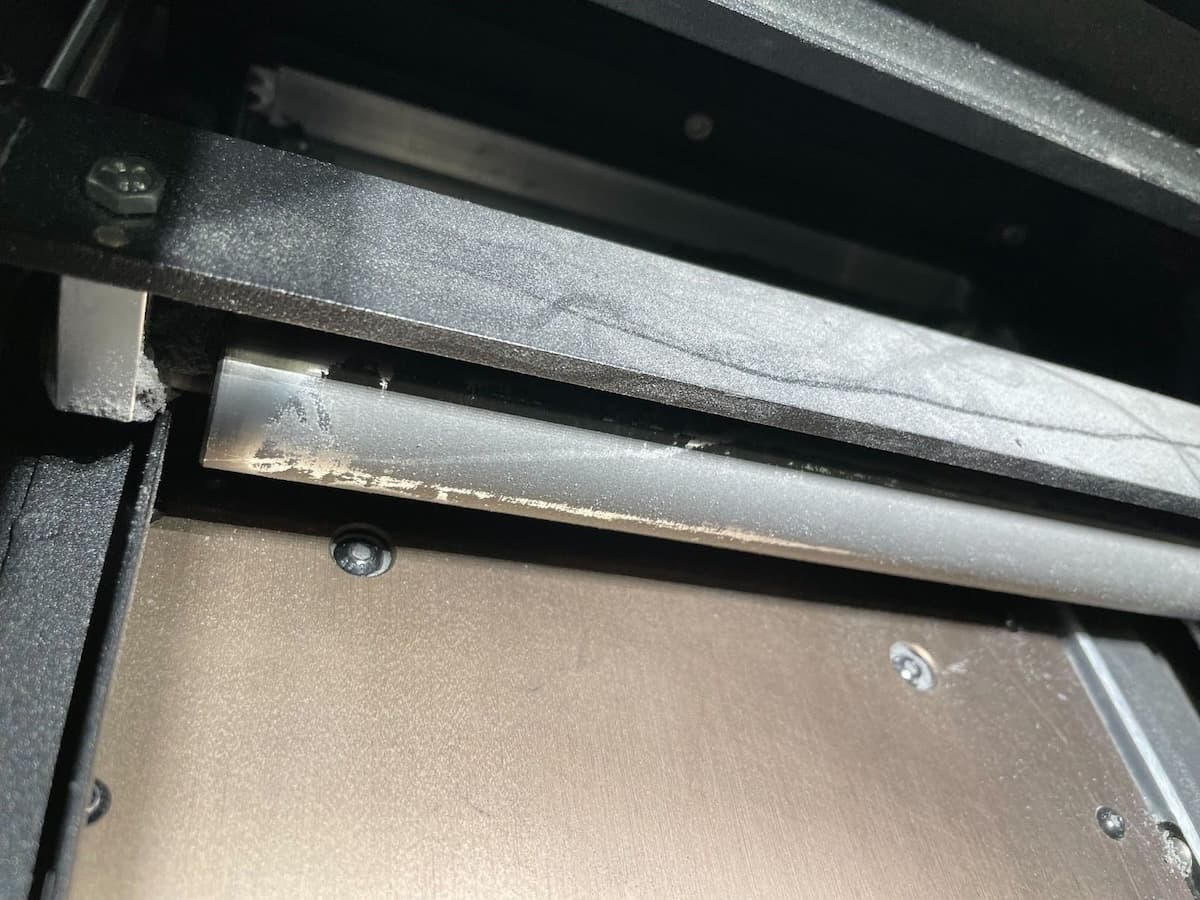
Move and inspect the recoater. If it appears coated with semi-sintered powder, clean the recoater before running another print.

To clean the recoater:

  1. On the touchscreen, tap the wrench icon. The Maintenance screen appears.
  2. Tap Motor Moves. The Motor Moves screen appears.
  3. Tap the < (Left) or > (Right) button under Recoater until you can view the recoater assembly.
  4. If the recoater is covered with semi-sintered powder, clean it with a PEC*PAD or other lint-free microfiber cloth wetted with ethanol.
TPU 90A Powder buildup on the recoater

Changing materials

Fuse Series printers and related accessories are designed to be used with only one powder type at a time. Make sure to clean each device thoroughly, following Formlabs instructions, before switching powder types. Mixing powders can lead to print failures or permanent damage to the machine.

Using a dedicated build chamber for Nylon 11 Pro Powder is highly recommended. If using a build chamber that has previously printed with a different powder, the print bed assembly should be replaced in order to prevent failures due to stuck print beds. Please contact Formlabs Support or your certified service provider for guidance on replacing this component. Swapping out the print bed is most important when the previously printed material has a lower printing temperature than the new material, for example, when switching from Nylon 12 to Nylon 11 Pro Powder.

If you plan to regularly print in multiple different materials, Formlabs recommends dedicating a separate printer, build chamber, and Fuse Sift or Fuse Sift X1 for each material type for an easier workflow.

Consult the following support articles for additional information: