-
50% contained ACMO.
-
50% of the resins containing ACMO either did not have an SDS easily available online or did not properly communicate its hazards.
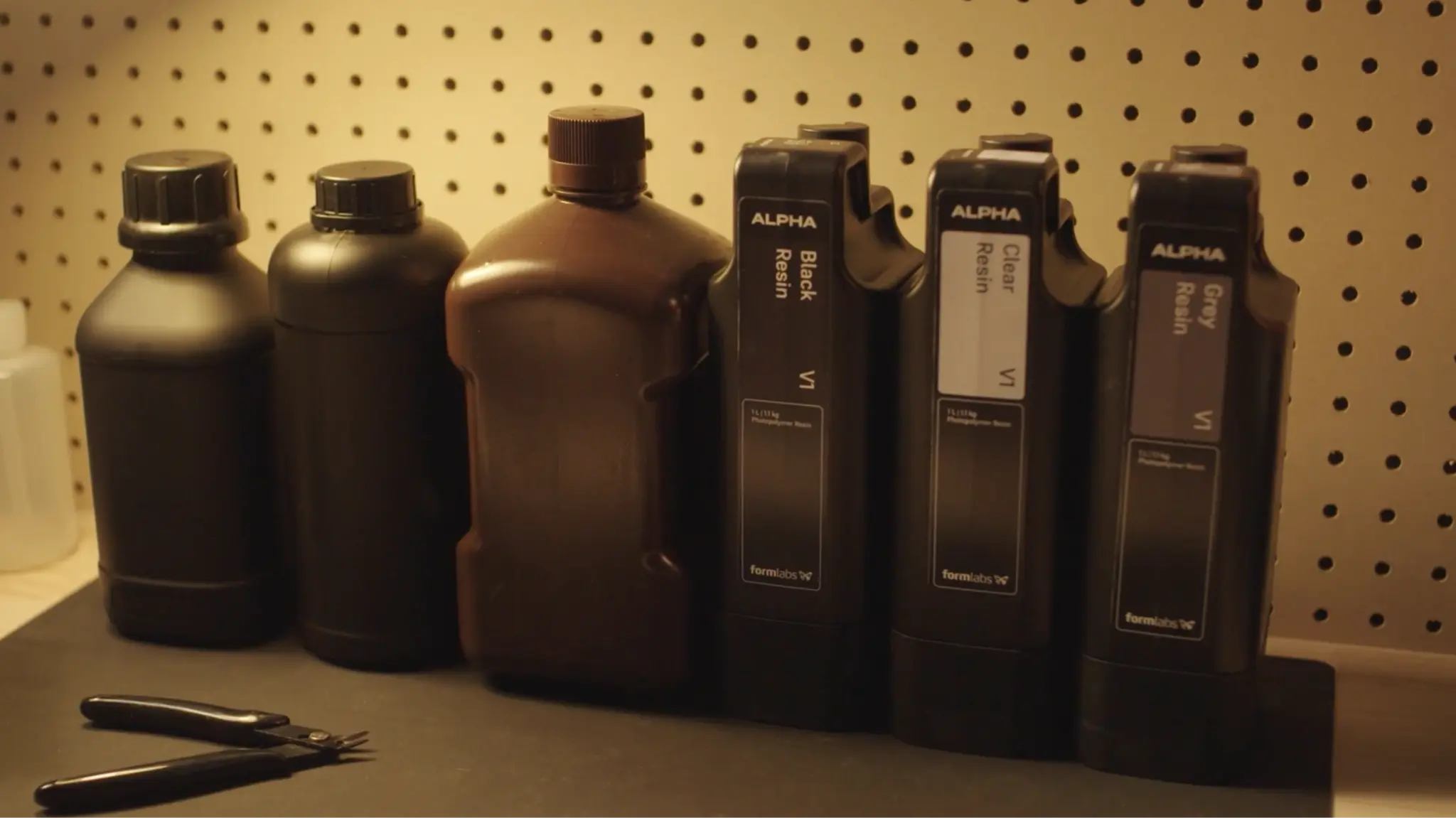

The High Cost of Low-Cost SLA Resins: A Monomer Analysis and Hazard Report
A safety data sheet (SDS) is produced by a chemical manufacturer and it should list information pertaining to the hazards of a material. Formlabs performed comprehensive analysis on dozens of 3D printing resins to determine their chemical contents. Comparing this analysis to the product SDSs, we found that some SDSs were unavailable online or that chemical hazards were excluded. Specifically, ACMO (N-Acryloylmorpholine) was identified in many resins, sometimes without being disclosed on the product safety documentation.
The High Cost of Low-Cost SLA Resins: A Monomer Analysis and Hazard Report
A safety data sheet (SDS) is produced by a chemical manufacturer and it should list information pertaining to the hazards of a material. Formlabs performed comprehensive analysis on dozens of 3D printing resins to determine their chemical contents. Comparing this analysis to the product SDSs, we found that some SDSs were unavailable online or that chemical hazards were excluded. Specifically, ACMO (N-Acryloylmorpholine) was identified in many resins, sometimes without being disclosed on the product safety documentation.
ACMO: A Monomer to Know

ACMO (N-Acryloylmorpholine) is an inexpensive, low-viscosity chemical that cures quickly. It is commonly used in industrial applications. However, ACMO presents significant health risks, including Category 2 organ toxicity and the potential for severe and irreversible eye damage. Strict engineering controls and personal protective equipment (PPE) are needed to use this chemical safely in industrial environments. The full GHS Hazard Statements and Precautionary Codes for ACMO can be viewed here.
In addition, in the United States, the Environmental Protection Agency (EPA) has a SNUR (Significant New Use Rule) for ACMO as a monomer for stereolithography. This means the following labels and protocols apply to 3D printing resins containing greater than 1% of ACMO in the US:
-
Mandatory Warnings: Products containing ACMO must include the warnings: "DANGER. May cause damage to organs through prolonged or repeated exposure. Causes serious eye damage. Harmful if swallowed.” According to the SNUR, a statement to the effect of “may cause reproductive effects” is also required.
-
Engineering & PPE (Personal Protective Equipment): The SNUR requires the use of specialized gloves and engineering controls such as ventilation or respirators where feasible, to prevent inhalation of ACMO vapors.
While ACMO can be very useful in particular applications, using this chemical in non-industrial settings can pose a danger to users, especially if they are not aware of the hazards. The table below lists whether a resin had an available SDS online, whether it contained ACMO, and whether the SDS (when available online) declared the ACMO hazards, “may cause damage to organs through prolonged or repeated exposure” (H373) and “causes serious eye damage” (H318).
Resin SDS Analysis and Findings
Summary of Findings
|
Manufacturer |
Resin |
Lot Number |
SDS available online when checked in September 2026? |
ACMO-free? |
H373 & H318 present on SDS? |
|---|---|---|---|---|---|
|
3D Systems |
Figure 4 Rigid Grey |
R25103036 |
Yes |
No |
Yes |
|
Anycubic |
High Speed 2.0 |
RGS2HE2627C0101 |
Yes |
No |
No |
|
Anycubic |
ABS-Like Pro 2 |
RABV2HU2621C0302 |
Yes |
No |
No |
|
Anycubic |
High Clear |
RHDTO2603C0601 |
Yes |
Yes |
N/A |
|
Asiga |
FusionGRAY |
5000198 |
Yes |
Yes |
N/A |
|
Asiga |
PlasticClear |
18694 |
Yes |
Yes |
N/A |
|
BASF |
ST45M |
19811915 |
Yes |
No |
Yes |
|
BASF |
ST7500SG |
HD8221116 |
Yes |
No |
Yes |
|
BASF |
ST1400 |
UV01177 |
No |
Yes |
N/A |
|
ELEGOO |
Rapid |
P16JAN2026 |
No |
No |
No |
|
ELEGOO |
Standard V2 |
P14JUL2026 |
Yes |
No |
No |
|
ELEGOO |
Standard 8K Space Grey |
No |
No |
No |
|
|
ELEGOO |
Water Washable 8K Space Grey |
No |
No |
No |
|
|
ELEGOO |
ABS-Like 3.0 |
P23APR2026 |
Yes |
No |
No |
|
HeyGears |
PAU20 |
GP202602026 |
Yes |
No |
Yes* |
|
HeyGears |
PAP10 |
2412907 |
Yes |
No |
Yes* |
|
HeyGears |
PAS10 |
2504904 |
Yes |
No |
Yes* |
|
HeyGears |
PAU11 |
GP202603025 |
Yes |
No |
Yes* |
|
Liqcreate |
Strong-X |
missing |
Yes |
Yes |
N/A |
|
Liqcreate |
Tough-X |
missing |
Yes |
Yes |
N/A |
|
Loctite |
IND403 |
IDH2675977 |
Yes |
Yes |
N/A |
|
Loctite |
IND3843 |
IDH2584962 |
Yes |
Yes |
N/A |
|
Loctite |
IND405 |
IDH2697115 |
Yes |
Yes |
N/A |
|
Loctite |
IND147 |
IDH2904356 |
Yes |
Yes |
N/A |
|
Loctite |
IND402 |
IDH2676512 |
Yes |
No |
Yes |
|
Loctite |
IND406 |
IDH2727552 |
Yes |
Yes |
N/A |
|
Loctite |
Onyx Impact Plus |
B199109 |
Yes |
Yes |
N/A |
|
Loctite |
IND475 |
IDH2733496 |
Yes |
Yes |
N/A |
|
Loctite |
3D 3172 |
IDH2584961 |
Yes |
Yes |
N/A |
|
Loctite |
IND249 |
IDH2933628 |
Yes |
Yes |
N/A |
|
Nova3D |
Clear |
missing |
No |
Yes |
N/A |
|
Phrozen |
Aqua-Gray |
PZBGR401244124 |
Yes |
No |
Yes |
|
Phrozen |
Water-Washable |
PZAWWG01238001 |
Yes |
No |
Yes |
|
Siraya Tech |
Blu |
P20260309 |
Yes |
No |
Yes** |
|
Siraya Tech |
Fast |
P20260403 |
Yes |
No |
Yes** |
|
SUNLU |
ABS-Like |
P21042026G03F2 |
Yes |
No |
Yes |
|
SUNLU |
Water Washable |
P30032024E03E |
Yes |
No |
Yes |
* Heygears uses the signal word and hazard label “Warning: causes serious eye irritation,” rather than “Danger: causes serious eye damage” in ACMO’s GHS classification. Though it is ‘only’ a single word change, there is a significant difference in the level of severity between the GHS signals ‘Warning’ and ‘Danger.’
** Siraya Tech uses the signal word ‘warning’ in its US SDS, rather than ‘danger’. Its EU SDS does not list hazard codes H318 (serious eye damage) and H373 (organ damage) in sections 2.1 and 2.2.
Some resins list the GHS hazards for ACMO but do not list other warnings such as reproductive toxicity or aquatic toxicity. For example, according to the SNUR, the US SDS for resins containing ACMO should contain a statement to the effect of “this substance may cause reproductive effects.” Failure to provide mandated warnings is a significant safety oversight, as ACMO exposure can lead to long term effects such as permanent eye damage.
Users of these resins should research the specific hazards of ACMO to implement best practices and minimize exposure to harm. For further research, you can access helpful resources at the ECHA CHEM database and PubChem.
Would you like us to test a specific resin? Fill out our form here. We'll test and publish results for the most-requested resins.
Formlabs’ Approach to Resin Safety
Formlabs resins are formulated for high performance while minimizing hazardous ingredients. In addition, we provide easily accessible SDSs with all appropriate hazards listed for our materials so that users can approach printing with comprehensive information about resin safety and the precautions to take when printing.
Formlabs employs more than 40 materials scientists and engineers who research, develop, and test the materials.

Formlabs Materials Lab in Somerville, USA
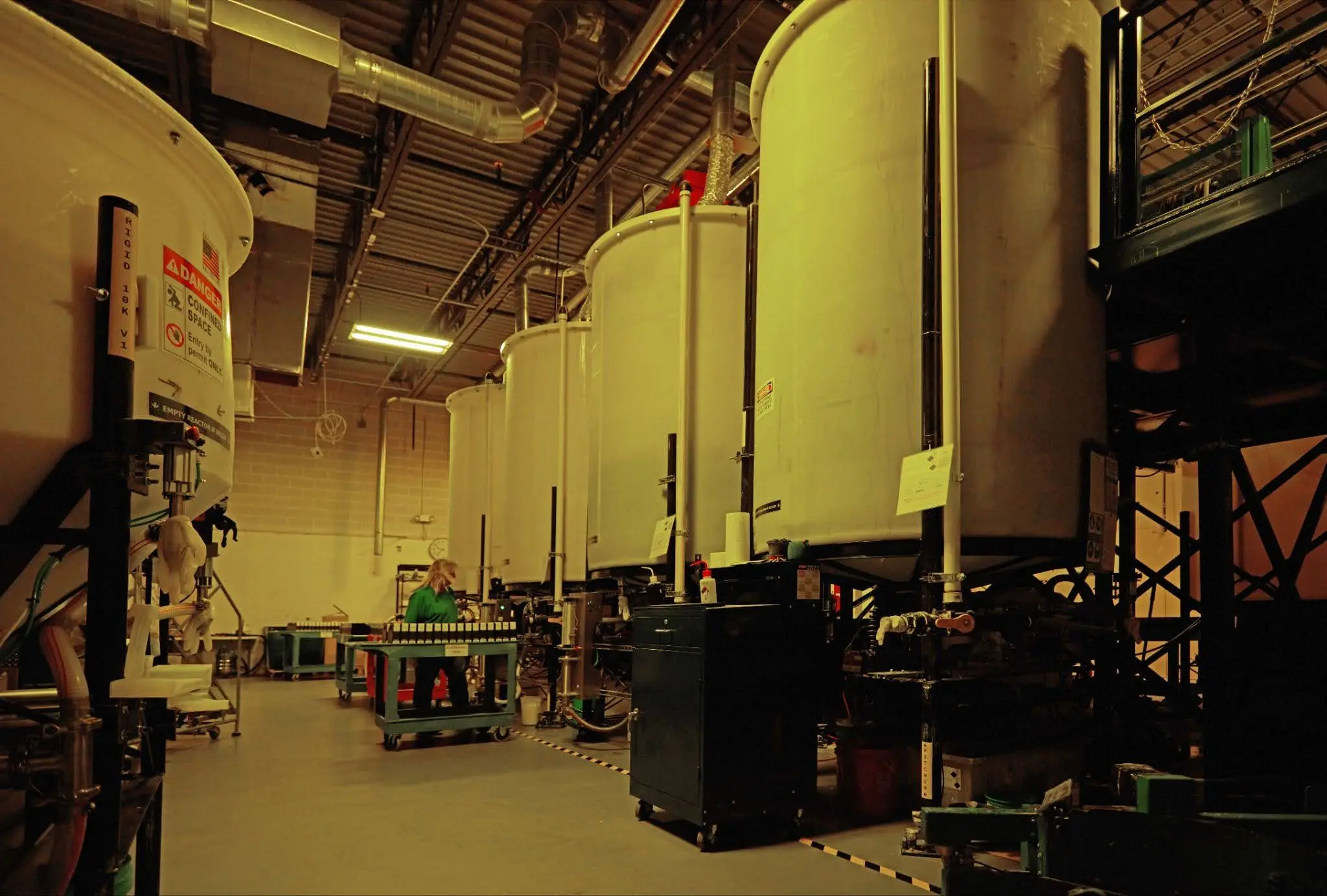
Formlabs resin manufacturing facility in Ohio, USA
Our commitment to quality and reliability doesn't stop at the printer. That means holding our materials manufacturing to the same standards, which is why we produce all of our resins in our own facility in Ohio. Our biocompatible materials are made in a fully regulated environment from start to finish. These materials are designed and manufactured within our robust Quality Management System that is ISO 13485 and EU MDR certified. A dedicated team of operators and quality assurance professionals makes the resins inside a certified ISO Class 8 cleanroom.
For more information on safety, explore our safety hub or download SDSs for Formlabs materials.
Method
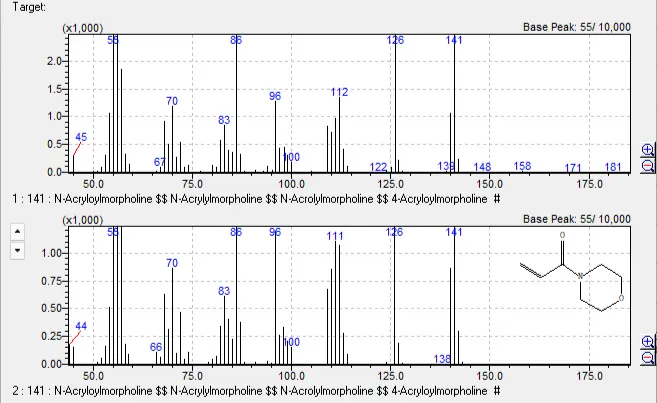
To identify ACMO in 3D printing resins we use Gas-Chromatography Mass-Spectrometry (GCMS). In this process resin is separated into its pure constituent components and analyzed with a mass spectrometer. The mass spectrometer ionizes molecules and measures the abundance of fragments at different mass-to-charge ratios (m/z). This produces a chemical fingerprint (trace) in the form of a mass spectrum for each ingredient in the mixture, which can be compared to known references for identification. In all the resins tested in which ACMO was identified, the relevant mass spectrum was more than 95% similar to the reference spectrum (see below)
Mass spectrometry trace (abundance vs m/z) of a target monomer (top) as compared to the known ACMO Reference (bottom).