Note:
As of June 9, 2026, BioMed Elastic 50A Resin has been renamed to BioMed Flex 50A Resin. This better describes its performance relative to other flexible Formlabs resins.

Note:
As of June 9, 2026, BioMed Elastic 50A Resin has been renamed to BioMed Flex 50A Resin. This better describes its performance relative to other flexible Formlabs resins.
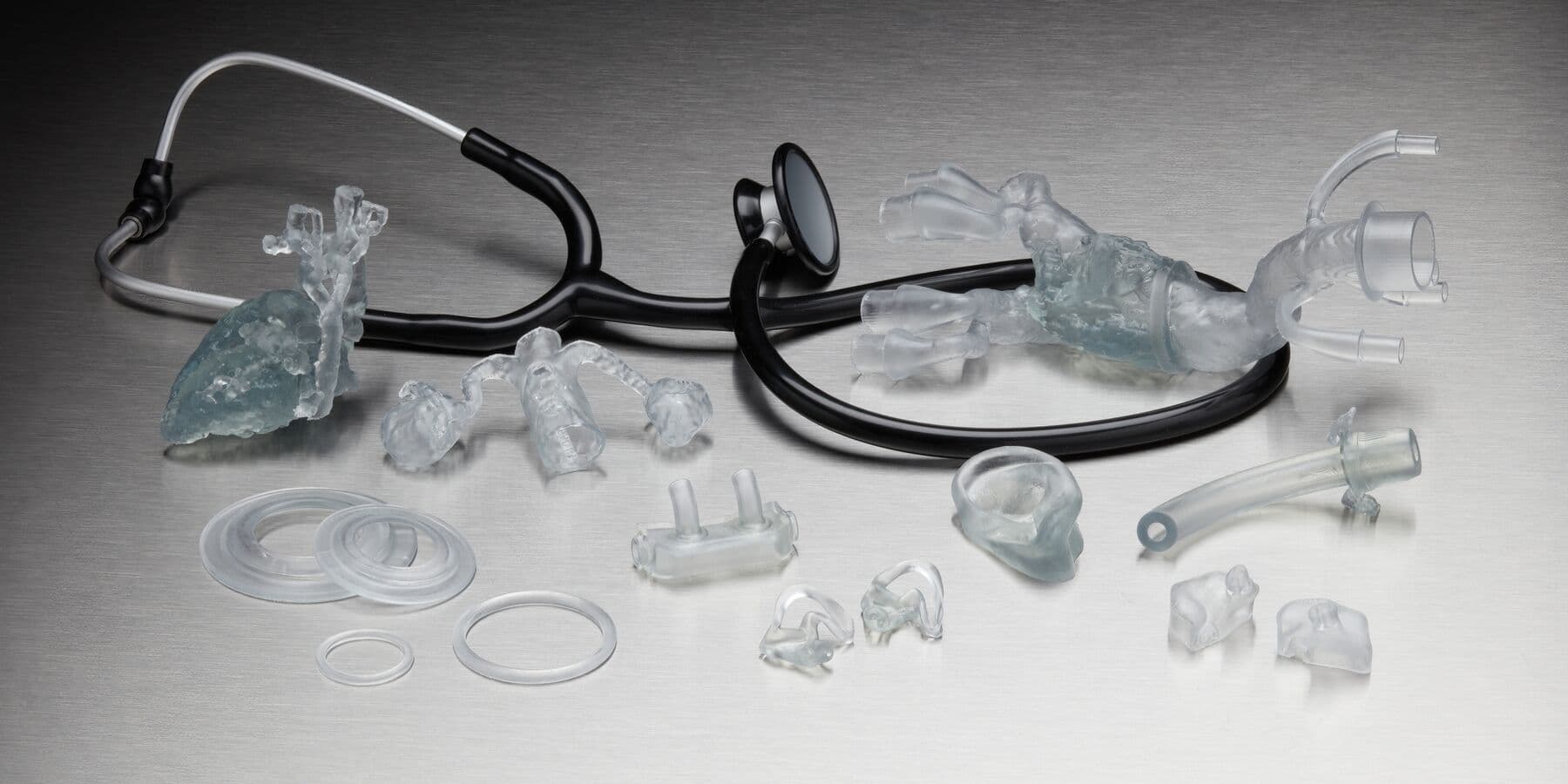
BioMed Flex 50A Resin is a soft, elastic, medical-grade material for applications requiring comfort, biocompatibility, and transparency. This ISO 10993 and USP Class VI material is produced in an FDA-registered, ISO 13485 certified facility and can be used in applications with long-term skin and short-term mucosal membrane contact.
Notice:
Read the manufacturing guide for detailed instructions about the workflow for BioMed Flex 50A Resin.
Recommended for:
BioMed Flex 50A Resin prints at 100 microns.
To learn more about the performance or specific material properties of this resin, refer to the Safety Data Sheet (SDS) and Technical Data Sheet (TDS). Always consult the SDS as the primary source of information to understand safety and handling of Formlabs materials.
Required resources
Made by Formlabs:
Printing with BioMed Flex 50A Resin
Finishing
The Form Wash agitates the solvent bath and removes parts from the bath after a set time. Wash parts in 99% IPA according to the support article Form Wash time settings. Pay particular attention to information that affects mechanical properties or biocompatibility requirements.
If the model is hollow or has internal channels, ensure liquid resin is flushed out thoroughly from these features. Allow parts to fully dry before post-curing.
Post-curing requirements
BioMed Flex 50A Resin requires post-curing to reach its optimal mechanical properties.
Note:
To post-cure this resin, submerge parts in a glass container of water at least 500mL in size. Parts should be fully submerged with no air bubbles on surfaces.
Refer to the support article Form Cure time and temperature settings for post-curing recommendations. If using Fast Cure, refer to the support article Fast Cure time settings.
Notice:
Follow the post-curing recommendations in the manufacturing guide for the clearest and best possible results. Improper post-curing can lead to suboptimal mechanical and biocompatibility properties.
Additional resources