Notice:
To avoid damage to equipment, check the resin tank compatibility table in Choosing the right material to confirm you are using a resin tank that is compatible with this material.

Notice:
To avoid damage to equipment, check the resin tank compatibility table in Choosing the right material to confirm you are using a resin tank that is compatible with this material.
Use Formlabs Castable Wax Resin to produce highly detailed jewelry by casting parts through direct investment casting with minimal part finishing (no post-cure required). Castable Wax prints are strong enough to use for prototyping and fitting before production.
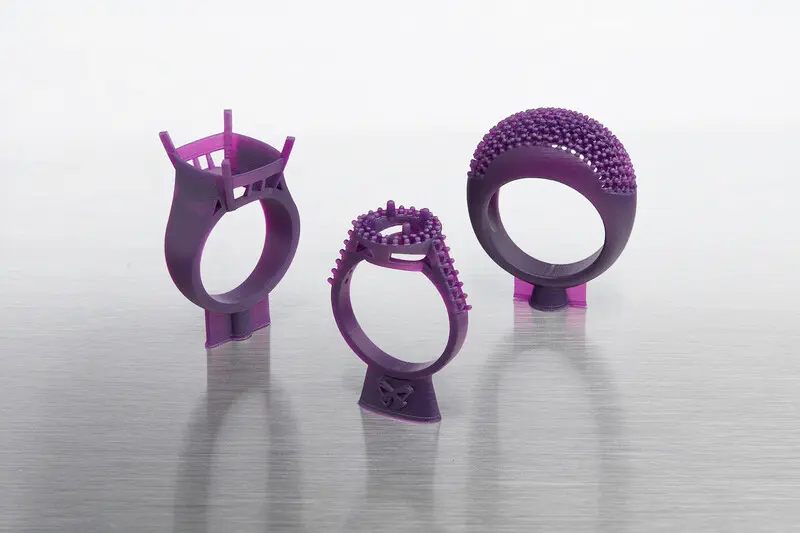
A 20% wax-filled material, Castable Wax Resin prints delicate models with ease. Parts printed in Castable Wax are ready to cast after washing without post-curing for fast, clean burnout and a streamlined casting process.
Understand the step-by-step workflow, recommendations, burnout schedules, and special considerations for designing models, printing, preparing investments, and casting successfully with Castable Wax Resin.
Recommended for:
Not recommended for:
Note:
To learn more about the performance or specific material properties of Castable Wax Resin, please refer to the Safety Data Sheet (SDS) and Technical Data Sheet (TDS). Always consult the SDS as the primary source of information to understand safety and handling of Formlabs materials.
Material properties
Castable Wax Resin is an acrylate photopolymer formulated with liquid wax to enable a burnout process similar to a traditional wax schedule.
Castable Wax Resin prints parts with high mechanical strength in their green state when compared to parts printed in Castable, which requires post-curing. As a result of the high strength, Castable Wax is particularly suitable for patterns with delicate features and high surface detail requirements.
Required resources
Made by Formlabs:
Made by third parties:
Workflow overview
Notice:
This is an abbreviated version of the complete instructions in the application guide Introduction to Casting for 3D Printed Jewelry Patterns [en]. Read the application guide for detailed instructions about design, settings, and part orientation for Castable Wax Resin.
An abridged guide to casting with Castable Wax Resin is available in the usage guide Castable Wax: Jewelry Pattern Burnout Process [en].
Design for casting
Casting is both a skill and an art form. The design of the piece to be cast is as important as the material properties for successful results. Pay attention to the design of individual features, the flow of material in the investment, and the printing configuration.
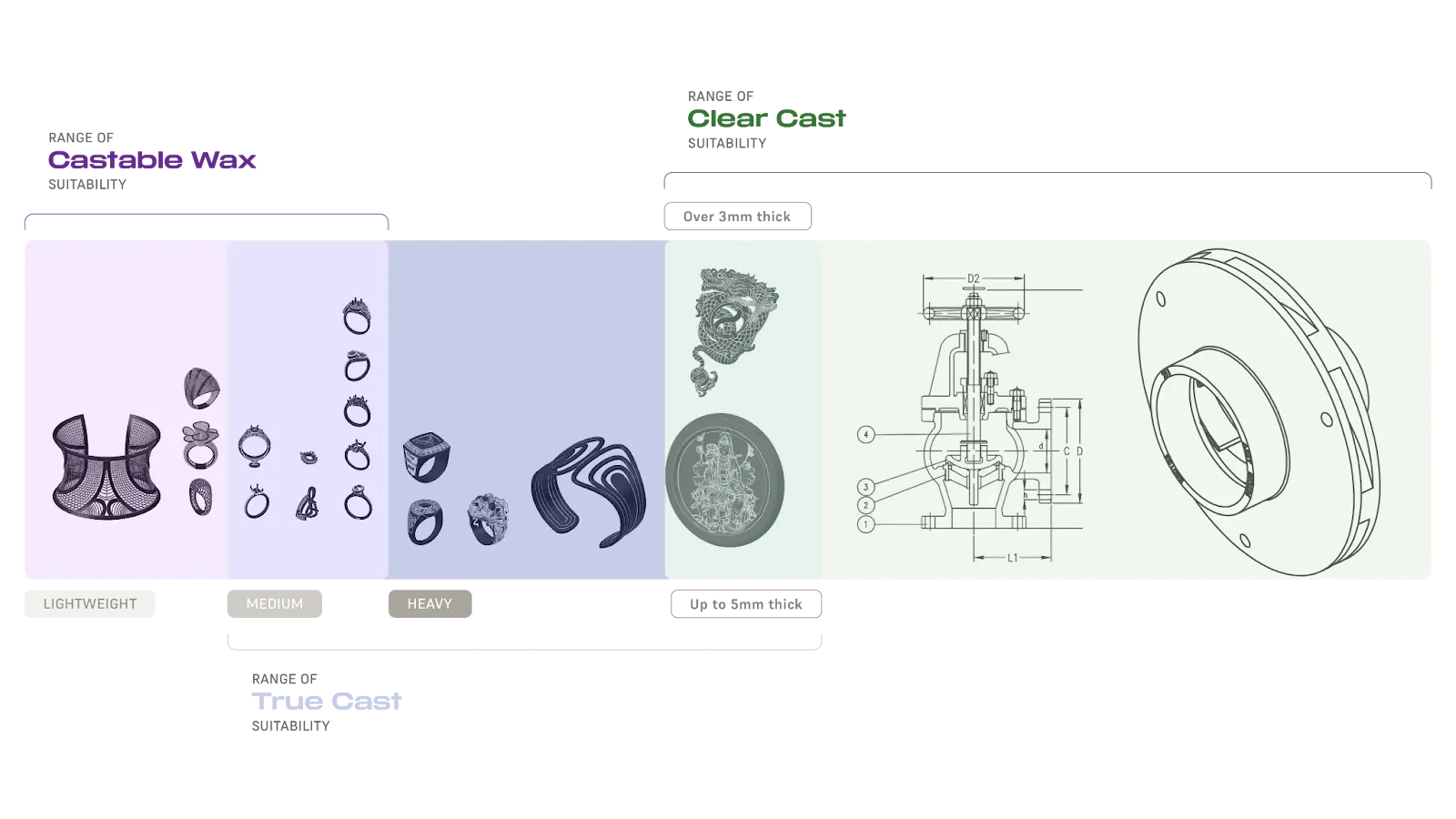
When choosing a casting resin, take the casting properties of each material into consideration. For smaller parts or wire filigree, use Castable Wax Resin. For medium to heavy jewelry or small engineering components, use True Cast Resin. For larger investment casting, use Clear Cast Resin.
Learn more about the best design parameters for common jewelry features, such as prongs, filigree, engraving, surfaces, raised text, and milgrain, in the white paper Jewelry 3D Printing: Basic Design Parameters, Supports, and Orientation [EN] from Formlabs.
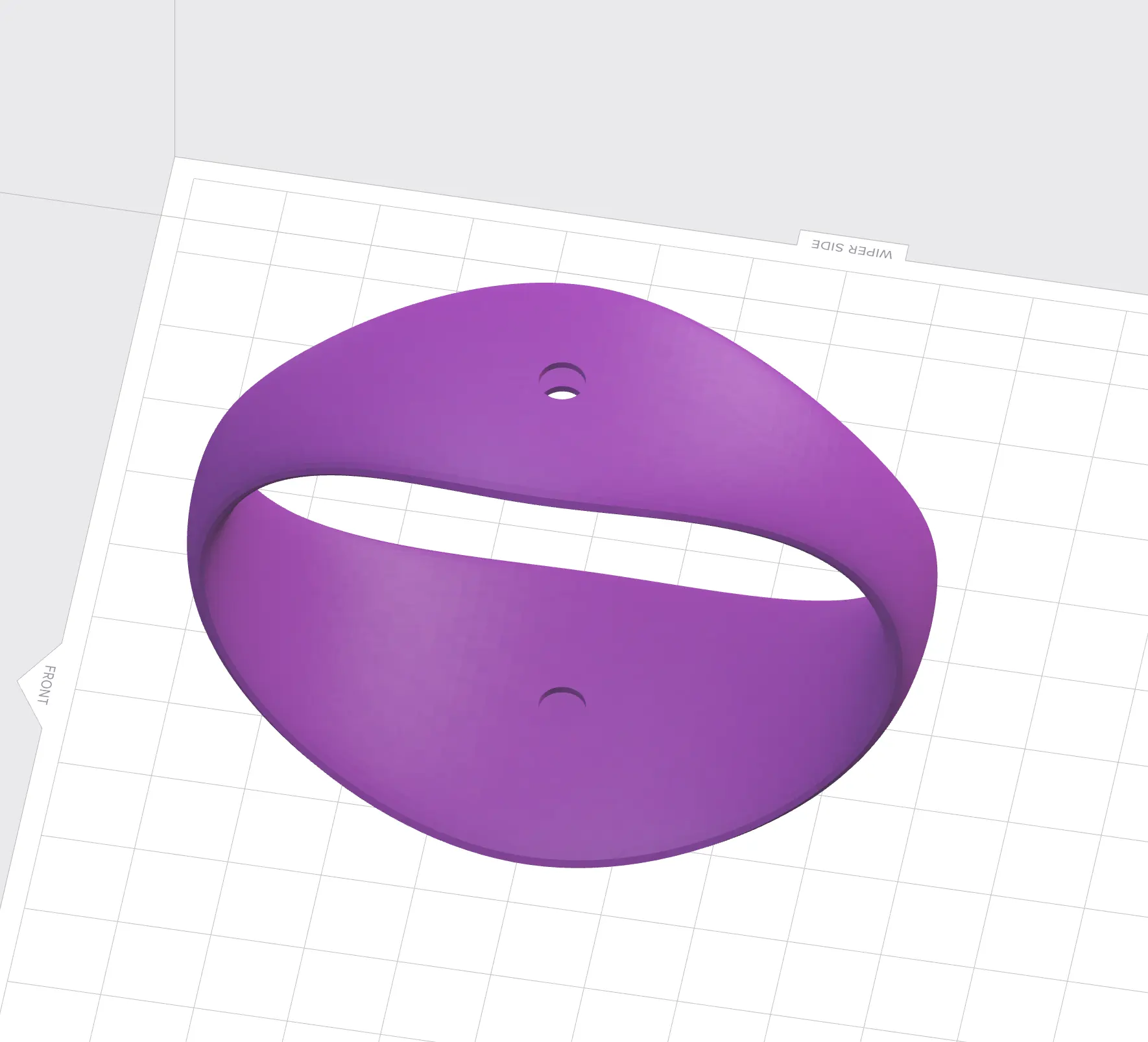
Design airflow vents in thick or large geometries to allow sufficient ventilation during burnout.
Printing with Castable Wax Resin
Install or update PreForm, then set up the next print job.
To prepare a model for printing in PreForm:
The PreForm print settings for Castable Wax Resin are optimized for printing jewelry and quality cast parts, with a focus on achieving the features and detail that matter to jewelers.
Open Mode on the Form 2 must be toggled off to print with Castable Wax Resin.
Shake the resin cartridge and mix resin in the resin tank to agitate Castable Wax Resin before printing. Mix the resin regularly to maintain or restore expected resin performance.
Finishing
The Form Wash agitates the solvent bath and removes parts from the bath after a set time. Wash parts according to the support article Form Wash time settings.
Ensure all IPA on washed parts evaporates completely prior to casting because the IPA can interact with the investment and cause pitting. For best results, wash parts in clean IPA and use compressed air to dry parts, especially parts with internal channels and hollows.
Post-curing requirements
No post-curing is required for Castable Wax parts. While post-curing Castable Wax parts should not affect castability, post-curing may shrink parts slightly (by less than 1%), which can cause distortion.
Casting with Castable Wax Resin
For detailed information on casting with Formlabs resins, read the application guide Introduction to casting with Formlabs resins [en] and other Formlabs resources.
Notice:
Follow the investment manufacturer's safety recommendations.
Additional resources