Anmerkung:
Prüfen Sie den Supportartikel Auswahl des richtigen Pulvers, um festzustellen, ob das von Ihnen verwendete Pulver eine Kontrolle der inerten Atmosphäre erfordert.

Anmerkung:
Prüfen Sie den Supportartikel Auswahl des richtigen Pulvers, um festzustellen, ob das von Ihnen verwendete Pulver eine Kontrolle der inerten Atmosphäre erfordert.
Unter Inertisierung versteht man das Entfernen von Luft aus einem geschlossenen Raum, indem sie durch ein Inertgas ersetzt wird. Beim SLS-3D-Druck wird als Inertgas in der Regel Stickstoff verwendet. SLS-Polymere neigen zur Oxidation, wenn sie über einen längeren Zeitraum hinweg erhöhten Temperaturen ausgesetzt sind. Die Begrenzung der Oxidation verbessert die Materialeigenschaften der Druckteile und ermöglicht das Drucken mit einer geringeren Neuzuführungsrate.
Beim Drucken mit Nylon 11 in einer Stickstoffatmosphäre können Sie beispielsweise mit einer Neuzuführungsrate von 30 % Teile mit höherer Duktilität drucken als bei einer Neuzuführungsrate von 50 % in einer Luftatmosphäre.
Der Fuse 1+ 30W ist mit einer verschlossenen Kammer ausgestattet, in der ein partieller Überdruck herrscht, um eine niedrige Sauerstoffkonzentration beim Drucken in einer Inertgasatmosphäre zu gewährleisten. Der Fuse 1+ 30W umfasst Rohrleitungen, Sensoren und Steuerungen, die ein Plug-and-play-Kontrollverfahren für die Inertisierung ermöglichen. Der Fuse 1+ 30W kann Stickstoff nicht selbst generieren, sodass eine externe Stickstoffquelle erforderlich ist, wenn eine Inertisierung gewünscht wird.
Bereitstellung
Stickstoff kann in verschiedenen Formen bereitgestellt werden, beispielsweise in Form von Druckgasflaschen, Flüssigstickstoffbehältern oder durch Stickstoffgeneratoren.
Stickstoffquellen, die die folgenden Anforderungen erfüllen, sind für die Verwendung mit dem Fuse 1+ 30W geeignet:
Weitere Informationen über die Beschaffung von Verbrauchsmaterialien finden Sie im Supportartikel Von Formlabs genehmigte Vertriebspartner für Verbrauchsmaterialien (SLS). In der nachstehenden Tabelle sind die Kompromisse zwischen den Optionen zusammengefasst:
| Stickstoffgenerator | Druckgasflasche | Flüssigstickstoffbehälter | Micro-Bulk-/Bulk-Tank | |
|---|---|---|---|---|
| Beispielbild | 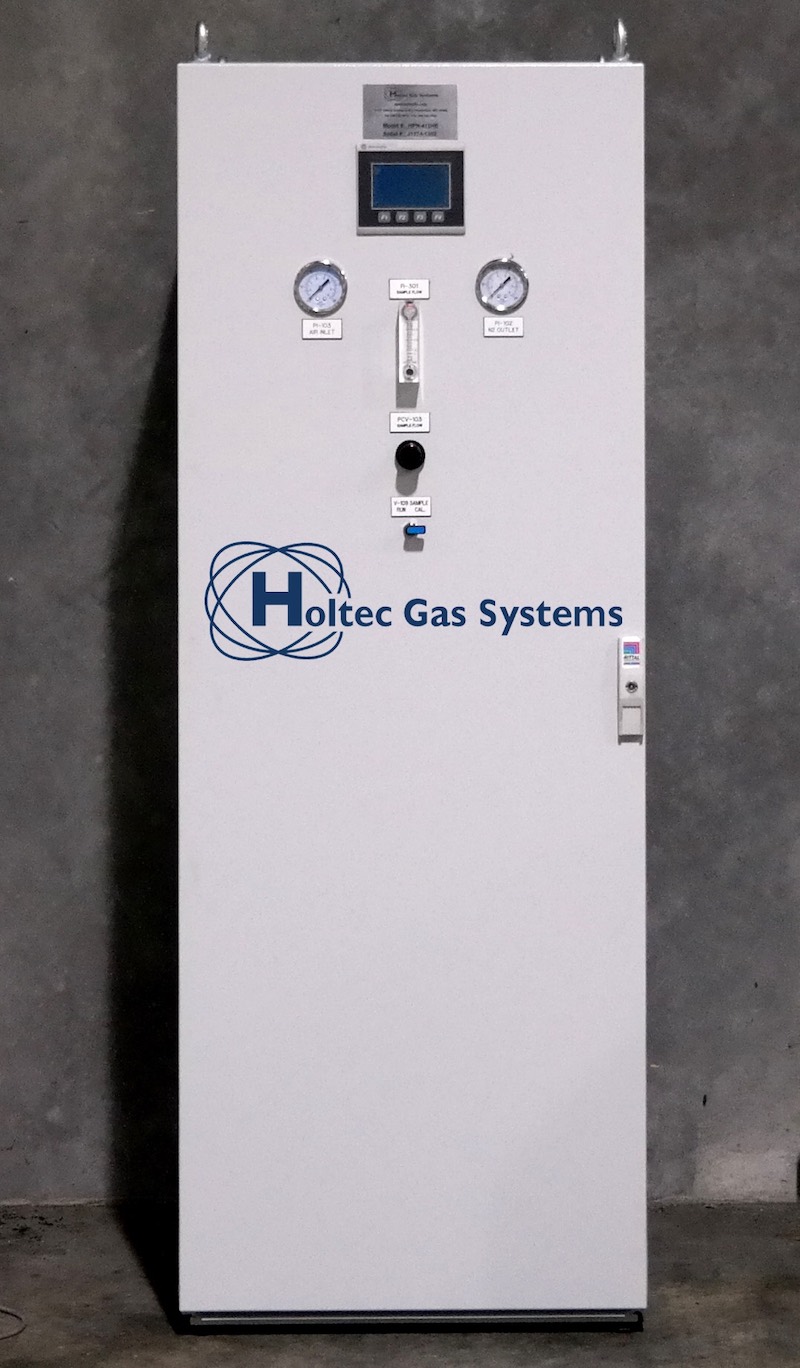 |  | 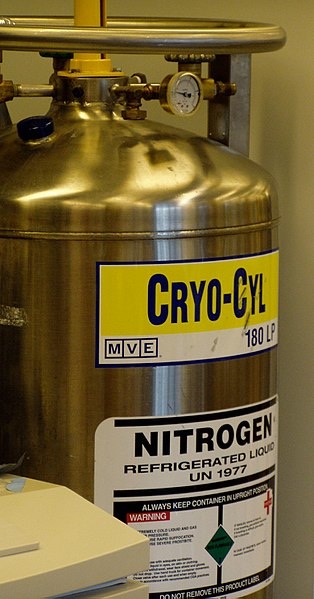 |  |
| Kapazität | Kontinuierlich | Etwa 300 SCF (8.495 l) Stickstoff oder 10 Stunden Druckzeit pro Zylinder | Etwa 5.760 SCF (163.105 l) Stickstoff oder 6–7 Tage Druckzeit pro 230-l-Behälter (mit Verlusten) | Abhängig von Installationstyp und Kapazität |
| Kosten | 4.000–10.000 USD pro Generator | 80–120 USD pro Zylinder | 70–120 USD pro Behälter | |
| Standortanforderungen |
|
|
| Spezielle Installation: Wenden Sie sich an die Anbieter, um die Anforderungen an den Standort zu erfahren. |
| Weitere Überlegungen |
|
|
| |
| Empfohlene Anbieter |
Holtec Gas Systems (Nordamerika) | Airgas | Airgas | Airgas |
Stickstoffgeneratoren
Stickstoffgeneratoren wandeln eine Druckluftquelle in einen Strom von hochreinem Stickstoffgas um, wobei der größte Teil des Sauerstoffs entfernt wird. Der daraus resultierende Stickstoffstrom kann als Stickstoffquelle für den Fuse 1+ 30W dienen. Ein Hauptvorteil des Einsatzes von Stickstoffgeneratoren ist, dass keine Stickstoffquellen in Flaschen ausgetauscht oder nachgefüllt werden müssen.
Druckluftkompressoren können bei der Inbetriebnahme einen hohen Stromverbrauch haben und sollten über einen vom Drucker getrennten Stromkreis versorgt werden, um Druckunterbrechungen zu vermeiden.
Formlabs empfiehlt die Verwendung eines dedizierten Druckluftkompressors oder eines Kompressors mit ausreichender Kapazität, um Druckabfälle zu vermeiden, wenn andere Geräte während des Drucks verwendet werden. Die einem Stickstoffgenerator zugeführte Druckluft muss gefiltert werden, um Feuchtigkeit, Öl und Partikel zu entfernen.
Empfohlene Stickstoffgeneratoren und zugehörige Anschlüsse finden Sie im Supportartikel über von Formlabs genehmigte Händler für Verbrauchsmaterialien. Die aufgeführten Anschlüsse sind mit dem empfohlenen Stickstoffgenerator HSS-7 oder HSS-3 von Holtec Gas Systems kompatibel. Die Anschlüsse umfassen:
Das folgende Diagramm zeigt, wie die oben genannten Komponenten zusammengebaut werden, um den Fuse 1+ 30W erfolgreich mit Stickstoff zu versorgen, beginnend mit einem Druckluftkompressor (jetzt abgebildet). Beachten Sie, dass die Punkte im gestrichelten Kästchen nicht erforderlich sind, wenn Ihr Druckluftkompressor bereits mit einem Filter ausgestattet ist.
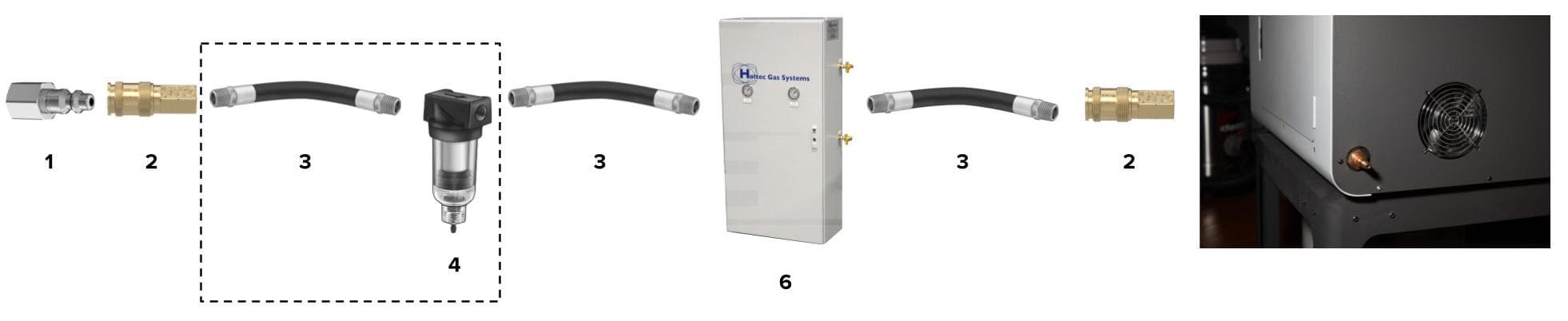
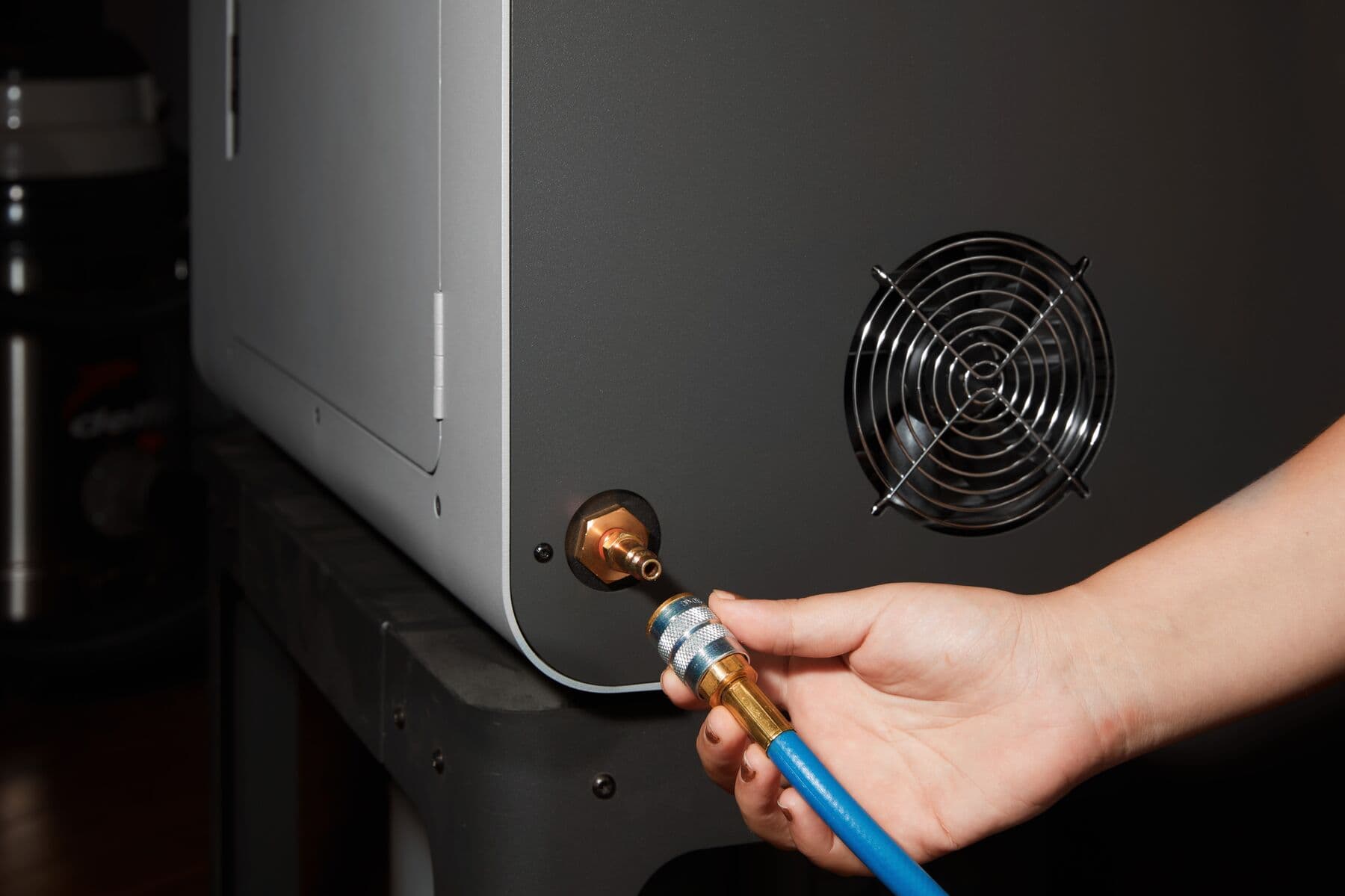
Die Abbildung unten zeigt die Position des Stickstoffeinlasses am Fuse 1+ 30W. Wie Sie sehen, ist der mitgelieferte Schnelltrennanschluss installiert.
Stickstoffflaschen, Dewargefäße und Tanks
Stickstoff kann dem Fuse 1+ 30W auch aus Stickstoffbehältern wie Druckgasflaschen, Flüssigstickstoff-Dewargefäßen oder Micro-Bulk- oder Bulk-Behältern zugeführt werden. Welche Option die beste ist, hängt vom Druckvolumen, dem Budget und den Anlagen ab. Nutzen Sie den von Airgas entwickelten Formlabs-Gasrechner, um die für Sie beste Stickstoffoption zu ermitteln.
Stickstoffflaschen sind eine kostengünstige Möglichkeit, mit dem Drucken in einer Inertgasatmosphäre zu beginnen, ohne in einen Kompressor und einen Stickstoffgenerator zu investieren. Großbestellungen können für hohe Druckauflagen in Produktionsumgebungen ebenfalls eine kostengünstige Option sein.
Bei Verwendung von Druckgasquellen für Stickstoff ist am Ausgang der Druckgasquelle ein Regler zu installieren, um den Stickstoffdruck auf den Einlassbereich des Fuse 1+ 30W zu senken.
Bei Verwendung von Flüssigstickstoffquellen einen Verdampfer am Ausgang der Flüssigstickstoffquelle installieren, um diesen in ein Gas umzuwandeln, das als Zufuhr für den Fuse 1+ 30W verwendbar ist.
Vorbereiten des Stickstoffsystems (nur Fuse 1+ 30W)
Der Fuse 1+ 30W verfügt über die Möglichkeit, Stickstoff als Inertgasatmosphäre in der Druckkammer zu verwenden. Die inerte Stickstoffatmosphäre verhindert die Oxidation des Kunststoffpulvers.
Der Fuse 1+ 30W verfügt über zwei atmosphärische Kontrollmodi:
So bereiten Sie den Fuse 1+ 30W für den Druck mit einer Inertgasatmosphäre vor:
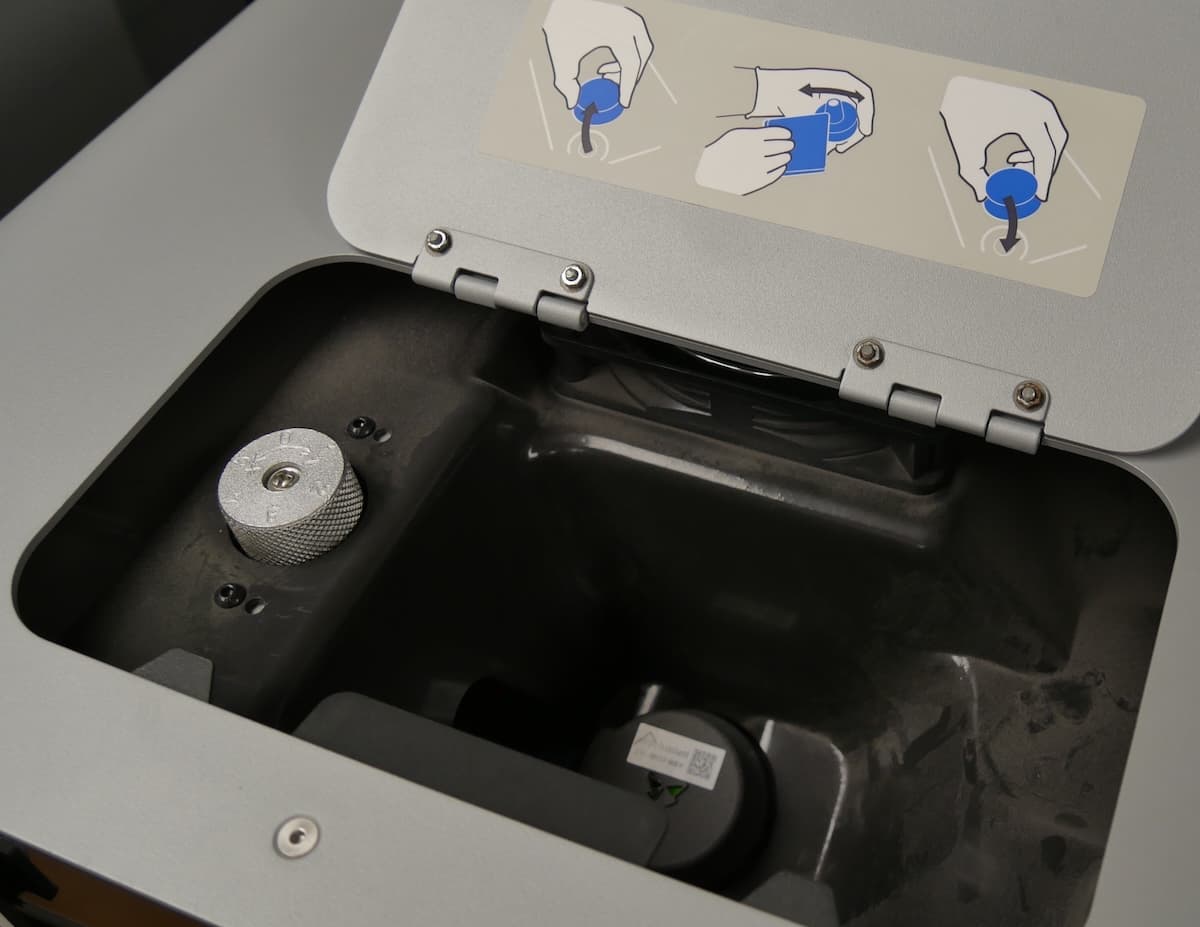
So stellen Sie den Ventildruck ein:
Anmerkung:
Der Drehknopf für den Stickstoffdruck ist extrem empfindlich. Wenn die Nadel auf dem Bildschirm zwischen den Druckwerten hin und her springt, nehmen Sie kleinere Einstellungen vor.
Sicherheit
Warnung:
Stellen Sie sicher, dass eine angemessene Belüftung vorhanden ist, um Gesundheits- und Sicherheitsprobleme im Zusammenhang mit Sauerstoffmangel zu vermeiden.
Eine erhebliche Gefahrensituation kann entstehen, wenn eine Stickstoffquelle falsch angeschlossen oder eingestellt ist und der Stickstoff den vorhandenen Sauerstoff in dem Raum, in dem sich der Drucker befindet, verdrängt. Der Sicherheitsbeauftragte Ihres Unternehmens sollte eine Sicherheitsbewertung durchführen, um die ordnungsgemäße Einrichtung und den sicheren Betrieb des Stickstoffsystems zu gewährleisten.