Hinweis:
Überprüfen Sie zur Vermeidung von Schäden am Gerät die Kompatibilitätstabelle für Harztanks unter Verwendung des richtigen Materials, damit Sie einen für dieses Material kompatiblen Harztank verwenden.

Hinweis:
Überprüfen Sie zur Vermeidung von Schäden am Gerät die Kompatibilitätstabelle für Harztanks unter Verwendung des richtigen Materials, damit Sie einen für dieses Material kompatiblen Harztank verwenden.
Mit Castable Wax Resin von Formlabs können Sie mit geringem Fertigstellungsaufwand (kein Nachhärten) durch Direktfeinguss detailreichen Schmuck gießen. Druckteile aus Castable Wax Resin sind fest genug für die Prototypenfertigung und für die Anprobe vor der eigentlichen Produktion.
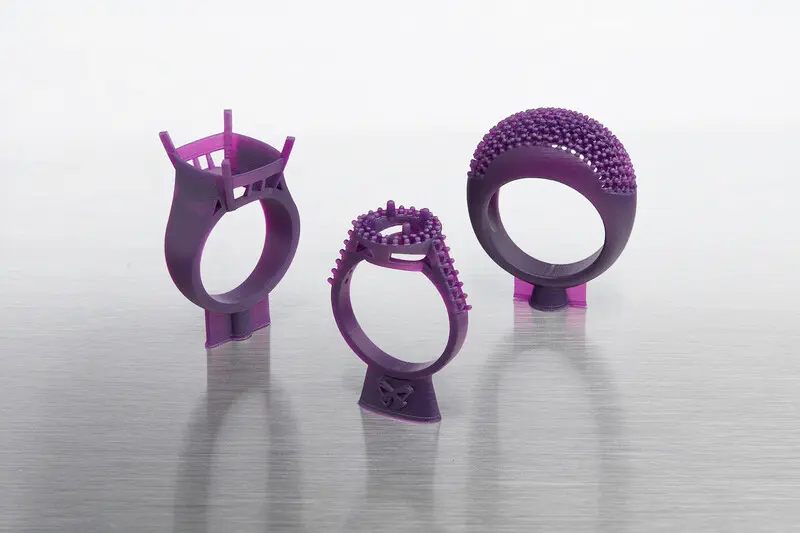
Castable Wax Resin ist ein zu 20 % mit Wachs gefülltes Material, mit dem sich filigrane Modelle mühelos drucken lassen. Druckteile aus Castable Wax Resin sind nach dem Spülvorgang direkt für den Guss bereit; es ist kein Nachhärten erforderlich. Das beschleunigt und vereinfacht den Ausbrenn- und Gussprozess.
Wir zeigen Ihnen den schrittweisen Arbeitsablauf und die Ausbrennzeitpläne und geben Tipps für das Design von Modellen, den Druck, die Vorbereitung der Einbettmasse und den erfolgreichen Guss mit Castable Wax Resin.
Empfohlen für:
Nicht empfohlen für:
Anmerkung:
Wenn Sie mehr über die Leistung oder die spezifischen Materialeigenschaften von Castable Wax Resin erfahren möchten, lesen Sie bitte das Sicherheitsdatenblatt (SDS) und das Technische Datenblatt (TDS ). Beziehen Sie sich primär auf das SDB zu den Themen Sicherheit und Handhabung von Formlabs Materialien.
Materialeigenschaften
Castable Wax Resin ist ein Acrylat-Photopolymer mit einem Anteil von flüssigem Wachs, das einen Ausbrennprozess ermöglicht, der dem Zeitplan von herkömmlichem Wachs ähnelt.
Im Vergleich zu Druckteilen aus Castable Resin, die nachhärten müssen, zeichnen sich Druckteile aus Castable Wax Resin bereits als Grünteile durch ihre mechanische Festigkeit aus. Aufgrund der hohen Festigkeit eignet sich Castable Wax besonders für Muster mit filigranen Merkmalen und hohen Anforderungen an die Oberflächendetails.
Erforderliches Zubehör
Von Formlabs:
Von Drittanbietern:
Übersicht des Arbeitsablaufs
Hinweis:
Dies ist eine gekürzte Version der vollständigen Anweisungen im Anwendungsleitfaden Einführung in das Gießen von 3D-gedruckten Schmuckmustern[[en]]. Detaillierte Anweisungen zu Design, Einstellungen und Modellausrichtung für Castable Wax Resin finden Sie im Anwendungsleitfaden.
Eine verkürzte Anleitung zum Gießen mit Castable Wax Resin finden Sie im Benutzerleitfaden Castable Wax: Schmuckmuster-Ausbrandprozess [en].
Design für den Guss
Gießen ist sowohl eine Fähigkeit als auch eine Kunstform. Für gute Ergebnisse ist das Design des Gussteils genauso wichtig wie die Materialeigenschaften. Seien Sie besonders sorgfältig beim Design einzelner Merkmale, der Auslegung des Materialflusses in der Einbettmasse und bei der Druckkonfiguration.
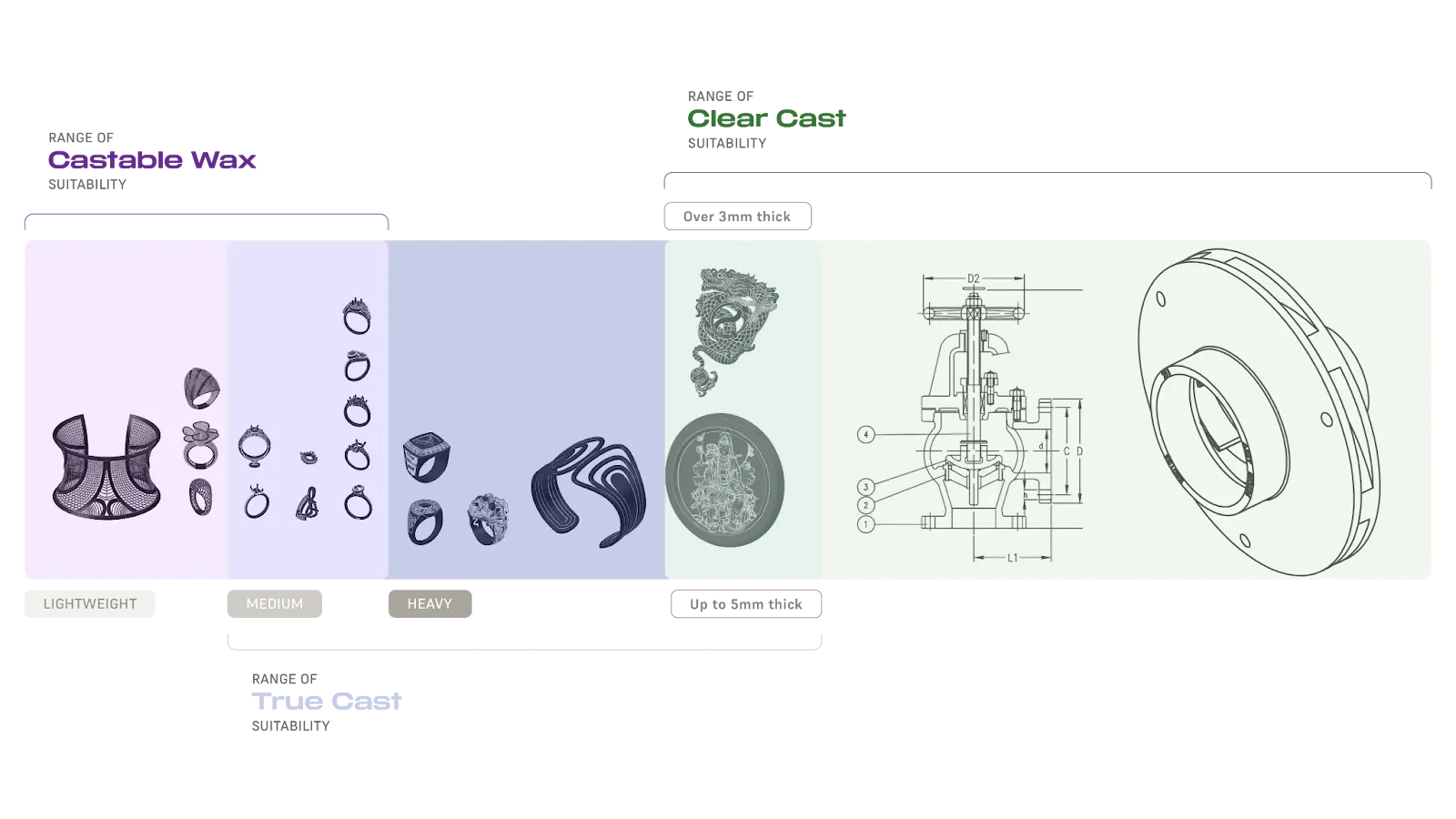
Bei der Auswahl eines Harzes sollten Sie die Eigenschaften des jeweiligen Materials beim Gießen berücksichtigen. Für kleinere Teile oder filigrane Drähte sollten Sie Castable Wax Resin verwenden. Für mittleren bis schweren Schmuck oder kleine technische Bauteile sollten Sie True Cast Resin verwenden. Für größeren Feinguss sollten Sie Clear Cast Resin verwenden.
Erfahren Sie mehr über die besten Design-Parameter für häufige Schmuckdetails wie Krappen, Filigranarbeiten, Gravuren, Oberflächen, erhabenen Text und Milgrain im Whitepaper 3D-Druck von Schmuck: Grundlegende Design-Parameter, Stützstrukturen und Ausrichtung [[en]] von Formlabs.
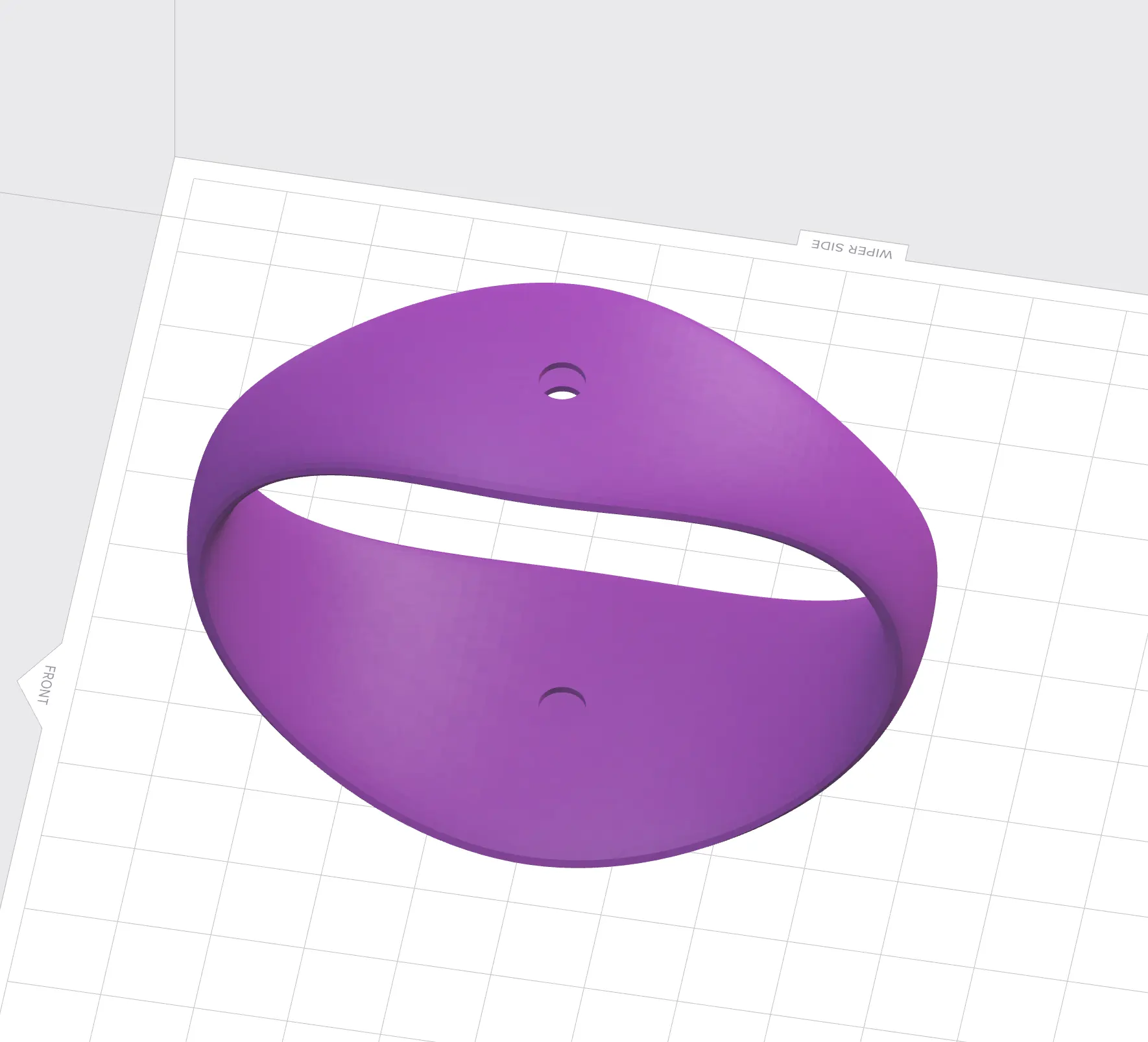
Fügen Sie bei dicken oder großen Geometrien Belüftungslöcher im Teil ein, damit beim Ausbrennen ein ausreichender Luftstrom vorhanden ist.
Drucken mit Castable Wax Resin
Installieren oder aktualisieren Sie PreForm und richten Sie dann den nächsten Druckauftrag ein.
So bereiten Sie in PreForm ein Modell für den Druck vor:
Die PreForm Druckeinstellungen für Castable Wax Resin sind für den Druck und Guss von Schmuck optimiert, wobei diejenigen Merkmale und Details im Fokus stehen, die für Juweliere am wichtigsten sind.
Der Open Mode auf dem Form 2 muss deaktiviert sein, um mit Castable Wax Resin zu drucken.
Schütteln Sie die Harzkartusche und mischen Sie Castable Wax Resin im Harztank vor dem Druck. Mischen Sie das Harz regelmäßig, um die übliche Druckleistung des Harzes zu erzielen.
Fertigstellung
Der Form Wash bewegt das Lösungsmittelbad und entnimmt die Teile nach der vorgegebenen Zeit. Waschen Sie die Teile gemäß den Einstellungen im Supportartikel Zeiteinstellungen beim Form Wash.
Stellen Sie sicher, dass sich der IPA vor dem Guss vollständig verflüchtigt hat, da er die Einbettmasse beeinträchtigen und zu Lochfraß führen kann. Die besten Ergebnisse, insbesondere bei Druckteilen mit internen Kanälen und Hohlräumen, erzielen Sie, wenn Sie die Druckteile mit reinem IPA waschen und anschließend mithilfe von Druckluft trocknen.
Nachhärtungsanforderungen
Bei Druckteilen aus Castable Wax Resin ist kein Nachhärten erforderlich. Zwar beeinträchtigt das Nachhärten von Druckteilen aus Castable Wax Resin nicht die Gießbarkeit, doch die Teile können geringfügig schrumpfen (um weniger als 1 %), was eventuell zu Verformungen führt.
Gießen mit Castable Wax Resin
Detaillierte Informationen zum Gießen mit Formlabs-Kunstharzen finden Sie im Anwendungsleitfaden Einführung in das Gießen mit Formlabs-Kunstharzen [en] und in anderen Formlabs-Ressourcen.
Hinweis:
Befolgen Sie die Sicherheitshinweise des Herstellers der Einbettmasse.
Weitere Ressourcen