Note:
Do not media blast with glass bead blasting media. Glass beads do not sufficiently etch the part’s surface and the coating will not adhere.

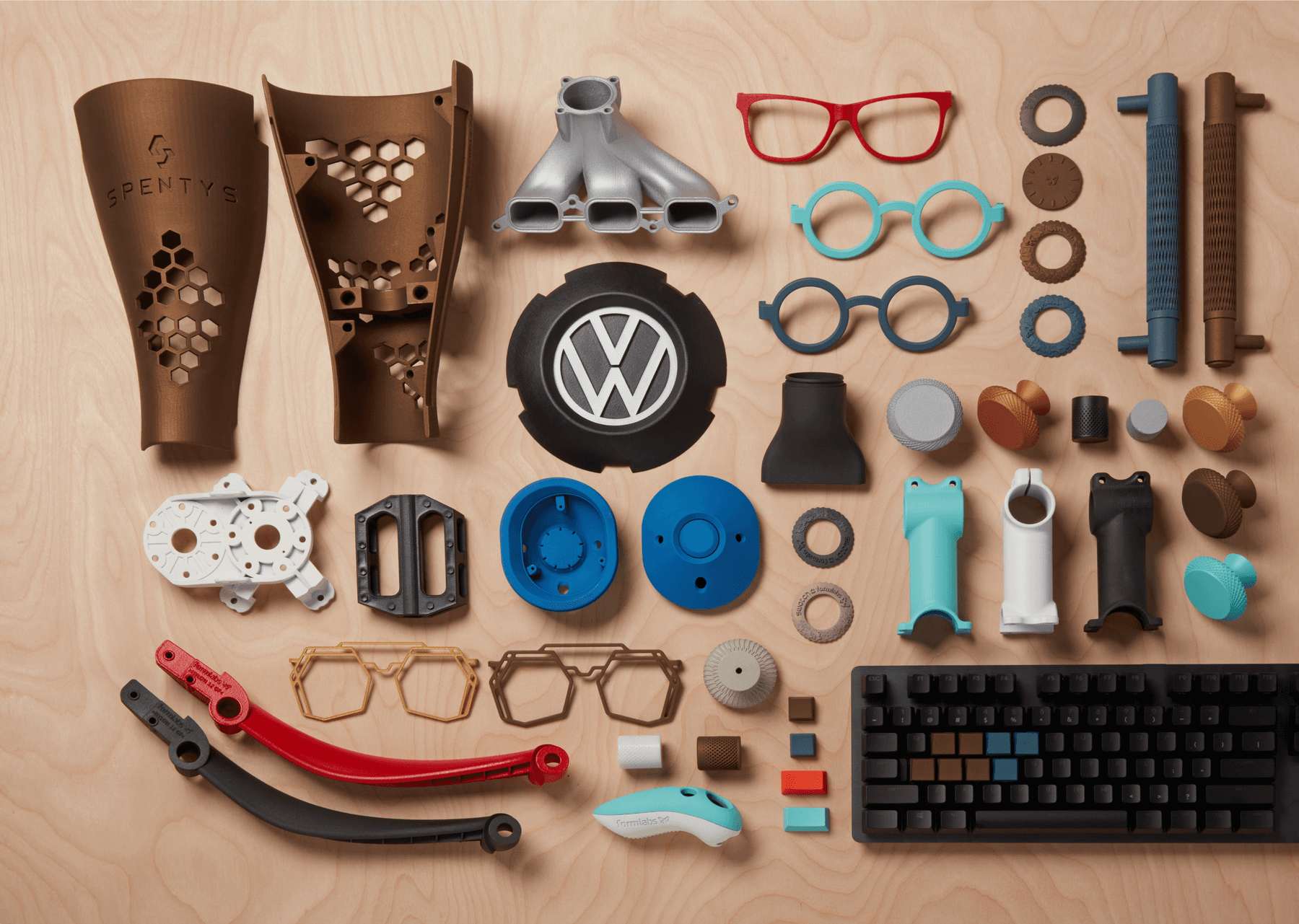
Ceramic coatings provide both performance and aesthetic benefits for a range of materials. Their inherent resistance to chemicals and temperature make ceramic coated parts ideal for a wide range of industries, such as automotive and aerospace, where extreme environments can damage parts, as well as consumer products, where superior surface is highly important.
Cerakote is a thin, high-performance ceramic coating with excellent temperature, chemical, and UV-resistant properties. 3D printed parts coated in a single-layer of Cerakote can withstand harsh environments for extended periods of time. Cerakote has minimal impact on the dimensional accuracy of a part, as Cerakoted parts have a predictable and very thin coating, allowing functional assemblies to operate smoothly.
Formlabs recommended materials
Cerakote is applied to the surface layer of printed parts and is effective on both SLA and SLS printed parts.
Testing confirmed excellent adhesion, scratch resistance, and chemical resilience across coated parts—even in environments with diesel, isopropyl alcohol, and methylene chloride. For more information, see the white paper Complete Guide to Cerakote: Ceramic Coating for SLA and SLS 3D Printed Parts.
Design considerations
When designing parts for ceramic coating with Cerakote, add tolerances with the desired Cerakote thickness in mind. Cerakote can be applied in thickness between 6–25 μm, which may affect tight assemblies.
Note any areas that must be masked for mechanical or electrical purposes. Consider designing a 3D printed mask to eliminate taping bottlenecks.
Printing considerations
Follow Formlabs best practices for model orientation.
Orient your parts on the build plate so that critical surfaces are free of support marks.
Maximize packing density for SLS printed parts with 3D Packing.
Post-processing considerations
Follow Formlabs best practices for washing and post-curing prints. Refer to the individual material articles for specific wash and cure instructions.
Prepare the surface of the part by media blasting with 100 grit aluminum oxide or garnet sand at 40 PSI.
Note:
Do not media blast with glass bead blasting media. Glass beads do not sufficiently etch the part’s surface and the coating will not adhere.
Wipe down printed parts with a degreaser such as Prep ALL to remove any oils or contaminants.
Mask any areas of the part that you do not wish to coat in Cerakote with high-temperature masking tape or custom 3D printed covers.
Follow Cerakote’s application instructions.
End-use recommendations and limitations
Ceramic coating in Cerakote is ideal for 3D printed parts that require additional resistance to chemicals, temperature, and UV exposure. It is particularly recommended for:
Some limitations include:
Additional resources