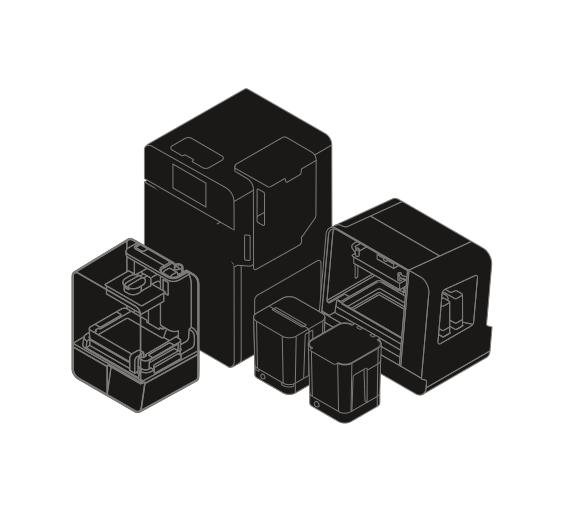
3D Printers
SLA 3D Printers
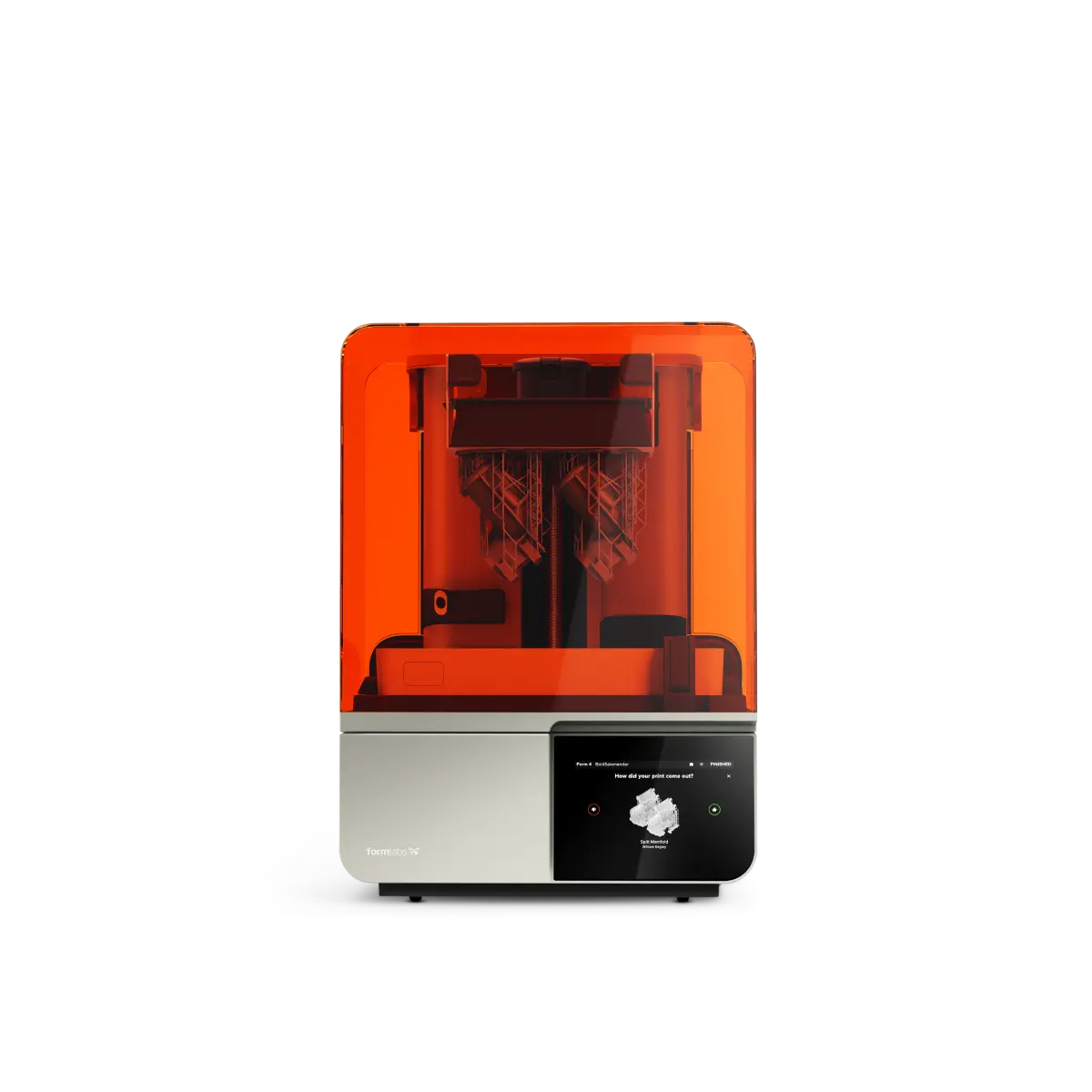
Form 4
Unmatched speed, precision, and versatility in one desktop 3D printer.
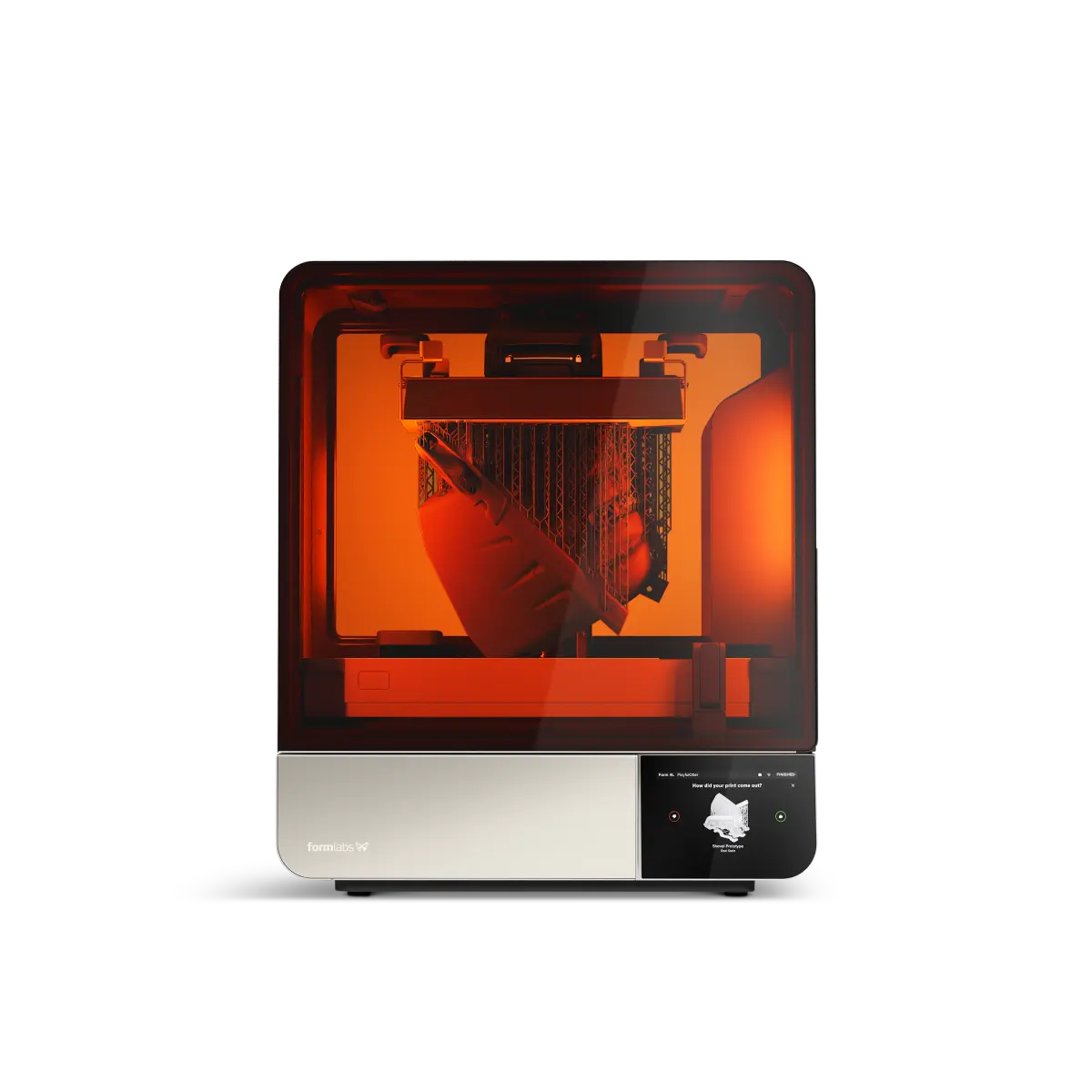
Form 4L
Redefining speed and accuracy for larger, professional-grade parts.
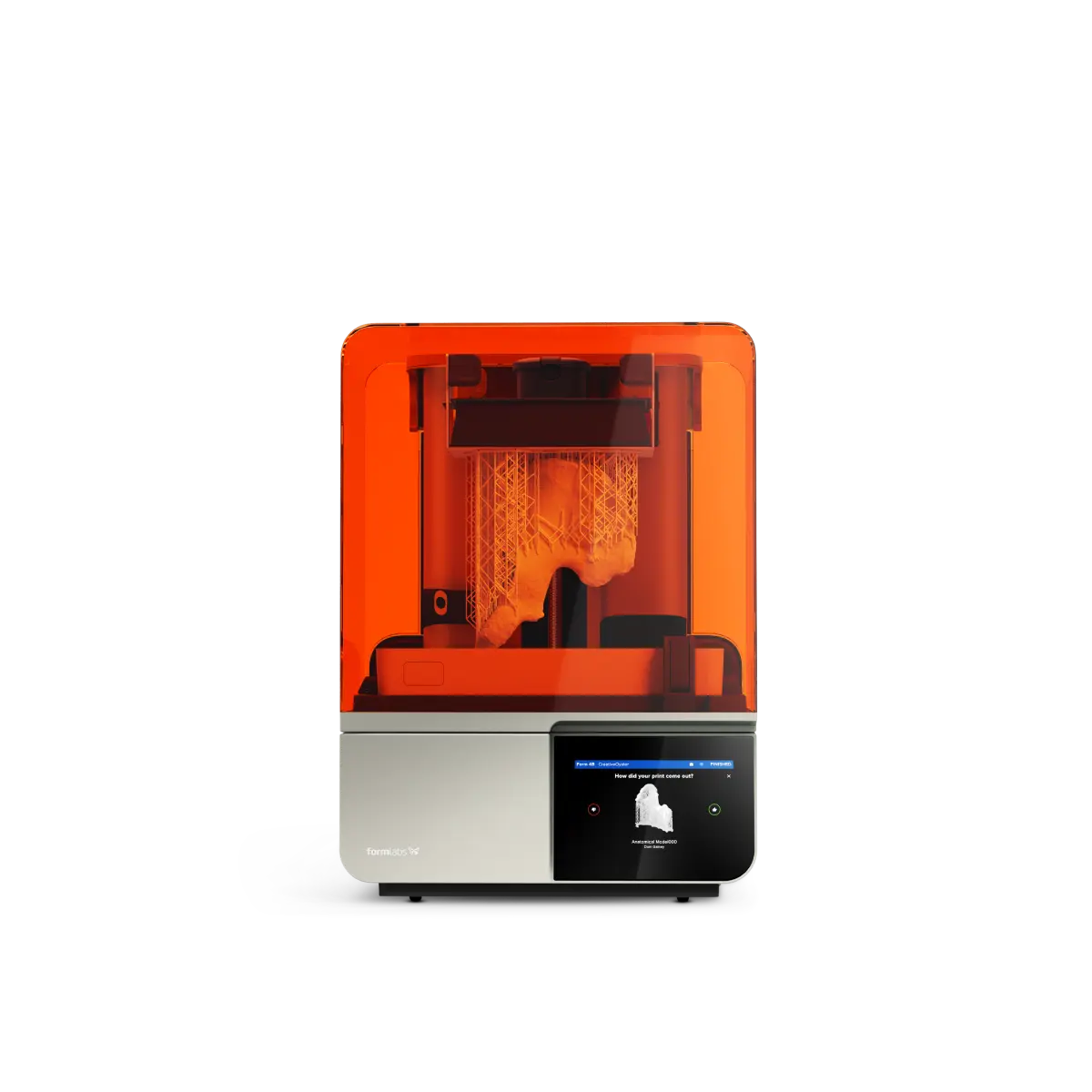
Form 4B
Personalize care with biocompatible models and medical devices.
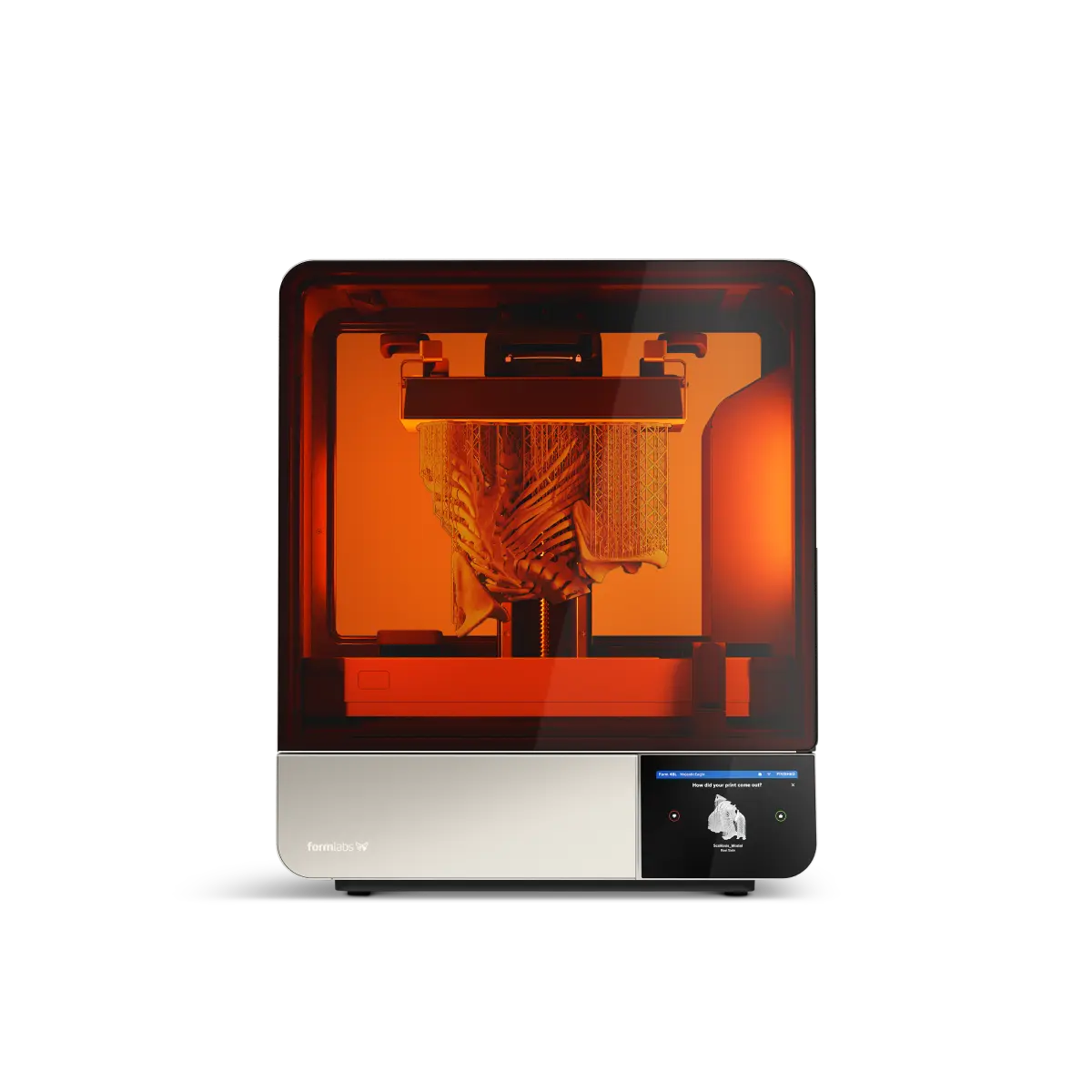
Form 4BL
Large biocompatible model and medical device production in-house.
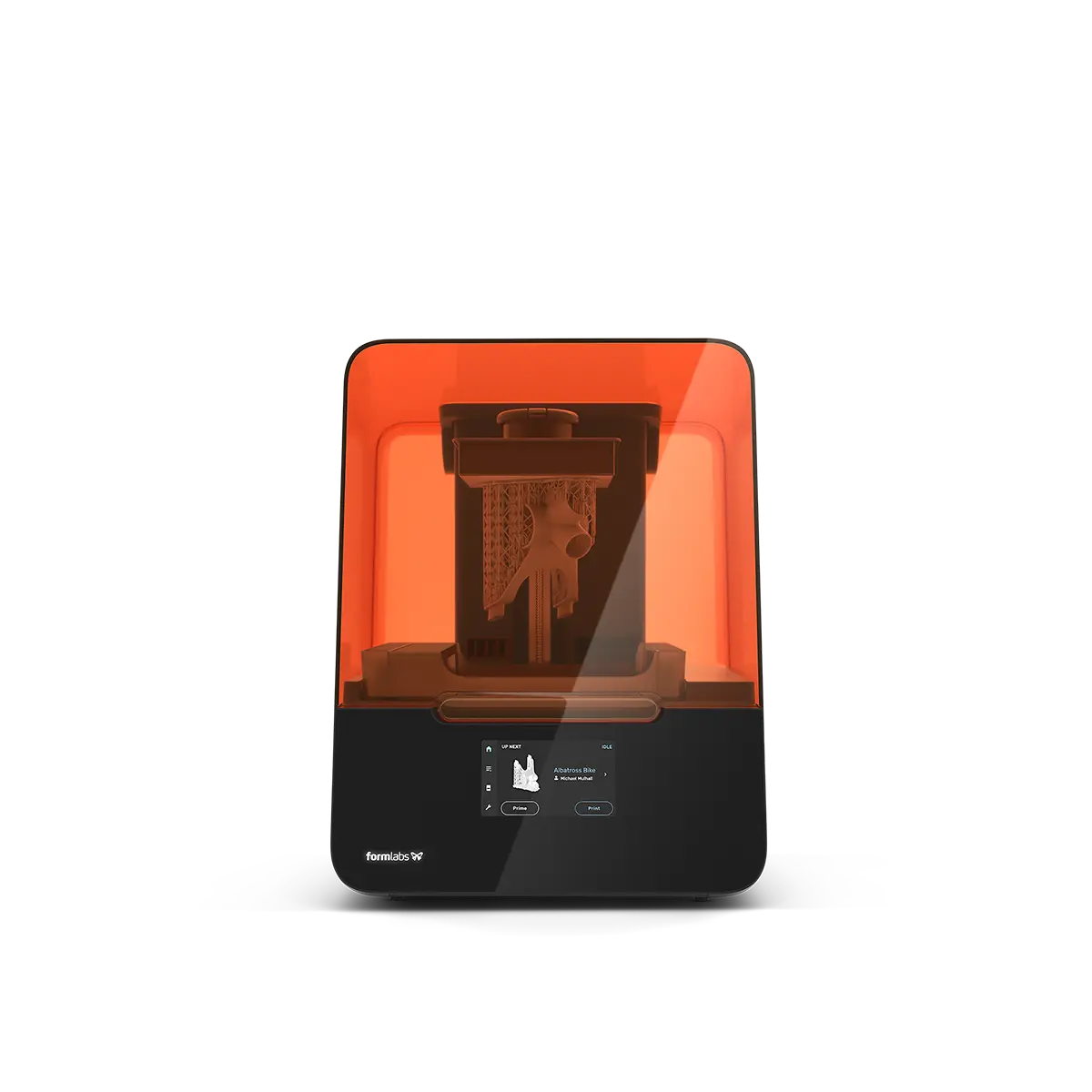
Form 3
Affordable, industrial-quality 3D printer that consistently delivers.
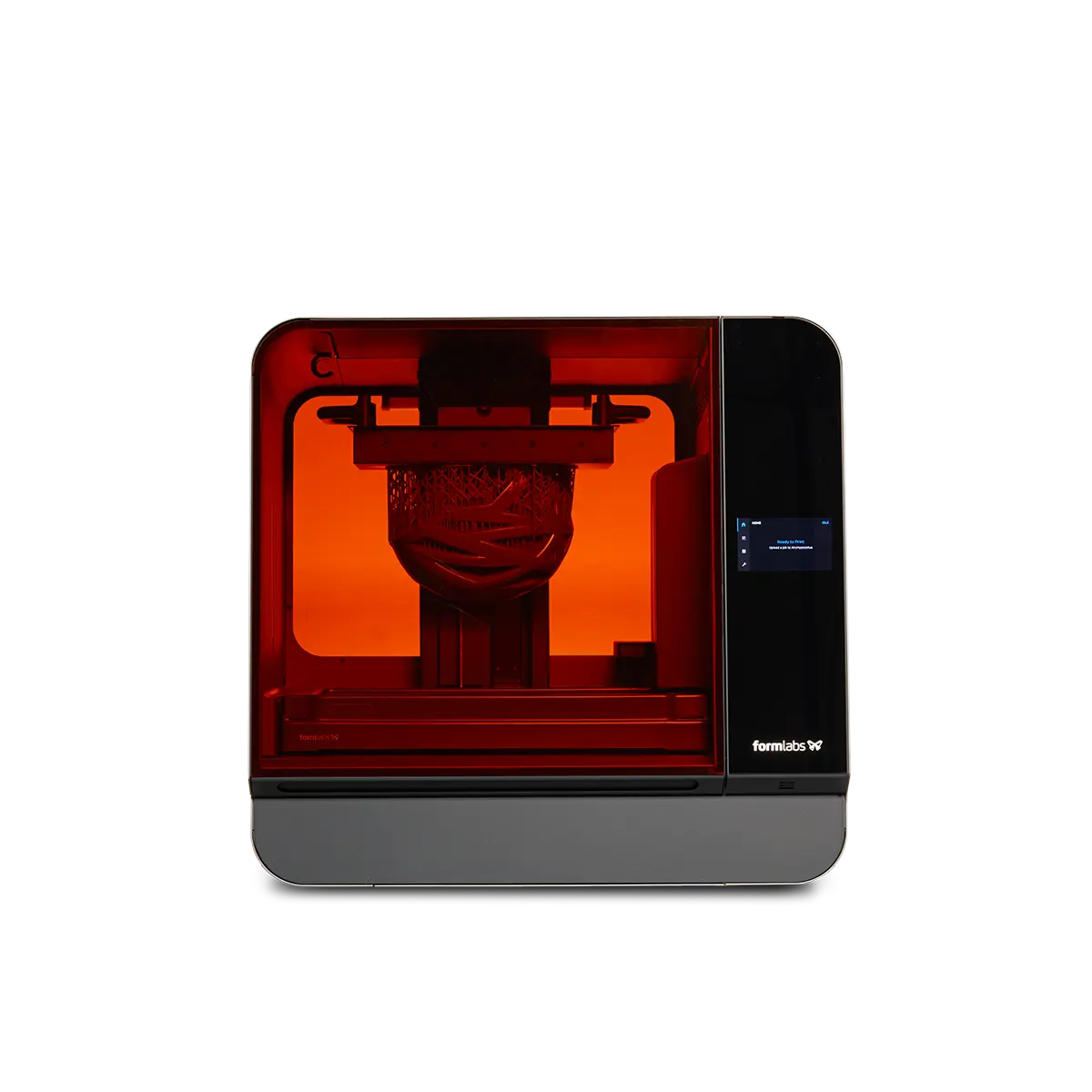
Form 3L
Fabricate large parts with incredible surface finish and fine detail.
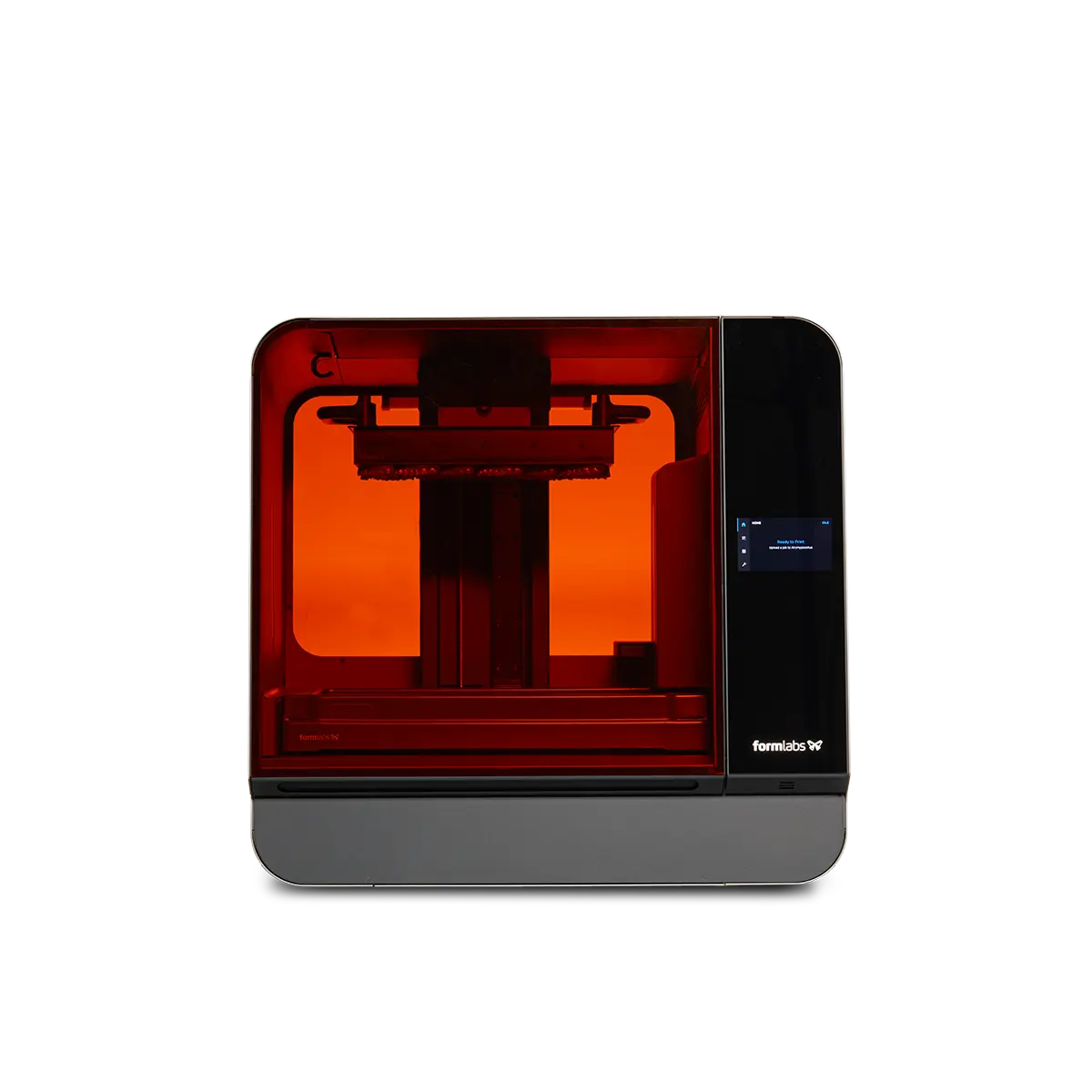
Form 3BL
Large format, affordable 3D printer for biocompatible models and medical devices.
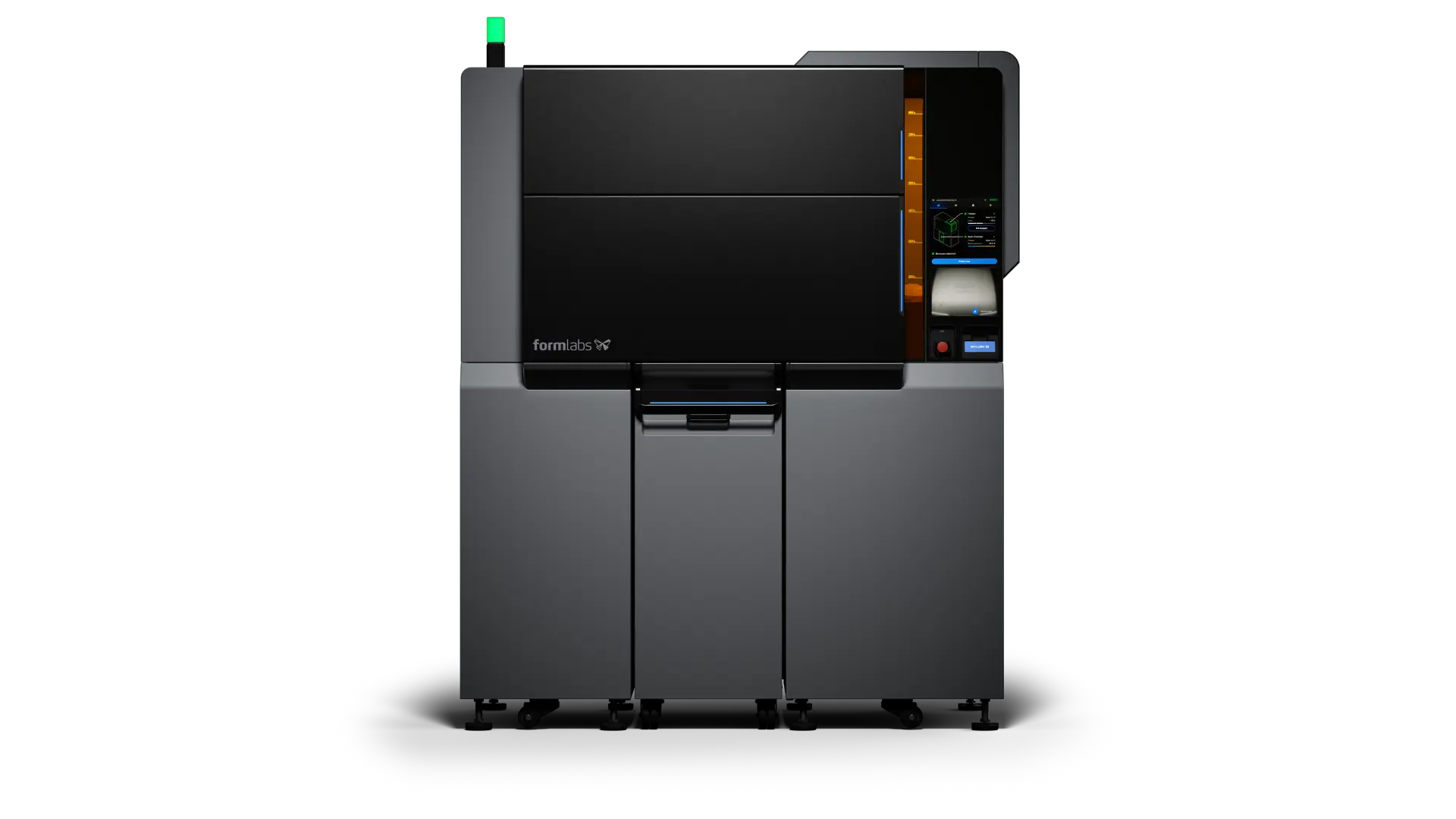
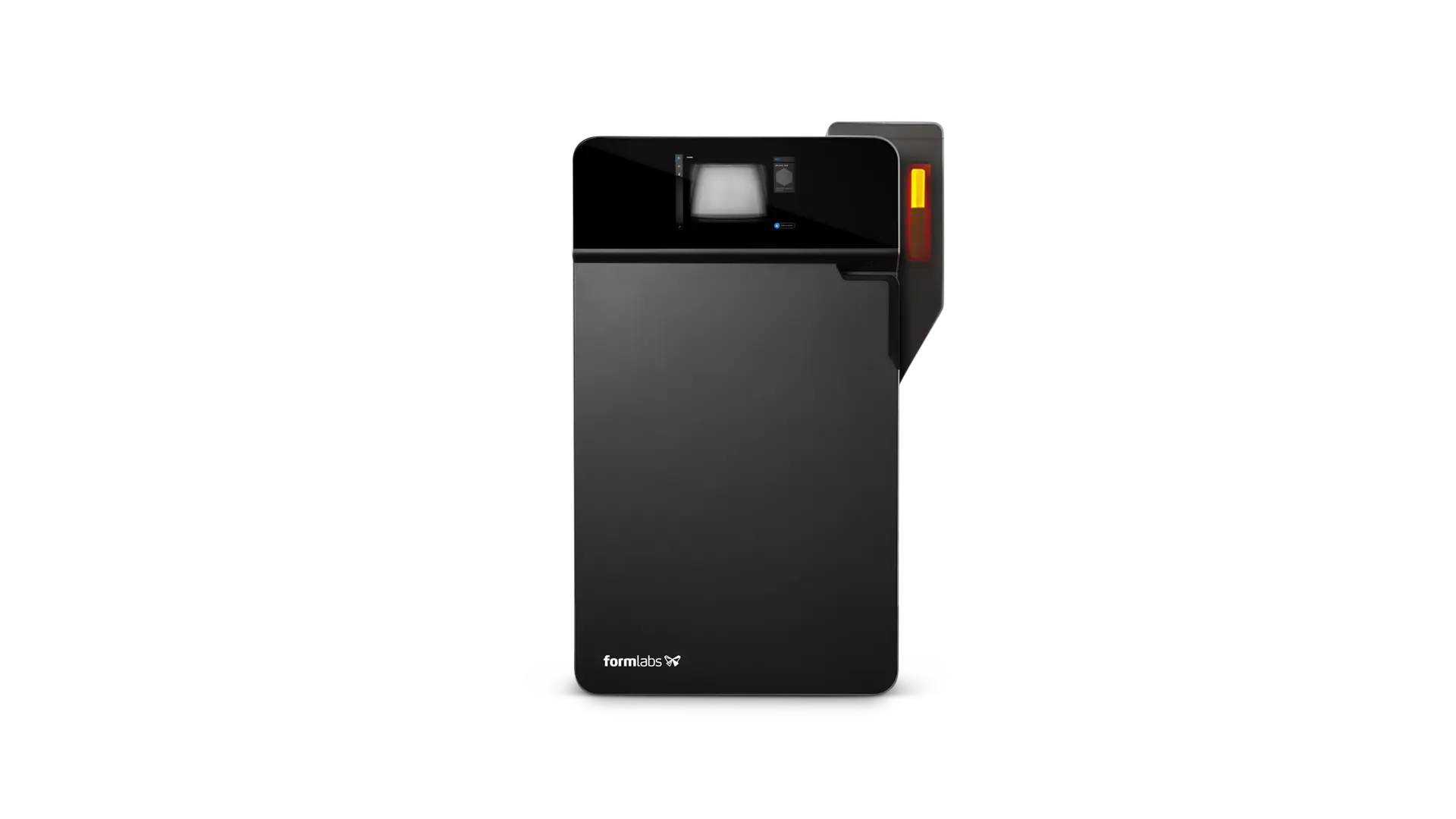
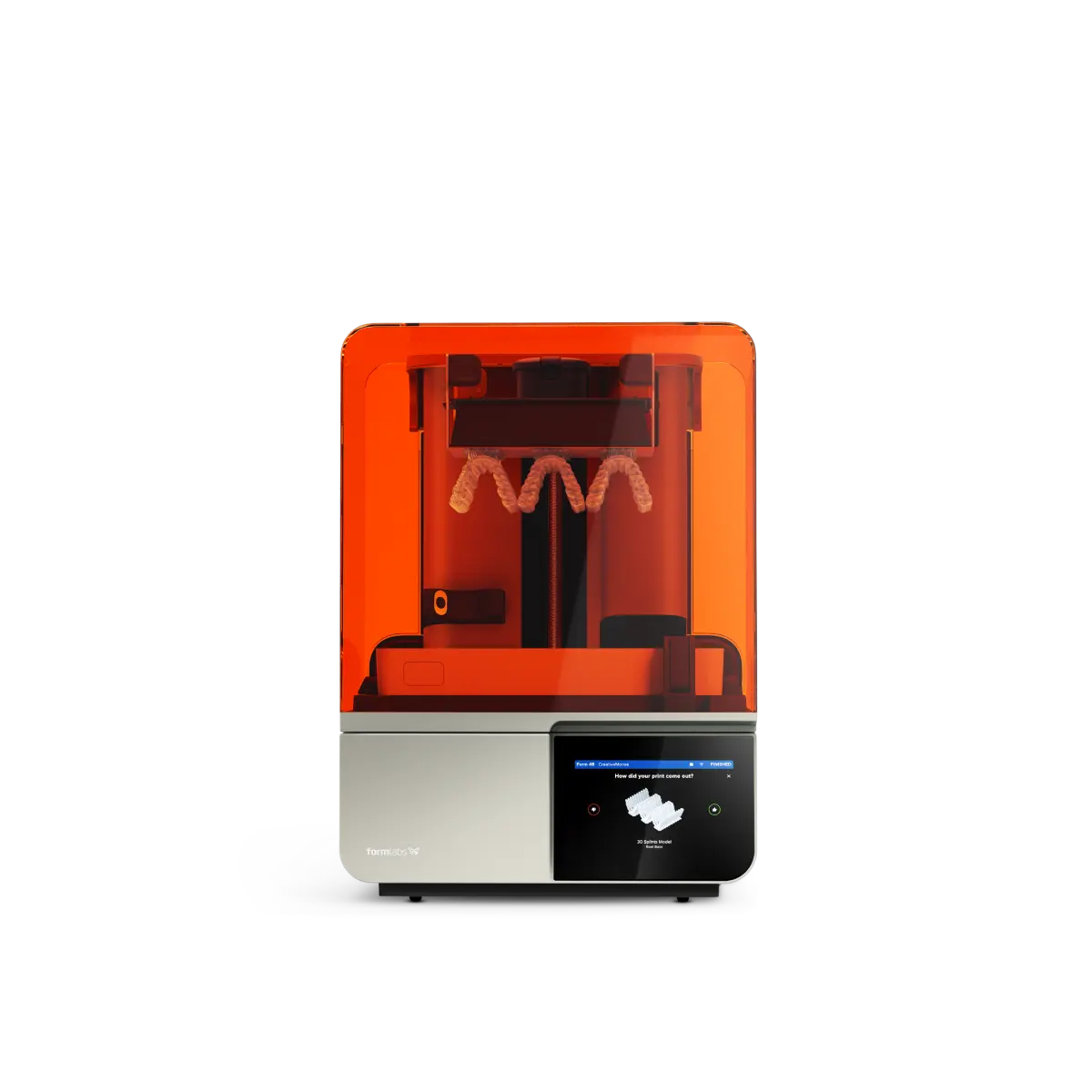
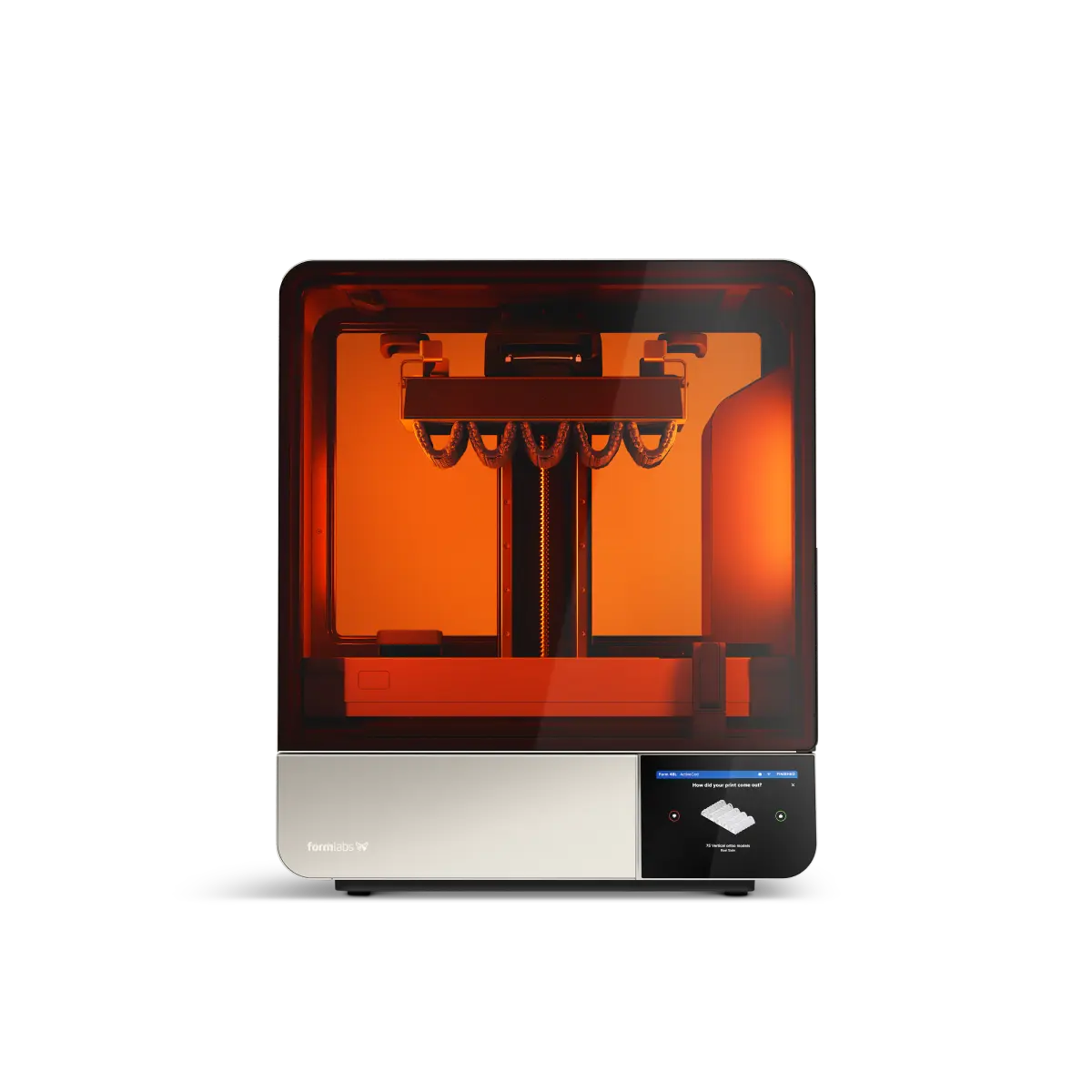
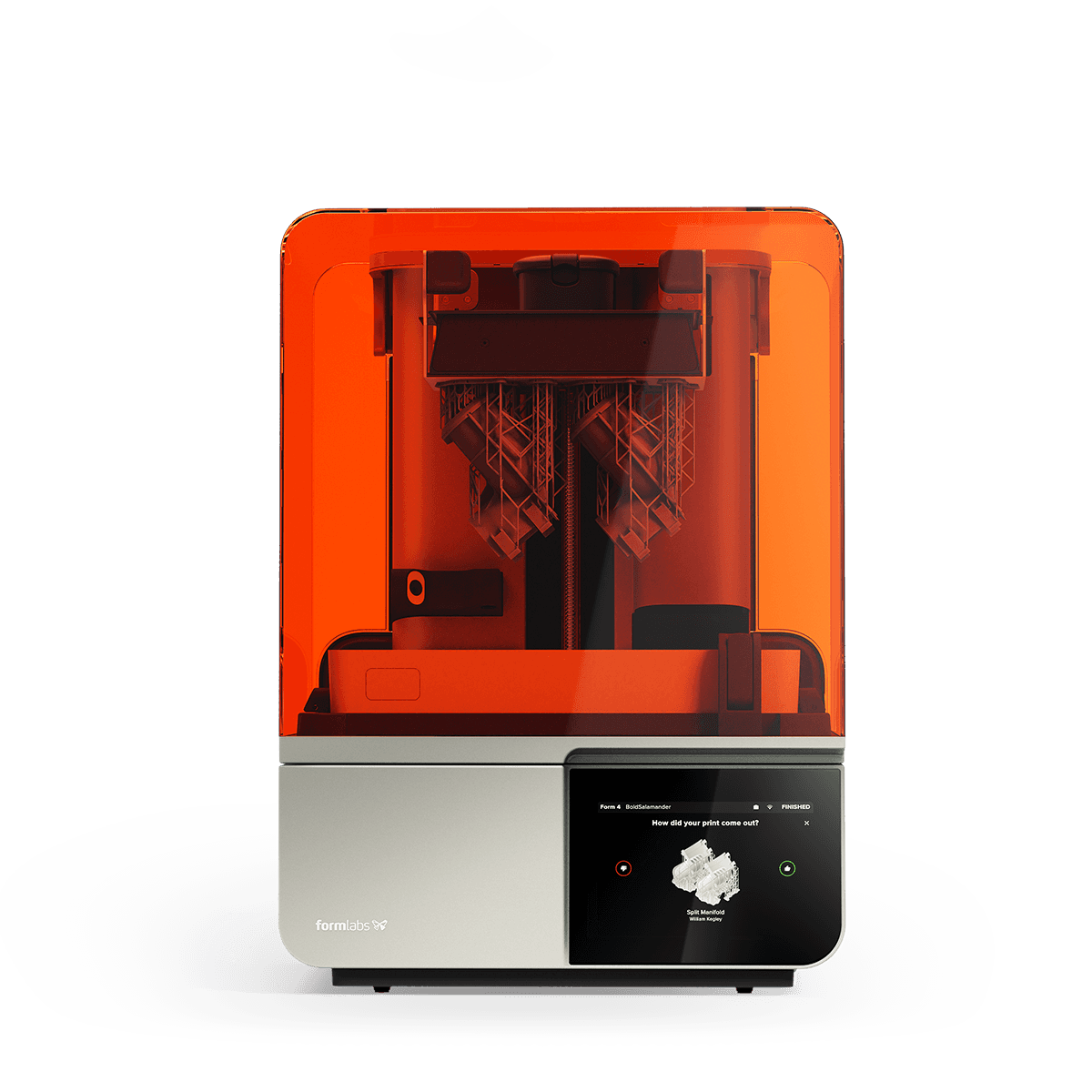
Form 4 is a blazing fast masked SLA 3D printer that combines an industry-leading materials library with a reliable, accurate print engine. Turn your ideas into reality faster than ever with easy workflows, leading reliability, and stunning part quality using the Form 4 ecosystem.
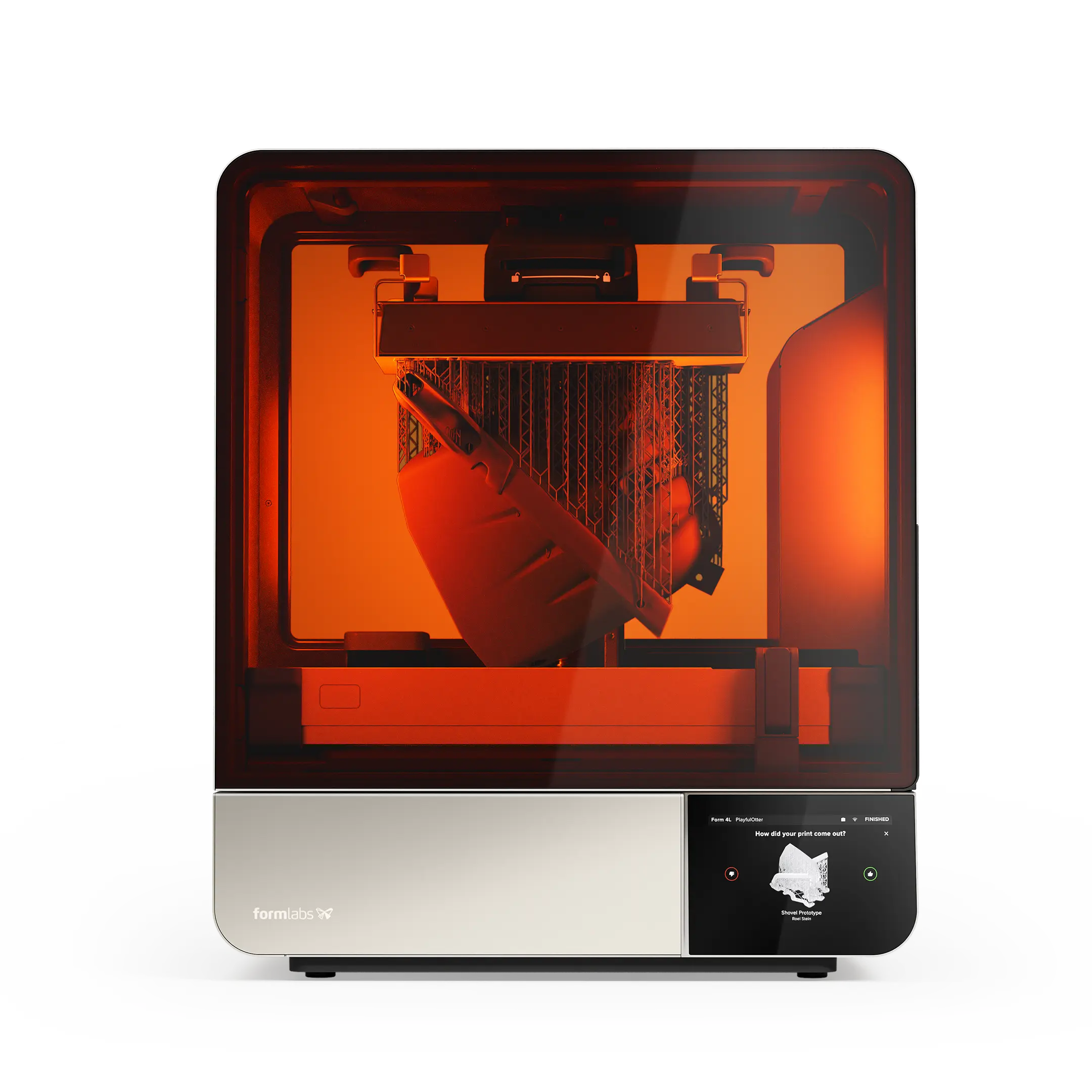
Form 4L is a blazing fast, large-format masked SLA 3D printer that combines an industry-leading materials library with a reliable, accurate print engine. Turn your biggest ideas into reality faster than ever with easy workflows, leading reliability, and stunning part quality using the Form 4L ecosystem.
Masked Stereolithography (MSLA)
Masked Stereolithography (MSLA)
25–200 µm
0.001–0.008 in
25–200 µm
0.001–0.008 in
Backlight Unit: 60 uniform-wavelength LEDs, a plano-convex lens array, and integrated air cooling
405 nm optical wavelength
16 mW/cm² optical power intensity delivered to the cure plane
50 µm pixel size
Backlight Unit: 145 uniform-wavelength LEDs, a plano-convex lens array, and integrated air cooling
405 nm optical wavelength
16 mW/cm² optical power intensity delivered to the cure plane
46 µm pixel size
Auto-generated
Light-touch removal
Auto-generated
Light-touch removal
No (available on Form 4B)
No (available on Form 4BL)
39.8 × 36.7 × 55.4 cm
15.7 × 14.5 × 21.9 in
66.4 x 52.8 x 79.4 cm
26.1 x 20.8 x 31.3 in
27.3 cm
10.7 in
Not measured.
18–28 °C
64–82 °F
18–28 °C
64–82 °F
23 industry-leading Formlabs materials or third-party materials using Open Material Mode. More exciting new materials are currently in development.
Explore Materials
19 industry-leading Formlabs materials or third-party materials using Open Material Mode. More exciting new materials are currently in development.
Explore Materials
Footnotes
⁶ Assuming a part printed on supports that resembles a rectangular prism with 12.5 cm depth and 1 cm height.
⁸ Layer thickness availability varies by material. View our materials compatibility table to confirm availability.
FAQ
Resin 3D printing is one of the most popular 3D printing processes and was the world's first 3D printing technology, invented in the 1980s. It has since gained widespread adoption across hundreds of thousands of professionals in industries ranging from engineering and manufacturing to dentistry and education.
Resin 3D printers use a light source to cure liquid resin into hardened plastic through a process called photopolymerization. This produces highly accurate, isotropic, and watertight parts with fine features and smooth surface finishes.
Resin 3D printed parts offer the highest resolution and accuracy, the clearest details, and the smoothest surface finish of all plastic 3D printing technologies. The wide range of resin formulations also makes them highly versatile, matching the optical, mechanical, and thermal properties of standard, engineering, and industrial thermoplastics.
Formlabs desktop resin printers start at $2,625 for the Form 4, while large-format options like the Form 4L start at $7,125 and the Form 4BL starts at $16,249. Entry-level hobbyist resin printers can cost as little as $300, though they involve trade-offs in reliability, workflow, and material options.
Yes, Formlabs resin printers are well-suited for beginners thanks to an easy-to-use end-to-end ecosystem, extensive training resources, and personal support. They are also among the most popular 3D printing solutions found in educational settings.
Post-curing is recommended for most materials to help parts reach their highest possible strength and stability. For biocompatible materials, post-curing is required to meet the safety standards set by regulatory agencies.
Resin prints can be extremely strong depending on the material used, and they are isotropic, meaning they offer consistent strength in the X, Y, and Z directions. Resin parts are also generally waterproof and airtight, with cured resins exhibiting very low water absorption.
Yes, Formlabs offers Open Material Mode, an optional one-time lifetime license per printer that unlocks the ability to use third-party resins. Formlabs also offers certified third-party resins for added flexibility.
Resin 3D printing is generally safe, and Formlabs designs its resins to be as safe as or safer to handle than common household chemicals or adhesives. It is always recommended to consult the safety data sheet (SDS) for any new material before use.
Selective laser sintering (SLS) is a 3D printing technology that uses a high-power laser to sinter small particles of polymer powder into solid parts. The unfused powder supports the part during printing and eliminates the need for dedicated support structures. This makes SLS 3D printing ideal for complex geometries, including interior features, undercuts, thin walls, and negative features, as well as enabling higher-volume production applications — the self-supporting print bed allows parts to ‘nest,’ so that customers can fully pack the build chamber and reach production volumes, even with only one printer.
Basic steps for SLS post-processing include removing excess, unsintered powder from the parts and media blasting the parts to fully clean them and smooth the surfaces. Formlabs SLS ecosystem includes the Fuse Sift and Fuse Blast, which make the powder recovery and part cleaning process faster, easier, and cleaner. There are also advanced 3D print post-processing methods like coating, smoothing, painting, vapor smoothing, and electroplating that can improve aesthetics, mechanical properties, and overall performance to make your parts suitable for a wide range of applications.
SLA uses a light source to cure liquid resin into solid parts, while SLS uses a laser to sinter polymer powder, making each technology suited to different applications and materials.
Yes, Fuse Series SLS 3D printers are designed to fit into office or workshop settings with consistent housekeeping practices.