
How Teenagers at Shanghai Xichuang Education Technology Develop Robots With Fuse 1+ 30W
In the robotics classroom at Shanghai Xichuang Education Technology, teenagers design, build, and verify robotic arms. As a professional R&D institution deeply rooted in educational technology, Shanghai Xichuang Education Technology Co., Ltd. has introduced the Formlabs Fuse 1 Generation Selective Laser Sintering (SLS) 3D printing Ecosystem, empowering students to quickly move from creative concept to physical prototype. With SLS 3D printing, these students are learning about technology by applying it.
How Teenagers at Shanghai Xichuang Education Technology Develop Robots With Fuse 1+ 30W
In the robotics classroom at Shanghai Xichuang Education Technology, teenagers design, build, and verify robotic arms. As a professional R&D institution deeply rooted in educational technology, Shanghai Xichuang Education Technology Co., Ltd. has introduced the Formlabs Fuse 1 Generation Selective Laser Sintering (SLS) 3D printing Ecosystem, empowering students to quickly move from creative concept to physical prototype. With SLS 3D printing, these students are learning about technology by applying it.
Talk to Our Sales Team
Whether you need to prototype at speed, or are producing end-use parts, we’re here to help. The Formlabs Sales team is composed of dedicated specialists who know exactly how to support you and your company's needs.
Empowering Innovative Thinking With Cost-Effective and Time-Efficient Tools
Since its inception, Shanghai Xichuang Technology has been focusing on stimulating innovative thinking. Through robotic design projects, students cultivate innovative thinking and learn practical skills in the classroom.
R&D requires multiple rounds of iteration as students move from design to application. Especially in the prototype verification stage, a large number of parts need to be repeatedly produced and tested to ensure their performance and reliability.
Before introducing 3D printing technology, Xichuang mainly relied on metal materials and traditional machining to produce parts. However, since the final parts of robotic arms are usually injection molded, metal parts do not reflect the final material and performance during the testing process. This not only affects the test results, but also comes with high costs and material waste.
Xichuang students debugging the robotic arm
Xichuang’s requirements for a 3D printing ecosystem included safety, ease of use, and speed, and Formlabs SLS delivered with the Fuse 1+ 30W 3D printer, the Fuse Sift powder recovery system, Nylon 12 Powder, and PreForm print preparation software.
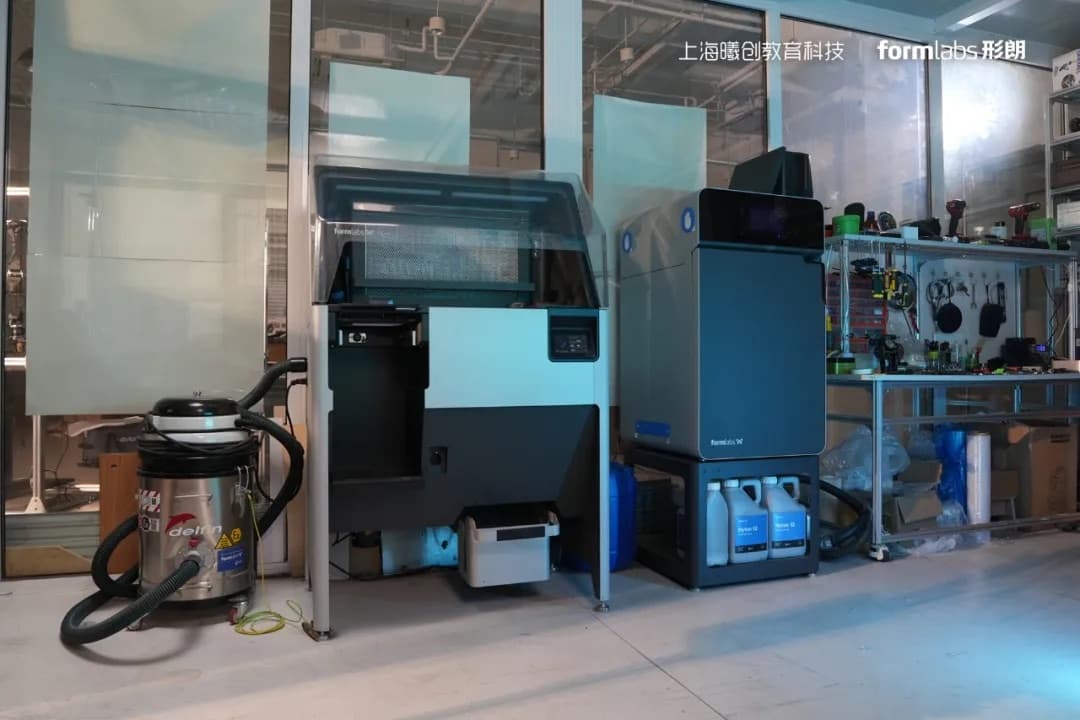
Fuse Sift (at left) for powder recovery and Fuse 1+ 30W (at right) in the Xichuang classroom.
Adding the Fuse 1+ Ecosystem to a Classroom Setting
Compared with other 3D printing ecosystems, Formlabs Fuse 1+ Ecosystem is more suitable for a teenagers’ classroom setting. with easy and intuitive workflows and contained powder recovery and mixing in Fuse Sift. The streamlined workflow makes it easy for students and teachers to use, with automated prompts on the touchscreen of Fuse 1+ 30W to walk users through printing.
The touchscreen on Fuse 1+ 30W shows printing in real time.
Printing is completed in a closed environment, reducing direct contact between students and materials. The printer also has a built-in filtration system meaning there’s no need for additional ventilation equipment, and can run stably in classroom and studio environments.
The Fuse Sift powder recovery system has a built-in filter element and its own negative pressure, effectively reducing the risk of dust exposure, for a safer and more controllable post-processing workflow.
A student removes excess powder from a printed part in Fuse Sift.
Intuitive Print Set Up With PreForm
In Xichuang's classroom, students need to independently complete the design and printing of robot parts, necessitating tools that are easy to use. SLS printing does not require support structures, reducing the complexity of model processing and allowing students to focus more on the design itself.
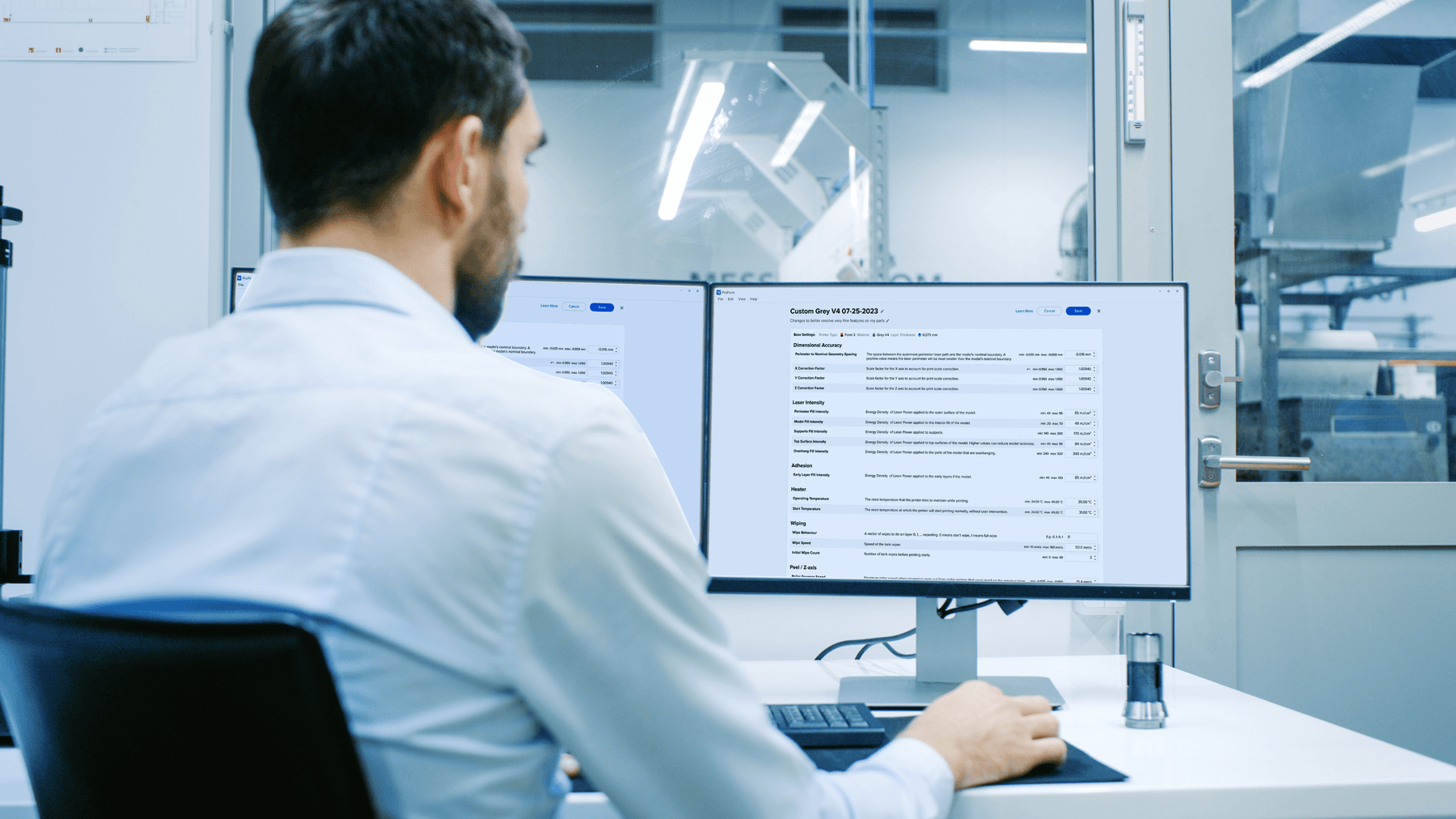
At the software level, PreForm, Formlabs’ free print preparation software, provides functions such as automatic model placement, automatic typesetting, and one-click slicing, greatly reducing the threshold for using 3D printing. Even students 3D printing for the first time can get started quickly and independently complete the entire printing process.
PreForm is easy to use with one-click print set up.
Helping Students Bring Their Ideas to Life
“3D printing can help students quickly apply their creativity to real scenarios, allowing them to complete the whole process from design to application, understand technology in practice, and improve hands-on skills, which is the original intention of Xichuang opening courses.”
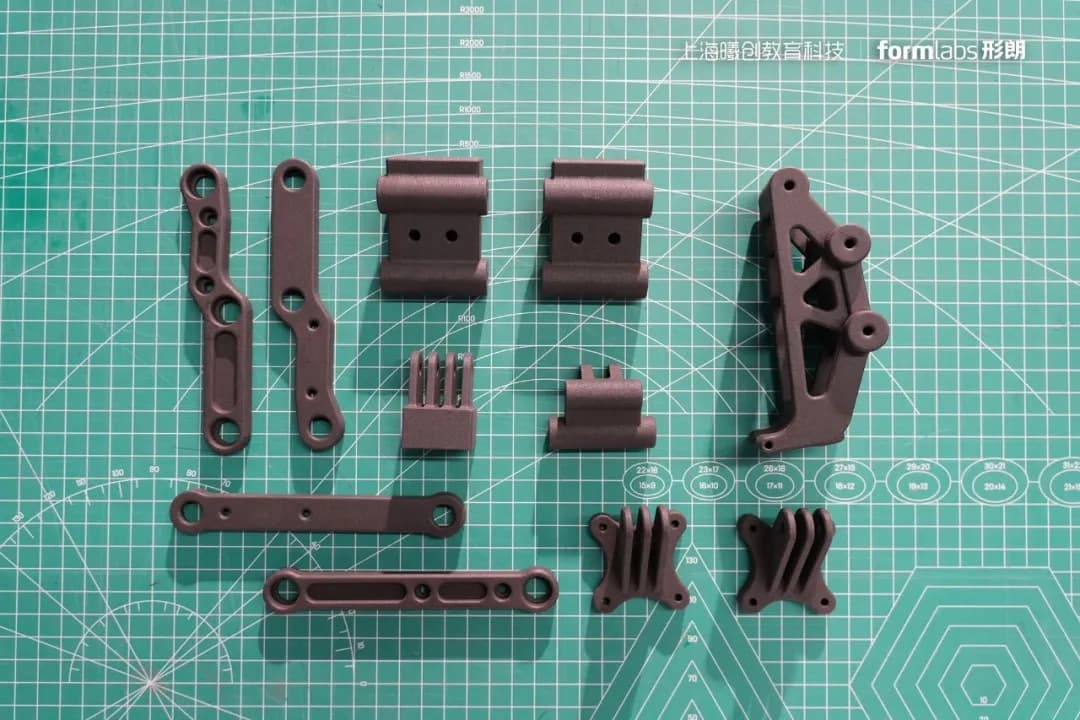
With the help of the Fuse 1+ 30W printer, Xichuang's mentors and students can iterate parts in hours. Compared with traditional CNC processing or mold production, this significantly accelerates production efficiency while substantially reducing costs.
At the same time, Formlabs' equipment has a compact footprint while delivering industrial parts, enabling Xichuang’s students to achieve high-quality production in limited classroom space. Yuan Yanfeng has found that parts printed with Nylon 12 Powder have excellent strength and precision, which is not only suitable for verifying complex components, but also for printing durable end-use parts.
The accessibility of the Fuse 1+ Ecosystem gives more teenagers the opportunity to develop their engineering skills through applied practice. In the future, Xichuang will continue to work with Formlabs to make 3D printing technology accessible, empowering their students with hands-on experience solving real-world robotics problems.
Explore Fuse 1+ 30W to learn more about Formlabs 3D printing or explore our resources for educational settings.