
Diagnosing a print failure (SLA)
Diagnosing a print failure (SLA)
Sometimes prints don't come out the way you expected. Compare common symptoms to narrow in on the underlying source of the problem and find a solution.
Missing parts
The following print defects result in the complete absence of any printed parts. The build platform is left almost entirely empty.
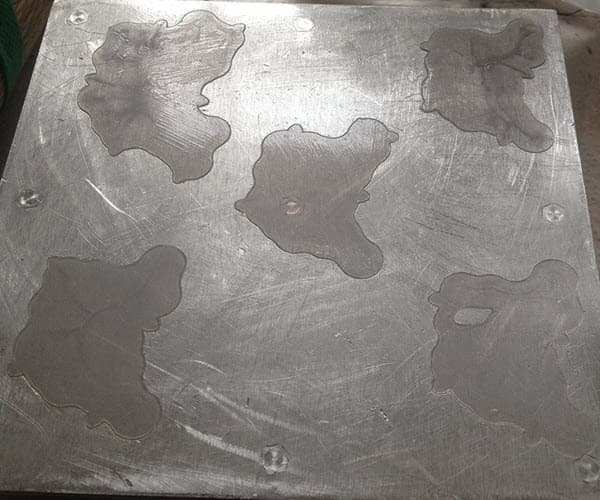
A print defect in which the early layers adhere to the build platform, creating a silhouette of the raft or initial layers.
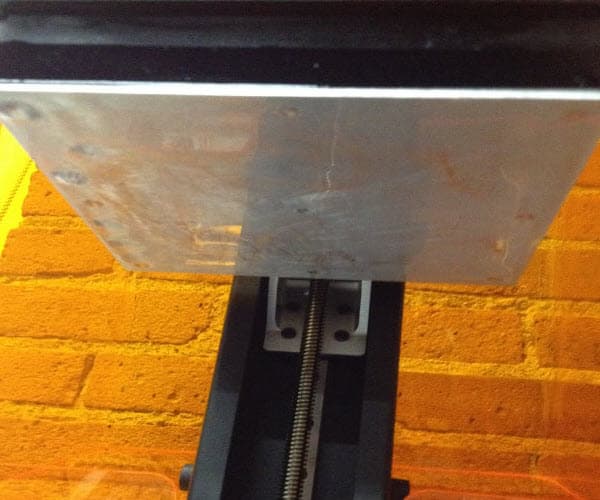
A print defect in which prints are either partially or completely detached from the build platform.
Incomplete or damaged parts
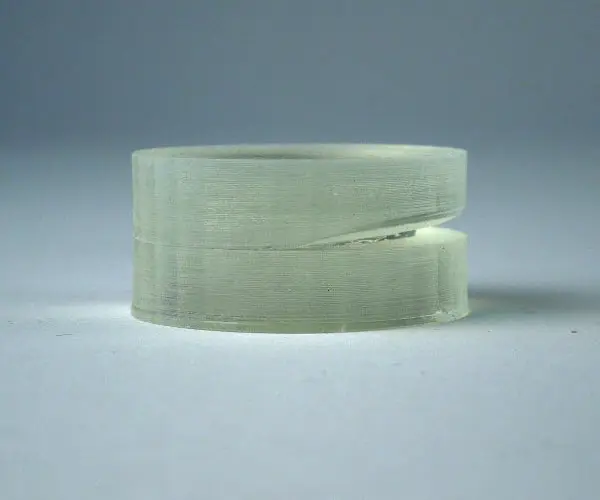
A print defect in which the cured layers of a print separate from one another.
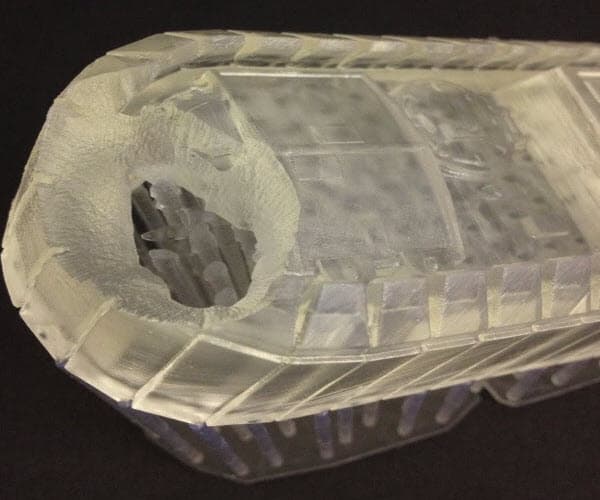
A print defect in which a portion of a printed part fails to cure properly. The area of missing material expands outwards through subsequent layers.
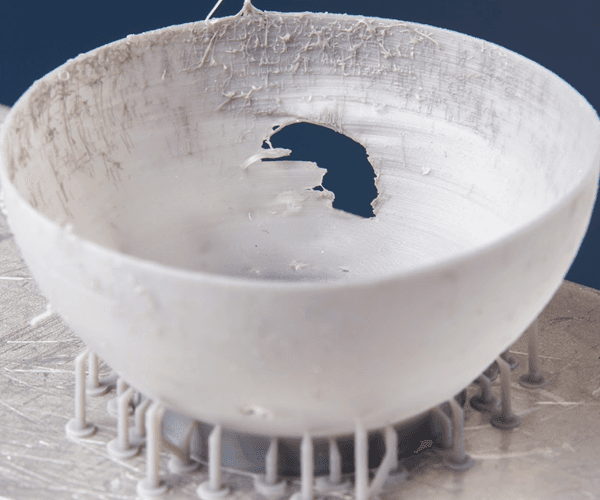
A print defect in which a hole is ruptured in the side of a concave or hollow part.
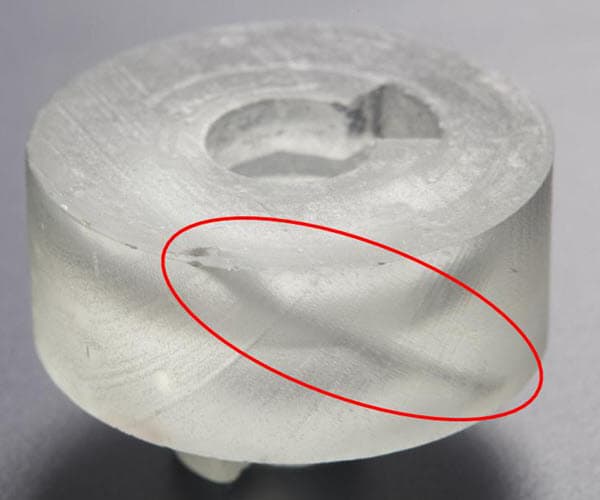
A print defect in which a small region of the part does not form. This void can take the form of a small hole, a tunnel that runs through the part, or a slit that cuts through the part.
The following print defects result in a “completed” print, but the printed parts often show damage or have chunks missing.
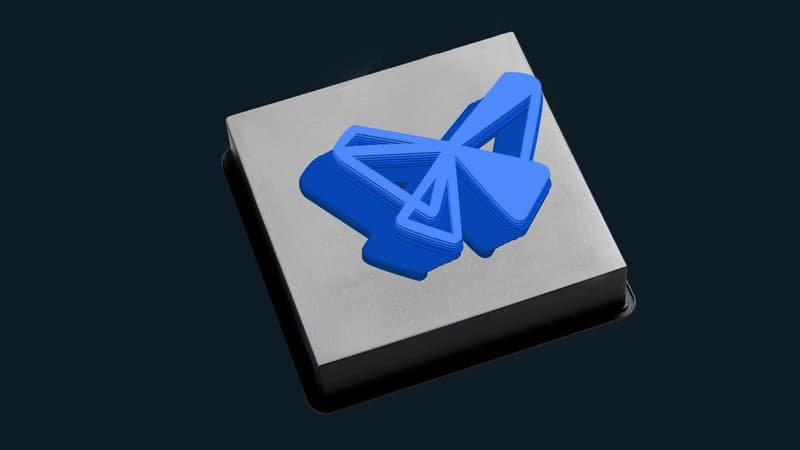
A print defect in which a model’s layers are displaced left or right on the build platform during the print. This distortion only happens along the X-axis and affects all models in the print job equally.
Poor surface quality
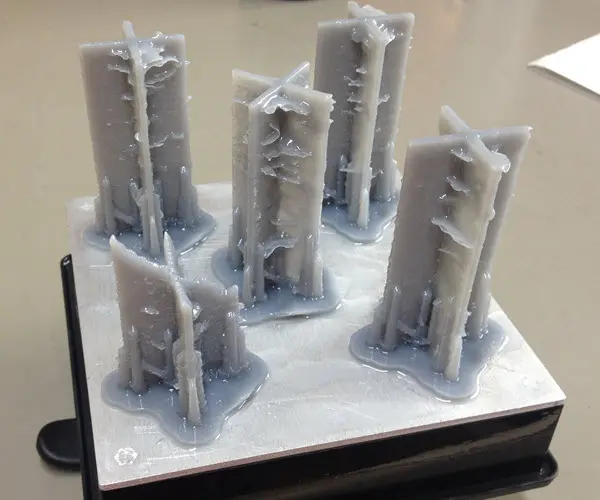
A print defect in which cured or partially cured resin forms thin flaps that hang horizontally from a print.
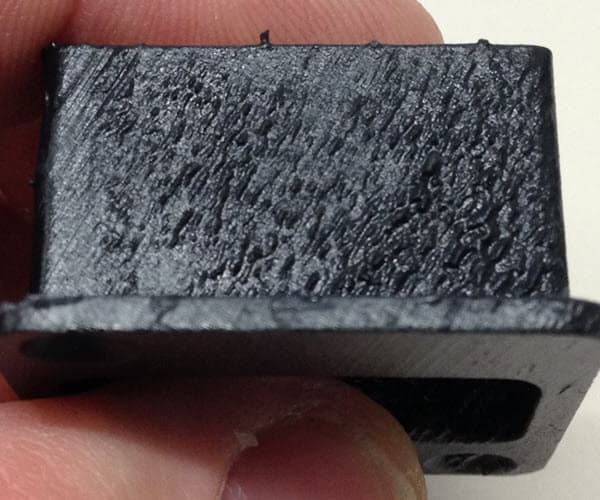
A print defect in which a rough surface texture forms on one or more sides of an otherwise successful print.
Dimensional accuracy
A print defect in which reduced space between the build platform and resin tank causes the initial layers to be very thin. This print defect results in a completed print, but the height of the printed part is shorter than expected.
Symptoms:
- The raft is compressed and thinner than expected
- Parts are especially difficult to remove
- The raft is completely flat and supports are significantly shorter than expected
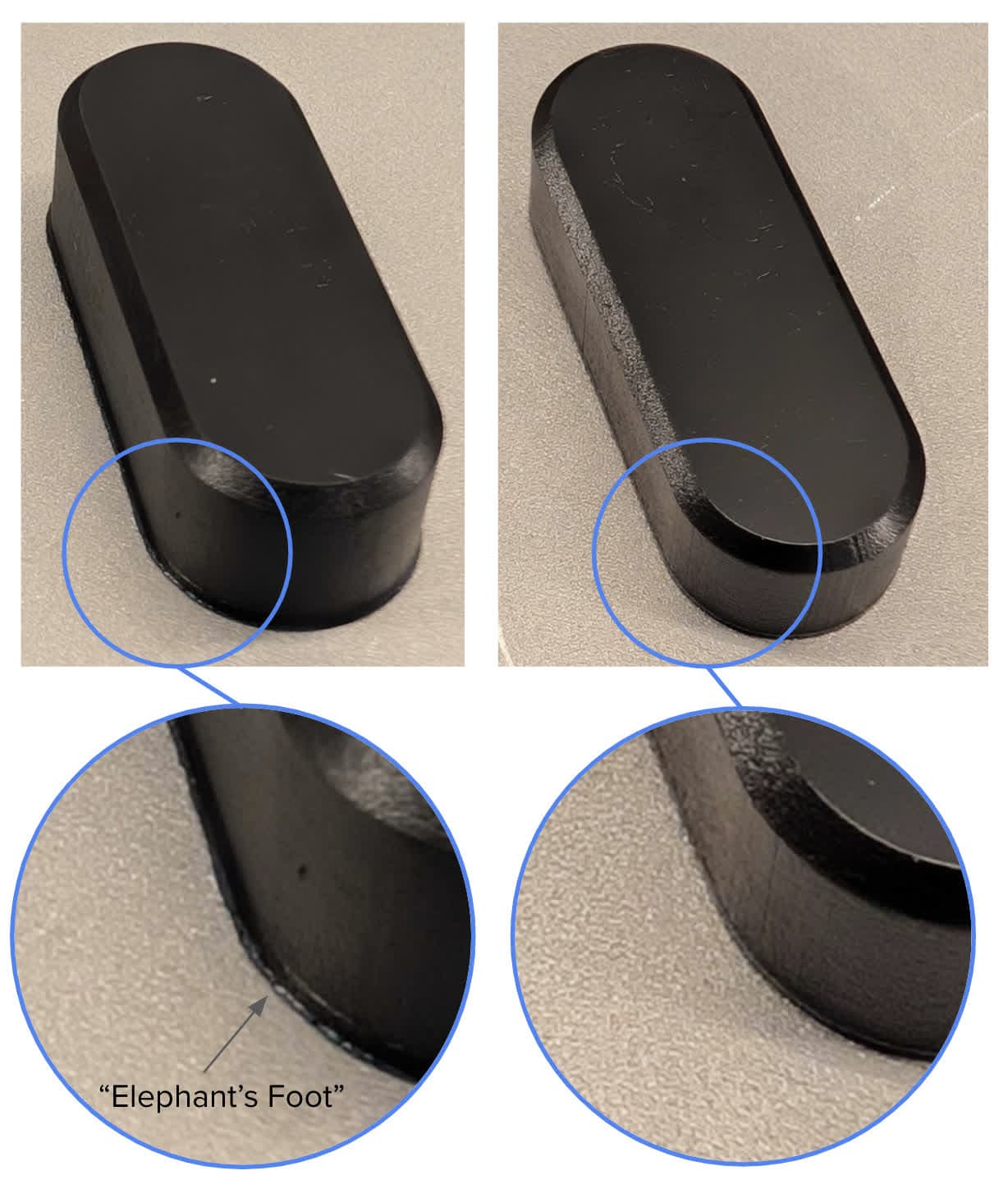
Build platform flashing, also known as an elephant's foot, refers to a print defect in which extra cured material splays out from a part where it contacts the build platform.