Notice:
To avoid damage to equipment, check the resin tank compatibility table in Choosing the right material to confirm you are using a resin tank that is compatible with this material.

Notice:
To avoid damage to equipment, check the resin tank compatibility table in Choosing the right material to confirm you are using a resin tank that is compatible with this material.
With a 40% wax-fill and low expansion, Castable Wax 40 Resin supports a wide range of lost wax casting conditions and is compatible with leading gypsum investments. Pieces printed in Castable Wax 40 offer excellent detail and clean burnout under a wide range of casting workflows and conditions.
Castable Wax 40 Resin offers the easiest workflow on the market for 3D printing and casting challenges with highly detailed designs. Castable Wax 40 Resin creates beautiful 3D printed jewelry pieces that burn out cleanly.
Castable Wax 40 Resin prints at 25 microns and 50 microns.
Note:
To learn more about the performance or specific material properties of Castable Wax 40 Resin, please refer to the Safety Data Sheet (SDS) and Technical Data Sheet (TDS). Always consult the SDS as the primary source of information to understand safety and handling of Formlabs materials.
Required resources
Workflow overview
Notice:
This is an abbreviated version of the complete instructions in the application guide Introduction to Casting for 3D Printed Jewelry Patterns [en]. Read the application guide for detailed instructions about design, settings, and part orientation for Castable Wax 40 Resin.
Design for casting
Casting is both a skill and an art form. The design of the piece to be cast is as important as the material properties for successful results. Pay attention to the design of individual features, the flow of material in the investment, and the printing configuration. Learn more about the best design parameters for common jewelry features, such as prongs, filigree, engraving, surfaces, raised text, and milgrain, in the white paper Jewelry 3D Printing: Basic Design Parameters, Supports, and Orientation [en] from Formlabs.
Printing
Notice:
To avoid damage to equipment, check the resin tank compatibility table in Choosing the right material to confirm you are using a resin tank that is compatible with this material.
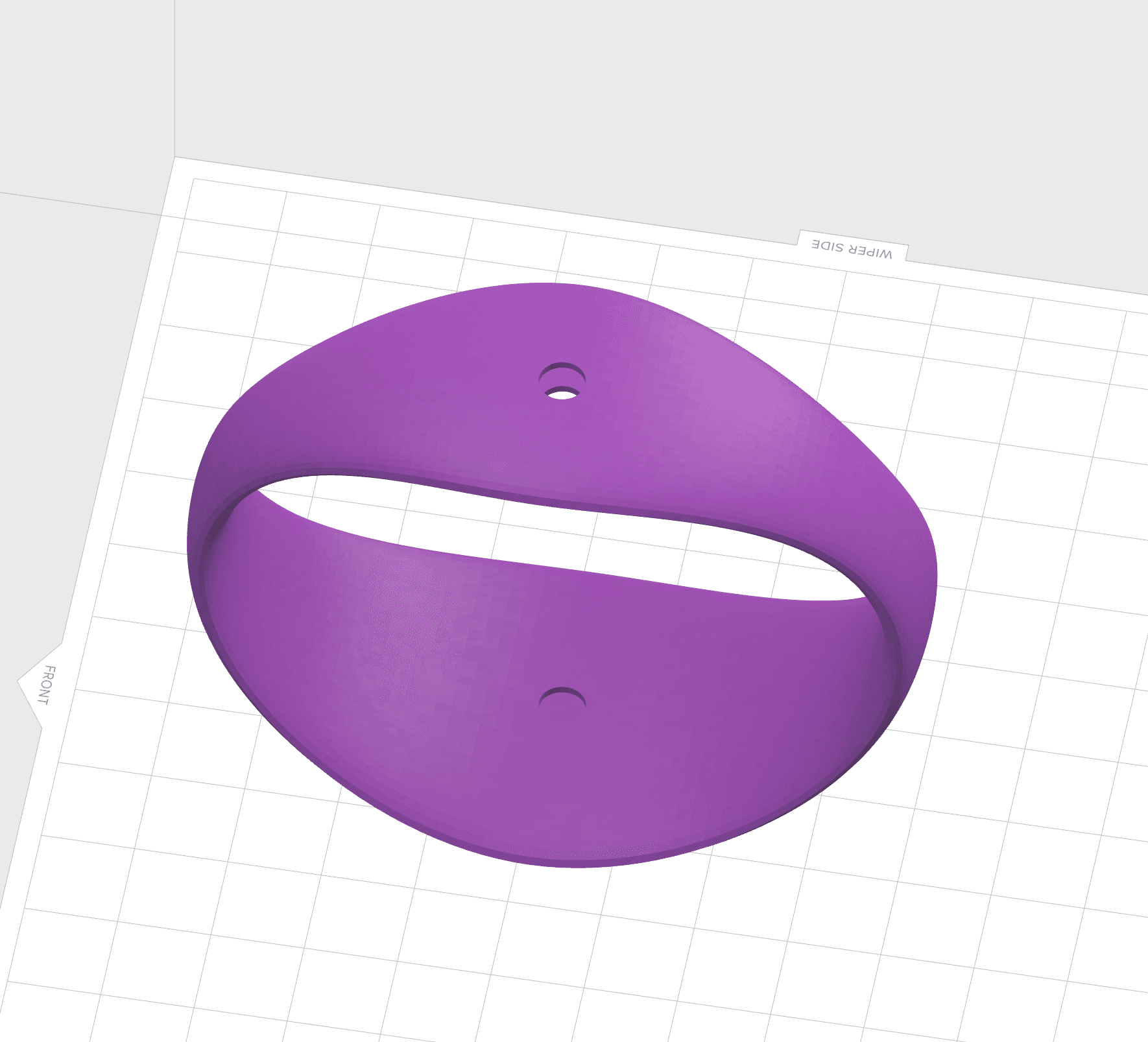
Install or update PreForm, then set up the next print job.
To prepare a model for printing in PreForm:
Shake the resin cartridge and mix resin in the resin tank to agitate Castable Wax 40 Resin before printing. Mix the resin regularly to maintain or restore expected resin performance.
Finishing
The Form Wash agitates the solvent bath and removes parts from the bath after a set time. Wash parts according to the support article Form Wash time settings.
Ensure all IPA on washed parts evaporates completely prior to casting because the IPA can interact with the investment and cause pitting. For best results, wash parts in clean IPA and use compressed air to dry parts, especially parts with internal channels and hollows.
Post-curing requirements
Castable Wax 40 Resin does not require post-curing, although it can be post-cured to improve handling strength. While post-curing Castable Wax 40 parts should not affect castability, post-curing may shrink parts by less than 1%, which may cause distortion.
Notice:
Do not post-cure Castable Wax 40 Resin above room temperature. Elevated temperatures can melt the solid wax content in the resin, causing sticky parts.
Casting with Castable Wax 40 Resin
For detailed information on investment casting with Formlabs resins, read the application guide Introduction to Casting for 3D Printed Jewelry Patterns [en].
Tip:
Cast printed parts within three days for highest accuracy.
Additional resources