Notice:
To avoid damage to equipment, check the resin tank compatibility table in Choosing the right material to confirm you are using a resin tank that is compatible with this material.

Notice:
To avoid damage to equipment, check the resin tank compatibility table in Choosing the right material to confirm you are using a resin tank that is compatible with this material.
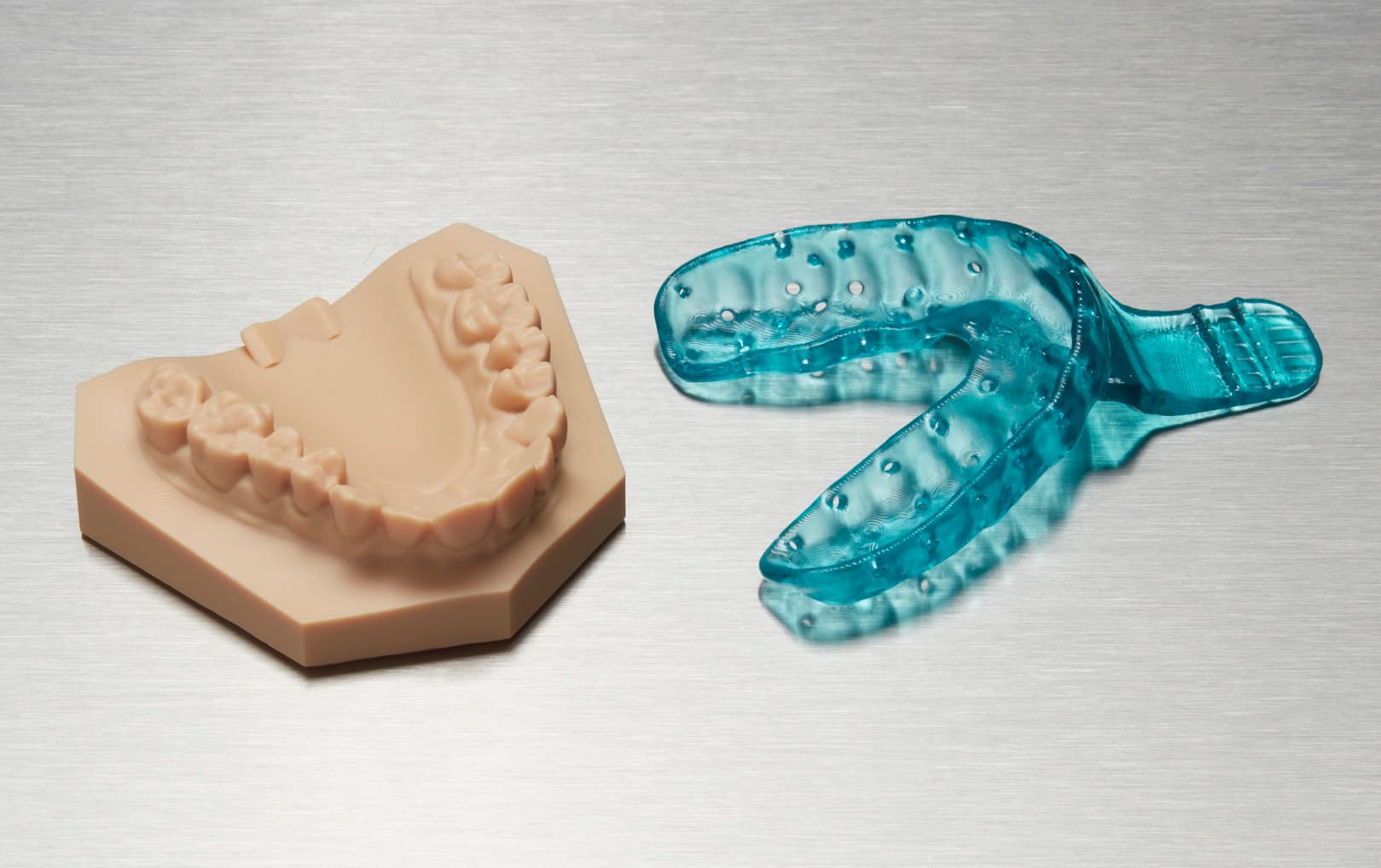
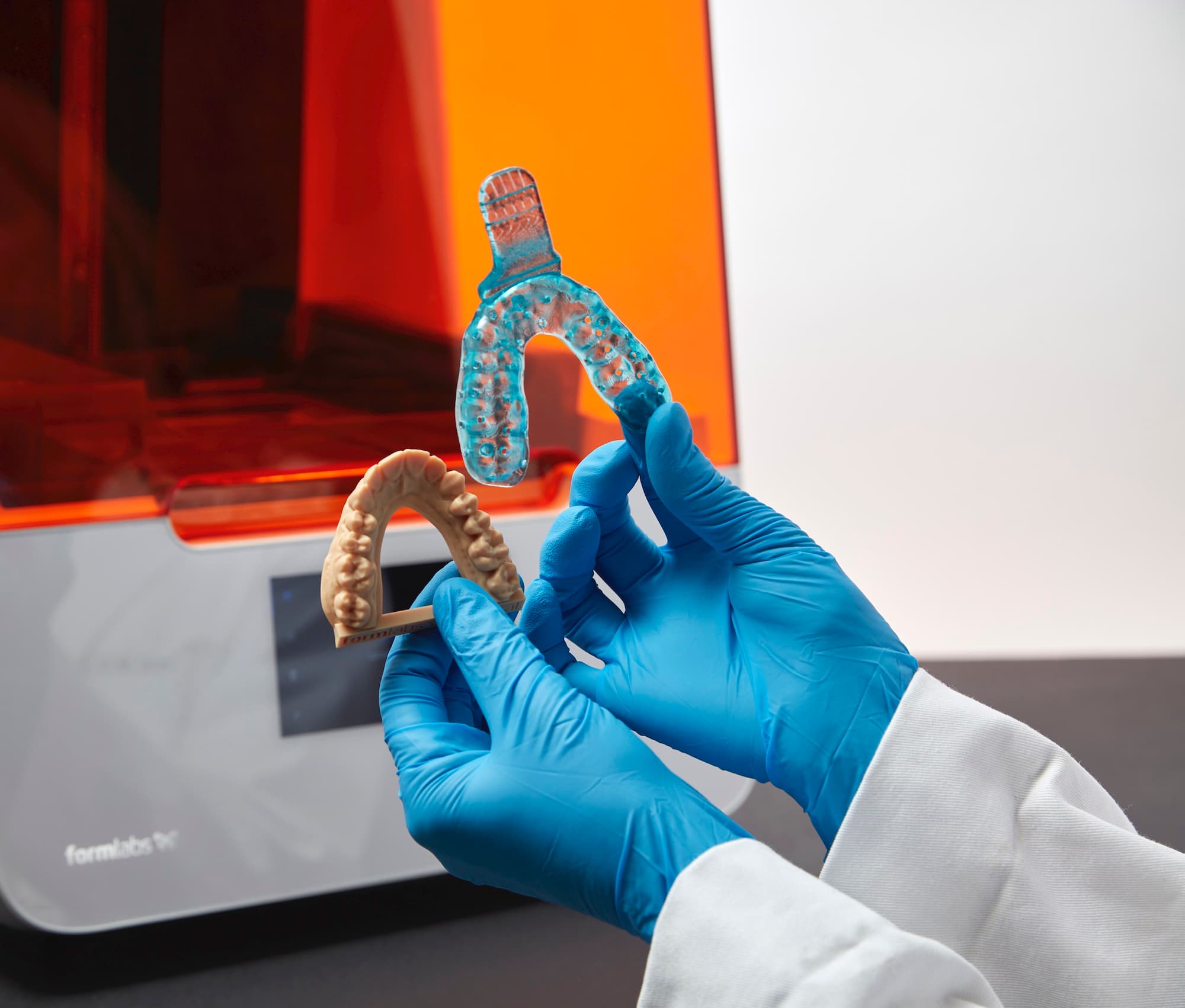
Custom Tray Resin is a long-term material formulated for manufacturing impression trays. Printing custom trays ensures even distribution of impression material and more accurate impressions. Custom Tray Resin prints at 100 microns (Form 4B and Form 4BL) or 200 microns (Form 2, Form 3B, or Form 3BL), allowing dental professionals to print custom trays quickly, reducing labor time and enabling higher throughput.
When printing these appliances, follow the application guide 3D Printing Custom Trays with Formlabs SLA 3D Printers [en], to ensure precise and accurate results.
Note:
To learn more about the performance or specific material properties of Custom Tray Resin, please refer to the Safety Data Sheet (SDS) and Technical Data Sheet (TDS). Always consult the SDS as the primary source of information to understand safety and handling of Formlabs materials.
Required resources
Made by Formlabs:
Made by third parties:
Workflow overview
Notice:
This is an abbreviated version of the application guide, 3D Printing Custom Trays with Formlabs SLA 3D Printers [en]. Read the application guide for detailed instructions about the workflow for Custom Tray Resin.
Scan
In order to 3D print an impression tray, use a scanner to collect anatomical data of the patient’s dentition. Either scan the patient directly with an intraoral scanner, or use a desktop optical scanner to scan a polyvinyl siloxane (PVS) impression or stone model.
Design
Use a dental CAD software package to process and design the impression tray before printing. Choose software that offers open STL file export. The exact design steps vary for each software package, so contact the software provider for details on generating a splint from patient scans.
Print feature recommendations
Minimum wall thickness: 2 mm
Minimum handle thickness: 3 mm
For heavy impression materials, Formlabs recommends retention holes at least 3 mm in diameter.
Notice:
To avoid damage to equipment, check the resin tank compatibility table in Choosing the right material to confirm you are using a resin tank that is compatible with this material.
Notice:
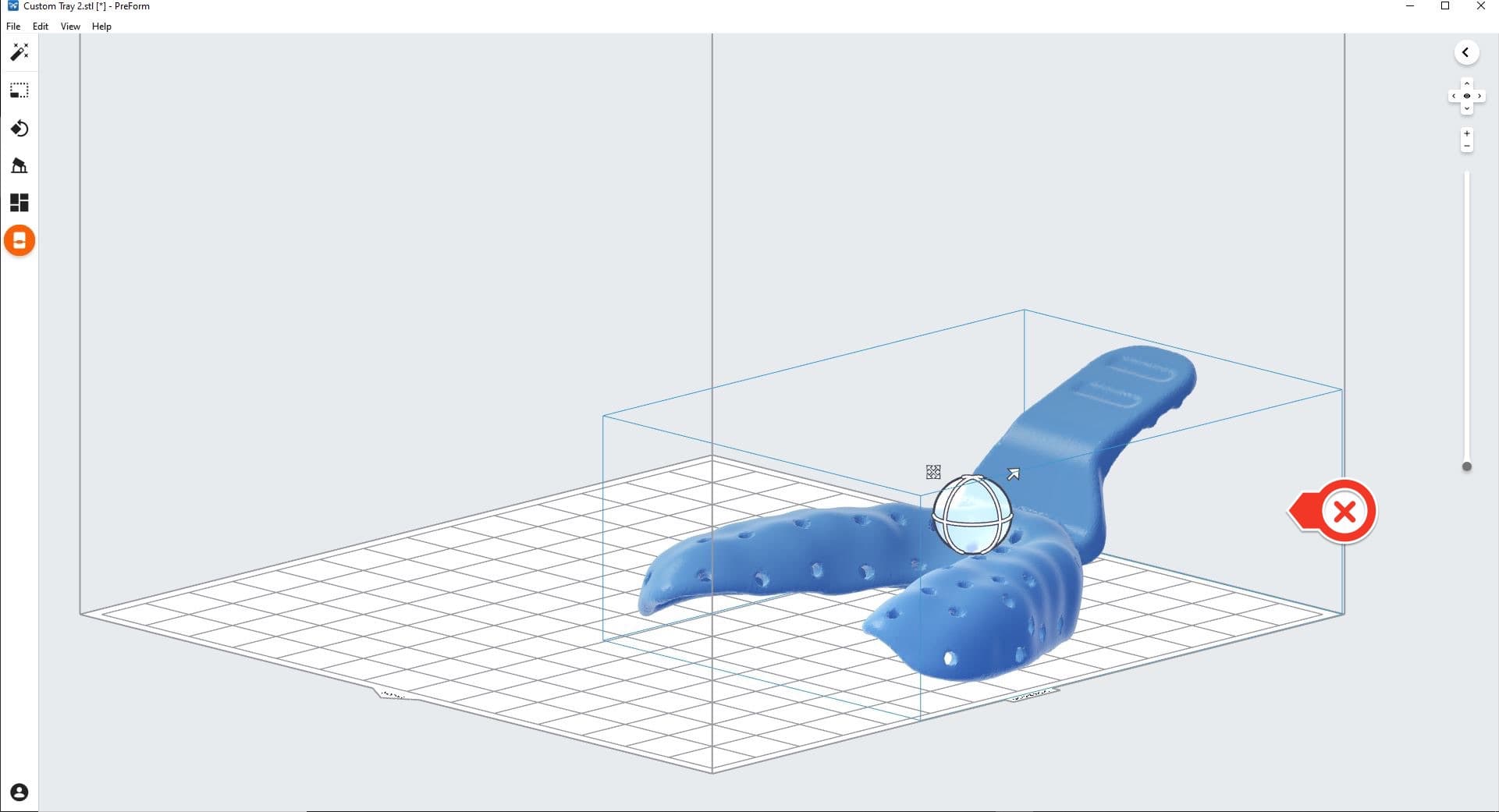
Always orient parts with the intaglio surfaces facing away from the build platform.
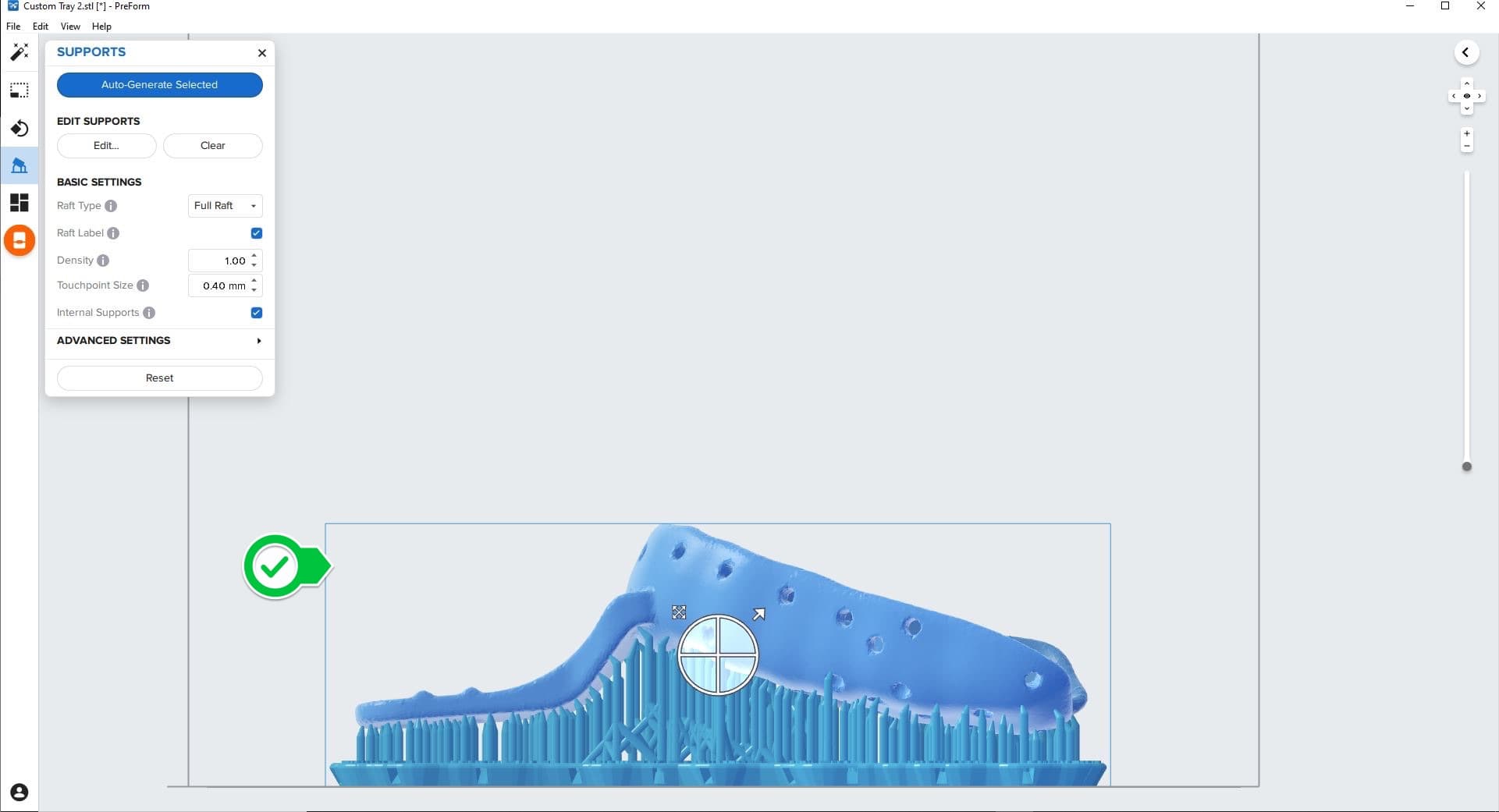
Notice:
For full compliance and biocompatibility, Custom Tray Resin requires a dedicated resin tank, build platform, and Finish Kit, which should not be used with any other resins.
Washing
Follow the part washing recommendations in the manufacturing guide for the clearest and best possible results. Improper washing can lead to suboptimal mechanical and biocompatibility properties.
Post-curing requirements
Follow the post-curing recommendations in the manufacturing guide for the clearest and best possible results. Improper post-curing can lead to suboptimal mechanical and biocompatibility properties.
Additional resources