
White powder (laurolactam) buildup on printer (Fuse 1+ 30W)
White powder (laurolactam) buildup on printer (Fuse 1+ 30W)
Explanation
Laurolactam is a fluffy white by-product of sintering nylon produced by Fuse 1 generation printers. It is harmless but may leave deposits that obscure the touchscreen.
Unlike the Fuse 1, the Fuse 1+30W operates under positive pressure, which can lead to minor air leakage. During printing, laurolactam may escape through the main enclosure door, potentially leaving deposits on the touchscreen and surrounding exterior sheet metal. Follow the steps below to minimize laurolactam leakage and clean it when it appears.
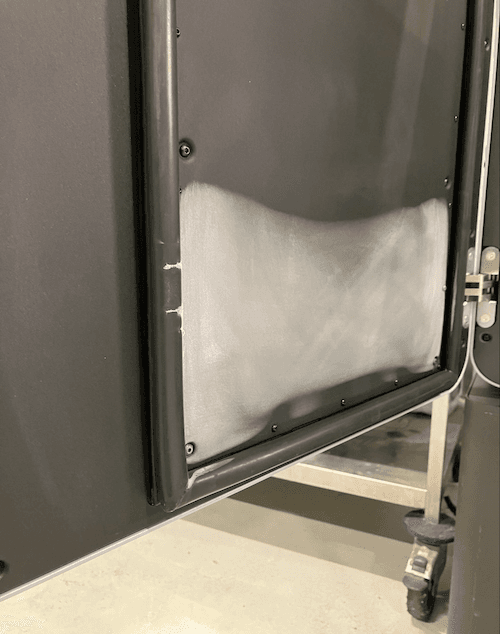
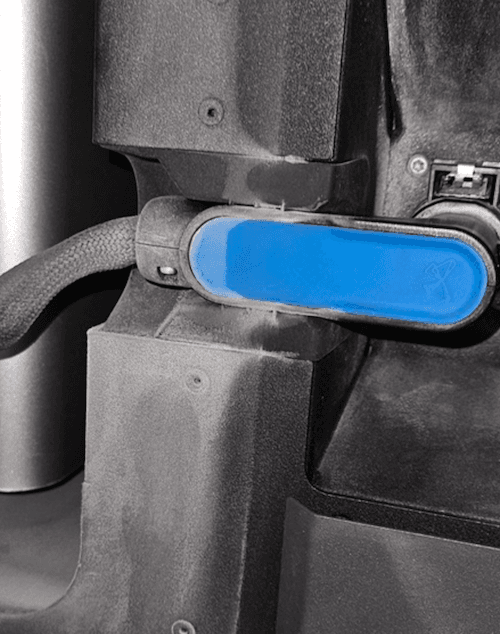
Laurolactam powder on the main enclosure door and door latch.
Cleaning laurolactam buildup
Regularly cleaning laurolactam buildup can help prevent and mitigate further buildups and make them easier to manage. Use a soft cloth and ethanol to remove the deposits.
Wipe the rubber collar of the build chamber plug. Ensure the rubber is not folded into the printer enclosure, as this creates a leak path.
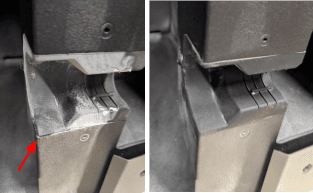
Wipe the door gasket, focusing on the area that touches the build chamber plug.
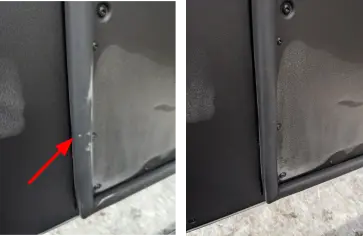
Inspect and clean the infrared sensor
Laurolactam deposits on and around the IR sensor can prevent it from measuring the powder’s temperature during a print, leading to defects such as hard caking and melting. Inspect the infrared sensor and infrared sensor housing for any laurolactam that has built up in the IR sensor’s field of view.
Regular maintenance
Inspect parts of your Fuse 1+ 30W that are especially vulnerable to laurolactam buildup.
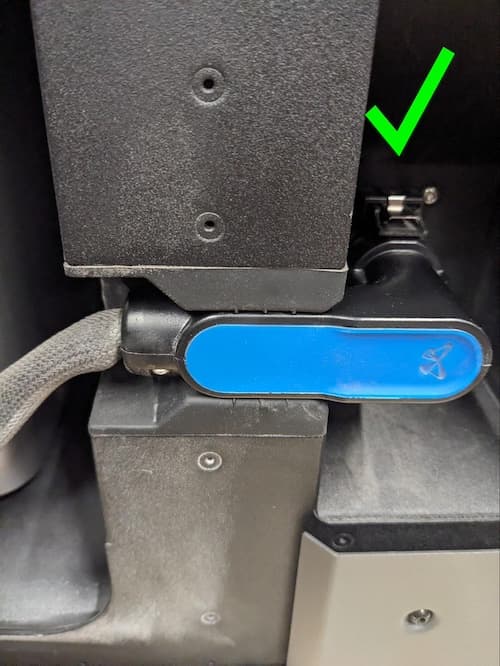
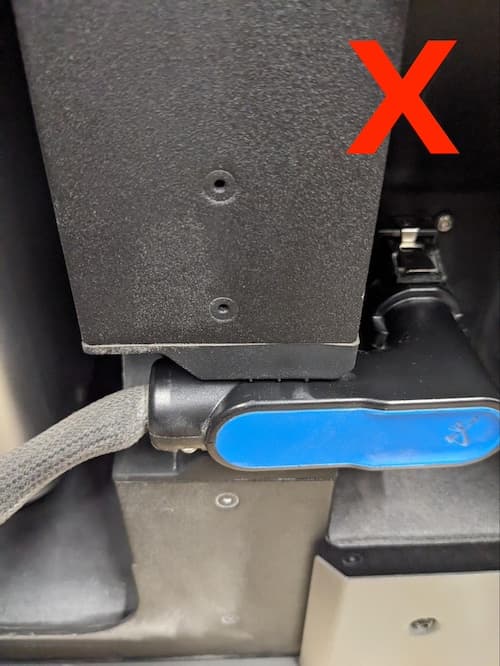
Check the build chamber plug
A loose build chamber plug can lead to laurolactam buildup. Ensure the build chamber plug is properly inserted. You should hear a clicking sound. Make sure the plug handle sits flush to the printer enclosure to minimize leaks.
Inspect the door gasket
Check for any damage or wear on the gasket that might affect the door’s seal. Any gaps or wear to the door gasket may lead to laurolactam buildup.
Adjust the door latch
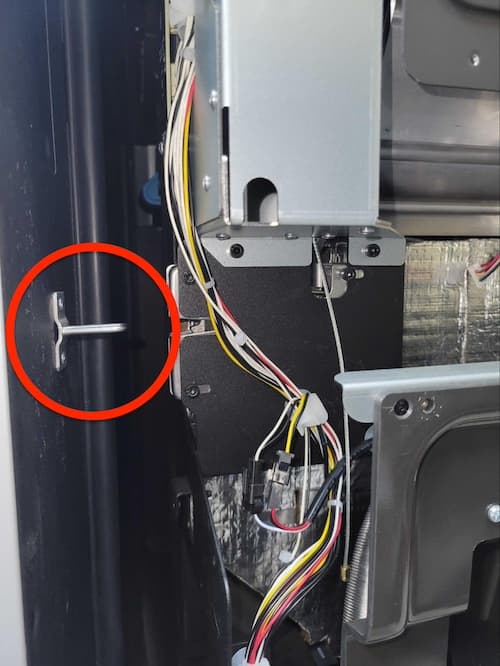
If the door does not close firmly, adjust and tighten the door latch as needed:
- Remove the lower hopper side cover and loosen the four screws.
- Adjust the latch by moving it backward.
- Double-check that the door closes properly, then tighten the screws to secure the latch.